After half an hour of running, many people feel a strange lightness and a clear mood, and after a sudden injury on the pitch, a player may finish the match and feel the pain only when their body cools down. Behind part of these scenes are substances the body makes itself, called endorphins, natural painkillers that act on the same receptors targeted by opioid drugs. This page explains what endorphins are, where they are made, when they are released, their relationship with mood, pain and addiction, and what actually raises them and what is claimed about them without evidence, then leads you to separate articles on each aspect.
What are endorphins?
Endorphins are a group of neuropeptides, meaning short chains of amino acids, that work in the nervous system as transmitters or modulators of nerve signals, and are also released into the blood, playing a hormone-like role. The name itself explains the idea: a compound of “endogenous” and “morphine”, meaning the morphine the body makes. They are part of a larger family that scientists call the endogenous opioid peptides, which also includes enkephalins and dynorphins.
Several types of endorphins are known, the best known and most studied being beta-endorphin, the strongest pain reliever among them. Beta-endorphin binds mainly to the “mu” type of opioid receptors, the very receptors that morphine, heroin and tramadol bind to. This similarity has important consequences we will come back to when talking about addiction.
Where and how are endorphins made?
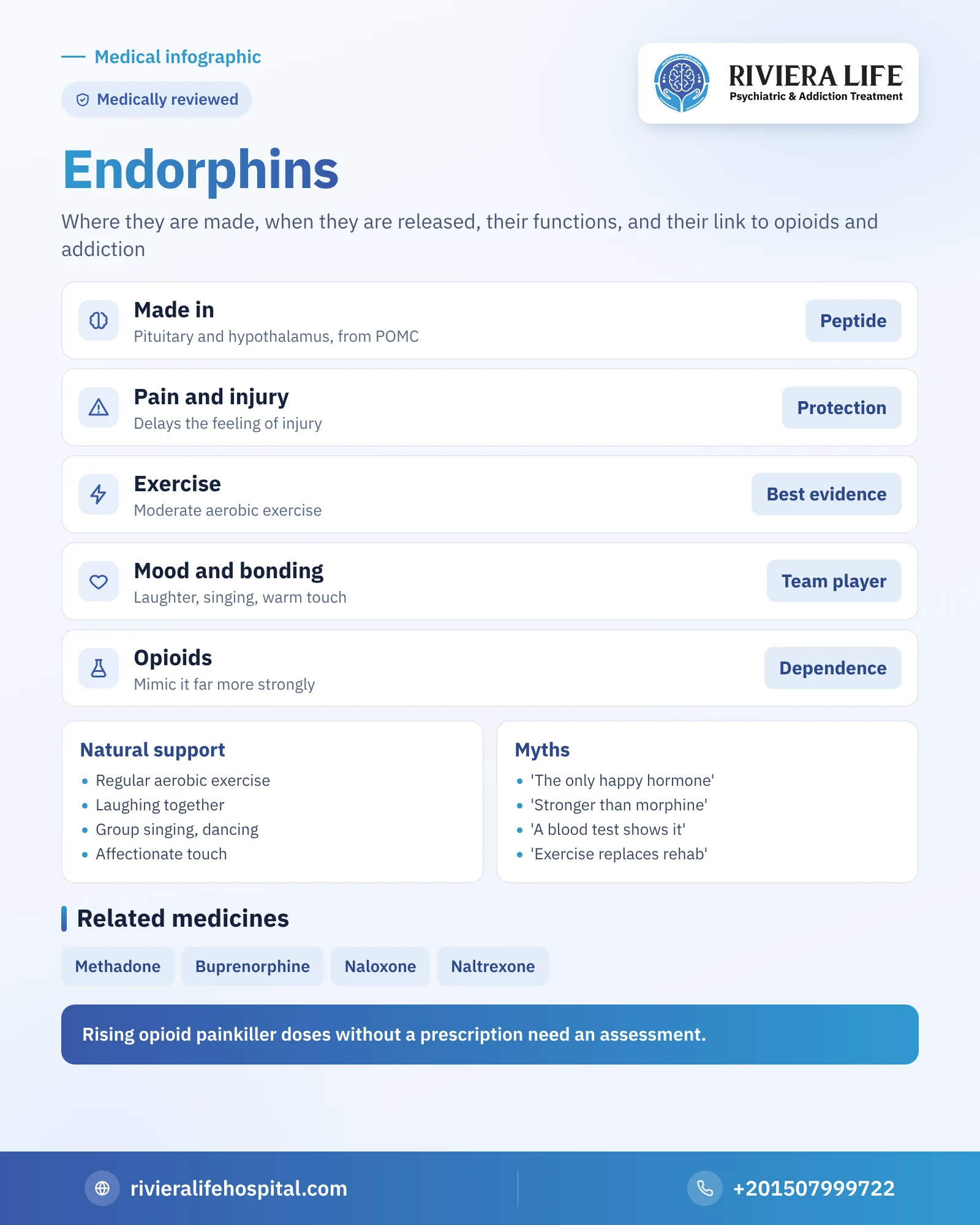
The main source of endorphins is the pituitary gland at the base of the brain, and the hypothalamus that controls it. They are also made in smaller amounts in the spinal cord, in scattered nerve cells, and in some immune system cells.
Beta-endorphin is not made as a separate molecule, but is cut from a larger molecule called pro-opiomelanocortin (POMC). This molecule is like a “roll” that enzymes cut into small pieces, including beta-endorphin and the hormone that stimulates the adrenal gland to release cortisol. That is why endorphins are closely linked to the stress axis connecting the brain to the pituitary and adrenal glands, so both rise together in situations of stress and pain. You can find an explanation of this axis on the cortisol page.
When are endorphins released?
The body releases endorphins in response to various stimuli, some painful and some pleasant:
- Pain and injury: their release is part of the internal pain-relief system, and partly explains why the sensation of pain is delayed in moments of danger.
- Acute psychological and physical stress: they rise with stress hormones to soften the impact of the situation.
- Moderate to intense physical exertion: especially relatively long aerobic exercise.
- Pleasant activities: laughing together, singing and dancing in a group, affectionate touch, and intimacy.
The important point here is that endorphins are not only “the joy hormone”; they are released in moments of pain and shock as a protective mechanism, just as they are released in moments of pleasure.
The functions of endorphins in the body
The clearest function of endorphins is pain relief, as they reduce the transmission of pain signals in the spinal cord and brain. But their role extends further:
- Easing the effect of stress: they act as a partial brake on the stress response, helping the body return to calm after the situation.
- Taking part in the reward system: they affect dopamine release in pleasure centers, adding to the feeling of satisfaction after food, company or achievement.
- Social bonds: research points to a role for endogenous opioids in the feeling of warmth and closeness to others, in cooperation with oxytocin.
- Roles scientists are studying that are not yet settled: in regulating appetite, in some aspects of immunity, and in regulating the release of other hormones.
Endorphins and pain: why is the feeling of injury delayed?
Many soldiers, athletes and accident victims know this experience: a clear injury that the person only feels after minutes or hours. Scientists explain this by a pain-relief system descending from the brain to the spinal cord, in which endorphins and enkephalins take part along with noradrenaline, temporarily reducing the passage of pain signals so the person can escape or call for help.
This mechanism is useful in emergencies, but it is short-term by nature. In chronic pain, however, such as long-term back pain or fibromyalgia, this system seems to work less efficiently in some patients, which is why “putting up with it” is not enough as treatment, and the patient needs a plan set by the doctor combining physiotherapy, movement, psychotherapy and appropriate medication. You can find the role of noradrenaline in this system on the noradrenaline page.
Endorphins, mood, sleep and behavior
The feeling of relief after exercise or a hearty laugh has a chemical basis in which endorphins take part, but they are not the only player. Newer studies on the “runner’s high” indicate that other substances, including endocannabinoids, take part in this feeling, because endorphins released into the blood do not easily cross into the brain. The more accurate conclusion: endorphins are part of a chemical team that includes dopamine, serotonin and others, and do not create mood alone. Their relationship with sleep is indirect; the physical activity that raises them improves sleep quality in many people, while chronic pain that exhausts their system ruins sleep.
Low and high endorphins
There is no routine blood test that measures endorphins for the doctor to diagnose a deficiency or excess, because the level in the blood does not reflect what happens in the brain. That is why you should be careful of anyone offering a “happiness hormones test” and building treatment on it. What research cautiously says is that disruption of the endogenous opioid system may take part in some cases of chronic pain, depression and compulsive eating episodes, and that trauma and long-term stress may change its sensitivity. But these are scientific associations that are not suitable as a basis for self-diagnosis. If you are looking for proven ways to support it, see the article How to increase endorphins.
Endorphins, addiction and drugs
Opioid drugs such as heroin, morphine and tramadol work because they mimic endorphins, but they do so with a strength and speed the body never reaches. With repetition, the brain reduces its natural production and lowers the sensitivity of its receptors, so the person comes to need the substance to feel “normal”. And when they stop, they find an internal system that has been switched off, so the body aches, anxiety and depression that characterize withdrawal appear.
Here three questions recur. The first: can a person become addicted to chasing the endorphin rush itself, through excessive exercise, risk-taking or even self-harm? The answer is that there are compulsive behavioral patterns in which the whole reward system takes part, and endorphins alone do not explain them. The second: can an endorphin or dopamine test predict who will become addicted? No; vulnerability to addiction is the result of genetics, experiences and environment, and no chemical test reveals it.
The third: how does stress affect it? Chronic stress and untreated anxiety exhaust both the reward and pain-relief systems, so the drug seems a faster “solution”, which is why treating anxiety is part of preventing relapse. What happens to the internal system during detox, and how supportive medicines, cognitive behavioral therapy, support groups and exercise help restore it, you can find in detail in the article Endorphins and addiction.
Endorphins and mental disorders
Researchers are studying the role of endogenous opioids in depression, in the response to trauma, and in some self-harm behaviors after which people describe a feeling of relief. This research explains part of the picture, but it does not mean that a mental disorder is an “endorphin deficiency” treated with a supplement or an activity. The diagnosis is made by a psychiatrist, and treatment is based on psychotherapy and proven medicines according to each case. Someone who has thoughts of self-harm needs urgent specialist help, not a chemical explanation.
How can you support endorphins naturally?
The means with the strongest evidence is regular physical activity, especially moderate-intensity aerobic exercise. It is followed, with weaker but consistent evidence, by laughing with others, singing and dancing in a group, listening to music you love, and affectionate touch with people you trust. Acupuncture, spicy foods and chocolate are often mentioned, but the evidence for them is limited or conflicting. The details, and how to build a realistic daily habit, are in the article How to increase endorphins naturally.
Medicines that affect the endorphin system
The most prominent medicines linked to this system fall into two classes. The first is opioid receptor agonists, the opioid painkillers that mimic endorphins, some of which are used in controlled doses in treating addiction, such as methadone and buprenorphine. The second is opioid receptor antagonists, such as naloxone, used in emergencies to reverse an overdose, and naltrexone, which the doctor may prescribe to help prevent relapse. There is no medicine dispensed “to raise endorphins”, and all of the above are used only by medical decision and under supervision.
Common myths about endorphins
Myth: endorphins are the only “happy hormone”. The truth is that they are one element of a system that includes dopamine, serotonin and oxytocin, each with a different role, as the dopamine and serotonin pages explain.
Myth: natural endorphins are “stronger than morphine”, so there is no need for painkillers. The truth is that their strength in laboratory experiments does not mean the body, with its limited amount, can do without treatment for severe pain.
Myth: endorphins can be measured with a blood test to find the cause of sadness. The truth is that there is no approved routine test for this purpose.
Myth: someone addicted to opioids can replace them with exercise alone. The truth is that exercise is useful in recovery, but withdrawal and dependence need a medical plan.
The endorphins guide: each aspect in its own article
We have devoted separate articles to the most important questions about endorphins:
- Endorphins and addiction: how opioids mimic endorphins, what happens to the internal system during withdrawal, and how it regains its balance in treatment.
- How to increase endorphins: natural means ranked by strength of evidence, what is claimed without basis, and a simple weekly plan.
- Dopamine: the partner of endorphins in the reward and motivation system.
- Cortisol: the stress hormone that comes from the same parent molecule as endorphins.
When should you see a doctor?
You don’t need a doctor to exercise or laugh more, but you do need one if chronic pain dominates your day, if you notice you are relying on an opioid painkiller and increasing its dose without a prescription, or if symptoms of depression last more than two weeks. At Riviera Life, consultant psychiatrists and addiction specialists assess the case in complete confidentiality, and the first consultation is free via +201507999722, with fourteen years of experience and round-the-clock medical supervision in Sheikh Zayed, Giza.
Medical sources and referencesThe information in this article is based on reliable scientific sources