The short answer
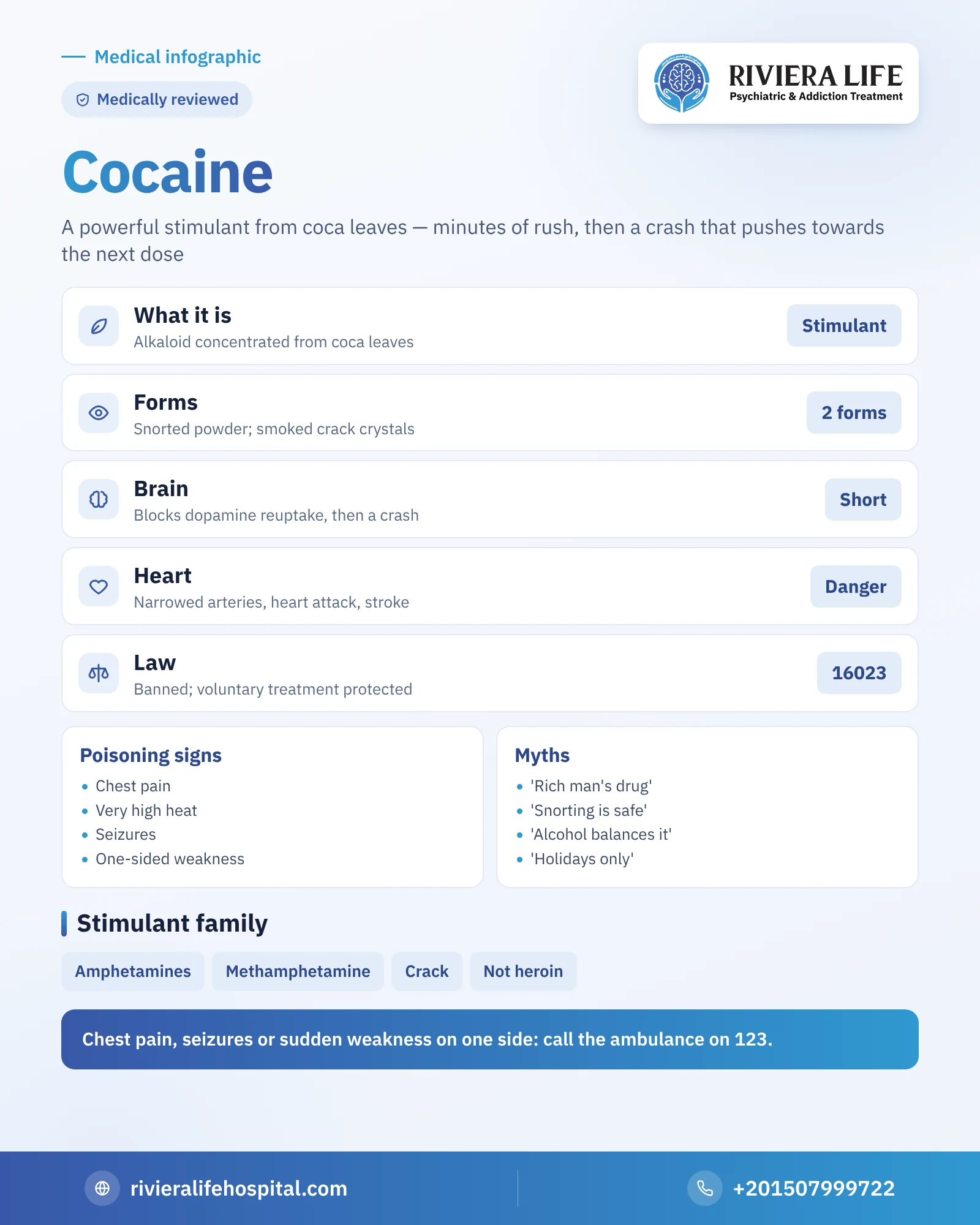
Cocaine, sometimes spelled “cocain”, is a stimulant extracted from the leaves of the coca shrub in South America and then concentrated into a white powder. It circulates in two forms: a powder that is usually snorted, and hard crystals that are smoked, known as crack, which is the fastest at causing addiction. It raises the activity of the nervous system and puts pressure on the heart and vessels, so it may cause a heart attack or a stroke even in young people. On the street it is called “coke” or “snow”, it is banned in Egypt, and it isn’t dispensed for any personal use.
- CategoryNervous-system stimulant
- Its formsPowder, and smoked crack
- Most prominent dangerThe heart and vessels
Cocaine is a powerful stimulant extracted from the leaves of the coca plant, which raises energy and self-confidence for a few minutes then leaves its user worse than before, pushing them towards a new dose. This short cycle between the high and the crash is the secret of its danger: it exhausts the heart and leads quickly to addiction, even in someone who thinks they only use it on special occasions.
On this page you will find a clear picture of cocaine: what it is, its forms and the names it circulates under in Egypt, how it works in the brain, and why some nights with it end in the emergency room. In the middle there is a guide that leads you to a separate article for each aspect, from symptoms and testing to withdrawal and treatment.
What is cocaine?
Cocaine is an alkaloid substance found naturally in the leaves of the coca shrub, which grows in the Andes mountains of South America. Local people chewed these leaves for long centuries to resist tiredness and hunger, and the amount of the substance reaching the body this way was small. The big shift happened in the mid-nineteenth century when chemists succeeded in isolating the active substance and concentrating it into a pure powder, so what used to enter the body slowly through chewing came to reach the brain all at once.
In its early years cocaine went into the formulas of medicines and tonics and even some drinks, then cases of addiction and sudden death began to pile up, so countries restricted it one after another. Today it is scientifically classified among stimulants, that is, substances that raise the activity of the central nervous system, unlike opioids and sedatives, which slow it.
Names of cocaine circulating in Egypt
On the Egyptian street cocaine is usually shortened to “coke” or “coca”, and you may hear the word “snow”, taken from its common English name, because of its white color. The word “bodra” (powder) is sometimes used for cocaine, even though it is applied more to heroin, a confusion that greatly bewilders families because the two substances are completely different in effect and treatment. The smokable form is known as “crack” or “the stone” because of its hard crystalline shape. Because the seller doesn’t stick to any name, the only way to know the substance precisely is medical assessment and testing.
Forms of cocaine and ways of using it
Cocaine circulates in two main forms that differ in shape and in the speed of reaching the brain:
- Cocaine hydrochloride: a fine white powder usually snorted through the nose, which may also be dissolved and injected into a vein.
- Crack or freebase: hard crystals that are smoked, so the substance reaches the brain via the lungs within seconds, which is why this form is considered the fastest at causing addiction.
Snorting gives an effect that begins within minutes and lasts about half an hour, while the effect of smoking and injecting is more violent and shorter, and may not exceed minutes. The shorter the effect, the greater the desire to repeat the dose during the same night, the pattern known as continuous use or “binges”. Cocaine usually doesn’t reach the user pure, as it is mixed with powders to increase the weight or with unknown medicinal and chemical substances, and reports in several countries have recorded its contamination with extremely potent synthetic opioids.
What does cocaine do in the brain and body?
Inside the brain, nerve cells release the substance dopamine and then quickly draw it back in so the message ends. Cocaine blocks these reuptake channels, so dopamine piles up between cells, along with noradrenaline and serotonin. The result is a sudden feeling of strength, alertness and elation, followed at the level of the body by:
- A racing heartbeat and raised blood pressure.
- Constriction of blood vessels, including the arteries of the heart and brain.
- A rise in body temperature and dilated pupils.
- Loss of appetite and less need for sleep.
- Talkativeness and excess movement, and anxiety or suspicion of others may appear with higher doses.
After the effect wears off, what users call the “crash” happens: exhaustion, distress, irritability and a desire for another dose. With repetition the brain’s sense of ordinary pleasures decreases, and the sensitivity of its stress circuits increases, so the person becomes agitated and depressed in the absence of the substance. Here the shift begins from using in search of pleasure to using to escape distress.
Does cocaine have a medical use?
Cocaine has a local anesthetic property along with narrowing blood vessels, which is why it is still used in a limited number of countries as a topical solution the doctor puts in the nose before some minor operations to reduce pain and bleeding. This use is done in calculated amounts on the surface of the tissues inside the operating room, and has nothing to do with drug use. In most practices it has been replaced by modern local anesthetics that don’t cause addiction, and cocaine isn’t dispensed in Egypt for personal use on any prescription.
Why is cocaine dangerous?
Cocaine has become linked in many people’s minds with nights out and material success, and this image hides real risks:
- The heart first: it may cause a heart attack or a dangerous rhythm disturbance even in healthy young people, and sometimes the first time.
- The brain: it raises the risk of stroke and seizures.
- Rapid addiction: its short effect encourages repetition, and crack in particular may lead to addiction within a short period.
- Mental health: anxiety, panic attacks and persecutory thoughts, and it may reach temporary psychosis.
- Mixing: it is often used with alcohol, sedatives or hashish, and every mix adds a new danger.
- The cost: its high price drains money quickly, and pushes some users into debt and legal problems.
Cocaine within the stimulant family
Cocaine shares with amphetamines and methamphetamine that they all raise dopamine and stimulate the body, but it differs from them in its short duration. Methamphetamine’s effect may last long hours, while cocaine fades quickly, which is why its pattern is linked to closely spaced doses in a single night followed by days off. It is completely different from heroin, which calms and slows breathing, and those who want a detailed comparison will find it in the article on the difference between cocaine and heroin.
Cocaine and the law in Egypt
Egypt’s anti-narcotics law lists cocaine among the banned narcotic substances, and punishes its import, trafficking, possession and use, with the penalty escalating with trafficking. On the other hand, the law opens an important door to treatment, as someone who comes forward on their own seeking treatment doesn’t have a criminal case brought against them for use. The Fund for Drug Control and Treatment of Addiction provides a confidential hotline on 16023, while any legal question concerning a specific case belongs with a specialized lawyer.
The cocaine guide: each aspect in a separate article
Every link in the following list leads you to an article that answers a single question in detail:
- Cocaine addiction symptoms: the medical picture of addiction psychologically, physically and behaviorally, and how the doctor distinguishes it from others.
- How do you recognize a cocaine addict?: a practical guide for the family to the signs that can be noticed at home.
- Cocaine withdrawal symptoms: the stages of the crash and withdrawal, how long they last and when they become dangerous.
- Cocaine addiction treatment: the stages of treatment, psychological and medicinal therapies, and follow-up.
- Causes of cocaine addiction: why use turns into addiction, and who is most at risk.
- The harms of cocaine: what it does to the heart, brain, nose, lungs and life.
- How long does cocaine stay in the body?: the period during which it shows in a urine, blood, saliva or hair test.
- How do you deal with a cocaine addict?: steps for those close to them, from opening the conversation to clear boundaries.
- Cocaine and sex: its effect on desire, erection and fertility, and what improves after stopping.
- Cleaning the nose from cocaine: what happens to the nasal tissues and how its effects are treated safely.
- Crack addiction: the smoked form of cocaine, its symptoms, risks and treatment.
- How long crack stays in the body: when it leaves the blood and urine, and what testing reveals.
- The difference between cocaine and heroin: a comparison of effect, signs, danger and treatment.
Common myths about cocaine
The myth: cocaine is a “rich man’s drug” and doesn’t cause real addiction. The truth: price changes nothing in the chemistry of the brain, and cocaine is among the substances most able to create compulsive craving because of its short effect.
The myth: snorting is safe, and the danger lies only in injecting or crack. The truth: the method changes the speed, but heart attacks, seizures and addiction are all possible with snorting too.
The myth: alcohol “balances” cocaine and eases its effect. The truth: combining them produces a third substance in the liver called cocaethylene, which is more harmful to the heart than either of them alone.
The myth: someone who only uses on holidays isn’t an addict. The truth: the pattern of widely spaced binges is very common in cocaine addiction, and the criterion is loss of control and continuing despite harm, not the number of days.
Discovered someone close to you is using cocaine?
The shock is natural, but the first reaction determines much of what follows. Don’t open the subject while they are at the peak of the effect or on the crash day after, as they are then either on edge or exhausted and depressed. Record the changes you have noticed in sleep, money and mood, then choose a calm moment and speak in the language of worry, not accusation. Don’t bargain over money without a plan, and don’t try to solve the matter secretly inside the home for months. Ask for a specialized consultation for yourself first if they refuse, as having a clear plan changes the way the whole family deals with the situation. You will find detailed practical steps in the article on how to deal with a cocaine addict.
Signs of cocaine poisoning
Call the ambulance on 123 immediately if any of these appear
Cocaine poisoning may strike the heart or brain within minutes, even with an amount the person was used to before.
- Pain or tightness in the chest, or extreme difficulty breathing
- Excessive body heat with heavy sweating or very hot skin
- Seizures or loss of consciousness
- Sudden weakness affecting one side of the body, or stumbling speech
- Severe agitation, hallucinations or frightening suspicion of everyone around them
Until the ambulance arrives, move the person away from heat and noise, sit or lay them down in a quiet place, and talk to them in a low voice without arguing. If they have a seizure, move the hard objects around them away and don’t put anything in their mouth. Don’t give them stimulants, alcohol or sedatives from home, and tell the paramedics what they took if you know, as this saves precious time.
When should you ask for help?
Don’t wait for the matter to reach debts or the emergency room. If use is repeated, or the person has started planning their days around cocaine, or has failed to stop despite their promises, these are all sufficient reasons for a medical assessment. At Riviera Life, a team of consultants in psychiatry and addiction treatment receives the case in complete confidentiality, and puts in place a plan that suits its severity, and the first consultation is free.
Medical sources and referencesThe information in this article is based on reliable scientific sources