The short answer
Adrenaline, scientifically called epinephrine, is a hormone released by the adrenal gland above the kidney, and it drives the “fight or flight” response to danger or stress: it speeds up the heart, raises blood pressure and sugar, and prepares the muscles for movement within moments. It is not “the happy hormone” as is commonly claimed; it is closer to being the hormone of fear and readiness, and that title is usually given to dopamine and serotonin. Its repeated rise is linked to anxiety and panic attacks, stimulants raise it too, and it is used medically to treat severe allergy and in cardiac resuscitation.
- Scientific nameEpinephrine
- Where it is releasedThe adrenal gland
- Is it the happy hormone?No, it is the alarm hormone
A car suddenly swerves toward you, and you hit the brakes before you think, then afterwards you notice your heart pounding and your hands trembling. That is adrenaline at work: a hormone the adrenal gland releases in seconds to prepare the body to face danger or flee from it. It is a lifesaving hormone in emergencies, and also a medicine doctors use in severe allergy and cardiac arrest, but its repeated rise without real danger is linked to anxiety and panic attacks. This page explains what adrenaline is, how it is made and when it is released, what its functions are, why some people chase the “adrenaline rush”, and when the matter needs a doctor.
What is adrenaline?
Adrenaline, scientifically called epinephrine, is a hormone belonging to the catecholamine group, which also includes noradrenaline and dopamine. It is released mainly from the adrenal gland into the blood, reaching all the body’s organs within moments, which is why it is classified primarily as a hormone. Small amounts of it are found in some nerve cells in the brainstem, where it works as a neurotransmitter, but its well-known role is its hormonal role in the “fight or flight” response. Its name is often confused with that of its sibling noradrenaline; the difference is that the latter works more as a neurotransmitter in the brain and nerves.
Where is adrenaline made?
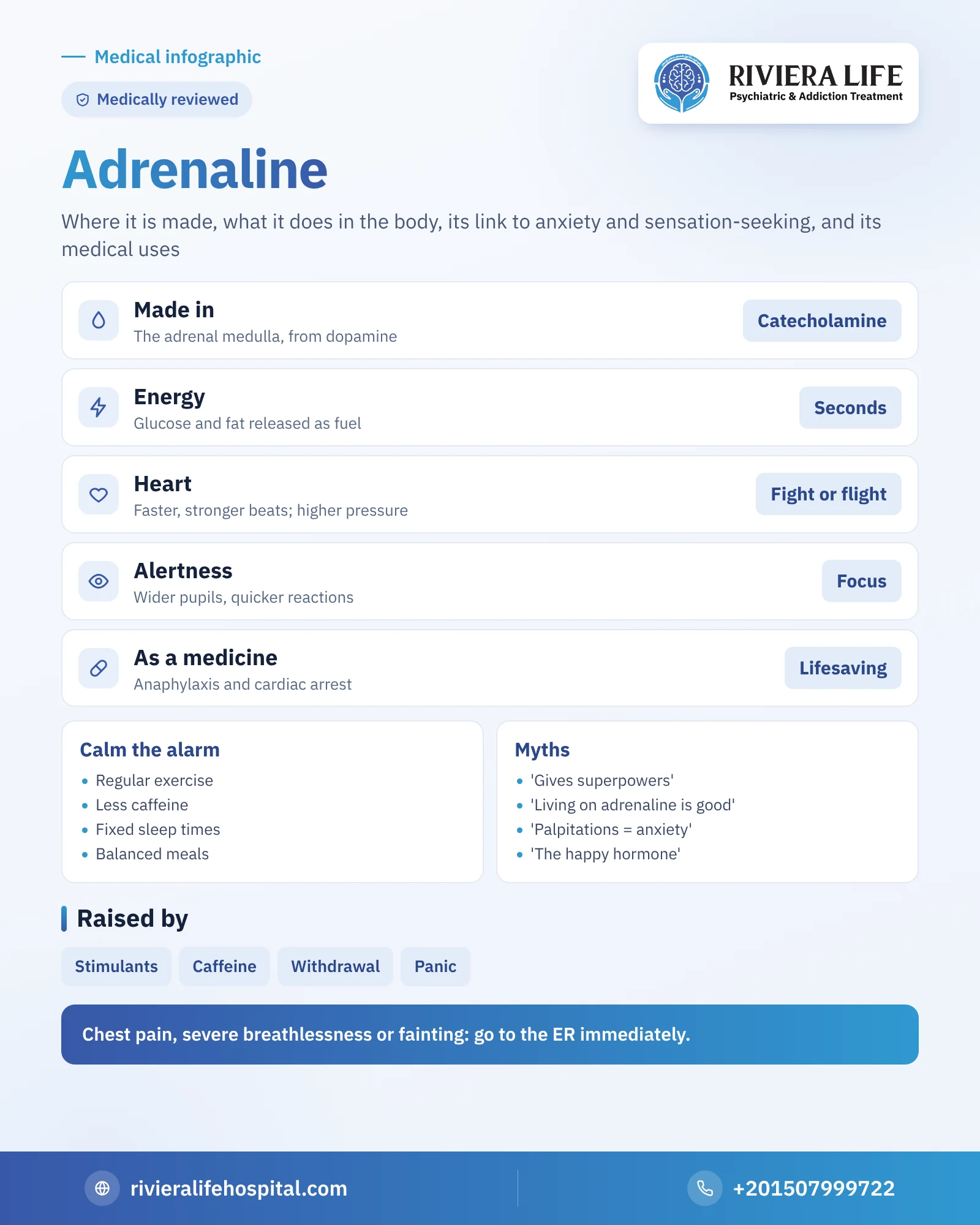
Above each kidney is a small gland called the adrenal gland, and it has two parts that are completely different in function. The outer cortex releases steroid hormones, the best known being cortisol, while the inner medulla makes catecholamines, and most of what it releases is adrenaline with a smaller proportion of noradrenaline. The production chain starts from the amino acid tyrosine, which is converted to dopa, then dopamine, then noradrenaline, and in the last step noradrenaline is converted to adrenaline by an enzyme found abundantly in the adrenal medulla, whose work needs cortisol coming from the neighboring cortex.
How and when is it released?
When the brain picks up a danger, real or imagined, the hypothalamus sends a signal through the sympathetic nervous system, the part responsible for states of readiness, directly to the adrenal medulla. Because the route is a direct nerve pathway, adrenaline is released within seconds. In parallel, a slower pathway through the pituitary gland begins, raising cortisol to maintain alertness if the stress continues. Common triggers include:
- Sudden danger: an accident, a fight or a terrifying sound.
- Psychological stress: an exam, a job interview or a sharp disagreement.
- Intense physical exertion and excitement: competitive sport or dangerous games.
- Low blood sugar, bleeding and severe cold.
- Some substances: caffeine in large amounts, and stimulants such as amphetamine and cocaine.
What does adrenaline do in the body?
Every effect of adrenaline serves one goal: to give you, within minutes, the best chance of survival.
- Instant energy: it stimulates the liver to break down stored glycogen into glucose, and releases fats to become fuel.
- More oxygen: it widens the airways so breathing becomes easier, and speeds up breathing.
- A stronger, faster heart: it increases the number of beats and the force of contraction, so blood pressure rises.
- Directing blood: it sends it to the large muscles and reduces it in the skin and digestive system, which is why the face goes pale and the mouth dry.
- Alertness and focus: the pupils widen and reaction speed increases.
- Temporary pain relief: it works with other systems to delay the sensation of injury.
These effects usually calm within minutes after the danger passes, while cortisol stays high longer if the situation continues.
Adrenaline, mood, sleep and behavior
Adrenaline is not only “the fear hormone”; it is present in the excitement before a match, intense joy, and stage fright before going on stage. The difference is in how the brain interprets the situation, not in the hormone itself. Sleep, however, is clearly affected: high readiness hormones in the evening, because of anxiety, caffeine or stimulating screens, make falling asleep difficult and make sleep light and broken. Many people with anxiety describe sudden waking with palpitations, a picture explained in the article Adrenaline and anxiety.
Signs of high and low adrenaline
A passing rise in difficult situations is normal and healthy. The problem begins when readiness repeats without real danger, as in anxiety disorders, panic attacks and chronic stress, so the person lives with palpitations, sweating, muscle tension and insomnia most of the time. There is a rare physical cause worth mentioning: a tumor of the adrenal medulla called pheochromocytoma, which releases large amounts of catecholamines, causing attacks of headache, sweating and palpitations with very high blood pressure. Here the doctor may order special blood or urine tests, in specific cases that have nothing to do with diagnosing anxiety.
Low adrenaline, however, is rare as a standalone problem, and is usually linked to adrenal gland diseases in which low cortisol is the more dangerous issue, or to people with diabetes who have repeated hypoglycemic episodes, so their alarm response weakens.
Adrenaline and mental disorders
The alarm system that adrenaline drives is present in a number of mental disorders, but in different forms. In anxiety disorders and panic attacks, the alarm goes off without actual danger. In post-traumatic stress disorder, the body stays in a state of hyperarousal: startling at sudden sounds, light sleep, and palpitations when recalling the event. Researchers believe that the hormones released at the moment of trauma strengthen the storage of the memory, which is part of the explanation of why some painful memories stay vivid and strong. This does not mean that an adrenaline test diagnoses any of these disorders; the diagnosis is made by a psychiatrist through interview and assessment.
The adrenaline rush: can it be addictive?
Some people describe themselves as “adrenaline junkies”: they drive insanely fast, jump from heights, or get into fights or big bets. Adrenaline is a partner here, but the deeper driver is the reward system and dopamine. Psychologists call this trait “sensation-seeking”, and research indicates that those who have it to a high degree are more prone to trying drugs, stimulants and gambling. There is no official medical diagnosis called adrenaline addiction, but there are signs that deserve attention when they repeat:
- Physical: palpitations, high blood pressure, sweating, insomnia, frequent headaches and constant fatigue.
- Psychological: intense boredom, emptiness or sadness in quiet times, irritability, and difficulty concentrating.
- Behavioral: repeating risk and raising its level to get the same feeling, neglecting responsibilities, and provoking clashes.
And when sensation-seeking turns into drugs or gambling, the matter needs a specialist assessment.
How is a sensation-seeking pattern treated?
Treatment begins by understanding what the person fills their emptiness with. Cognitive behavioral therapy helps identify triggers and correct the thoughts that justify risk-taking, and dialectical behavior therapy focuses on regulating emotions and reducing impulsivity. Stress-management skills, such as slow breathing and meditation, help, as does channeling energy into exciting and safe activities such as organized sports. If there is accompanying anxiety or depression, the doctor may prescribe suitable medication, and if there is substance use, treating it is an essential part of the plan. The family and support groups support commitment in the long term.
Lifestyle changes that calm the alarm system
- Regular exercise, which provides healthy excitement and improves the body’s ability to return to calm.
- Reducing caffeine and energy drinks, especially after the afternoon.
- Regular sleep at fixed times.
- Balanced meals that prevent sharp drops in blood sugar.
- A clear daily routine that reduces surprises and impulsivity.
- Long-term goals that give life a meaning beyond the exciting moment.
Adrenaline, drugs and withdrawal
Stimulants such as amphetamine, captagon and cocaine raise catecholamines in the body and brain, causing palpitations and raised blood pressure and temperature, and may lead to heart attacks and strokes even in young people. Conversely, withdrawal from alcohol, sedatives and opioids raises the activity of the alarm system, so tremor, sweating and anxiety appear. That is why “high adrenaline” symptoms in someone who uses substances or has recently stopped need a medical assessment.
Adrenaline as a medicine
Doctors use manufactured adrenaline as a lifesaving medicine in severe allergy (anaphylactic shock), where it opens the airways and raises collapsed blood pressure, and some patients at risk carry a self-injection pen according to their doctor’s instructions. It is also used in resuscitation during cardiac arrest, and is added in small amounts to some local anesthetics. In the opposite direction, beta blockers block some of adrenaline’s effects on the heart, and the doctor may sometimes prescribe them for the physical symptoms of anxiety in specific situations.
Common myths about adrenaline
Myth: adrenaline gives superhuman strength. The truth is that it temporarily raises capacity and delays pain, but it does not go beyond the body’s limits, and injuries may appear after it wears off.
Myth: someone who lives on adrenaline is more lively and successful. The truth is that constant readiness wears out the heart, sleep and mood in the long run.
Myth: repeated palpitations always mean anxiety. The truth is that some heart, thyroid and adrenal diseases cause the same symptoms, which is why assessment starts with a physical examination.
The adrenaline guide: each aspect in its own article
- Adrenaline and anxiety: the fight-or-flight response, panic attacks, why the heart pounds for no reason, and how to calm the body.
- Noradrenaline: adrenaline’s nervous-system sibling and its role in attention and stress.
- Cortisol: the long-term stress hormone that works after adrenaline.
- Symptoms of high cortisol: when stress turns into a physical burden.
When should you see a doctor?
Seek a medical assessment if attacks of palpitations, sweating and tremor repeat without a clear cause, or come with a severe headache and high blood pressure, or if anxiety stops you from sleeping or going out, or if you have turned to sedatives or substances to calm your body. Go to the emergency department immediately with chest pain, severe shortness of breath or fainting. At Riviera Life, consultant psychiatrists assess the case after ruling out physical causes, in complete confidentiality, and the first consultation is free via +201507999722.
Medical sources and referencesThe information in this article is based on reliable scientific sources