Alcohol is the most widespread psychoactive substance in the world, and also one of the most misleading, because being a drink available in restaurants and hotels makes many think it is lighter than drugs. The medical reality is different: alcohol is a nervous-system depressant that causes physical dependence, its withdrawal itself can be a danger to life, and its harms extend from the liver to the brain and heart. This page is an entry point to everything the Riviera Life team writes about alcohol: what it is, how it works, and why social drinking sometimes turns into addiction, followed by links to detailed articles on each aspect.
What is alcohol?
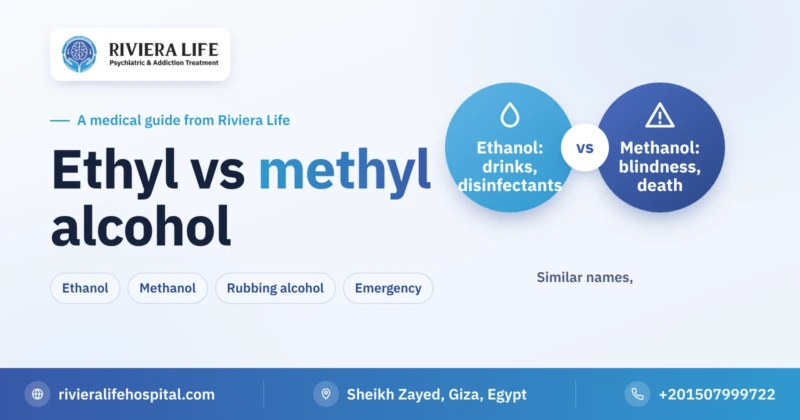
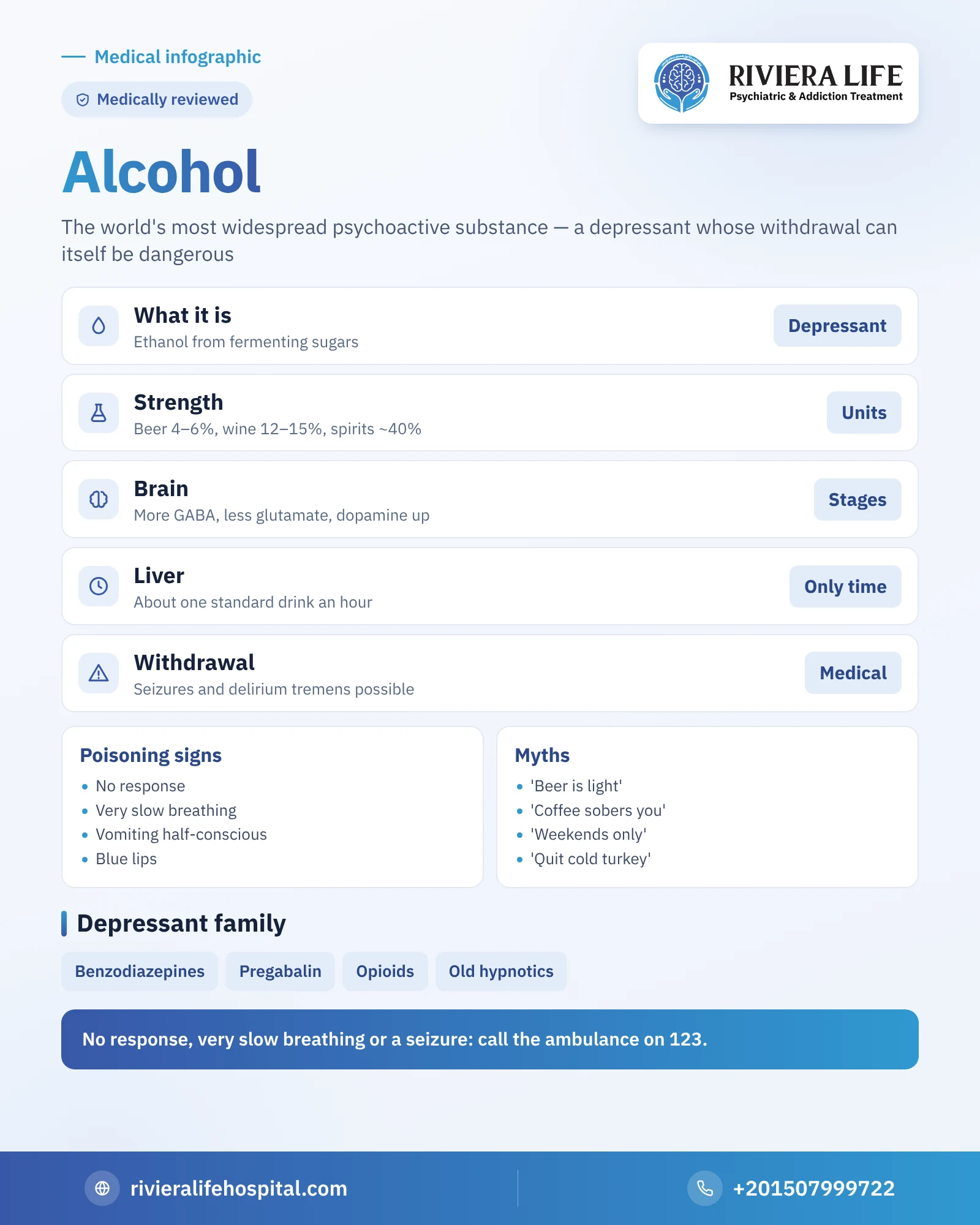
The alcohol found in drinks is scientifically called ethanol, a colorless liquid produced by the fermentation of sugars by yeast. The sugar may come from barley, as in beer, or from grapes, as in wine, or from dates, cane, potatoes and grains, then the alcohol content of some types is raised by distillation. Ethanol is the only kind of alcohol that is drunk; methanol, or wood alcohol, is a toxic substance even in small amounts, and may cause blindness or death if found in adulterated or home-made drinks.
What a person drinks is measured by what doctors call a standard drink, an amount containing a roughly fixed quantity of pure alcohol, ranging between eight and fourteen grams depending on each country’s definition. The important idea here is that a can of beer, a glass of wine and a small shot of whisky may carry roughly the same amount of alcohol, and that the type of drink doesn’t make one of them “lighter” if the amount is equal.
Names of alcohol in circulation in Egypt
Alcohol doesn’t need secret names like drugs do, but Egyptians have their own words for it. People say “el-khamra” or “el-mashroub” (the drink) in general, “beera” for beer, “nebit” for wine in old colloquial speech, and “araqi” for the aniseed-flavored distilled drink. In some working-class areas “bouza” is widespread, a drink fermented from bread or barley whose alcohol content is variable and unknown. The most dangerous thing in circulation is adulterated alcohol or “sberto” (surgical spirit) mixed with juices, because it may contain methanol. The family also hears expressions such as “he drinks” or “he stays out late” meaning drinking, words said lightly that sometimes hide a real problem.
Forms of alcoholic drinks and their alcohol content
Drinks differ greatly in alcohol concentration, and this is what deceives many people when they measure what they drink by the number of glasses:
- Beer: usually about four to six percent, and stronger types may reach double that.
- Wine: roughly between 12 and 15 percent.
- Distilled drinks such as whisky, vodka and araqi: about forty percent or more.
- Home-made and adulterated drinks: unknown concentration, and a risk of methanol contamination.
The only way of taking alcohol is drinking, so most of it is absorbed from the small intestine within minutes and reaches the brain quickly, and the speed of absorption increases if it is drunk on an empty stomach or with fizzy drinks.
What does alcohol do in the brain and body?
Alcohol acts on more than one chemical system in the brain at the same time. It strengthens the effect of a calming neurotransmitter called “GABA”, and weakens the effect of an excitatory transmitter called “glutamate”, so the brain calms and slows. At the same time it raises dopamine in the reward circuit, which explains the feeling of elation in the first glasses. That is why the drinker passes through successive stages as the alcohol concentration in their blood rises:
- Relaxation, talkativeness and a decline in shyness.
- Slow reactions, and weakened judgment and assessment of situations.
- Staggering, stammering and mood swings that may reach aggression.
- Vomiting, confusion and loss of memory of what happened while drinking.
- Respiratory depression, low temperature and loss of consciousness, which is the stage of alcohol poisoning.
The liver breaks down most of the alcohol, and it works at an almost fixed speed, equal on average to one standard drink an hour. Neither coffee nor a cold shower speeds it up. With repeated drinking the brain adapts: it reduces calming receptors and raises the activity of excitatory systems to offset the effect of alcohol. This adaptation is the origin of tolerance, and it is also the reason stopping suddenly is dangerous, because the brain remains in a state of excess excitation when alcohol is absent.
Does alcohol have a medical use?
There is no medical use for alcoholic drinks themselves, and doctors don’t advise drinking for health. The idea used to be widespread that a daily glass protects the heart, but recent reviews and the World Health Organization confirm that there is no amount considered completely safe in terms of cancer risk. Ethanol as a chemical has medical uses outside drinking, the best known being sterilization in disinfectants, and it was sometimes used inside hospitals to treat methanol poisoning under close monitoring, a use that has nothing to do with drinking and doesn’t justify it.
Why is alcohol dangerous even though it is a legal drink?
The legal description doesn’t reflect the medical size of the problem. Alcohol brings together several causes of danger in a single substance:
- Dangerous withdrawal: stopping suddenly after heavy daily drinking may cause seizures or delirium tremens, among the few withdrawal states that may be fatal.
- Harms that touch almost every organ: the liver, pancreas, heart, brain, nerves and stomach, and it is classified as a carcinogen.
- Accidents and violence: it is linked to a large proportion of road accidents, injuries and fights.
- Social acceptance: because it is accepted in some circles, admitting the problem is delayed for years.
- Deadly mixing: combining it with tramadol, pregabalin or sedatives multiplies respiratory depression.
The World Health Organization estimates that alcohol is linked to about three million deaths a year around the world, a figure that places it among the largest preventable causes of death.
Alcohol within the depressant family
Alcohol belongs to the nervous-system depressant substances, the same family that includes benzodiazepines such as Xanax and the old hypnotics. These substances share the calming mechanism via the GABA system, which is why what is called cross-tolerance occurs between them, their dangerous withdrawal symptoms are similar, and doctors use some of them under supervision to treat alcohol withdrawal. This similarity has a dark side: mixing alcohol with any other depressant substance combines their effect on the breathing center. One of the most common forms of mixing in Egypt is combining it with pregabalin, to which we have dedicated the article on pregabalin and alcohol.
Alcohol and the law in Egypt
Selling alcoholic drinks in Egypt is permitted with a license and in specific places, and local laws regulate its circulation and ban its sale to minors. But the law punishes driving under the influence of alcohol, and breaching public decency while drunk, and it also criminalizes manufacturing or selling adulterated drinks. Seeking treatment for alcohol addiction carries no accountability, as it is a medical condition whose owner is treated confidentially. The Fund for Drug Control and Treatment of Addiction provides a free hotline on 16023 for advice.
Types of alcoholic drinks: what is the difference between fermented and distilled?
Alcoholic drinks are divided into two categories according to the method of making them, and the difference between them explains much of the misunderstanding about “light” and “strong”.
- Fermented: produced by the fermentation of fruit or grain sugar by yeast, including beer and wine. Their concentration is relatively low because yeast stops working at a certain limit.
- Distilled: reprocessed by distillation to raise the concentration, including whisky, vodka, gin, rum, brandy and araqi.
The common misconception is that beer has a lighter effect. The truth is that what counts is the amount of pure alcohol, not the name of the drink, so a large can of beer may carry the equivalent of a small glass of a distilled drink. That is why consumption is counted in units, not glasses.
Added to these types are cocktails, which hide the taste with juices and so tempt people to drink more, and home-made drinks whose concentration or purity is impossible to know. There is no way at home to detect methanol contamination, and its symptoms are delayed for hours, then strike the eyes and nerves.
No category of them reduces the risk of addiction or liver damage if the amount increases. You can read about their effects on the body in the harms of alcohol, and the danger signs of excess in the symptoms of drunkenness and alcohol poisoning.
The alcohol guide: each aspect in a separate article
Looking for a specific answer about alcohol? Choose the article that suits your situation, as each one details a particular question:
- Alcohol addiction symptoms: the signs the family notices in the body, behavior and mood, and when drinking becomes addiction.
- Alcohol withdrawal symptoms: the timeline after the last glass, seizures, delirium tremens and emergency signs.
- Alcohol addiction treatment: the stages of treatment, the medicines the doctor decides on, relapse prevention and choosing a hospital.
- Quitting alcohol: a practical guide to the journey of stopping, from the first decision to the first months of recovery.
- Causes of alcohol addiction: genetics, psychological pressures and environment, and why some drinkers become addicted and not others.
- The harms of alcohol: what befalls the liver, heart, brain, stomach and family life in the short and long term.
- How long alcohol stays in the body: detection windows in breath, blood, urine and hair, and what affects the result.
- Alcohol and sex: its effect on desire, erection, hormones and fertility, and what returns after stopping.
Common myths about alcohol
The myth: beer is light and doesn’t cause addiction. The truth is that the alcohol in beer is the same alcohol as in whisky; the difference is only in concentration, and someone who drinks several cans a day may reach severe dependence.
The myth: coffee or a cold shower gets rid of drunkenness. The truth is that they may make the person seem more alert, but the alcohol concentration in the blood only falls with the passing of time.
The myth: someone who drinks only at weekends isn’t an addict. The truth is that heavy drinking in a single session is a separate harmful pattern that raises the risk of accidents and poisoning, and may hide a loss of control.
The myth: stopping suddenly is the bravest way to treat it. The truth is that stopping suddenly after heavy daily drinking may cause seizures or delirium, and safety requires a medical assessment beforehand.
Where does the family start?
If you are reading this page because you are worried about a father, husband or son who drinks, start with what you have seen, not with what you fear: how often he drinks, whether he hides the bottles, and whether his work has been affected or his mood changes in the morning. Choose a time to talk when he is completely sober, not while he is drunk and not the morning after when he is exhausted. Talk about the effect of drinking on the home and his health, and avoid insults and comparisons. And never encourage him to stop suddenly on his own if he drinks large amounts every day; instead ask for a medical assessment for him first. Then read the article on alcohol addiction symptoms to know where the case stands.
Signs of alcohol poisoning
Call the ambulance on 123 immediately if you notice
Alcohol poisoning may stop breathing, and it isn't enough to leave the person to sleep until they come round.
- No response to being called, or difficulty waking them
- Very slow or irregular breathing with pauses
- Vomiting while barely conscious
- Seizures
- Cold, pale skin or bluish lips
- Disturbed vision or severe abdominal pain after drinking a drink of unknown origin
Until the ambulance arrives, don’t leave them alone, and if they are unconscious and breathing, put them on their side so they don’t inhale vomit. Don’t give them coffee, don’t force them to vomit, and don’t put them under cold water. And if they have been drinking along with sedative or painkiller pills, tell the paramedics.
Do you drink more than you think? The alcohol addiction test answers this question in ten questions with an instant, confidential result.
When should you ask for help?
Ask for a medical assessment if the person has tried to cut down and couldn’t, or if tremor, sweating or anxiety appear in the morning that calm with drinking, or if drinking has started to cost them their work, health or family. An early assessment determines whether withdrawal needs admission under supervision or whether outpatient follow-up can begin. At Riviera Life, a team of consultants in psychiatry and addiction treatment carries out this assessment in complete confidentiality, and the first consultation is free.
Medical sources and referencesThe information in this article is based on reliable scientific sources