Before a decisive exam or in a moment of sharp disagreement, a hormone rises in your blood that prepares your body for confrontation: cortisol. This hormone is not an enemy, as its popular name “the stress hormone” suggests; it is essential to life itself, regulating sugar, blood pressure, inflammation and the sleep-wake cycle. The problem begins when it stays high for long periods, or drops sharply because of a disease of the adrenal gland. On this page you will find a clear explanation of what cortisol does, how it is affected by stress and addiction, and when the matter needs a doctor, with links to detailed articles on each aspect.
What is cortisol?
Cortisol is a steroid hormone from a group called “glucocorticoids”, not a neurotransmitter like dopamine or GABA. The difference matters: a neurotransmitter works in the narrow space between two nerve cells within fractions of a second, while a hormone is released into the blood and reaches almost all the body’s organs, its effect lasting minutes and hours.
Cortisol is made from cholesterol in the outer layer of the two adrenal glands, small glands sitting above the kidneys. Because it dissolves in fat, it crosses cell membranes easily, then binds to a special receptor inside the cell called the glucocorticoid receptor. This combination moves into the cell nucleus, where it raises the activity of some genes and lowers the activity of others. For this reason cortisol’s effect is wide and relatively slow; it doesn’t press a single button but resets the way the cell works.
Where does the order to release it come from? The hypothalamic-pituitary-adrenal axis
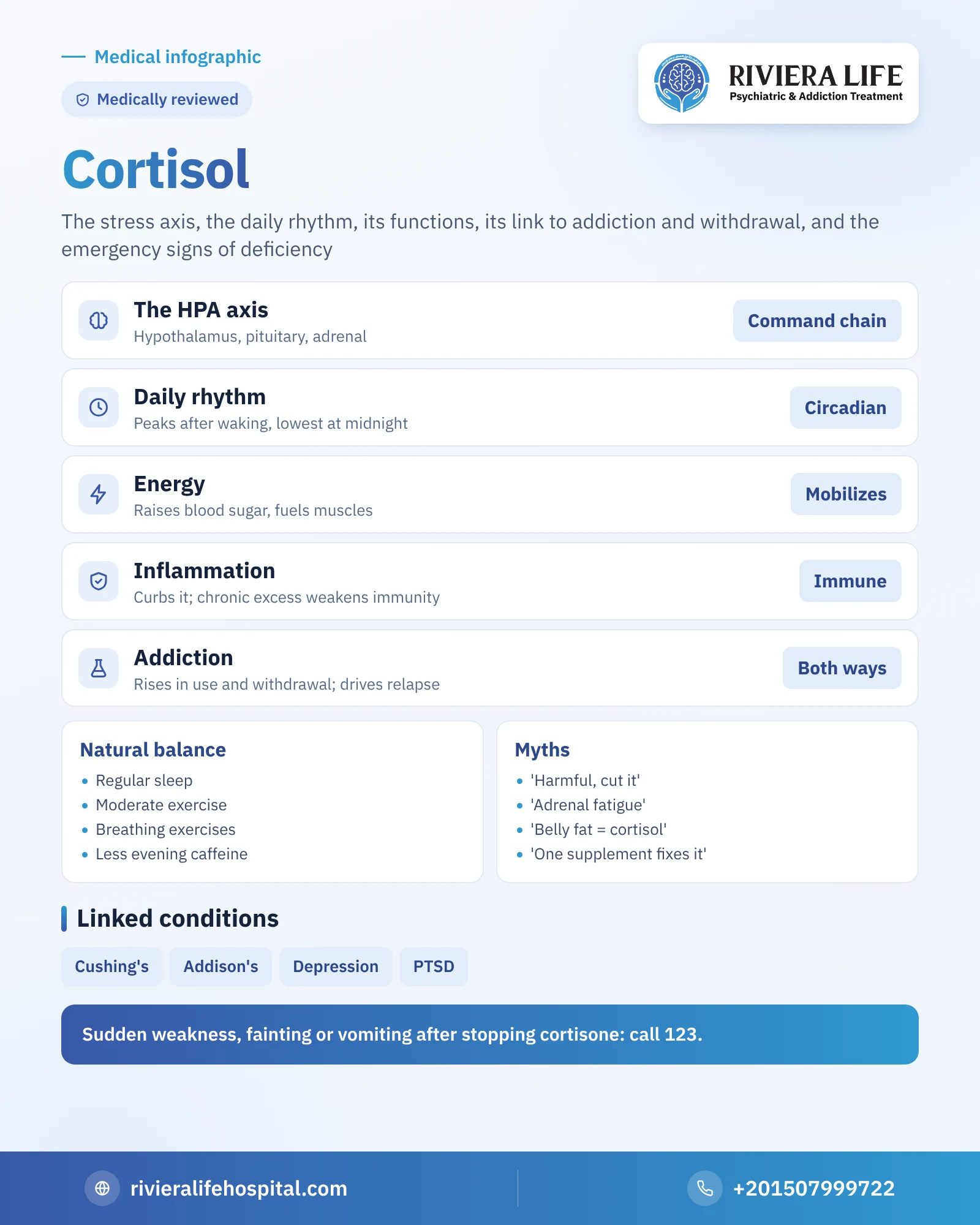
The adrenal gland does not release cortisol on its own. The decision begins in the brain, in a small area called the hypothalamus. When the brain detects a threat or exertion, the hypothalamus sends a chemical signal to the pituitary gland, which releases a stimulating hormone that travels through the blood to the adrenal gland and orders it to release cortisol. Doctors call this chain “the hypothalamic-pituitary-adrenal axis”.
The axis has its own brakes: when cortisol rises in the blood it reaches the brain and asks it to ease the signal, so release gradually decreases. This feedback is what makes an ordinary bout of stress end after its cause is gone. In chronic stress or addiction these brakes may weaken, so the axis stays switched on almost permanently.
A fixed daily rhythm
Cortisol follows the body’s biological clock. It usually reaches its highest levels in the early morning, shortly after waking, helping you get up and focus. Then it falls gradually during the day, reaching its lowest levels around midnight, making room for the night hormone melatonin. That is why the doctor cares about the timing of the test, and also why late nights and night work disrupt this rhythm, so the person feels exhausted in the morning and alert at night.
The functions of cortisol in the body
Some say cortisol “raises everything”; it is more accurate to say it redistributes the body’s resources when needed. Among its most important roles:
- Energy and sugar: it raises blood sugar by stimulating the liver to produce it, and provides fuel for the muscles and brain during exertion.
- Heart and vessels: it helps maintain blood pressure and increases the vessels’ response to hormones such as adrenaline.
- Immunity and inflammation: it curbs excessive inflammation, which is why cortisone medicines are used to treat allergies and rheumatism, but its chronic elevation weakens immunity.
- Brain and mood: it affects attention and memory, especially memory of frightening situations, as well as mood and sleep.
- Digestion and appetite: it changes appetite and increases the desire for foods rich in sugar and fat when it stays high.
- Bones and reproduction: its long elevation weakens bone building, and may disrupt the menstrual cycle and sexual desire.
Cortisol, mood and sleep
A short dose of cortisol makes you more alert and ready. But its elevation persisting for weeks and months is linked to anxiety, irritability and difficulty sleeping, and disruption of the stress axis has been observed in a proportion of patients with depression, while in some people with post-traumatic stress disorder the axis sometimes seems disrupted in the opposite direction, which reminds us that the relationship is not “always high” but a loss of balance. This does not mean that cortisol alone causes these disorders, but it is part of a network that includes noradrenaline, serotonin and the brain’s fear circuits.
High and low cortisol in brief
There is a big difference between a functional rise that accompanies chronic stress and lack of sleep, and real disease. Cushing’s syndrome is a condition in which cortisol rises pathologically, and its most common cause is the use of cortisone medicines for long periods, followed by tumors in the pituitary or adrenal gland. Its signs include weight gain in the face and abdomen with thin limbs, wide purple skin streaks, easy bruising, and raised blood pressure and sugar. The details, and the difference between stress and disease, are in the article Symptoms of high cortisol.
On the other side, adrenal insufficiency occurs when the gland does not produce enough cortisol, including Addison’s disease. Its signs appear as severe exhaustion, weight loss, dizziness on standing and nausea, and the skin may darken in some cases. The most dangerous aspect is the “adrenal crisis”, an emergency that needs immediate treatment. Confirmed insufficiency is treated with hormone replacement determined by an endocrinologist, who teaches the patient how to adjust it during illness; it is a treatment that usually continues for life and is not stopped on one’s own. A similar insufficiency sometimes occurs when cortisone medicines are stopped suddenly after long use, because the gland will have “gone to sleep” and come to rely on the medicine.
How is cortisol measured?
A random blood test is not enough to assess cortisol, because its level changes throughout the day. The endocrinologist chooses the test according to the question being asked:
- A morning blood test: usually useful in looking for cortisol deficiency.
- A late-night saliva test: measures free cortisol at the time it should be low, and is used to look for a pathological rise.
- A 24-hour urine test: gives a picture of total release over a full day.
- Suppression or stimulation tests: a specific medicine is given, then cortisol is measured to see whether the axis responds normally.
It is not advisable to do these tests on your own initiative and then interpret them from the internet; the result is affected by medicines, contraceptives, sleep and stress on the day of the test, and it needs a doctor to read it in context.
Cortisol and addiction: a two-way relationship
Many drugs activate the stress axis directly or indirectly. The dose itself may raise cortisol, then withdrawal comes to raise it again strongly, especially with alcohol, opioids and stimulants. With repetition the axis loses its flexibility: the person becomes more sensitive to stress and less able to calm themselves, so substance use turns into a way of silencing a stress that the substance use itself created.
In the other direction, acute and chronic stress increase the urgent craving to use, and they are among the best-known triggers of relapse after a period of abstinence. Stress is also linked to the reward system driven by dopamine, as the article Dopamine and addiction explains. In some patients with alcohol addiction, a rise in cortisol has been observed whose signs may resemble Cushing’s syndrome, and it usually improves after stopping for long enough.
When does cortisol return to normal after stopping substance use?
There is no fixed period. It depends on the type of substance, the duration and intensity of use, general health, and the quality of sleep and support after stopping. The response improves in many people within weeks to months, while some remain more sensitive to stress for longer. That is why good rehabilitation programs care about teaching stress-management skills, regulating sleep and physical activity, not only withdrawing the substance. Those who need actual hormonal follow-up, such as people who used cortisone medicines for a long time, are followed by an endocrinologist.
The role of cortisol during detox and rehabilitation
The first days after stopping are the most stressful stage for the stress axis; the insomnia, anxiety and irritability of withdrawal are not weakness of will, but partly a reflection of this axis’s activity along with adrenaline and noradrenaline. That is why, in the detox stage, the doctor focuses on calming the body with medicines suited to each substance under direct supervision, and on regulating sleep, fluids and nutrition, not on endurance alone.
Then comes the rehabilitation stage, to build what therapists call “resilience to stress”: cognitive behavioral therapy, regular physical activity, a fixed daily schedule, and training in facing triggering situations. Here cortisol meets dopamine: stress makes the brain more attentive to drug cues, and quick reward becomes more tempting when the axis is on alert.
How can you support cortisol balance naturally?
The strongest evidence is not in supplements but in daily habits: enough regular sleep, moderate physical activity on most days of the week, breathing and relaxation exercises, supportive relationships, less caffeine in the evening, and staying away from alcohol and nicotine. As for popular herbs such as ashwagandha, their results are based on small studies and they may have side effects and interactions, so they should not be taken without consulting a doctor. The practical steps in detail are in the article How to lower cortisol.
Medicines that affect cortisol
What raises cortisol in the body most is not stress but cortisone medicines themselves, whether tablets or injections, and to a lesser degree some types of strong inhalers and creams if used for a long time. In Egypt, cortisone injections are widely used without supervision to gain weight, open the appetite or relieve pain, which may end in Cushing’s syndrome or in adrenal insufficiency when stopped. Some epilepsy medicines, hormonal contraceptives and others also affect cortisol. The rule: don’t start cortisone medicines or stop them suddenly without a doctor.
Common myths about cortisol
Myth: cortisol is a harmful hormone that must be lowered by any means. The truth is that it is essential to life, its severe deficiency is dangerous, and what is needed is balance, not elimination.
Myth: constant exhaustion is caused by “adrenal fatigue”. The truth is that this term, widespread online, is not a recognized medical diagnosis, and that persistent tiredness has many causes that deserve a real examination, including anemia, thyroid problems, depression and sleep disorders.
Myth: belly fat is evidence of high cortisol. The truth is that most cases of weight gain have other causes, and that Cushing’s syndrome is rare and has clearer signs that the doctor knows.
Myth: a single supplement regulates cortisol. The truth is that the supplements marketed for this purpose do not have strong evidence, and some may interact with other medicines.
The cortisol guide: each aspect in its own article
We have devoted separate articles to the most searched questions about cortisol:
- Symptoms of high cortisol: the difference between the effect of stress and Cushing’s syndrome, and the signs that call for a visit to an endocrinologist.
- How to lower cortisol: sleep, movement, breathing, food and the place of supplements, with a special application to the stage of recovery from addiction.
- Adrenaline and anxiety: the fast face of the stress response, and how it differs from cortisol.
- Noradrenaline and psychological stress: the role of the neurotransmitter that ignites the state of alert in the brain.
When does it become an emergency?
Acute cortisol deficiency can threaten life, especially in people with Addison’s disease, those who suddenly stopped cortisone medicines after long use, or those who developed a severe infection while dependent on these medicines.
Call the ambulance on 123 immediately if you see
Especially in someone who has used cortisone for a long time or stopped it suddenly, or who is diagnosed with adrenal insufficiency:
- Sudden severe weakness or inability to stand
- Severe dizziness or fainting with low blood pressure
- Repeated vomiting or severe abdominal pain
- Confusion, disorientation or unusual drowsiness
- A high temperature with rapid deterioration in general condition
When should you see a doctor?
See a doctor if you notice rapid, unexplained weight gain in the face and abdomen with purple streaks or easy bruising, a new rise in blood pressure or sugar at a young age, or severe exhaustion with weight loss and dizziness. And if stress itself is what is draining you, or anxiety and insomnia have become a fixed part of your day, or you have started turning to sedatives or substances to calm down, psychiatry is the right place. At Riviera Life, consultant psychiatrists and addiction specialists assess the effect of stress and substance use on your life in complete confidentiality, and the first consultation is free on +201507999722.
Medical sources and referencesThe information in this article is based on reliable scientific sources
1StatPearls — Physiology, cortisolncbi.nlm.nih.gov2MedlinePlus — Cortisol test: when it is ordered and how it is readmedlineplus.gov3MedlinePlus — Cushing's syndrome (excess cortisol)medlineplus.gov4NHS — Addison's disease and adrenal insufficiencynhs.uk5MedlinePlus — Stress and its effect on healthmedlineplus.gov