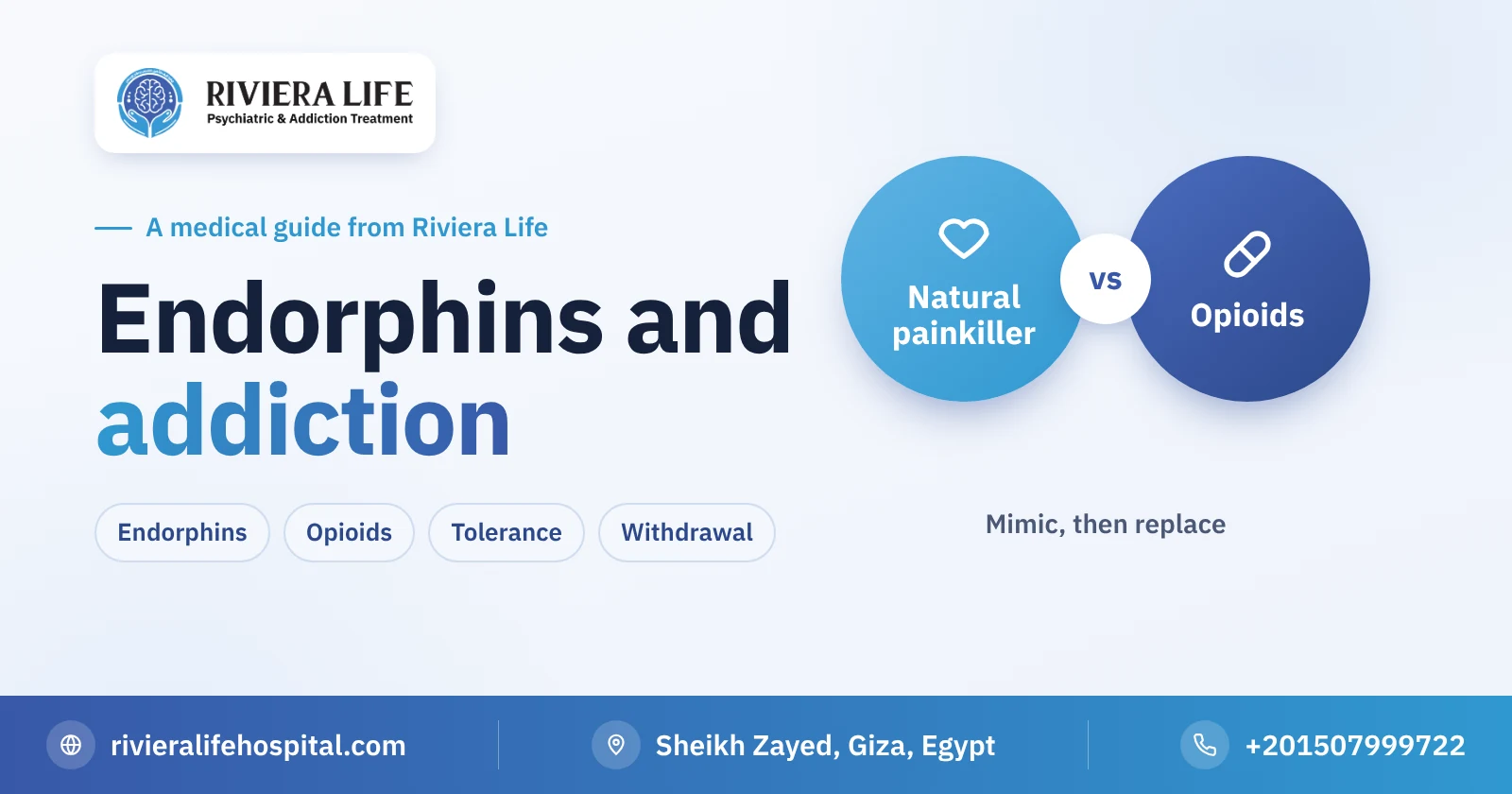
The relationship between endorphins and addiction is one of mimicry and then replacement. Opioid drugs such as heroin, morphine and tramadol act on the same receptors as endorphins, but they do so with a strength the body never reaches, so the brain gradually lowers its natural production and sensitivity. When the user stops, they find their internal system weak, so the pains, anxiety and depression appear that push them to go back. This article explains this cycle step by step, whether the endorphin rush itself can be addictive, and how the brain regains its balance in treatment.
Endorphins and addiction: where do endorphins sit in the reward system?
In the brain there is a circuit responsible for teaching us what is worth repeating: food when we are hungry, warmth when we are cold, and closeness to others. In this circuit dopamine leads the feeling of “wanting” and striving, while the internal opioids, including endorphins, take part in the feeling of “enjoyment” and satisfaction after getting the thing. Endorphins raise dopamine release in the reward centers indirectly, by easing the inhibition of some cells that normally hold it back. That is why any substance that floods the opioid receptors strikes the circuit from two sides: direct pleasure, and a dopamine boost that teaches the brain to seek it again. The wider picture of this circuit is in the article on dopamine and addiction.
How do opioids mimic endorphins?
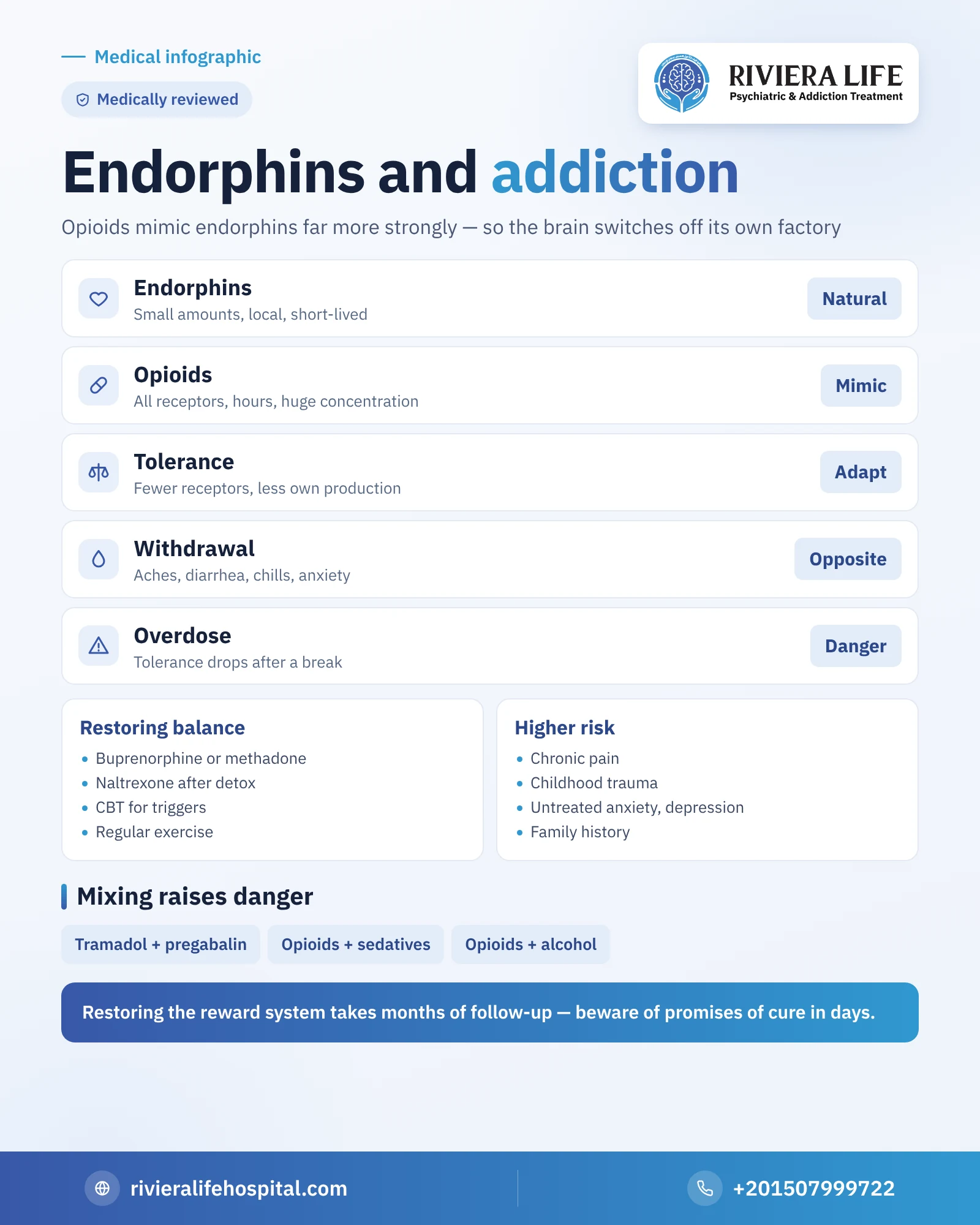
Natural endorphins are released in small amounts, in a specific place, for a short time, then enzymes break them down quickly. Opioids, by contrast, reach all the receptors in the brain and body together, stay for hours, and at a concentration far higher than what the body makes. This difference is the secret of the euphoria, and also the secret of the danger:
- The receptors in the brainstem responsible for breathing are also affected, so breathing slows and may stop with large doses.
- The receptors in the intestines are affected, causing severe constipation.
- The reward centers receive a signal stronger than any natural pleasure, so daily life seems dull by comparison.
Heroin, morphine and medicinal opioid painkillers work in the same way, and the difference between them is in speed, strength and duration of effect, as the opioids page explains.
Tolerance and dependence: the brain switches off its factory
The brain is an organ that seeks balance. When it receives huge amounts of an endorphin-like substance daily, it responds with two steps: it reduces the number or sensitivity of available receptors, and it reduces its own production of internal opioids. The first result is tolerance, meaning the same dose is no longer enough. The second result is physical dependence, meaning the body now works “normally” only in the presence of the substance. A young man who started with a tramadol tablet to endure long working hours finds after months that he needs several tablets to reach the feeling one tablet used to give him, and that he aches and sweats if he is late for his dose.
Why is withdrawal so painful?
On sudden stopping, the external substance disappears, while the internal factory is still switched off and the receptors are of low sensitivity. The body is left almost without a natural painkiller, so a picture opposite to the effect of opium appears: pain in the bones and muscles, diarrhea instead of constipation, runny nose and tears, chills, insomnia, anxiety and irritability. Added to that is overactivity in the brain’s alarm centers that the opioids had been suppressing. Then comes a longer and less obvious stage: distress, low mood and loss of pleasure that may last weeks or months, and it is among the most important causes of relapse. The time details are in the article on opioid withdrawal symptoms.
Can the endorphin rush itself be addictive?
It is often said that some people are “addicted to endorphins” through excessive exercise or dangerous adventures. More accurately, there are compulsive behaviors in which the whole reward system takes part, including endorphins, without them alone being the cause. Some athletes continue training despite injuries, and feel distress and tension if they stop, and researchers sometimes call this “exercise dependence”, though it isn’t an independent official diagnosis.
Likewise, some people who harm themselves describe temporary relief after the harm, and researchers believe internal opioids may take part in this. This last situation needs a specialized and urgent psychological assessment, not just a chemical explanation. As for recognized behavioral addiction, such as gambling, it is driven by the reward system with all its components.
Mixing substances: why does it increase the danger?
In Egypt it is common to mix tramadol with pregabalin, or opioids with sedatives and hashish, in search of a stronger effect or to ease the effects of one substance with another. From the endorphin angle, each substance adds a burden on the reward system, and some of these combinations depress breathing to a multiplied degree. Withdrawal from a mixture of substances is also harder and longer than withdrawal from a single substance, and needs a medical plan that knows exactly what the patient was using.
Who is most at risk?
Research indicates that the internal opioid system differs from person to person, and that this difference may change the way one responds to the first dose. Some people describe the first dose as “the first time I felt at ease”, and these may be more at risk. The risk also rises with chronic pain, psychological trauma in childhood, untreated anxiety and depression, and a family history of addiction. This doesn’t mean inevitability, but it means that someone carrying these factors needs greater caution with any opioid painkiller, and strict adherence to the prescription.
The role of endorphins during detox
In the first days after stopping, the internal system isn’t able to perform its role, which is why the patient isn’t left to face withdrawal alone. The medical team uses medicines that ease the symptoms and make the stage safe, and the doctor may choose a gradual withdrawal with a long-acting opioid medicine such as buprenorphine or methadone, giving the brain time to readjust its receptors. As the weeks pass, natural production begins to recover gradually, so mood improves and pain decreases, and the ability to sleep and enjoy improves. This improvement is slow and differs from person to person, and knowing it in advance prevents despair in the difficult weeks.
How does treatment restore the balance of the internal system?
There is no medicine that returns endorphins to their level at the push of a button, but the integrated treatment plan works on this from several sides:
- Supporting medication: buprenorphine and methadone for stabilization when needed, or naltrexone, which blocks the opioid receptors to reduce the effect of any dose and help prevent relapse, all by the doctor’s decision.
- Cognitive behavioral therapy: helps the patient understand their triggers and deal with intense craving without a substance.
- Regular physical activity: among the safest means of activating the internal system, and it is introduced gradually into the program.
- Rebuilding natural sources of pleasure: relationships, work and hobbies, because the brain needs real alternatives.
- Support groups and follow-up after discharge: reduce the isolation that feeds relapse.
The details of the full treatment program are in the article on opioid addiction treatment.
Overdose: when breathing stops
The most dangerous moment in this cycle is going back after a period of abstinence. Tolerance falls quickly after stopping, while the person thinks they can take the old dose, so it exceeds what the breathing center can tolerate. The danger multiplies when opioids are mixed with sedatives, pregabalin or alcohol.
Call the ambulance on 123 immediately if any of these appear
These are signs of an opioid overdose; don't wait for the person to wake up on their own.
- Very slow or irregular breathing or unusual snoring
- No response to calling or shaking
- Blue lips or fingertips
- Very small, pinpoint pupils
- Cold, clammy skin with complete limpness
Where do you start treatment?
The right start is a medical assessment that determines the type of substance, the duration of use and accompanying illnesses, then decides whether outpatient treatment is enough or the patient needs detox inside a hospital. Hospital is preferred when doses are large, there is mixing with other substances, there have been previous failed attempts to stop at home, or there is accompanying depression and suicidal thoughts. And beware of any place that promises you a guaranteed cure in a few days; restoring the balance of the reward system needs months of follow-up.
How Riviera Life meets these standards in opioid addiction treatment
Riviera Life is a hospital licensed by the Ministry of Health, with fourteen years of experience and thousands of recovered cases. The consultants in psychiatry and addiction treatment handle detox under round-the-clock medical supervision, then complete psychological rehabilitation, the family program and follow-up after discharge, in complete confidentiality. The first consultation is free via +201507999722 in Sheikh Zayed, Giza.
More from the endorphins guide
- Endorphins: the comprehensive guide
- How to increase endorphins naturally
- Dopamine and addiction
- Opioids: the comprehensive guide
- Exercise addiction: when does training become a harmful attachment and how does recovery begin?
Questions many people ask
Natural endorphins are released in small amounts and break down quickly, so they don't cause addiction in the medical sense. The danger comes from substances that mimic them far more powerfully, such as opioids.
This differs from person to person according to the substance and the duration of use, and symptoms of low mood and loss of pleasure may last weeks or months before the system improves gradually with treatment.
Yes, regular exercise is a useful and safe part of rehabilitation programs because it activates natural sources of pleasure and improves sleep and mood, but it doesn't replace medical treatment of withdrawal and dependence.
Naltrexone blocks the opioid receptors, reducing the effect of any dose the patient takes, and the doctor may prescribe it after detox ends as part of an integrated plan.
Look for a Ministry of Health license, detox under round-the-clock medical supervision, psychological rehabilitation, a family program and follow-up. Riviera Life in Sheikh Zayed meets these criteria, with fourteen years of experience.