Someone locks the flat door, then goes back to check it five times; another repeats his ablution until he is late for prayer; and a mother washes her hands until the skin cracks. These are not strange habits or a weakness of character; they may be forms of obsessive-compulsive disorder, a well-known mental disorder with a clear diagnosis and effective treatment. This page gathers what you need to know about it: what it is, how it begins, how it is treated and when seeking help becomes necessary, then leads you to a separate article on each of its aspects.
What is obsessive-compulsive disorder?
Obsessive-compulsive disorder is a mental disorder built on two elements that feed each other. The first is obsessions: thoughts, images or urges that intrude on the mind against the person’s will, which they usually see as illogical or contrary to their values, but which provoke intense anxiety, disgust or a feeling that something is “not in its right place”. The second is compulsions: visible behaviors such as washing, checking and arranging, or silent mental acts such as counting and repeating certain phrases, which the person carries out to relieve that anxiety or to prevent something bad they fear will happen.
The problem is that the relief the compulsion brings is very short. After minutes the thought returns, perhaps stronger, so the act repeats, and the circle widens day after day until it consumes hours of time and a great deal of energy. The fifth edition of the American diagnostic manual and the eleventh edition of the International Classification of Diseases classify OCD in a separate group called “obsessive-compulsive and related disorders”, after it was once included among the anxiety disorders.
Is OCD common?
More than people think. International estimates indicate that about 1 to 3 people in every hundred develop it at some stage of their lives, and it affects men and women at similar rates in adults. It often begins in childhood, adolescence or the early twenties, and may appear for the first time during major transitions such as pregnancy and after childbirth. Even so, many patients wait long years before seeking treatment, either out of shame about the content of their thoughts, or because they think what they are going through is a “temperament”, not an illness.
The forms and types of OCD
There is no single form of OCD, but doctors notice that most cases revolve around recurring themes, and one person may have more than one theme:
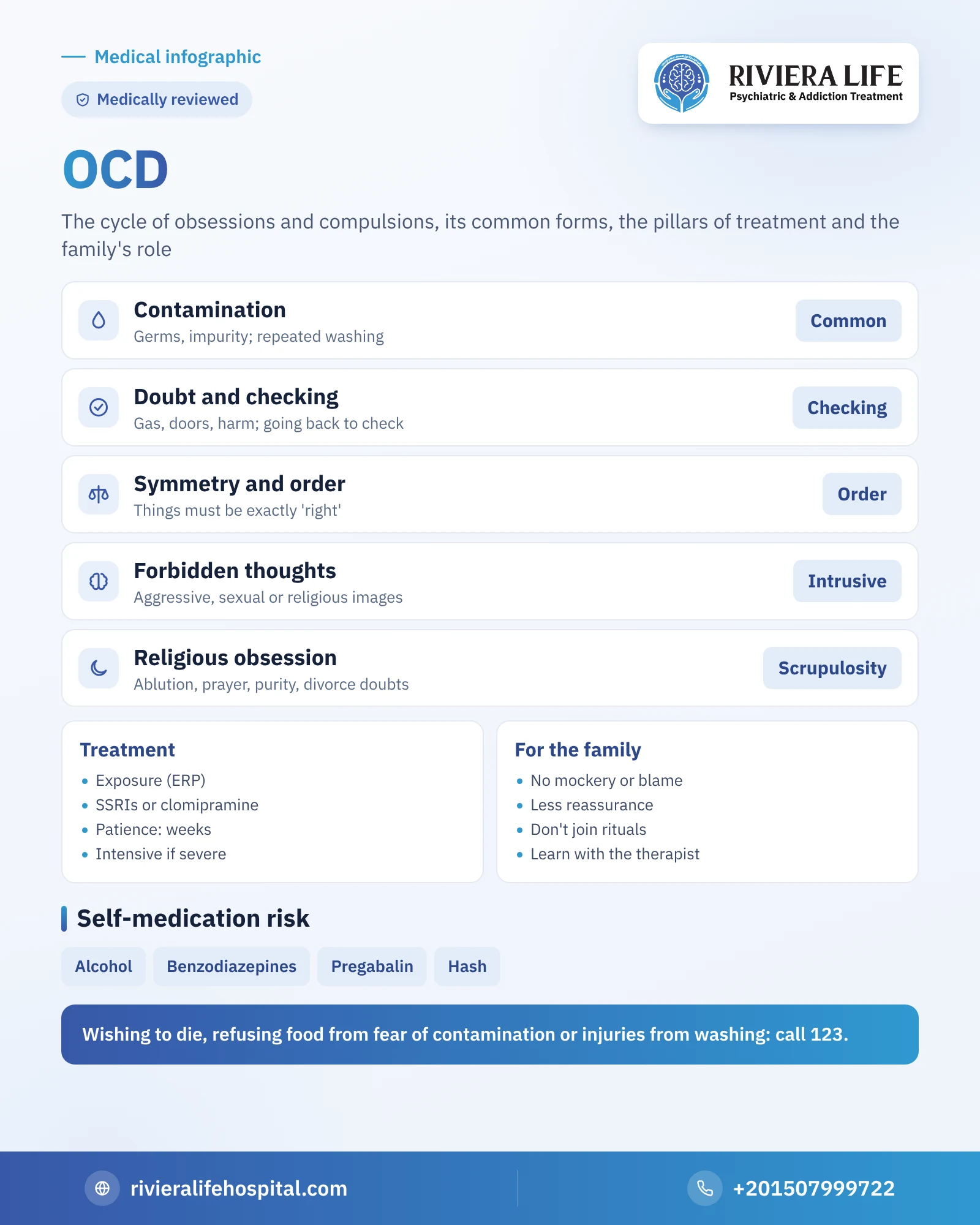
- Contamination and cleanliness: fear of germs, impurity or disease, met with repeated washing and avoiding touching things.
- Doubt and checking: Did I turn off the gas? Did I hit someone with the car? Met with repeatedly going back to make sure and asking others.
- Symmetry and order: an urgent need for things to be equal or arranged in a completely “right” way.
- Forbidden or aggressive thoughts: disturbing images of harming a loved one, or sexual or religious thoughts that the person strongly rejects.
- Religious obsession: constant doubt about the validity of ablution, prayer and purity, or about whether a divorce took place, with repeating acts of worship many times.
When diagnosing, doctors add a description of the degree of “insight”, meaning how far the person realizes that their fears are exaggerated: good or fair, poor, or absent altogether when they become convinced that what they fear is real. They also note whether the patient has a history of tics. Among the disorders close to OCD: body dysmorphic disorder, hoarding disorder, hair pulling and skin picking.
The main symptoms in brief
Three things distinguish OCD from ordinary carefulness: the thoughts intrude on the mind and the person does not choose them; the compulsions take up a great deal of time, usually more than an hour a day; and they cause real distress or disrupt work, study and relationships. Indirect physical signs may also appear, such as dry, cracked hands from frequent washing, or exhaustion and little sleep. You can find a detailed explanation of the mental, behavioral and physical signs, and questions to help you assess what you are going through, in the article Symptoms of OCD.
Why do some people develop OCD?
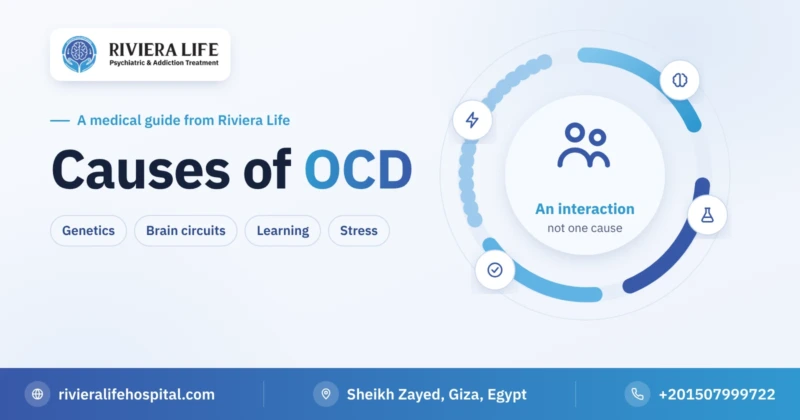
There is no single cause. Research points to an interaction between a genetic predisposition, since the risk is higher among first-degree relatives of people with OCD; differences in how neural circuits work that connect the front of the brain with deeper regions responsible for habits and assessing danger; and a role for serotonin and other neurotransmitters. Added to this is an important psychological factor: each time the compulsion relieves anxiety, the brain learns that the act “worked”, so it asks for it again. Major stress, childbirth or certain infections in childhood may be the spark for its appearance in someone with a predisposition. The details are in the article Causes of OCD.
How is OCD diagnosed?
The diagnosis is made by a psychiatrist or a clinical psychologist, and it does not rely on a blood test or a scan, but on a detailed interview in which the specialist asks about the nature of the thoughts, what the person does to get rid of them, the time lost in this, and its effect on their life. They may use validated scales to measure severity and follow improvement with treatment.
The doctor also takes care to distinguish OCD from conditions that resemble it, such as generalized anxiety, depression in which rumination is common, and psychotic disorders, and makes sure there is no physical or medicine-related cause of the symptoms. Tests circulating online do not replace this assessment; they may reassure someone who needs treatment or frighten someone who does not.
A useful step before the assessment: the OCD self-test measures the time obsessions and compulsions take up and how much they affect your day.
Treatment of OCD: an overview
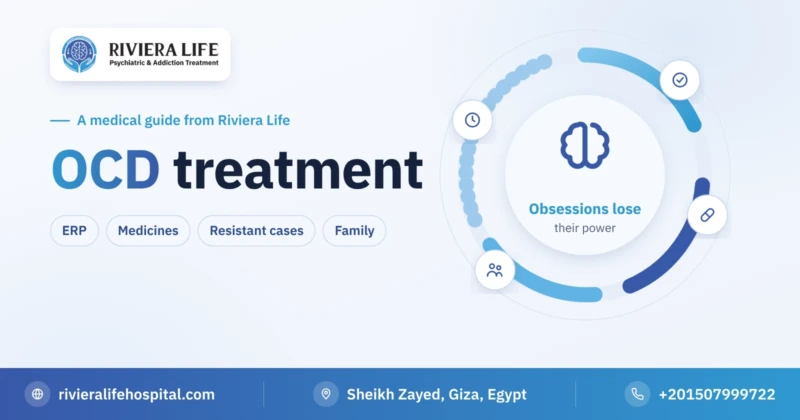
The good news is that OCD is one of the disorders that respond to treatment, and that most patients improve noticeably with regular treatment. The plan usually rests on two pillars:
- Cognitive behavioral therapy using exposure and response prevention: the patient faces, gradually and with the therapist’s help, the situations that trigger their obsessions without performing the compulsion, so the brain learns that anxiety calms down on its own.
- Medicines: the best known are antidepressants from the selective serotonin reuptake inhibitor class, and clomipramine; the doctor determines the type, the dose and the duration.
Treatment needs patience, because the medicine takes several weeks to show its effect, and exposure sessions require commitment. In severe or resistant cases, the patient may need an intensive program or a hospital stay. The full details, and the criteria for choosing a place of treatment, are in the article Treatment of OCD.
OCD and addiction: dual diagnosis
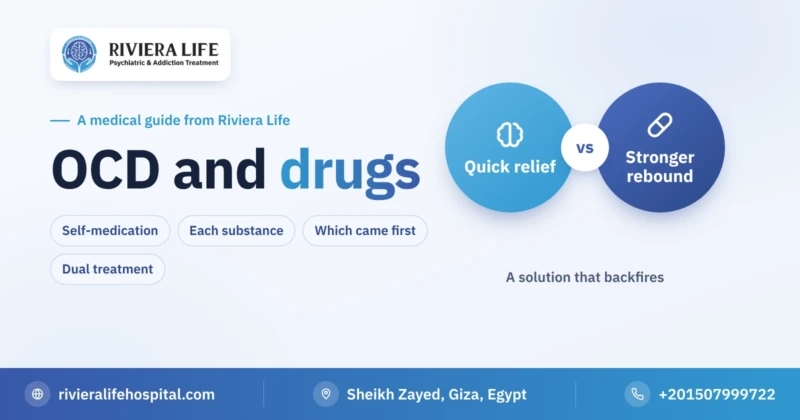
A person with OCD lives with near-constant anxiety, which is why some of them, without realizing the danger, turn to substances that give them temporary calm: alcohol, sedatives from the benzodiazepines class, pregabalin or hash. This calm is paid for later; the substance does not treat the obsession, but adds dependence and withdrawal symptoms that increase anxiety, and may make commitment to treatment sessions harder. When the two disorders occur together, the patient needs one plan that treats them both, in which the team begins by withdrawing the substance safely and then continues treating the OCD, because treating one and leaving the other brings relapse closer.
Living with OCD and the family’s role
Many families take part in the obsession without meaning to: answering the same reassurance question for the twentieth time, washing things the way the patient asks, or rearranging the house so they won’t get angry. Specialists call this “family accommodation”; it comes from love, but it entrenches the obsession instead of weakening it. The most useful role for the family is to learn with the therapist how to reduce this participation gradually, and how to support the patient in facing their anxiety instead of removing it for them. It is also important to pay attention to the effects the disorder leaves on study, work and marriage, which are explained in the article The harms of OCD.
Serotonin and OCD
Serotonin is a neurotransmitter that helps nerve cells exchange messages, and it is involved in regulating mood, sleep and anxiety. Doctors noticed decades ago that medicines that increase its activity at nerve synapses relieve OCD in many patients, so it came to be seen as one of the players in the illness.
But the picture is more complex than the phrase “a serotonin deficiency”. There is no blood test that measures its level in the brain and diagnoses OCD, and research indicates that the illness results from a disturbance in neural circuits connecting planning regions with habit regions, in which serotonin and other neurotransmitters such as dopamine and glutamate take part.
This relationship shows up in practice in treatment:
- Serotonin reuptake inhibitors are the first-line medicine class for OCD, but their effect is delayed, and several weeks may be needed before the patient notices a clear difference.
- OCD may need a longer duration of treatment and a more precise plan than ordinary anxiety, and this is the doctor’s decision, not something the patient adjusts on their own.
- Medicine alone is usually not enough; exposure and response prevention retrains the brain to tolerate anxiety without rituals.
- Stopping the medicine suddenly may cause unpleasant symptoms and a relapse, so stopping is gradual and under the doctor’s supervision.
As for the supplements and herbs marketed to raise serotonin, they may interact with OCD medicines and cause a dangerous condition called serotonin syndrome, so ask the doctor before adding anything. To read more on the causes of the illness, see The causes of OCD and its risk factors, and for treatment options see Treatment of OCD.
Common myths about OCD
Myth: OCD means loving cleanliness and order. The truth is that many patients hate what they do and wish they could stop it, and that the disorder may have nothing to do with cleanliness at all, but with doubt or with aggressive or religious thoughts.
Myth: someone who has the thought of harming their child may act on it. The truth is that the intrusive thoughts in OCD terrify the person because they are the complete opposite of what they want, and they do not mean that the person wants to carry them out.
Myth: obsession is evidence of weak faith. The truth is that it is a disorder rooted in how the brain works, affecting religious and non-religious people alike, and it needs medical and psychological treatment, not blame.
Myth: OCD is a kind of madness. The truth is that most patients realize their thoughts are exaggerated, and this is what distinguishes it from psychosis, as the article OCD and psychosis explains.
The OCD guide: each aspect in its own article
We have devoted a separate article to each question that concerns patients and their families, answering it in depth:
- Symptoms of OCD: the mental, behavioral and physical signs, self-assessment questions, and when you need a doctor.
- Causes of OCD: the role of genetics, the brain, learning and stress, and the risk factors.
- Treatment of OCD: exposure and response prevention, medicine classes, and when the patient needs hospital.
- The harms of OCD: its effect on the mind, the body, work and the family if left untreated.
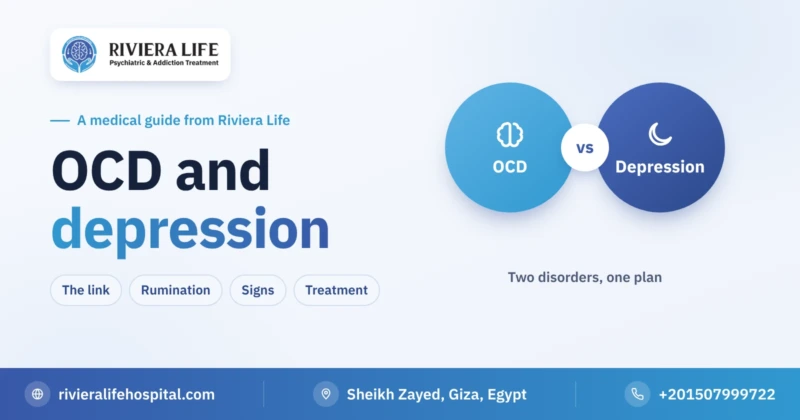
- OCD and depression: why they so often occur together, and how to tell obsession from rumination.
- OCD and panic attacks: the difference between OCD anxiety and a panic attack, and the treatment of each.
- OCD and doubt: when normal doubt turns into pathological doubt, and the difference between it and pathological jealousy.
- OCD and psychosis: the degrees of insight, when the two disorders occur together, and how treatment differs.
- OCD and suicide: the warning signs, how the family should act, and where to seek help immediately.
When does it become an emergency?
Most cases of OCD are treated in the outpatient clinic, but some situations cannot wait, especially when OCD occurs together with severe depression or psychotic symptoms.
Seek urgent help immediately if you see
Call the ambulance on 123 or go to the nearest emergency department, and do not leave the person alone.
- Signs that they want to die or end their life, or that they are a burden on others
- Stopping eating or drinking because of fear of contamination
- Wounds or injuries from excessive washing, scrubbing or compulsions
- Complete conviction in unrealistic ideas, with behavior that may put them or others in danger
- Total inability to leave bed or the house for days
When should you seek help?
Don’t wait for the obsession to “get worse”. If the thoughts or compulsions take up noticeable time in your day, cause you ongoing distress, or have started to affect your work, study or your relationship with your family, this is a good time for an assessment. At Riviera Life, consultant psychiatrists assess the case in complete confidentiality and put together a treatment plan that suits its severity, whether outpatient follow-up or an intensive inpatient program. The first consultation is free via +201507999722.
Medical sources and referencesThe information in this article is based on reliable scientific sources
1NIMH — Obsessive-compulsive disorder: symptoms and treatmentnimh.nih.gov2NHS — Obsessive compulsive disorder: overviewnhs.uk3NICE — Guidance on treating OCD and body dysmorphic disorder (CG31)nice.org.uk4StatPearls — Obsessive-compulsive disorderncbi.nlm.nih.gov5APA — What is obsessive-compulsive disorder and related disorders?psychiatry.org