The short answer
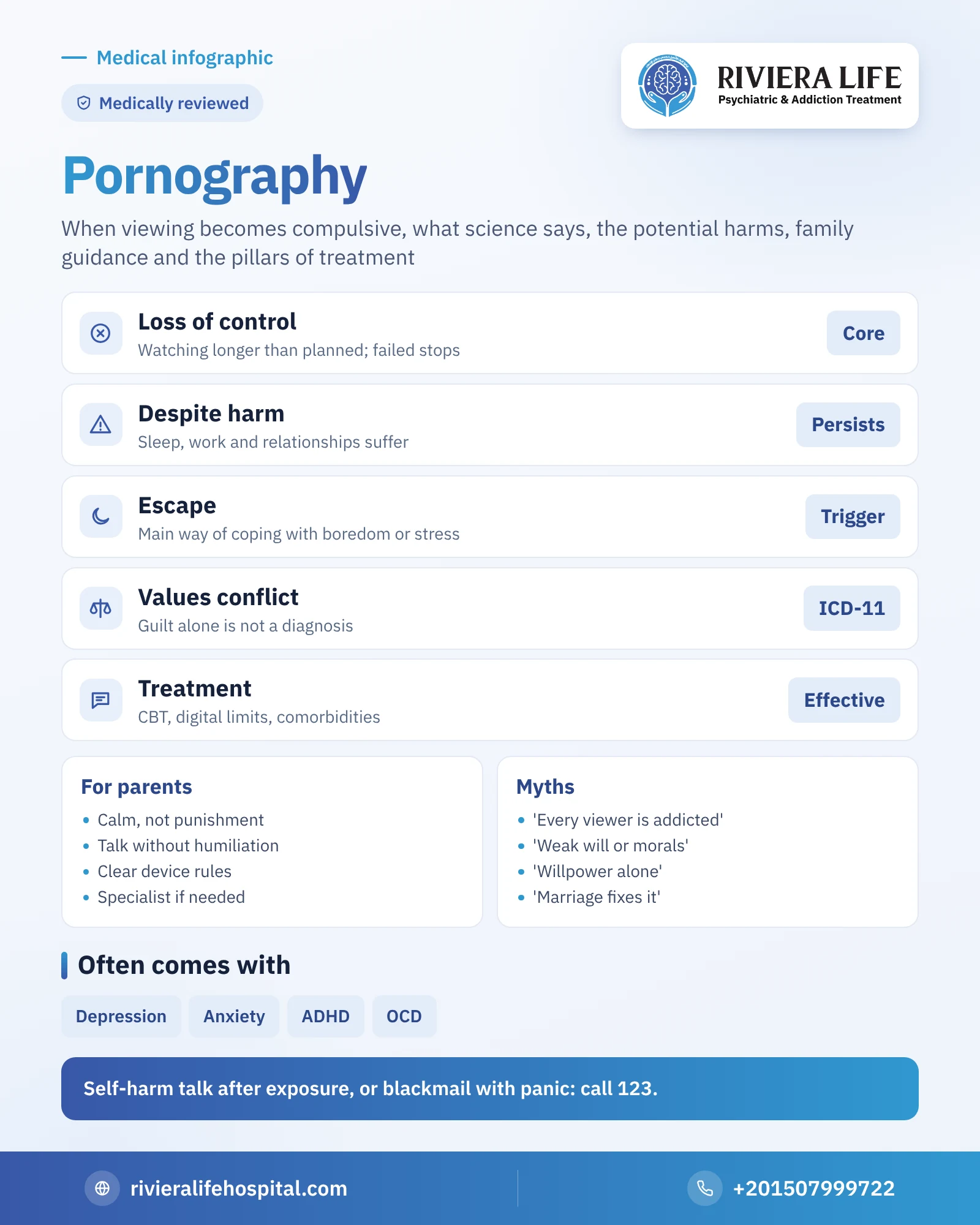
A pornography problem means a repeated pattern of viewing explicit sexual content that the person cannot control despite a sincere wish to stop and despite the harm it brings them. There is no official diagnosis called “porn addiction”, but the International Classification of Diseases includes “compulsive sexual behavior disorder”, which covers compulsive viewing if loss of control continues for months and causes clear distress or impairment. So what counts is loss of control and harm, not how often one watches, and the condition is treated psychologically.
- Closest medical nameCompulsive sexual behavior disorder
- The criterionLoss of control with harm
- TreatmentMainly psychological and behavioral
For many, it starts with a curious click at an early age, then for some it turns into late hours in front of the screen, and repeated promises to stop that don’t last more than days. Viewing pornographic material does not on its own mean there is a disorder, but when a person loses the ability to control it, and it starts consuming their time, sleep, relationships and self-image, it becomes a health problem that deserves understanding and treatment, not blame.
This page explains, in calm medical language, when viewing becomes compulsive behavior, what science says about it and what is still debated, and how the family can help its children, then leads you to a separate article on each aspect.
What is meant by problematic pornography use?
It means a repeated pattern of viewing explicit sexual content online that the person cannot control, despite a sincere wish to cut down or stop, and despite the distress or losses it brings them. What counts here is not the number of times alone; two people who watch the same amount may differ, with one living their life without any notable effect while the other feels it controls their day. Three questions define the problem: Have you lost control? Do you continue despite the harm? Have important areas of your life been disrupted because of it?
In Arabic, people use the expression “porn addiction” to describe this condition, and it is an understandable expression that reflects real suffering, but it helps to know how medical classifications view it before we judge ourselves or others.
Is “porn addiction” an official medical diagnosis?
Not by that name. The fifth edition of the American diagnostic manual includes no standalone diagnosis of porn addiction or sex addiction. The eleventh edition of the International Classification of Diseases, issued by the World Health Organization, however, included a diagnosis called compulsive sexual behavior disorder, and placed it among impulse control disorders, not among addictions. This diagnosis covers different patterns of sexual behavior, including compulsive viewing of pornography, on condition that loss of control lasts a long time, about six months or more, and causes severe distress or clear impairment in life.
The classification points out an important point: distress resulting only from viewing conflicting with the person’s religious or moral values, without a real loss of control, is not enough on its own for a diagnosis. This does not diminish or ignore that distress; it means the therapist deals with it differently. Researchers still disagree about whether it is better to describe the condition as an addiction or as compulsive behavior, and each view has its evidence.
When does viewing become a problem?
There is no number of hours that separates normal from pathological, but there are signs specialists agree on. Among them: viewing becoming almost the only way of dealing with boredom, stress or loneliness; attempts to stop repeating and failing; and sessions lasting longer than the person planned so they steal hours from sleep or work. Added to this are withdrawal from activities and relationships, growing secrecy, and feeling guilt and emptiness after each time. You can find a detailed list of these signs, with questions to help you review yourself, in the article Symptoms of porn addiction.
What happens in the brain? What we know and what we don’t
Sexual content is one of the strongest natural stimuli of the brain’s reward system, the same system that drives us toward food and social connection. What is new about the internet is not the content itself, but easy access, endless variety and the ability to move from one clip to another without stopping. Some imaging studies indicate that people with compulsive viewing show a stronger response to pornography-related cues, similar to what is seen in other types of behavioral addiction.
But the picture is not settled. Many of these studies are small and cannot clearly answer the question of cause and effect: did viewing change the brain, or are people with a certain predisposition more inclined to compulsive viewing? That is why in this guide we avoid frightening phrases about “destroying the brain”, and stick to what is established: repetition strengthens habit, and a strong habit becomes harder to break the more it is used to escape from feelings.
Why do some people fall into this pattern?
There is no single cause. A personal predisposition, such as impulsivity or difficulty regulating emotions, usually comes together with circumstances that increase the need to escape, such as depression, anxiety, loneliness and stress, and with an environment that makes access easy and private at any hour. Starting at a young age and a lack of healthy sex education play a role in shaping the relationship with this content. The details and risk factors are in the article Causes of porn addiction.
The potential harms in brief
What people with this pattern complain about most is not direct physical harm, but accumulated losses: wasted time, disturbed sleep, declining concentration and productivity, isolation, and a constant feeling of guilt or shame. In marriages, a gap in trust and communication may arise, and unrealistic expectations about the body and intimacy may form. Some men link excessive viewing with weak sexual response with a partner, a matter on which the evidence varies but which deserves medical assessment if it appears. Teenagers have a special situation we will come back to. The full explanation is in the article The harms of pornography.
The link with masturbation and sex addiction
These subjects get mixed up in many people’s minds, and distinguishing between them helps treatment. Compulsive viewing is often paired with masturbation, but masturbation in itself does not cause blindness, infertility or hair loss as common myths claim, and its problem, when it becomes compulsive, resembles the problem of pornography: loss of control and what follows. You can read about this in the masturbation guide. And when loss of control widens to include sexual behaviors with others, the closest topic is what the sex addiction guide covers; all of these may fall medically under compulsive sexual behavior disorder.
Treatment: an overview
Problematic pornography use can improve, and the person doesn’t need to wait until they “hit rock bottom”. Treatment is usually based on cognitive behavioral therapy, which helps in understanding triggers and building alternatives, on controlling the digital environment, and on treating what accompanies the condition, such as depression, anxiety, ADHD or OCD. The psychiatrist may decide to use medicine in certain cases, and the decision here is theirs alone. Couples sessions help when the relationship has been affected. The steps in detail are in the article Treatment of porn addiction.
Values and religion: how does the therapist deal with them?
In our society this subject is usually linked to embarrassment and guilt, and many of those who seek help do so because viewing conflicts with their values. A good therapist does not mock these values or impose their own, but respects what the person wants for themselves, and helps them live according to what they believe. At the same time, they distinguish between guilt that drives change and destructive shame that makes a person see themselves as entirely bad, because intense shame pushes many people back to the same behavior to escape its pain.
Teenagers and the family: where to start?
Many children and teenagers are exposed to this content before they are ready to understand it, sometimes by chance through an ad or a link someone sent. What protects them is not monitoring alone, but combining protection tools on devices with a calm conversation in which the son or daughter feels safe to tell what they saw without fear of punishment. Start with general questions, explain that these materials do not represent real relationships, and agree on clear rules for using the phone at night. The harms article has a full section guiding parents step by step.
Common myths
Myth: everyone who watches pornography is addicted. The truth is that loss of control and ongoing harm are the criterion, not merely watching.
Myth: someone with this problem has weak will or bad morals. The truth is that compulsive behavior feeds on psychological and environmental factors, and blame makes it worse rather than treating it.
Myth: stopping suddenly and strength alone are enough. The truth is that many need a plan that addresses triggers and underlying feelings, otherwise they return after days.
Myth: marriage solves the problem automatically. The truth is that compulsive behavior may continue after marriage, and may add tension to the relationship if it isn’t treated.
The pornography guide: each aspect in its own article
We have devoted an article to each question, answering it in depth:
- Symptoms of porn addiction: the behavioral and psychological signs of loss of control, self-review questions, and when to seek an assessment.
- Causes of porn addiction: the psychological, behavioral and environmental factors, and the role of depression, anxiety and loneliness.
- Treatment of porn addiction: cognitive behavioral therapy, trigger control, couples therapy and the doctor’s role, and how to choose a place of treatment.
- The harms of pornography: the effect on the mind, relationships and teenagers, and a practical guide for parents.
When does it become urgent?
This problem is rarely an emergency in itself, but intense shame and despair may lead some people, especially teenagers, to dangerous thoughts, and some may be blackmailed with images or chats.
Seek urgent help immediately if you see
Call the ambulance on 123 or go to the nearest emergency department, and do not leave the person alone.
- Talk of wanting to die, or that they don’t deserve to live because of what they do
- Self-harm, or hinting at it, after the matter is exposed or a sense of scandal
- Blackmail with images or chats, with despair or intense panic
- An acute psychological collapse with inability to eat or sleep for days
When should you seek help?
If you have tried to stop more than once and couldn’t, or viewing has started taking from your sleep, your work and your relationship with your partner, or you have started feeling a distress afterwards that stays with you, this is a good time for an assessment. At Riviera Life, consultant psychiatrists listen to you without judgment and in complete confidentiality, and put together a plan with you that suits your situation and your beliefs. The first consultation is free via +201507999722.
Medical sources and referencesThe information in this article is based on reliable scientific sources
1World Psychiatry — Compulsive sexual behaviour disorder in the ICD-11ncbi.nlm.nih.gov2Mayo Clinic — Compulsive sexual behavior: symptoms and causesmayoclinic.org3Mayo Clinic — Compulsive sexual behavior: diagnosis and treatmentmayoclinic.org4Journal of Behavioral Addictions — Self-perceived addiction to pornography and the role of moral incongruencencbi.nlm.nih.gov5American Academy of Pediatrics — Talking to your child about online pornography exposureaap.org