The short answer
Ecstasy, which many spell “ecstasy” or “extasy”, is the common name for an entirely synthetic substance whose scientific name is methylenedioxymethamphetamine (MDMA). It belongs to the amphetamine family, but combines stimulation with altered sensation and emotions, so doctors classify it between stimulants and hallucinogens. It is usually sold as colored tablets bearing logos, and the logo means nothing about their content. Its most dangerous effects are raised body temperature, low sodium and seizures, and it is a banned substance in Egypt without any approved medical use.
- Scientific nameMDMA
- CategoryBetween stimulants and hallucinogens
- Status in EgyptBanned, with no medical use
Ecstasy reaches many young people in the form of a small colored pill with a cute logo on it, and with it a promise of a night of energy, warmth and music. This innocent image is exactly what makes it deceptive, as the pill itself may carry a substance of unknown concentration or other substances its owner knows nothing about, and the night may end with a dangerous rise in body temperature or a seizure. This page is Riviera Life’s entry point to everything about ecstasy: what it is, what it does to the brain, why it may kill in a single night, and when it turns into addiction, followed by links to detailed articles on each aspect.
Many write it as “ecstasy”, “extasy” or “XTC”, and it is known scientifically as MDMA, and these are all names for a single substance.
What is ecstasy?
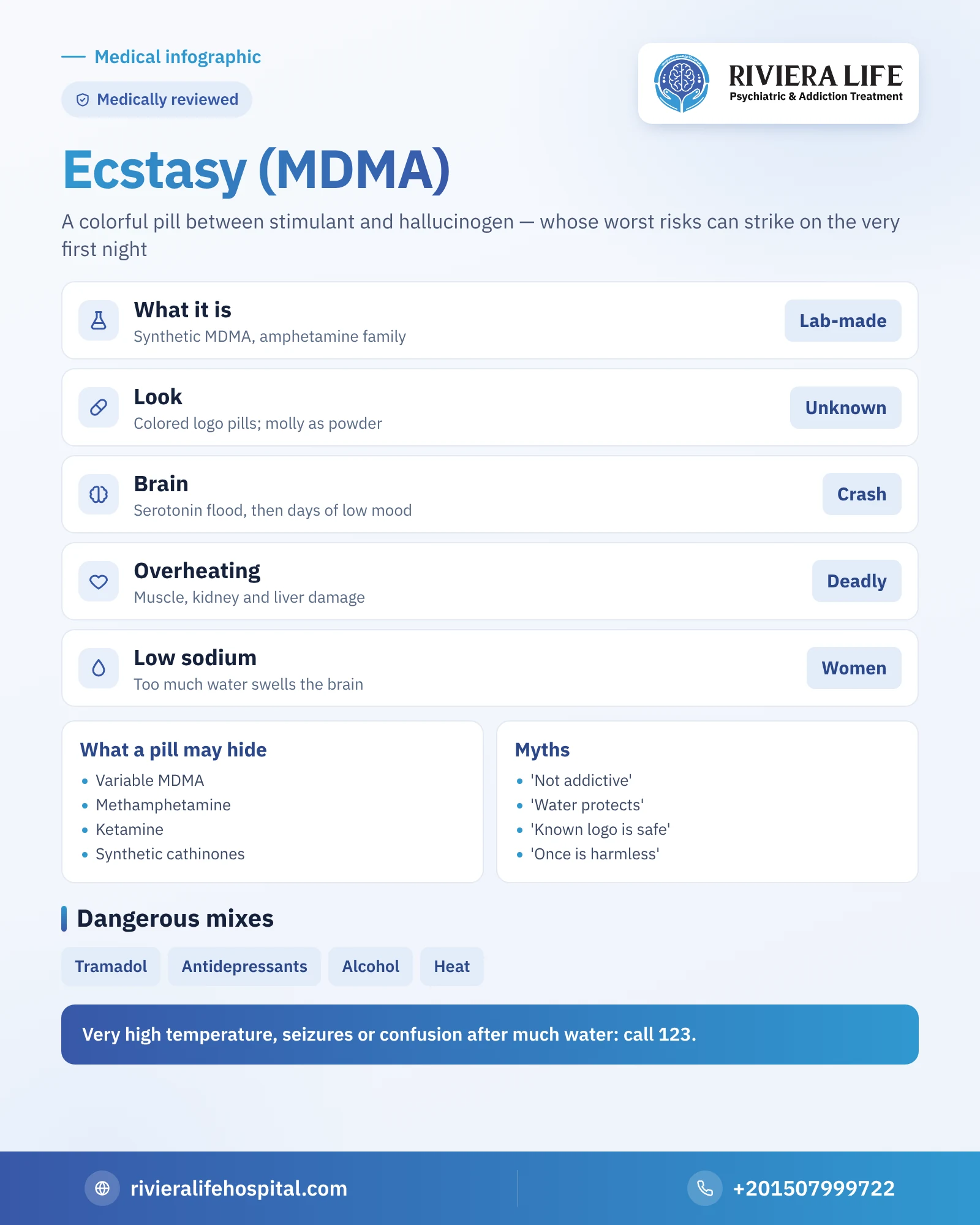
Ecstasy is the common name for an entirely synthetic chemical substance called methylenedioxymethamphetamine, abbreviated worldwide to four letters (MDMA). It has no relation to any plant, but is prepared in illegal labs, and chemically belongs to the amphetamine family, but differs from its relatives in one essential matter: alongside its stimulant effect, it alters sensation and emotions, so the user feels an unusual emotional closeness to others, and lights, sounds and touch seem sharper.
That is why doctors classify it in a middle zone between stimulants and hallucinogens, and sometimes describe it as “empathogenic”. The substance first appeared in the early twentieth century in the labs of a pharmaceutical company, and was never released as a medicine, then reappeared in the 1980s linked to night parties and electronic music, and from there spread to most countries of the world.
Names of ecstasy circulating in Egypt
Its best-known name in Egypt is “ecstasy” itself or its abbreviation “X”, and some young people use the name “molly” for the powder or crystals said to be purer than the pills. The pill is often named after the logo printed on it or its color, so users talk about a particular type as if it were a trusted brand. In general conversation and the media, its name may get mixed up with the phrase “hallucination pills”, which is applied to more than one substance.
The important thing is that the family knows that the name and the logo guarantee nothing. A pill bearing a familiar shape may be made in completely different labs, and may not contain any amount of the original substance.
Forms of ecstasy and ways of using it
Ecstasy is mostly sold as colored tablets of various sizes and shapes, and also appears in capsules, or as a white powder or small crystals. The most common method is swallowing, and some users resort to snorting the powder, while other methods remain rare.
The greatest danger here lies in the content of the pill, not its shape. Testing of tablets seized in many countries has revealed that what is sold as ecstasy may contain:
- An amount of the active substance that differs greatly from one pill to another, even between two pills of the same shape.
- Methamphetamine or caffeine to increase the sense of energy.
- Ketamine or other narcotic substances.
- Synthetic cathinones of the type known in the media as bath salts.
- Chemically similar substances whose effect is delayed, so the person takes a second pill thinking the first “didn’t work”, which is one of the most dangerous scenarios.
What does ecstasy do in the brain and body?
Ecstasy acts mainly on serotonin, the neurotransmitter that regulates mood, sleep, appetite and temperature. The substance pushes nerve cells to empty their store of serotonin all at once, and hinders its reuptake, so it floods the brain for hours. Along with it, ecstasy raises dopamine and noradrenaline, and stimulates the release of hormones such as oxytocin and antidiuretic hormone, and the latter explains an important part of its risks.
The effect usually begins half an hour to an hour after swallowing, and lasts about three to six hours. During this period the following may appear:
- A feeling of joy and openness and a desire to talk and touch.
- Excess energy and the ability to dance or stay up for hours.
- Dilated pupils, teeth grinding and tightening of the jaw muscles.
- A racing heartbeat, raised blood pressure and sweating, then a feeling of chills.
- A rise in body temperature, especially in a crowded, hot place.
After the effect ends, the brain finds its serotonin store almost empty, so the person lives through a day or several days of sadness, anxiety, exhaustion and poor concentration. This “crash” is what pushes some to repeat use, and it is also the beginning of the road to dependence for those who use regularly.
Does ecstasy have a medical use?
Ecstasy has no medical use in Egypt, and isn’t dispensed by prescription. At the global level, research has been conducted for years on its use at controlled doses within psychotherapy sessions for post-traumatic stress disorder, under the supervision of a specialized team and after careful examinations. At least one country has permitted it under very narrow conditions, while other major authorities haven’t yet approved it, and scientific debate about it is still ongoing. What happens in this research is in no way like a pill of unknown origin swallowed at a party.
Why is ecstasy dangerous?
Many think ecstasy is “light” because it doesn’t cause violent physical withdrawal like opioids. But its danger is of another kind, and it may come from a single time:
Severe overheating
Ecstasy disrupts the body’s ability to regulate its temperature, and with continuous dancing, crowding and heat, the temperature may rise to a level that destroys the muscles, injures the kidneys and liver and leads to death.
Low sodium in the blood
Because of antidiuretic hormone, the body retains water, so if the person drinks large amounts out of fear of dehydration, the concentration of sodium in their blood falls and the brain swells. Women are more prone to this complication.
Serotonin syndrome
It happens when serotonin accumulates to a toxic level, and its risk rises greatly when mixed with antidepressants, tramadol or other substances that affect serotonin.
Added to this are heart rhythm disturbance, seizures, mixing with alcohol or other substances, and driving under the influence. The details of the harms in the short and long term are in the article on the harms of ecstasy.
Ecstasy between stimulants and hallucinogens
Ecstasy shares with amphetamine and methamphetamine its chemical origin and its ability to raise heart rate, blood pressure and temperature, but it is less likely than them to push a person into compulsive daily use, and has more effect than them on serotonin and emotions. It is important that this isn’t understood as relative safety, as the tablets sold under its name sometimes contain methamphetamine itself. For those who want to compare, the ice and shabu page explains the most dangerous stimulants in this family, and the amphetamines page explains the wider family.
Ecstasy and the law in Egypt
Egypt’s anti-narcotics law lists ecstasy among the banned narcotic substances, and its possession, use and trafficking are punished, with the penalty becoming harsher with trafficking and distribution, especially at gatherings. On the other hand, the law allows someone who comes forward on their own seeking treatment a therapeutic rather than punitive path under specific conditions. We don’t offer a legal interpretation here for any specific case, which is a matter for a specialized lawyer, but seeking medical treatment in a licensed hospital takes place in complete confidentiality.
The ecstasy guide: each aspect in a separate article
We have dedicated a separate article to each question about ecstasy that deals with it in depth:
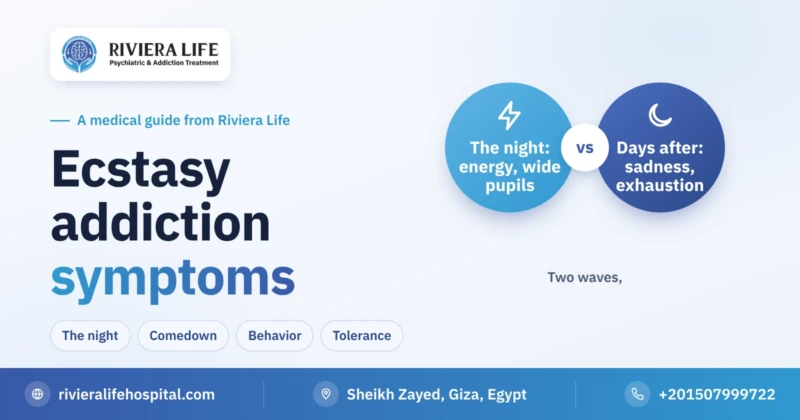
- Ecstasy addiction symptoms: the signs the family notices after weekends, and when use becomes a loss of control.
- Ecstasy withdrawal symptoms: what happens in the days and weeks after stopping, and when depression becomes dangerous.
- Ecstasy addiction treatment: the stages of treatment, the role of medicines and behavioral therapy, and how to choose a hospital.
- Causes of ecstasy addiction: why use at parties turns into a habit, and the risk factors among young people.
- The harms of ecstasy: its effect on the brain, heart, temperature, kidneys, memory and psychological state.
- How long ecstasy stays in the body: how long it shows in urine, blood, saliva and hair, and how the result is read.
Common myths about ecstasy
The myth: ecstasy doesn’t cause addiction. The truth is that its ability to cause dependence is lower than cocaine or methamphetamine, but some users lose control over it, and suffer craving, tolerance and psychological symptoms after stopping.
The myth: drinking a lot of water protects against danger. The truth is that excess water may cause low sodium and brain swelling, which is among the known causes of death linked to ecstasy.
The myth: a pill with a well-known logo is guaranteed. The truth is that the logo is easily copied, the concentration of the substance differs from one pill to another, and it may contain completely different substances.
The myth: once at a party does no harm. The truth is that overheating and serotonin syndrome may happen from the first time, especially in the heat or when mixed with other substances.
Discovered that your son or a relative is using ecstasy? Start here
Many families discover the matter after a night out or a summer trip, and swing between panic and denial. Start by calming down and gathering observations: when the change began, whether it is linked to weekends and parties, and whether they go through days of sadness and flatness afterwards. Choose a time when they are calm and not under the influence of any substance, and talk about your fear for their health, not about shame or punishment.
Ask them clearly whether they mix ecstasy with alcohol, tramadol or any psychiatric medicine, because that changes the degree of danger. Then book a medical assessment; an assessment doesn’t necessarily mean admission to hospital, but it determines the size of the problem. You will find the signs in detail in the article on ecstasy addiction symptoms.
Signs of ecstasy poisoning and emergencies
Call the ambulance on 123 immediately if any of these appear
These are signs of poisoning that may deteriorate within minutes, even if this is the first time the person has used.
- A very high temperature with hot skin, or confusion and delirium
- Seizures or loss of consciousness
- Chest pain or severe irregular palpitations
- A severe headache with vomiting and confusion after drinking large amounts of water
- Muscle stiffness or trembling with severe agitation and heavy sweating
- Hallucinations, or suspicion and severely disturbed behavior
- Very dark urine or no urination, with muscle pain
Until the ambulance arrives, move the person to a cool, quiet place, remove excess clothing, wet their skin with a damp cloth, and don’t leave them alone. Don’t force them to drink large amounts of water, and don’t give them any medicine or other substance. If they are unconscious and breathing, put them on their side. And tell the paramedics everything they took, as this information shortens the time to diagnosis and may save their life.
When should you ask for help?
Ask for a medical assessment if use is repeated, if days of depression and anxiety appear after each use, if the person starts increasing the amount or mixing it with other substances, or if their performance at school or work declines. Don’t wait for the matter to turn into a crisis. At Riviera Life, the hospital licensed by the Ministry of Health in Sheikh Zayed, Giza, the consultants in psychiatry and addiction treatment carry out a confidential assessment, the first consultation is free, and you can contact us at any time on +201507999722. And if you want to know the steps of treatment before calling, start with the article on ecstasy addiction treatment.
Medical sources and referencesThe information in this article is based on reliable scientific sources