The short answer
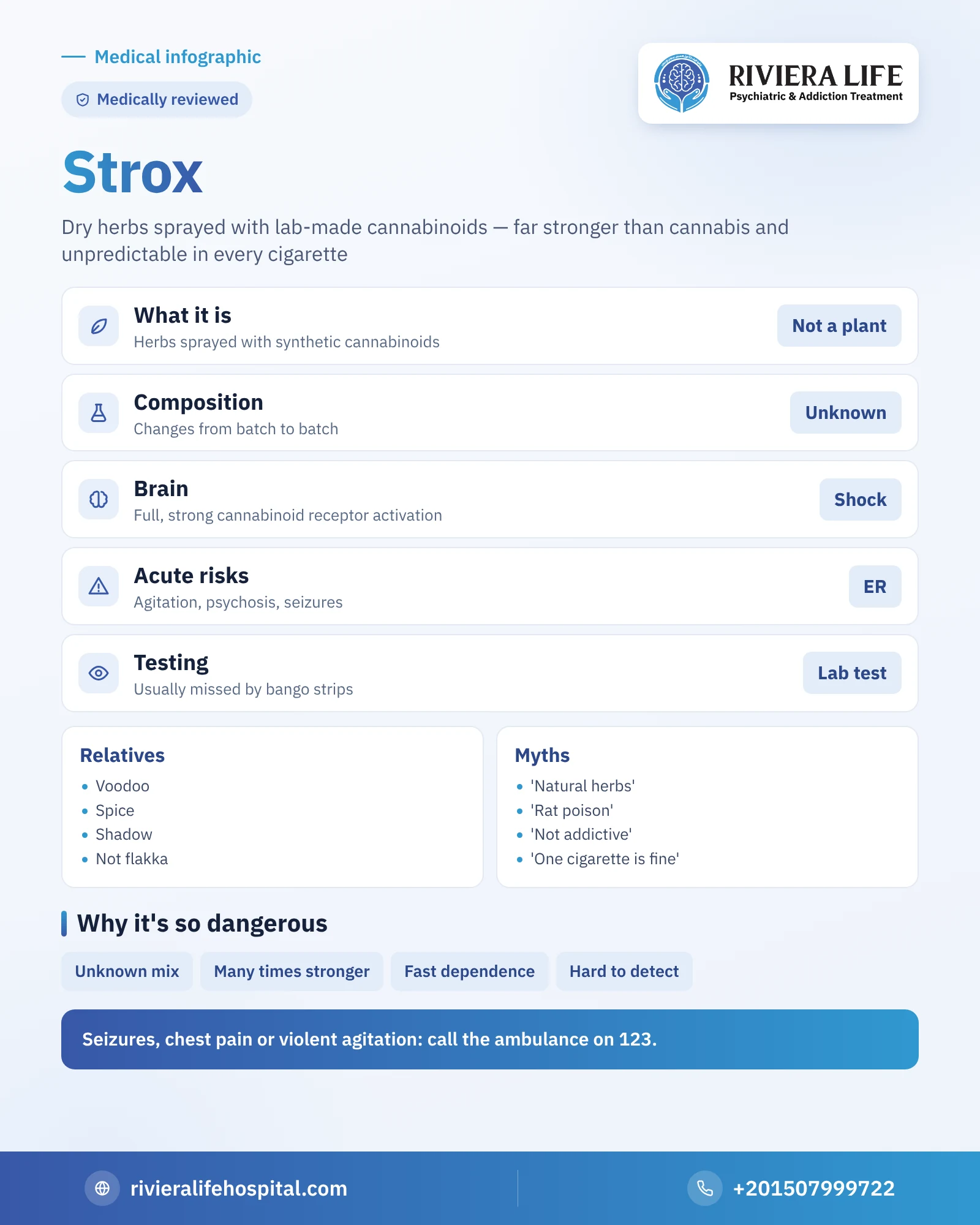
Strox, often pronounced “estrox”, is neither a plant nor a single substance, but dried herbs sprayed with chemical compounds called synthetic cannabinoids. These compounds were originally made for research purposes, and the manufacturers change their composition constantly, so the user knows neither what is in the bag nor its strength, and the concentration may differ between two cigarettes from the same bag. It is usually smoked, and causes episodes of agitation, psychosis and seizures that may call for the ambulance; it has no medical use, and its compounds have been listed in the narcotics schedules in Egypt.
- What it really isHerbs sprayed with chemicals
- RelativesVoodoo, spice and shadow
- Most prominent dangerSudden psychosis and seizures
Strox isn’t “light bango” or “flavored tobacco” as many young people who try it for the first time think. It is a dry herbal mix sprayed with lab-made chemicals that mimic the active substance in cannabis, but are many times stronger, and no one knows their concentration in the cigarette in their hands.
It has spread in Egypt in recent years because it is cheap and sold as a safe alternative, so its name has become linked with cases of agitation, seizures and loss of consciousness that reach emergency departments. This page gathers what the family and the patient need to know about strox, and leads you to a separate article for each of its aspects: symptoms, withdrawal, testing, harms, causes and treatment.
What is strox?
Strox belongs to a group known medically as “synthetic cannabinoids” or “synthetic cannabinoid receptor agonists” (Synthetic Cannabinoids). These are chemical compounds originally made in research labs to study the body’s internal cannabinoid system, which then leaked into the illegal market. The compound is dissolved in a solvent liquid and sprayed onto dried plant leaves that have no value in themselves, so the mix looks like a natural herb, while the entire source of the effect is the sprayed substance.
The idea that should stay in mind is that “strox” is a trade name for the market and not the name of a single substance. The compound in today’s bag may differ completely from the compound in last month’s bag, because the manufacturers change the composition constantly to get around the legal lists and mislead tests. That is why doctors describe dealing with strox cases as dealing with an unknown substance every time.
Names of strox circulating in Egypt
The best-known name is “estrox”, sometimes pronounced “strox” or shortened into slang words among users. Products close to it are sold under other trade names, each of which has gained its own fame, such as voodoo, spice and shadow. These names don’t guarantee a fixed content, as two bags with the same name may carry two compounds differing in strength. Some people confuse strox with bango because of the similar look, even though bango is a real cannabis plant and strox is a herb sprayed with chemicals.
Forms of strox and ways of using it
Strox mostly appears as crumbled dried leaves, green or brown in color, sold in small bags or ready-rolled joints, and may have a pungent or perfumed smell. Less often, the compound circulates as a liquid added to e-cigarette devices, a form the family finds hard to recognize.
The most common method is smoking, by rolling the mix in cigarette paper, mixing it with tobacco, or using a shisha. Smoking delivers the substance to the brain within minutes, which makes the effect sudden and sometimes violent. An additional problem lies in the spraying method itself: the substance isn’t distributed evenly over the leaves, so part of the bag may contain a tiny amount and another part a high concentration, and the person takes two cigarettes from the same bag with two completely different effects.
What does strox do in the brain and body?
In the brain there are receptors called type 1 cannabinoid receptors, which regulate mood, memory, perception, movement and appetite. The active substance in bango activates these receptors partially, while many of the strox compounds activate them fully and with much stronger binding. This difference is what explains why the effect of strox seems closer to a “shock” than to relaxation:
- Dizziness and severe heaviness in the body, and sometimes stiffness or inability to move for minutes.
- Confused perception of time and place, and unjustified laughing or crying.
- Acute anxiety, panic attacks and a feeling of persecution or that death is near.
- Auditory or visual hallucinations, and the matter may develop into psychosis with agitation and aggression.
- A racing heartbeat and raised blood pressure, nausea and vomiting.
- In severe cases: seizures or loss of consciousness.
With repetition rapid tolerance occurs, so the person needs a larger amount or more times during the day. Because the effect of many of these compounds is short, some addicts use it every hour or two, and show troublesome withdrawal signs if the next cigarette is late.
Does strox have any medical use?
No. The compounds sprayed in strox haven’t been tested on humans and aren’t made according to any pharmaceutical standards, and they have no therapeutic use. It is true that there are medicines derived from cannabis or similar to it that are dispensed in some countries for very limited uses, such as the nausea that accompanies chemotherapy, but these are preparations of known composition and concentration given under medical supervision, and have nothing to do with what is sold in bags.
Why is strox so dangerous?
Several causes of danger come together in strox that rarely come together in a single substance:
- Unknown composition: neither the seller nor the user knows the compound or its concentration, so every cigarette is a new experiment.
- Multiplied strength: its binding to cannabinoid receptors is stronger than bango by a large margin, so symptoms appear that aren’t usually seen with natural cannabis.
- Acute complications: agitation, psychosis and seizures, and sometimes chest pain or kidney injury requiring hospital admission.
- Rapid dependence: repeated use during the day leads to clear dependence and withdrawal within a short period.
- Difficulty of detection: the usual bango tests often don’t detect it, so the family is late in being sure and help is late along with it.
Strox within the synthetic cannabinoid family
Strox shares the same chemical origin with voodoo, spice and shadow, that is, synthetic compounds acting on cannabinoid receptors, and the names usually differ with the market and the brand rather than with a fixed essential difference. That is why their risks and their treatment are similar, even though the strength of batches varies from place to place. Flakka is often mentioned alongside them in the media, but it belongs to a completely different family, the stimulant synthetic cathinones, and its effect is closer to stimulants than to cannabis. To compare with the natural plant you can read the bango page.
Strox and the law in Egypt
The compounds used in making strox have been listed in the schedules of narcotic substances in Egypt through successive regulatory decisions, so possessing, circulating and trafficking it have become criminalized like other drugs, with a harsher penalty in trafficking cases. On the other hand, Egyptian law allows someone who comes forward on their own seeking treatment not to have a criminal case brought against them, a point that reassures many hesitant families. For any legal question concerning a specific case it is advisable to consult a lawyer, and you can also call the hotline of the Fund for Drug Control and Treatment of Addiction on 16023 free of charge and confidentially.
The strox guide: each aspect in a separate article
Choose from the following articles the one that suits your situation with strox right now, as each of them deals with a single question in detail:
- Strox addiction symptoms: the physical and behavioral signs the family notices, and when use becomes addiction.
- Strox withdrawal symptoms: when they begin after the last cigarette, how long they last, and when they become dangerous.
- How long strox stays in the body: why it doesn’t show in the usual bango test, and which tests can detect it.
- The harms of strox: what it does to the brain, heart, kidneys and mental health in the short and long term.
- Causes of strox addiction: why it attracts teenagers and young people, the psychological and environmental factors that raise the risk, and ways of prevention.
- Strox addiction treatment: the stages of treatment from assessment to relapse prevention, and how to choose a hospital.
- Medicines for strox addiction treatment: the categories of medicines the doctor uses and the role of each, and why there is no magic medicine.
Common myths about strox
The myth: strox is natural herbs, so it is lighter than hashish. The truth is that the herbs are merely a carrier, and the entire effect comes from synthetic chemicals that are stronger than natural cannabis and more dangerous.
The myth: strox is made from rat poison or pesticides. The truth is that the basic substance in it is synthetic cannabinoids, though some batches contain impurities or unknown additives. This myth does harm because it makes a person think the danger lies in “adulteration” alone, while the danger is in the substance itself.
The myth: strox doesn’t cause addiction because it doesn’t show up in testing. The truth is that its absence from the usual test is a technical matter concerning the device, and has nothing to do with its ability to cause dependence, which is high.
The myth: someone who smokes a single cigarette at a party won’t be harmed. The truth is that many cases of seizures and acute psychosis have happened to people trying it for the first time, because the concentration of the batch can’t be predicted.
Discovered your son smokes strox? Where to start
Many families discover the matter after a shocking incident: an incomprehensible fit of agitation, a call from a friend saying the son “collapsed” in the street, or a small bag with a strange smell in a trouser pocket. The first thing you need is not to turn the discovery into a trial. Write down what you have noticed and its dates, wait until he is fully conscious before you talk, and start with your worry for his health, not with the question “who gave it to you?”.
Don’t rely on a negative home test to reassure yourself, as it usually doesn’t detect strox. Contact a specialized medical provider for an assessment even if your son refuses at first, because the family itself needs guidance on how to deal with the situation. The list of signs in the article on strox addiction symptoms helps you organize your observations before the consultation.
Signs of strox poisoning that call for the ambulance
Call the ambulance on 123 immediately if any of these appear
Strox poisoning may deteriorate within minutes, and the person isn't left to sleep until they wake up on their own.
- Seizures, loss of consciousness or difficulty waking them
- Severe agitation, aggression or hallucinations that make them a danger to themselves or others
- Pain or pressure in the chest, or severe palpitations
- A very high body temperature accompanied by heavy sweating or muscle stiffness
- Repeated vomiting that doesn’t stop, or very little urine
Until help arrives, move any sharp tools away from him, talk to him calmly in a low voice in a place with little light and noise, and don’t try to restrain him by force except to prevent direct harm. If he loses consciousness while breathing, put him on his side. Don’t give him any medicine or drink “to wake him up”, and tell the paramedics what you know about the substance and the time he used it.
When should you ask for help?
Don’t wait for trying it to turn into a daily pattern. Any repeated use of strox, or any episode of psychosis or seizures even once, deserves an early medical and psychological assessment, because some users carry a predisposition to psychiatric disorders that this substance uncovers and accelerates. At Riviera Life, the consultants in psychiatry and addiction treatment assess the case in complete confidentiality, the first consultation is free, and from it a plan is built that suits the patient, whether they need admission under round-the-clock medical supervision or outpatient follow-up.
Medical sources and referencesThe information in this article is based on reliable scientific sources
1NIDA — Synthetic cannabinoids: what they are and their risksnida.nih.gov2EUDA — Drug profile of synthetic cannabinoids and spice productseuda.europa.eu3StatPearls — Natural and synthetic cannabinoid toxicity and its managementncbi.nlm.nih.gov4MedlinePlus — Cannabis and synthetic cannabinoidsmedlineplus.gov5MedlinePlus — Drug use and addictionmedlineplus.gov