The serotonin deficiency symptoms people talk about usually include persistent sadness, anxiety, irritability, disturbed sleep, an urgent craving for sweets and difficulty concentrating. But there is a fact you should know from the start: there is no blood test or scan that measures brain serotonin and proves it is low. So these symptoms are signs that the mood and sleep system is disturbed; serotonin may be part of the picture, or the cause may be something else entirely, such as the thyroid or anemia. This article explains the psychological and physical signs linked to it, what resembles them, and when you need a doctor.
What do we mean by serotonin deficiency?
Serotonin is a neurotransmitter that takes part in regulating mood, sleep, appetite and impulsivity, as the serotonin guide explains. When people talk about its “deficiency” they usually mean that its signal inside the brain is weaker than needed, either because too little is produced, because it is taken back up and broken down too quickly, or because of changes in the sensitivity of the receptors it binds to. These explanations make biological sense, but they aren’t measured in the clinic, which is why the doctor doesn’t write “serotonin deficiency” as a diagnosis in the report, but diagnoses the condition they see: depression, anxiety, a sleep disorder or another.
Why isn’t a blood test enough?
Most of the body’s serotonin is made in the gut and carried in the blood platelets, and it doesn’t cross the blood-brain barrier. So if you measure it in the blood, you are measuring the serotonin of the gut and blood, not the brain. Doctors use measurement of serotonin or its breakdown products in urine for specific purposes, such as looking for a rare type of tumor that secretes large amounts of it, not for diagnosing depression. So beware of centers or adverts offering a “happiness hormone deficiency test” and building a supplement prescription on it.
Psychological and mood signs
These are the symptoms most linked in research to a disturbed serotonin system, and most appear in depression and anxiety:
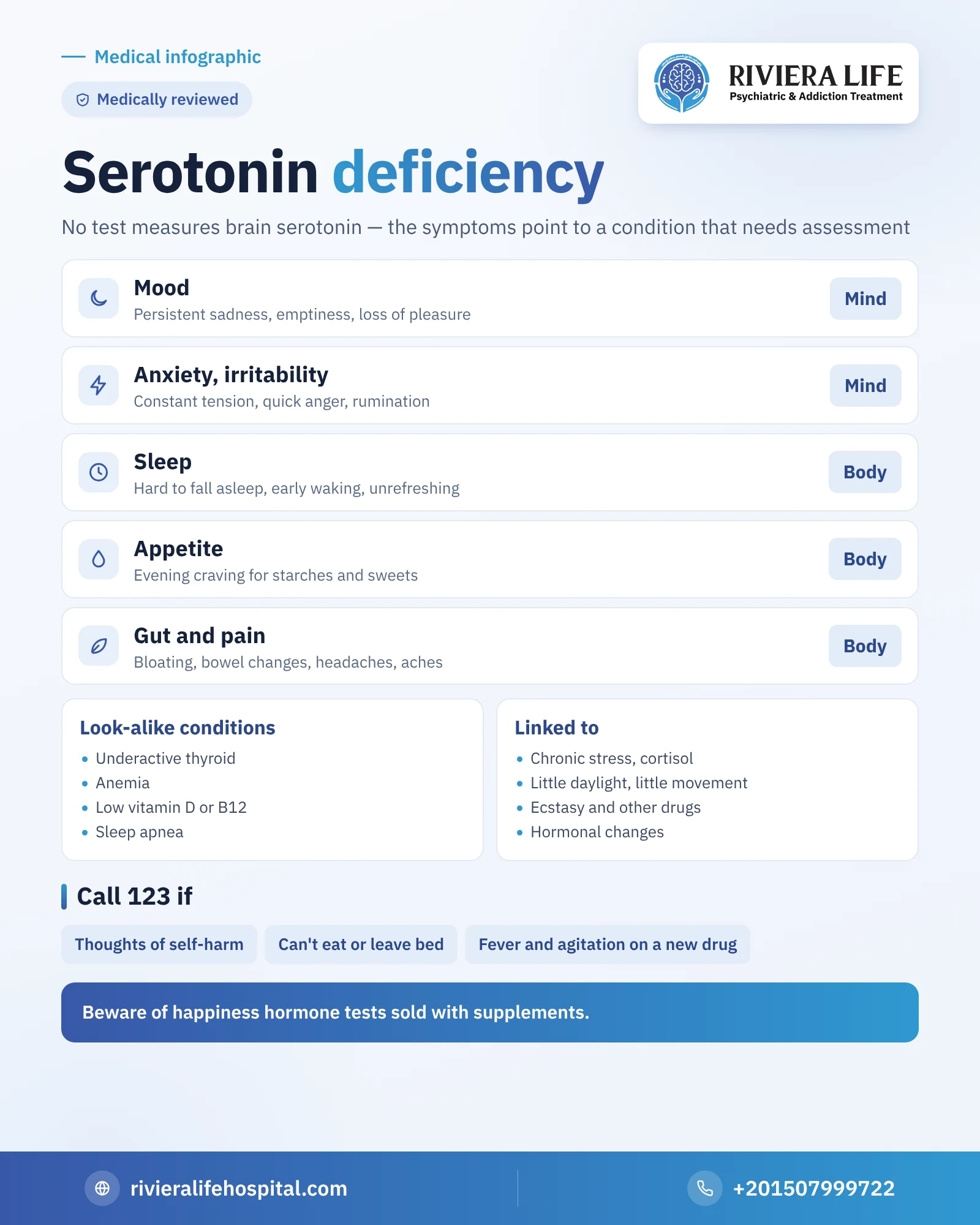
- Sadness or inner emptiness lasting most of the day, or loss of enjoyment in what used to be enjoyable.
- Excessive anxiety and constant tension, and expecting the worst without a clear reason.
- Irritability and quick anger, and getting worked up over small situations.
- Ruminating on negative thoughts and difficulty stopping them, and sometimes repeated thoughts resembling obsessions.
- Impulsivity in decisions, spending or eating, and a weak ability to hold back.
- Declining self-confidence and a feeling of guilt or worthlessness.
Notice that this list is almost the same as the list of symptoms of depression, and that is exactly the reason for caution: the symptoms point to a condition that needs assessment, not to a missing substance we make up for with a pill.
Physical signs
Because serotonin works throughout the body, disturbances in it may also be linked to physical signs, although the link here is weaker and less specific:
- Disturbed sleep: difficulty falling asleep, waking very early, or sleep that doesn’t refresh.
- Changes in appetite: an urgent craving for starches and sweets, especially in the evening, or loss of appetite.
- Persistent fatigue and low energy that don’t improve with rest.
- Increased sensitivity to pain, such as repeated headaches and muscle aches.
- Digestive disturbances such as bloating and changes in bowel movement, as serotonin regulates gut movement.
- Reduced sexual desire in some cases.
Each of these signs has dozens of possible causes, and the appearance of one of them isn’t enough to link it to serotonin.
What does it look like in daily life?
A thirty-year-old employee describes her state like this: she wakes at four in the morning and can’t get back to sleep, feels heavy in the morning, eats sweets in the afternoon without hunger, and loses her temper with her children and then blames herself. None of this alone is evidence of illness, but its coming together and continuing for weeks is what makes the doctor ask about depression or anxiety.
Another young man may say he has lost enthusiasm for everything for months, and lives his day “on silent mode”. Here too the most important question isn’t “do I have serotonin deficiency?” but “since when, and what is its effect on my life?”. And if eating without hunger has become a daily way of calming emotions, see the article on compulsive eating and food addiction.
What is linked to a disturbed serotonin system?
Research points to factors that may affect the serotonin system, most of which affect mood in other ways too:
- Chronic stress and raised cortisol for long periods.
- Little exposure to daylight, which partly explains seasonal mood changes in winter.
- Little movement and disturbed sleep times.
- A diet poor in protein, or harsh diets for long periods.
- Genetic factors affecting the serotonin transporter and its receptors.
- Drug use, especially ecstasy, which empties serotonin stores and then leaves it low for days.
- Some hormonal changes, as in the period before menstruation or after childbirth.
You will find what supports this system in proven ways in the article on how to increase serotonin.
Conditions that resemble serotonin deficiency
Before you attribute what you feel to serotonin, the doctor needs to rule out common physical causes that give very similar symptoms:
| Condition | What resembles serotonin deficiency | How it is detected |
|---|---|---|
| Underactive thyroid | Fatigue, sadness, weight gain, slowness | Thyroid hormone tests |
| Anemia | Tiredness, headache, poor concentration | Complete blood count |
| Vitamin D or B12 deficiency | Fatigue, numbness, mood swings | Simple blood tests |
| Sleep apnea | Unrefreshing sleep, irritability, poor concentration | Sleep study |
| Drug effects or withdrawal | Low mood, anxiety, insomnia | Medical history and drug test |
Serotonin deficiency and addiction
Many people in recovery go through low mood, anxiety and insomnia in the first weeks after stopping, and some describe it as “the world has lost its color”. Part of this is because the brain adapted to the substance and needs time to regain its balance, and another part may be depression that existed before use and that the substance masked.
And here lies the danger: someone looking for quick compensation may go back to the drug, or try supplements that raise serotonin while taking other medicines, exposing themselves to the risk of serotonin syndrome. The safest road is a psychological assessment that distinguishes withdrawal symptoms from accompanying depression, as the article on dopamine and addiction explains regarding the adaptation of the reward circuit.
Questions that help you before visiting the doctor
These questions aren’t a diagnostic test, but they help you describe your condition accurately:
- When did these symptoms begin? And do they continue most days for more than two weeks?
- Have they affected your work, study or relationships?
- Has your sleep or weight changed clearly?
- Have you started a new medicine or stopped a medicine or substance recently?
- Is there anyone in your family who has had depression or anxiety?
- Do you have thoughts that life isn’t worth it?
When do you need urgent help?
Most cases are assessed in the clinic without rushing, but some signs can’t wait.
Seek urgent help immediately if you see
Call an ambulance on 123 or go to the nearest emergency department, and don't stay alone.
- Thoughts of self-harm or ending life
- Complete inability to eat or leave bed for days
- A sharp drop in mood after suddenly stopping a substance or medicine
- Confusion or agitation with fever and sweating after a new medicine
How does the doctor deal with these symptoms?
The doctor starts with a detailed interview about the symptoms, their duration and their effect, then asks for tests to rule out physical causes, and assesses the possibility of depression, anxiety, a sleep disorder or the effect of drugs. Depending on the diagnosis, the plan may include psychotherapy such as cognitive behavioral therapy, changes to sleep and movement, and sometimes medicines that affect serotonin, whose type and duration the doctor sets. The goal is to treat the real condition, not to chase a number in a test.
How can Riviera Life help you?
If you have persistent mood symptoms, or are recovering from addiction and feel your mood isn’t coming back, the consultant psychiatrists at Riviera Life assess your case in complete confidentiality, distinguish between depression, withdrawal symptoms and physical causes, then set a plan that suits you. The first consultation is free on +201507999722.
More from the serotonin guide
- Serotonin: the complete guide
- How to increase serotonin
- Serotonin syndrome
- Depression: the complete guide
Questions many people ask
There is no approved test that measures brain serotonin. Measuring it in blood or urine is used for other purposes and doesn't diagnose depression or anxiety.
An urgent craving for starches may be linked to mood swings, but it is a general sign with many causes such as lack of sleep, stress and eating habits, and isn't enough on its own to judge.
Recent research doesn't support explaining depression by serotonin deficiency alone; it is one factor in a network that includes genetics, stress and brain circuits.
Yes, many in recovery go through low mood, insomnia and anxiety in the first weeks, and the doctor needs to distinguish withdrawal symptoms from accompanying depression.
If they continue most days for more than two weeks and affect your work or relationships, or if thoughts of self-harm appear, which call for urgent help.