Addiction usually begins with a free decision, then gradually turns into something that doesn’t resemble a decision. The relationship between dopamine and addiction explains a large part of this change: drugs and compulsive behaviors raise dopamine in the reward system more than any natural pleasure does, so the brain learns they are the most important thing, then reshapes itself around them. The result is a strong craving that ignites at the slightest reminder, indifference towards everything else, and a weakened ability to say “no”. This article explains how this happens step by step, why people differ in their susceptibility to addiction, and how treatment targets this cycle.
Dopamine and addiction: why is addiction linked to the reward system specifically?
The brain’s reward system was designed to protect survival. When a hungry person eats, a thirsty person finds water, or someone spends warm time with those they love, dopamine rises in a deep area called the nucleus accumbens, so the brain records what happened, where the reward came from and how it can be repeated.
This signal doesn’t so much mean “this is enjoyable” as “this is important, remember it and seek it again”. Drugs break into this system because they send the same signal without any real benefit behind it, and with a strength far beyond what natural rewards achieve. To learn about dopamine and its other functions away from addiction, see the complete dopamine guide.
How do drugs raise dopamine?
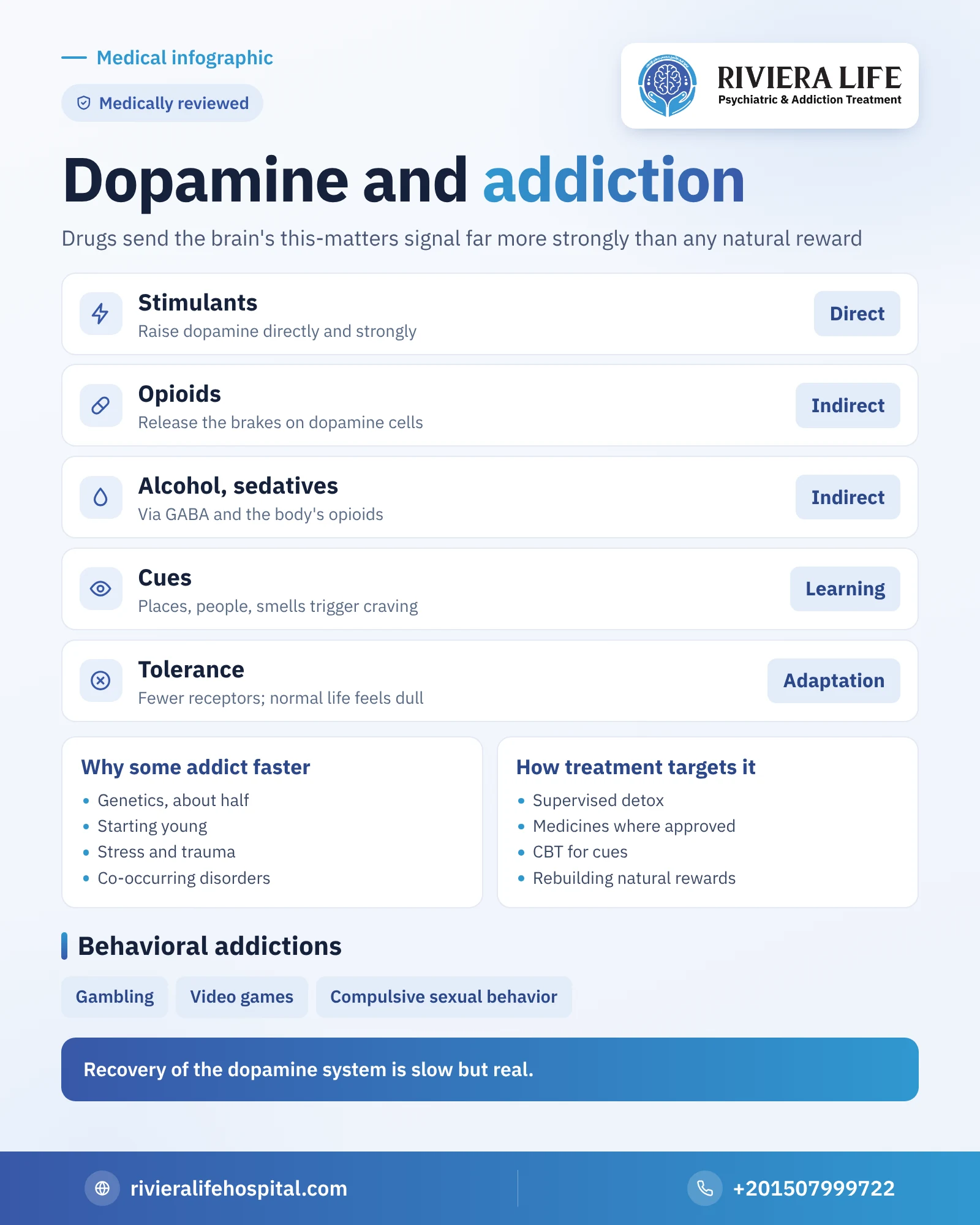
Not all substances are alike in how they reach the reward system, but the end result is similar:
| Substance class | How it raises dopamine | Examples |
|---|---|---|
| Stimulants | Directly: they block its reuptake or force the cell to release it in large amounts | Cocaine, amphetamines, Captagon, ice |
| Opioids | Indirectly: they inhibit the cells that hold back dopamine cells, so these are released | Heroin, tramadol, morphine |
| Alcohol and sedatives | Indirectly: through the GABA and endogenous opioid systems | Alcohol, benzodiazepines, pregabalin |
| Cannabis and its derivatives | Indirectly: through cannabinoid receptors in the brain | Hash, bango, strox |
| Nicotine | Activates receptors on the dopamine cells themselves | Cigarettes, shisha and e-cigarettes |
Stimulants have the strongest effect on dopamine, which is why they are linked to fast addiction and intense craving. Opioids and sedatives add strong physical dependence to this, and the role of GABA in it is explained in the article on GABA and addiction.
From pleasure to cues: how does the brain learn craving?
The first times, dopamine rises at the moment of use itself. But with repetition a striking shift happens: the surge starts appearing before use, on seeing things linked to it. The sound of a message from the person who supplies the substance, passing the street where they used to buy, a particular smell, or even Thursday, which became linked with nights out. All of these become “cues” capable on their own of igniting an overwhelming craving.
That is why many people in recovery describe craving attacking them suddenly months after stopping, when they meet an old friend or pass a familiar place. This isn’t weak willpower, but a memory the brain has learned deeply, and extinguishing it needs time and training.
Tolerance and fewer receptors: why do ordinary things lose their taste?
The brain hates flooding. When dopamine rises artificially again and again, it responds by reducing the number or sensitivity of its receptors. Brain imaging studies have shown a clear decrease in type 2 dopamine receptors in people with addiction to different substances. This adaptation has two sides:
- The person’s response to the substance itself decreases, so they need a larger amount or more frequent use to get the effect they are used to, which is called tolerance.
- Natural rewards lose their power to make them happy: food, work, family and hobbies become dull, so using seems the only way to feel anything.
Here the goal of use changes. The person no longer seeks the high so much as an escape from the emptiness and distress that appear when the substance is absent.
Weak brakes: dopamine and the front of the brain
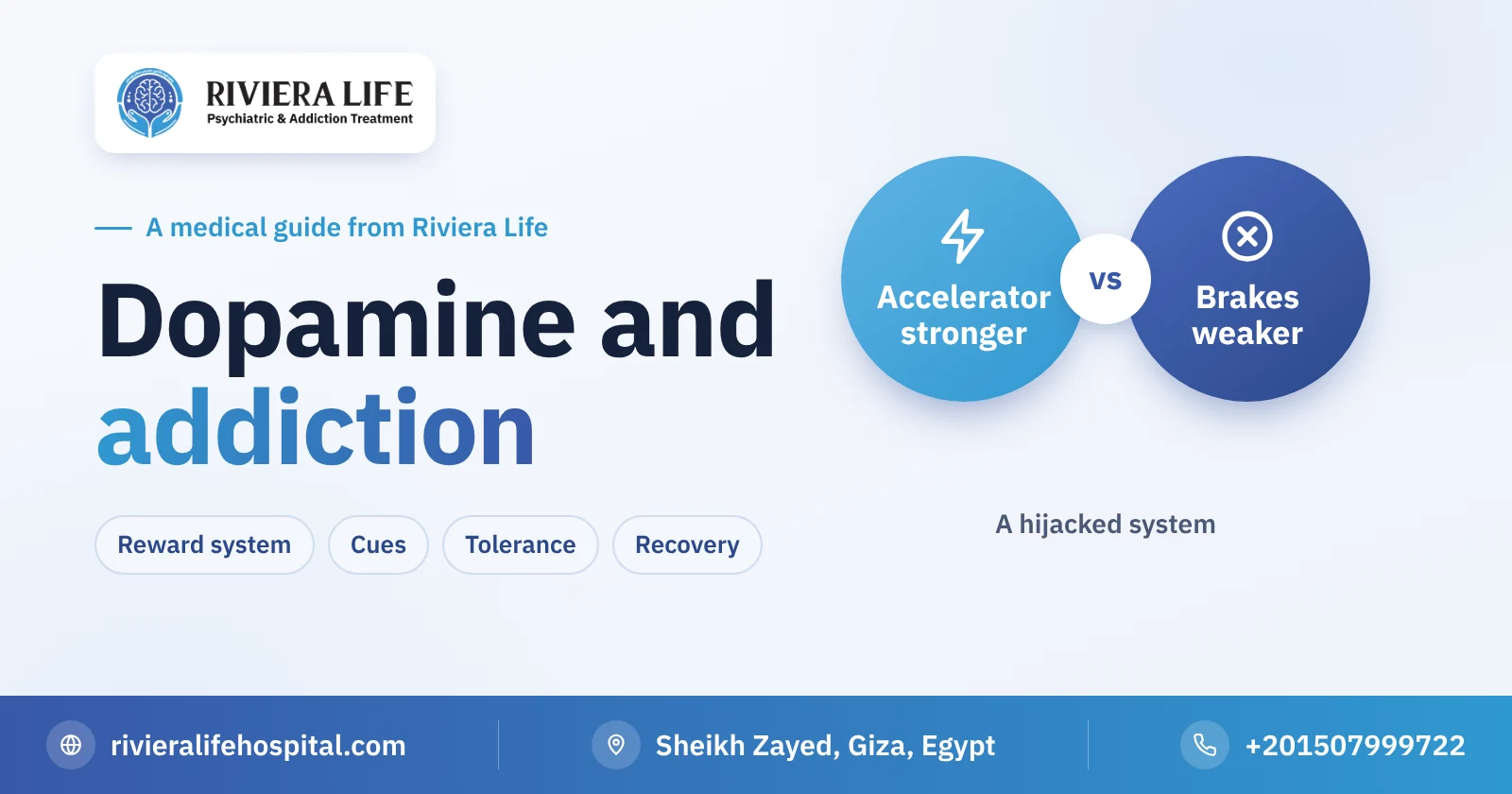
The brain’s frontal cortex is responsible for planning, weighing consequences and holding back impulses, and it in turn relies on dopamine signals to work well. With chronic addiction the activity of this area weakens, while the signals driving craving grow stronger. It can be likened to a car whose accelerator has become stronger and whose brakes have worn down. That is why the person swears sincerely in the morning that they won’t use, then finds themselves doing it in the evening; the conscious decision is there, but the tool that carries it out has become weaker.
Behavioral addiction: gambling, pornography and games
The reward system doesn’t need a chemical to be disturbed. Gambling relies on unpredictable reward: you don’t know when you will win, and this very uncertainty raises dopamine and makes the person continue after every loss. Modern medical classifications recognize gambling disorder and gaming disorder as official diagnoses, while describing compulsive pornography use as addiction remains the subject of scientific debate, although the international classification places it under compulsive sexual behavior disorder.
These behaviors differ from drugs in the intensity of the surge and the absence of direct physical toxicity, but they share with them the cycle of cues, craving and weak control. You will find the details of each in the guides to gambling addiction, pornography addiction and video game addiction.
Why do some people become addicted faster than others?
Many people use a substance once or a few times without reaching addiction, while others fall into it quickly. This difference comes from factors that affect the dopamine system itself or the person’s ability to hold back:
- Genetics: genes explain a large part of the risk of addiction, estimated by researchers at roughly half.
- Age of starting: the front of the brain only matures in the mid-twenties, which is why teenagers are more vulnerable.
- Stress and trauma: chronic tension changes the sensitivity of the reward system and makes the substance a tempting escape.
- Accompanying psychiatric disorders: such as depression, ADHD and anxiety, where the person may unknowingly use the substance as self-treatment.
- The type of substance and method of use: the faster it reaches the brain, as with smoking and injecting, the greater its power to cause addiction.
Does the dopamine system recover after stopping?
Yes, but slowly. Follow-up studies indicate that dopamine receptors and transporters improve gradually with continued abstinence, and that a noticeable part of this improvement may need months, perhaps more than a year after long addiction to stimulants. During this period the person in recovery goes through flatness, loss of pleasure and mood swings, the stage people call dopamine withdrawal, which we explain in detail in the article on dopamine withdrawal symptoms. Knowing that this flatness is temporary helps many to be patient and not relapse.
Dopamine addiction: can a person be addicted to dopamine itself?
The phrase “dopamine addiction” is widespread on social media, but it is a figurative description, not a medical diagnosis. Dopamine is a substance the brain makes itself and that no one takes; what actually repeats is a substance or behavior that raises it quickly and strongly, so the brain seeks it again and again.
People use the phrase for things very different in seriousness:
- Drugs that raise dopamine directly, which are a real addiction recognized medically.
- Gambling and video games, which modern classifications classify as behavioral disorders.
- Constantly moving between short videos and notifications, an exhausting habit that may turn into compulsive use in some people, without counting as a separate diagnosis.
The practical criterion isn’t the amount of dopamine, which can’t be measured, but loss of control: does the person continue despite harm? Have their attempts to cut down failed? Has the habit replaced sleep, work and relationships? If the answer is yes, the condition deserves an assessment whatever it is called, and its treatment starts by identifying what the habit does for the person: does it help them escape distress, fill a void, or try to lift a low mood?
Daily management starts with reducing the triggers around you and replacing quick pleasure with activities that build motivation gradually, as in the article on how to increase dopamine naturally. And anyone who shows compulsive preoccupation with their phone will find details in social media addiction.
How does treatment target the dopamine cycle?
There is no medicine that “fixes dopamine” and ends addiction, but each stage of treatment deals with part of the cycle:
- Medically supervised detox: stops the continuous flooding and treats physical withdrawal symptoms safely, especially with alcohol, opioids and sedatives.
- Medicines where available: for some types of addiction, such as opioids and alcohol, there are approved medicines that reduce craving or block the substance’s effect, determined by the doctor. Stimulant treatment relies mainly on psychotherapy, with medicines for symptoms such as depression and insomnia.
- Cognitive behavioral therapy: teaches the patient to recognize their personal cues and deal with craving without responding to it.
- Motivation through alternative rewards: programs that reward abstinence with tangible rewards, which have proven effective especially with stimulants, because they speak to the reward system in its own language.
- Rebuilding life: exercise, regular sleep, work and healthy relationships, meaning natural sources of pleasure that gradually regain their place.
- Treating accompanying disorders: treating depression or ADHD closes an important door to relapse.
Where do you start treatment?
The right start is an assessment by a doctor specializing in psychiatry and addiction treatment, which identifies the substance or behavior, the severity of dependence and any accompanying disorder, then decides whether outpatient treatment is enough or admission under medical supervision is needed. Look for a place that combines detox, psychotherapy, dual diagnosis treatment and family involvement in one plan, and follows the patient after discharge, and beware of any party that promises a cure in days or a guaranteed rate.
How Riviera Life meets these standards
Riviera Life brings all these elements together under one roof, for those looking for addiction treatment that deals with the brain, behavior and family together:
- Ministry of Health accreditation: the hospital holds an official license to provide psychiatry and addiction treatment services.
- Consultants in the specialty: consultants in psychiatry and addiction examine each case, and deal with the other psychiatric disorders that accompany addiction.
- Round-the-clock medical supervision: during detox and the hardest first days.
- Fourteen years in the field: during which thousands have recovered from dependence on substances and from behavioral addiction.
- Complete confidentiality, and a family program and aftercare that protect against relapse after discharge.
The first consultation is free of charge, and the number +201507999722 answers you night and day; we welcome you at our base in Sheikh Zayed, Giza.
More from the dopamine guide
- Dopamine: the complete guide
- Dopamine withdrawal symptoms and how long they last
- Dopamine deficiency symptoms
- How to increase dopamine naturally
- Dopamine vs serotonin: motivation and reward or mood and calm
- Happiness hormones: dopamine, serotonin, endorphins and oxytocin
- Psychological and physical addiction: the difference and how each is treated
- Drug craving: why it appears and how to deal with it
Questions many people ask
Most addictive substances raise it in the reward pathway, but in different ways; stimulants affect it directly, while opioids, alcohol and hash reach it indirectly.
Because the brain has learned to link places, people and situations with the substance, and these memories remain after withdrawal ends. In treatment the person in recovery learns to recognize these cues and deal with them.
No. Addiction is a disorder that changes the brain's reward and control circuits, so keeping to a decision becomes harder than usual. Responsibility remains, but treatment gives the person back tools of control.
No single medicine does that. Recovery comes from continued abstinence with psychotherapy and rebuilding natural sources of pleasure, with approved medicines for some types of addiction decided by the doctor.
Choose a licensed hospital that combines medically supervised detox, psychotherapy, treatment of co-occurring disorders and aftercare. Riviera Life in Sheikh Zayed meets these criteria, in complete confidentiality.