How to increase serotonin naturally is a question many search for, and the honest answer is that the strongest methods available are simple, not magic: daylight, regular movement, sleep at fixed times, food containing protein, and warm social relationships. The effect of these habits on brain serotonin can’t be measured directly, but research links them to improved mood, some of them with strong evidence. Supplements, on the other hand, need caution because they may interact with medicines. In this article we rank the methods by strength of evidence, explain what doesn’t help, and when medication becomes necessary.
Before you start: what can you expect?
Serotonin isn’t a tank you fill to fill your happiness. It is part of a network that regulates mood, sleep and appetite, as our serotonin guide explains, and most of what we know about the effect of daily habits on it comes from animal studies or indirect measurements in humans. So the realistic goal is to improve the conditions in which the brain works better, not to raise a specific number. And if you have clear symptoms of depression or anxiety, these methods support treatment; they aren’t a substitute for it.
Daylight: the simplest start
Studies indicate that the brain produces more serotonin on long sunny days than on short winter days, one of the explanations put forward for seasonal mood swings. The practical application is easy:
- Go out in morning light for a few minutes a day, even just to walk to work or drink coffee on the balcony.
- Put your workplace near a window if possible.
- You don’t need exposure to the scorching midday sun; ordinary daylight is enough, with skin protection when needed.
Doctors sometimes use bright light box therapy in seasonal depression, a treatment chosen under medical supervision.
Regular exercise: strong evidence on mood
Of all habits, exercise has the strongest evidence for improving mood, to the point that some medical guidelines recommend it as part of treating mild and moderate depression. Part of its effect is thought to pass through serotonin, along with endorphins, dopamine and improved sleep. You don’t need a hard program; brisk walking for half an hour most days of the week is a good start, and consistency is what matters most. Choose an activity you love, preferably with others, as walking with a friend combines movement and contact. For more on this, see how to increase endorphins.
Regular sleep
The relationship between serotonin and sleep goes both ways: it takes part in regulating the sleep-wake cycle, and the body makes melatonin from it in the evening. Disturbed sleep in turn is linked to worsening mood and anxiety. Practical steps:
- Fix your wake-up time, even on days off.
- Dim strong lighting and screens an hour before sleep.
- Avoid caffeine in the evening, and long naps after the afternoon.
- Keep the room dark, quiet and at a moderate temperature.
More details are in our article on melatonin and sleep.
Food: tryptophan in its proper context
The body makes serotonin from tryptophan, an amino acid found in protein-rich foods such as eggs, cheese, milk, chicken, fish, legumes, nuts and seeds. But there is an important detail: tryptophan competes with other amino acids to cross into the brain, so eating food rich in it doesn’t necessarily mean a larger amount reaches the brain. Some research suggests that eating carbohydrates with protein may ease its crossing, but the effect on mood in humans is limited.
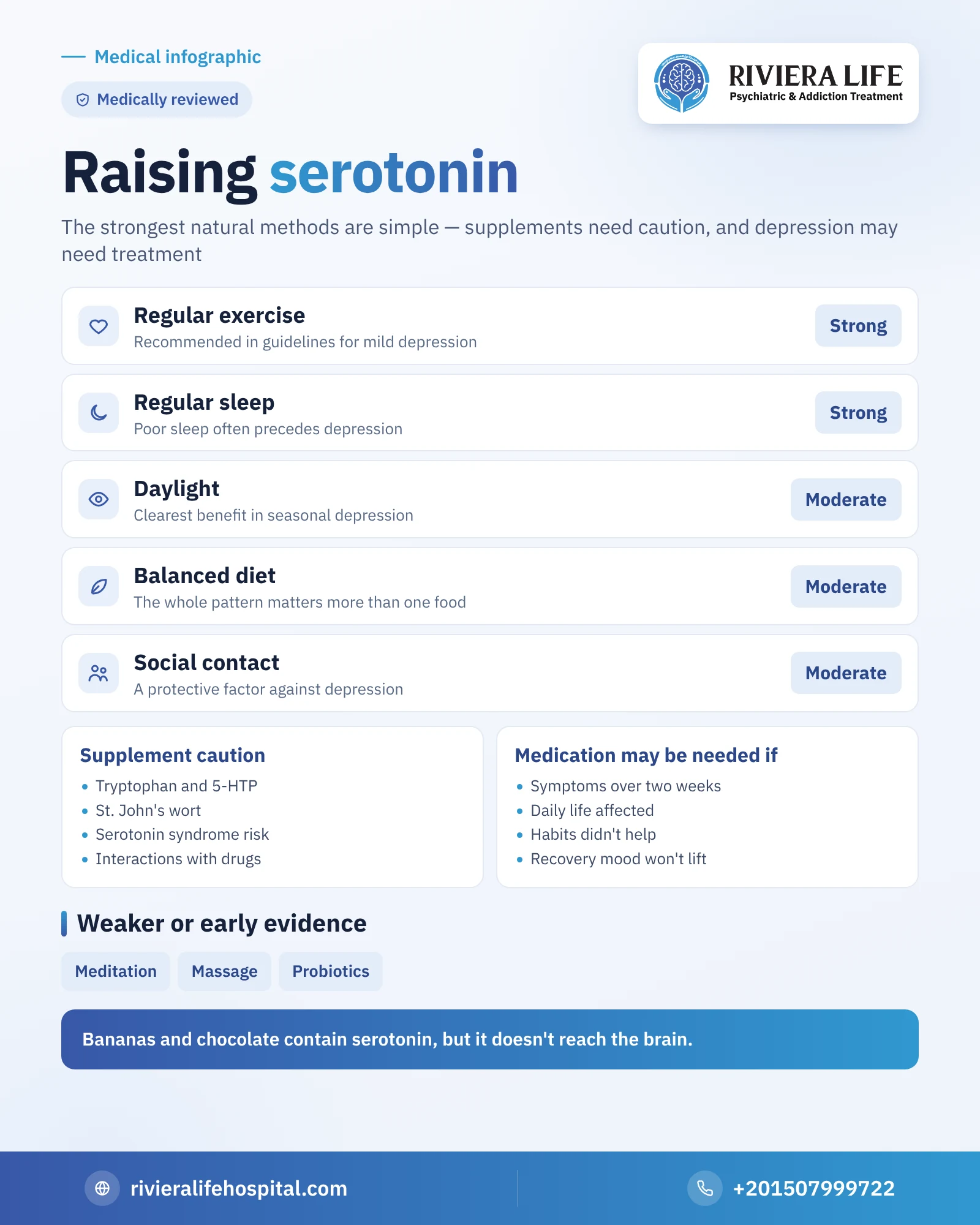
The practical conclusion: a balanced Mediterranean-style diet, with vegetables, fruit, whole grains, legumes, fish and olive oil, is linked in studies to a lower risk of depression, more than any single food. Bananas and chocolate contain some serotonin, but it doesn’t cross into the brain at all.
The gut and serotonin: what do we know?
Most of the body’s serotonin is made inside the gut, which has made the “gut-brain axis” an exciting research topic. Studies suggest that gut bacteria may affect gut serotonin production and mood, but the evidence that probiotic supplements lift mood in humans is still preliminary and inconclusive. What you can do safely: vary your fiber, eat plenty of vegetables, and reduce processed foods.
Social contact and calm activities
Loneliness is clearly linked to depression, and warm relationships are among the strongest protective factors. Although measuring their effect on serotonin specifically is difficult, spending time with people you love, helping others and taking part in a group activity all support mood and interact with other chemical systems such as oxytocin. Small studies also suggest that meditation, breathing exercises and massage may improve mood and ease stress; the evidence here is moderate to weak, but with hardly any harm.
Ranking the methods by strength of evidence
| Method | Strength of evidence for improving mood | Notes |
|---|---|---|
| Regular exercise | Strong | Recommended by guidelines for treating mild depression |
| Regular sleep | Strong | Disturbed sleep often precedes depression |
| Daylight | Moderate | Clearest in seasonal depression |
| Balanced diet | Moderate | The overall pattern matters more than a single food |
| Social contact | Moderate | A protective factor against depression |
| Meditation and massage | Weak to moderate | Useful for easing stress |
| Probiotics | Preliminary | Still under research |
Supplements: why the caution?
Supplements such as tryptophan, 5-HTP and St. John’s wort are sold as “raising serotonin naturally”. Some of these substances really do affect serotonin, and that is exactly the source of danger:
- Combining them with antidepressants, tramadol or some migraine medicines may cause serotonin syndrome.
- St. John’s wort interacts with many medicines, including contraceptive pills and some heart medicines, weakening their effect.
- The quality and concentration of supplements aren’t guaranteed, and the evidence for their effectiveness in depression is limited or conflicting.
Don’t start any supplement of this kind without consulting your doctor, especially if you are taking psychiatric medicines or painkillers.
When is medication the way?
If symptoms are severe or last more than two weeks and affect your life, as our article on serotonin deficiency symptoms explains, the doctor may suggest medicines that act on serotonin, such as selective serotonin reuptake inhibitors. These medicines don’t cause addiction, their effect usually appears after several weeks, and the doctor determines their type, duration and gradual stopping. Using them doesn’t cancel the importance of the habits above, but works alongside them, and the best results usually combine medication and psychotherapy.
Increasing serotonin during recovery from addiction
After stopping substances such as ecstasy, cocaine or alcohol, the person in recovery often goes through weeks of low mood and insomnia. Here the habits above become part of the treatment plan itself: a fixed sleep schedule, daily exercise, regular meals, and group activities that fill the time that used to go to using. It is important that the person in recovery doesn’t try to “make up” serotonin with supplements or medicines without a doctor, as he may unintentionally combine substances that raise it.
How can Riviera Life help you?
If you have tried improving your sleep, movement and diet and your mood hasn’t improved, or you are on a recovery journey and feel your mood isn’t returning, a specialist assessment is an important step. At Riviera Life, psychiatry consultants assess your condition in complete confidentiality and set a plan combining psychotherapy and medication when needed, and the first consultation is free on +201507999722.
More from our serotonin guide
- Serotonin: the complete guide
- Serotonin deficiency symptoms
- Serotonin syndrome
- How to increase dopamine
Questions many people ask
There is no guaranteed instant way. Regular movement and going out in daylight are among the habits most linked to improved mood, but their effect builds up with consistency.
They contain some, but serotonin coming from food doesn't cross into the brain. A balanced diet as a whole matters more than any single food.
They may interact with antidepressants, tramadol and migraine medicines and raise the risk of serotonin syndrome, so they aren't used without consulting the doctor.
They may be enough in mild cases under a specialist's supervision, but moderate and severe depression usually needs psychotherapy, medication or both.
It varies from person to person, and many notice a difference within weeks of regular sleep and movement, but consistency is what makes the difference.