Sex addiction symptoms aren’t about the number of times or the strength of desire, but about one central sign: the person wants to stop or cut down and can’t, and continues even though the behavior now costs them more than it gives. Around it gather other behavioral, psychological and health signs, some noticed by the person themselves, and others by their partner or family. This article sets out these signs in calm medical language, helps you distinguish them from similar conditions, and identifies when you need a specialist assessment.
Is every strong desire a sign of sex addiction?
No. Sexual desire varies greatly from person to person, and from one stage of life to another, and its strong presence isn’t a symptom of any illness. Nor is guilt alone enough; a religious person may feel intense distress over limited behavior they control, and this distress is real and deserves discussion, but it isn’t necessarily a disorder. What turns behavior into a medical problem is loss of control combined with harm and distress, continuing for a long period, which the World Health Organization estimates at about six months or more.
The central sign: loss of control
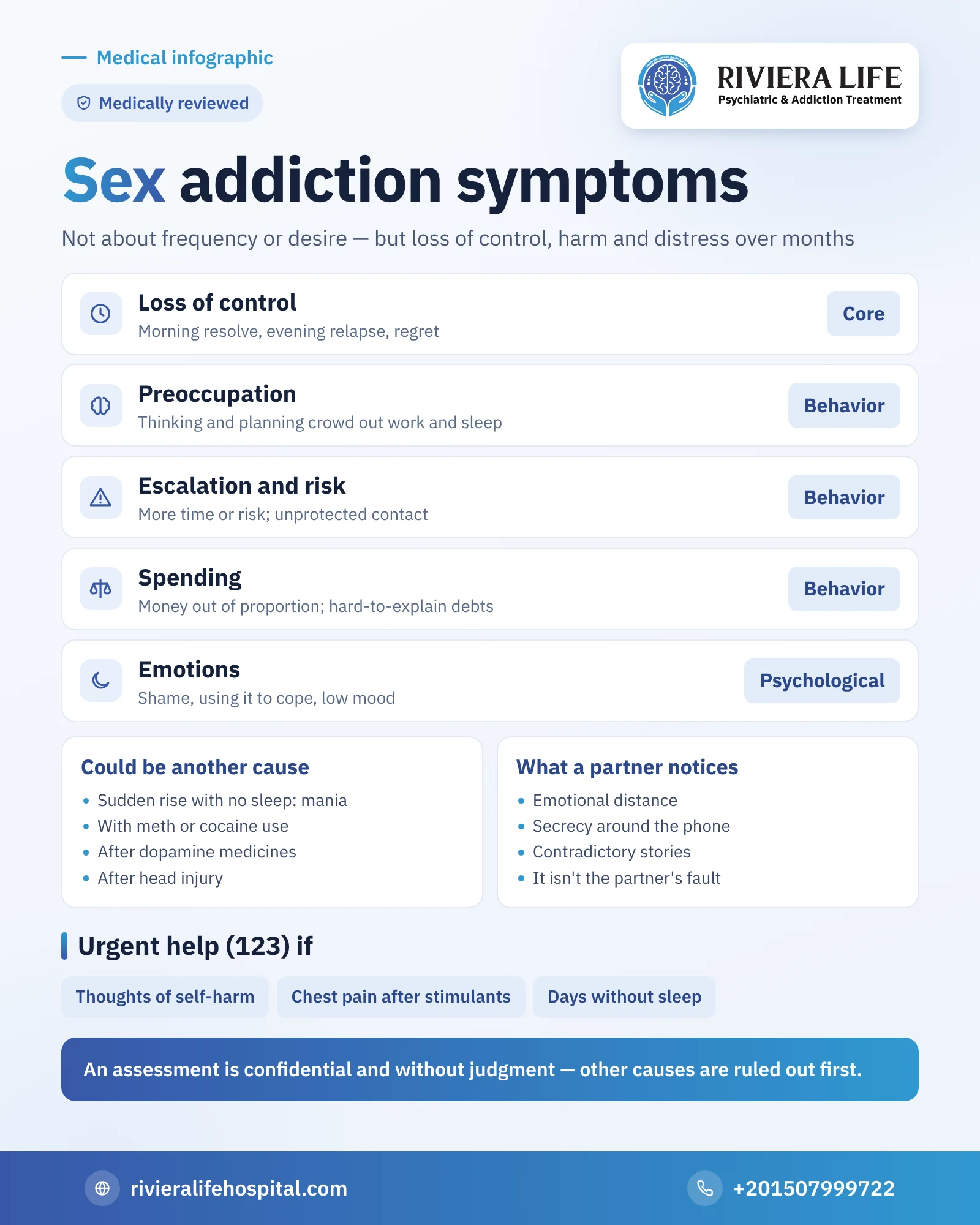
Many patients describe the same scene in different words: a sincere decision in the morning not to repeat it, then tension building through the day, then giving in in the evening, then regret and a new promise. This cycle is the core of the problem. It may show as time always stretching longer than planned, as the behavior returning after every short break, or as limits the person set for themselves being crossed again and again. Over time the behavior becomes more a release of tension than pleasure, and may continue even when the person finds little satisfaction in it.
Behavioral signs
- Constant preoccupation: thinking about and planning the behavior takes up a large part of the day, at the expense of work, sleep and family.
- Neglecting duties and self-care: repeated lateness, postponed tasks, and long late nights that affect performance the next day.
- Escalation: a need for more time or greater risk to reach the same feeling.
- Risk-taking: unprotected relationships, or behavior in places or circumstances that may expose the person to legal or professional problems.
- Spending: money spent on services, subscriptions or meetings out of proportion to income, and debts that are hard to explain.
Psychological and emotional signs
Behind the behavior usually hide feelings the person doesn’t talk about. The clearest is shame and guilt after each time, a feeling that doesn’t prevent repetition and sometimes even feeds it, because the behavior itself has become the usual way of soothing distress. Many notice that they turn to it when they feel anxious, sad, bored or lonely, not when they feel desire. Over time nervous tension, mood swings, withdrawal from friends, and sometimes clear depressive symptoms appear. If you find yourself in this description, see our article on depression, because treating it is part of recovery.
Signs in daily life
These signs don’t appear in one place, but are spread across small details: a phone that never leaves its owner, even in the bathroom, passwords that change, browsing history deleted regularly, hidden apps, and absences of hours without a convincing explanation. Performance at work or study may decline, or the person may receive a warning for using work devices. These signs alone prove nothing, but combined with loss of control they paint a clear picture.
What does the partner notice?
The partner is often the first to feel something has changed, before knowing what it is. They may notice emotional coldness or distance from intimacy between them, or on the contrary an insistence that disregards their wishes, or secrecy and tension when the phone is touched, or contradictory stories. It is important for the partner to know that these signs don’t mean they are at fault or less attractive; compulsive behavior revolves around the person’s need to escape, not around the other party. And if it comes to light, the partner has the right to seek psychological support for themselves, not to carry the burden alone.
Health signs that deserve attention
Some signs are physical, and need a doctor, not guesswork. If the behavior involves multiple partners, symptoms may appear indicating a sexually transmitted infection, such as unusual discharge, burning on urination, or sores or a rash in the genital area. But many of these infections remain silent without symptoms, which is why doctors advise regular screening for those at risk, usually including HIV, syphilis, hepatitis and others as the doctor judges. Health signs also include chronic exhaustion, disturbed sleep and headaches from long late nights.
Symptoms that may mean another cause
Not every increase in sexual behavior is a compulsive disorder. There are patterns that point to a different cause needing different treatment:
- A sudden increase lasting days or weeks with little sleep without tiredness, fast speech and impulsive spending: this may be a manic episode within bipolar disorder.
- Behavior that appears or intensifies with the use of shabu and methamphetamine or cocaine.
- A change that began after a new medicine, especially dopamine medicines used in Parkinson’s disease, or after a head injury, or with declining memory in older people.
These medical causes are explained in detail in our article on the causes of sex addiction.
Questions to help you assess your situation
These questions aren’t a diagnostic test, but a way to think honestly before talking with a specialist:
- Have you tried to cut down or stop more than once in recent months and failed?
- Does the behavior take longer than you plan most times?
- Have you lost something important because of it: a partner’s trust, a job, money or health?
- Do you turn to it more when you are anxious or sad than out of desire?
- Do you continue even though you no longer enjoy it as you used to?
- Do you hide it and lie about it to those closest to you?
If you answered yes to several questions, this doesn’t mean a diagnosis, but it is reason enough to seek an assessment.
When do you need a specialist assessment?
Seek an assessment if loss of control has continued for months, has started to harm your marriage, work or finances, is accompanied by symptoms of depression, anxiety or substance use, or appeared suddenly with a change in sleep and mood. The assessment is confidential, carried out by a psychiatrist who rules out other causes before any diagnosis, then discusses with you the sex addiction treatment options suited to your situation.
Seek urgent help immediately if you see
Call an ambulance on 123 or go to the nearest emergency department.
- Thoughts of death or self-harm because of shame or fear of exposure
- Chest pain, high fever or seizures after using stimulants
- Severe agitation with no sleep for days and dangerously reckless behavior
How can Riviera Life help you?
Many postpone the first step for fear of how the doctor will see them. At Riviera Life, psychiatric consultants carry out a confidential assessment without judgment, starting with understanding what is happening in your life and ruling out medical causes, and the first consultation is free on +201507999722.
More from our sex addiction guide
- Sex addiction: the complete guide
- The causes of sex addiction and its psychological and medical factors
- Sex addiction treatment and paths to recovery
- Porn addiction symptoms
Questions many people ask
Usually repeatedly failing to keep limits the person sets for themselves, with time stretching longer than planned. Then losses and secrecy gradually begin to appear.
Not necessarily; sexual thoughts are normal and vary between people. It becomes concerning when it crowds out your duties and leads you to behavior you can't control and that harms you.
Yes, although less commonly. A woman may delay seeking help because of stronger stigma, even though treatment is equally available and confidential.
In mania the increase appears suddenly for a defined period with little sleep, excess activity and fast speech, then calms down. Compulsive behavior is a persistent pattern over months without this mood picture, and the doctor makes the final distinction.
If the behavior involves multiple partners, regular screening for sexually transmitted infections is advised even without symptoms. The doctor decides on suitable tests confidentially.