Sex addiction has no single cause that can be pointed to; the causes of sex addiction are spread across psychological, brain and social factors, whose weight differs from person to person. For many, the behavior begins as a way to calm anxiety or sadness, then the brain learns this shortcut until it is hard to leave. For others, the sudden appearance of the behavior is a sign of a completely different medical cause, such as a manic episode, stimulant use or a medication effect. This article explains the psychological and medical factors behind loss of control, and why understanding the cause changes the way of treatment.
Why isn’t one explanation enough?
People tend to explain the problem in a single word: weak will, lack of religion, or idleness. But the reality doctors see is more complex. Two people practicing the same behavior may have different motives: escaping undiagnosed depression in the first, impulsiveness linked to shabu use in the second, and a side effect of a medicine in a third. That is why the doctor doesn’t start with judgment, but with a question: what function does this behavior serve in this person’s life, when did it begin, and what accompanies it?
The brain’s reward system
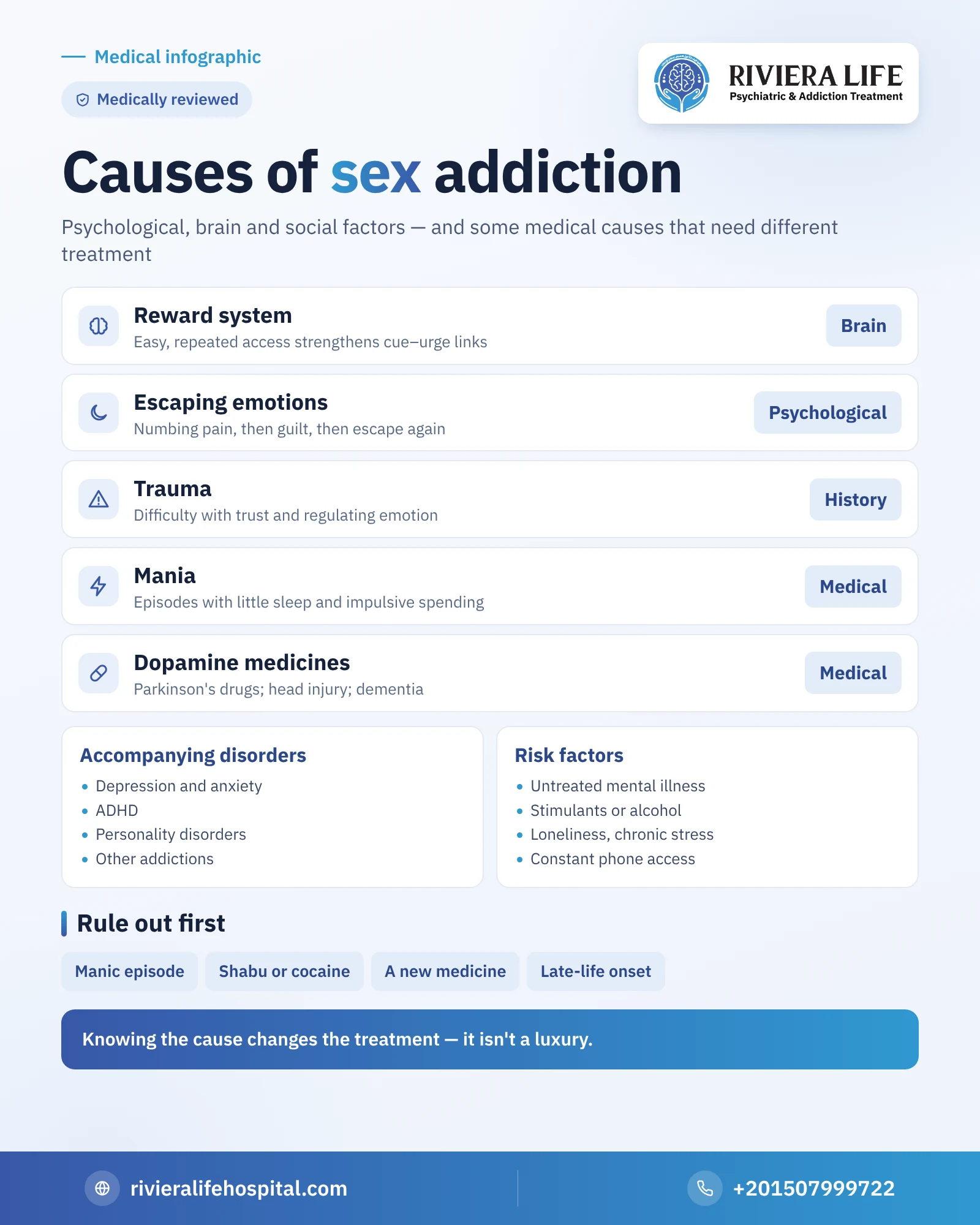
Every pleasurable behavior releases signals in the brain linked to dopamine, telling it: “repeat this”. With close repetition, especially when the behavior is available at any moment through the phone, the links between surrounding triggers, such as loneliness at night or tension after a working day, and the desire for the behavior strengthen. Some studies indicate that reward areas in those affected respond more strongly to cues linked to the behavior, while the role of the frontal areas responsible for inhibition and weighing consequences weakens. This field is still under research, but it explains why the patient feels the impulse is “stronger than them”.
Escaping difficult emotions
What recurs most in patients’ stories is that the behavior didn’t begin with desire, but with pain. An employee who comes home from exhausting work and finds no other way to calm down, a young man living alone in a new city, a husband escaping disputes he doesn’t know how to face. The behavior becomes a quick anesthetic for emotions, then generates guilt and anxiety afterwards, so the person returns to it to escape the guilt itself. This cycle is one of the strongest things that entrench the problem, and treatment works to break it by teaching other ways of regulating emotions.
Accompanying psychological disorders
Compulsive sexual behavior often occurs together with other disorders, and some of them may be the first spark:
- Depression and anxiety: some patients use the behavior to ease sadness or tension temporarily, as our guide to anxiety explains.
- Attention-deficit/hyperactivity disorder: linked to impulsiveness, thrill-seeking and difficulty delaying gratification.
- Personality disorders: especially those linked to emotional instability and impulsiveness.
- Addiction to substances and other behaviors: such as alcohol or gambling, as these problems share similar risk factors.
Childhood experiences and trauma
A proportion of patients have a history of painful childhood experiences, such as emotional neglect, living in a troubled home, or being abused. These experiences don’t inevitably make a person an addict, but they may leave difficulty with trust, attachment and regulating emotions, so the person later looks for quick closeness that carries no emotional risk. When trauma is part of the picture, treatment needs a therapist trained to deal with it gently, and our guide to post-traumatic stress disorder may help here. The same effect sometimes appears as a painful attachment to a partner, which we explain in our article on love addiction and its treatment.
Personality traits
Some traits raise susceptibility without being a direct cause: impulsiveness, constantly seeking novelty and excitement, low self-esteem, and intense sensitivity to rejection. The way of thinking also plays a role; someone who sees themselves as “bad and hopeless” after every slip tends towards giving up completely instead of stopping at the mistake, a pattern cognitive therapy works on directly.
Easy access and technology
Smartphones have changed the shape of the problem. Sexual content and dating apps are available around the clock, at almost no cost, and in complete privacy. This doesn’t create the disorder in everyone, but it removes the natural barriers that used to slow repetition, and makes those with susceptibility more prone to slipping. The pattern often starts with excessive viewing before it widens, which our article on the causes of porn addiction sets out.
Relationships and social pressures
The immediate environment affects the problem more than expected. Chronic marital disputes that aren’t talked about, long emotional coldness, or being away from family because of work may make compulsive behavior a quick refuge from a feeling of rejection or emptiness. In our societies it is hard to talk about sexual health at all, so many grow up without correct information, and curiosity gets mixed with fear and guilt for them, with no one to ask. This silence doesn’t cause the disorder alone, but it delays seeking help for years, and leaves the problem deepening in secret.
Medical causes: bipolar disorder
One of the most important things the doctor rules out is a manic or hypomanic episode in bipolar disorder. In these episodes sexual desire rises and caution falls, within a wider picture: little sleep without tiredness, excess energy, racing thoughts and impulsive spending. The essential difference is that this change comes in defined periods and calms when they end, and that its treatment relies on mood stabilizers, not on compulsive behavior programs alone. Confusing the two conditions may delay necessary treatment.
Stimulant drugs
Stimulants, led by methamphetamine, known in Egypt as shabu and ice, and cocaine, raise dopamine sharply, increasing sexual impulsiveness and weakening judgment of risks. Over time sexual behavior may become linked to use until each becomes a trigger for the other, so it is hard to treat one without the other. This link increases the risk of sexually transmitted infections, because caution almost disappears during use. Alcohol plays a similar role by removing inhibitions.
Medicines and neurological diseases
Some medicines that stimulate dopamine receptors, used to treat Parkinson’s disease and restless legs syndrome, may cause impulse control disorders in a proportion of patients, including increased sexual behavior. This usually improves when the treating doctor adjusts the medicine, and it must not be stopped without consulting them. Similar changes may also appear after head injuries affecting the front of the brain, or with some types of dementia in older people. That is why the behavior appearing for the first time at a late age calls for a neurological assessment.
Risk factors in brief
- Untreated depression, anxiety or ADHD.
- Use of stimulants or alcohol.
- Difficult childhood experiences or previous trauma.
- Loneliness, isolation and chronic stress.
- Ongoing marital disputes without dialogue.
- Constant easy access through the phone without limits.
What does understanding the cause mean for treatment?
Knowing the cause isn’t a luxury. Someone whose behavior was part of a manic episode first needs mood control, someone whose behavior was linked to shabu needs safe detox and a recovery program from the substance, and someone whose medicine was the cause needs to review it with their doctor. Someone who uses the behavior to escape their emotions benefits from cognitive behavioral therapy and learning healthy alternatives. The details of these paths are in our article on sex addiction treatment. At Riviera Life the consultant begins with exactly this question before setting any plan.
More from our sex addiction guide
- Sex addiction: the complete guide
- Sex addiction symptoms and signs of loss of control
- Sex addiction treatment and paths to recovery
- Bipolar disorder: the complete guide
Questions many people ask
There is no gene responsible for it, but some traits linked to it, such as impulsiveness and susceptibility to depression or addiction, may have a genetic side. Environment and experiences also play a large role.
Yes, the most prominent examples are dopamine-stimulating medicines used in Parkinson's disease. Don't stop the medicine yourself; tell your doctor so they can adjust the plan.
Because it raises dopamine sharply and weakens the brain's ability to weigh consequences, so use becomes linked to sexual behavior and each strengthens the other. Treating the condition requires dealing with both together.
Idleness and loneliness may increase repetition, but they are rarely the only cause. They usually combine with psychological pressure, depression or constant easy access.
Guilt doesn't cause the disorder, but it may increase distress and feed the cycle of escape and repetition. A good therapist respects the person's values and helps them act in line with them.