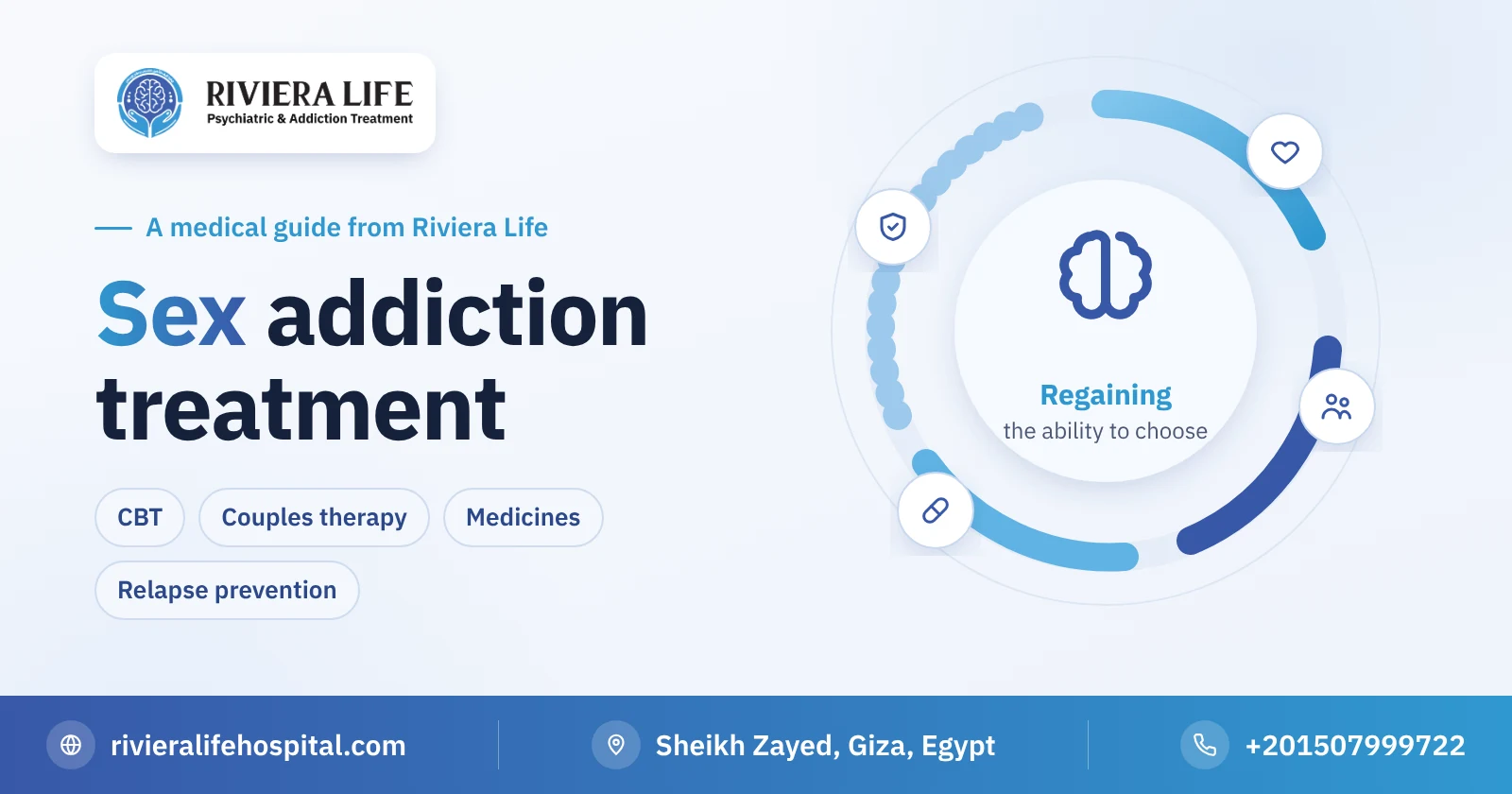
Sex addiction treatment is possible, and rests mainly on psychotherapy, led by cognitive behavioral therapy, together with treating accompanying depression, anxiety or substance use, and involving the partner when the relationship is affected. Medicines play a supporting role, decided by the psychiatrist according to each case. The goal isn’t to eliminate sexual desire, but to restore the ability to choose. This article explains the paths to recovery step by step, when an inpatient program is needed, and how to choose a place for treatment.
What exactly is the goal of treatment?
Some patients fear that treatment means complete deprivation or turning them into people without desire, and this isn’t true. The realistic goal is for the behavior the person has lost control over to stop, for sexual life, if it exists within a relationship, to return to its natural place, and for the patient to learn how to deal with tension, loneliness and boredom without escaping into compulsive behavior. The patient defines with their therapist what recovery means for them, in light of their values and circumstances, so no ready-made vision is imposed on them.
The first step: a comprehensive, confidential assessment
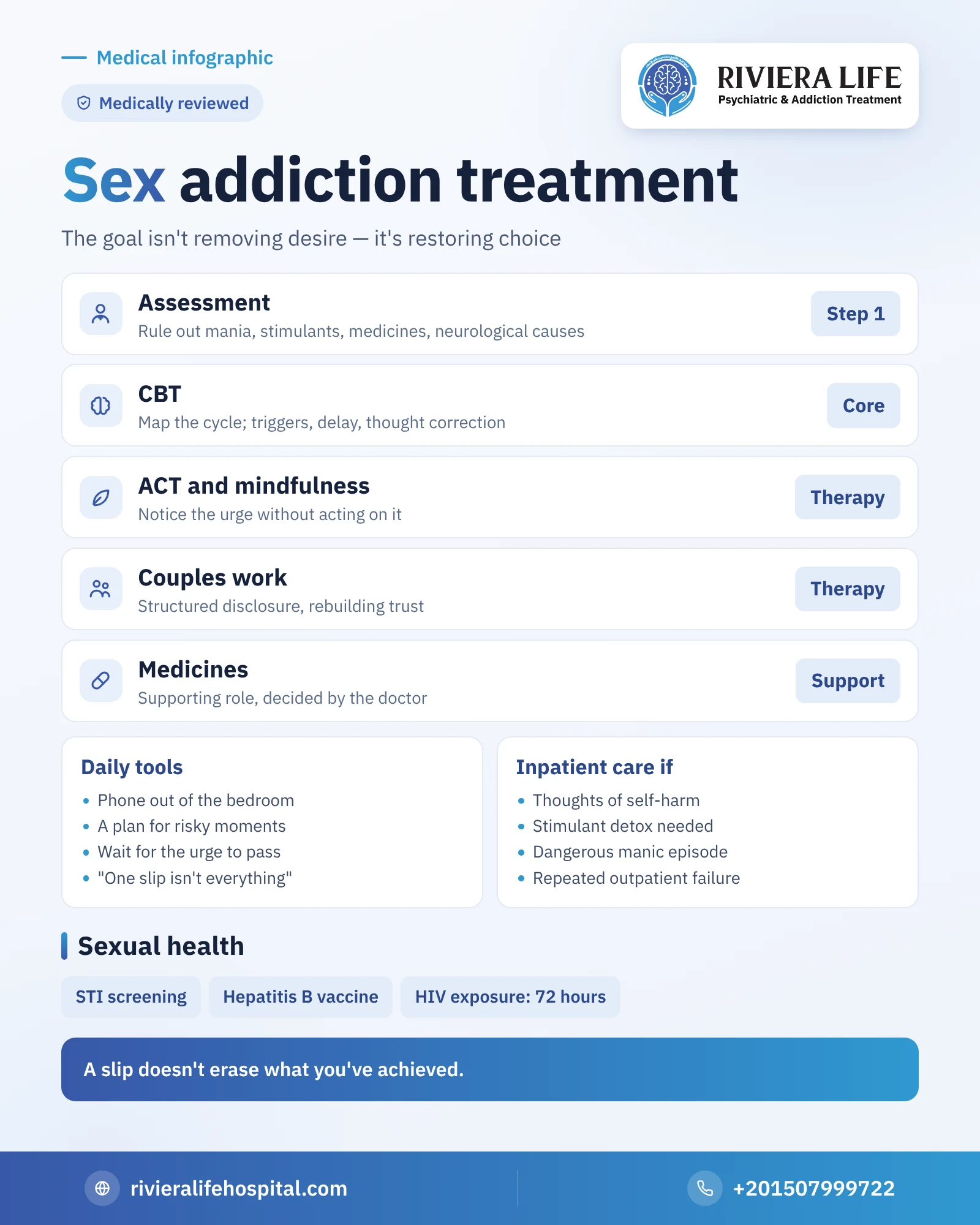
Treatment begins with an interview with a consultant psychiatrist covering the history and development of the behavior, attempts to stop, losses, mood and sleep, and use of any substances. The most important thing at this stage is ruling out causes that need different treatment: a manic episode, stimulant use, a medication effect or a neurological cause, which we have explained in our article on the causes of sex addiction. The doctor also suggests tests for sexually transmitted infections if there is a risk, then a clear plan with measurable goals is written.
Cognitive behavioral therapy
It is the backbone of most plans. In it, the patient learns to map the cycle they go around: what the trigger is, what thought comes after it, what feeling, then the behavior, then what follows. Practical tools come out of this map.
What does that look like in daily life?
- Controlling triggers: reducing opportunities for access, such as leaving the phone outside the bedroom at night, deleting triggering apps, and turning on blocking tools.
- A plan for risky moments: a list of what the person will do when they feel the urge, such as leaving the place, calling a supportive person or exercising.
- Delaying the response: practicing noticing the urge and waiting for it to subside, as it peaks and then recedes.
- Correcting thoughts: such as “I’ve ruined everything so there’s no point trying”, a thought that turns a small slip into a full relapse.
Acceptance, commitment and mindfulness
Instead of fighting the urge, a battle many lose, these methods teach the patient to notice the impulse as a passing sensation in body and mind without carrying out what it dictates. The therapist helps them identify what really matters to them in life, such as family, work and religious or moral values, so that abstaining becomes a step towards something they want, not merely deprivation. Mindfulness exercises also help lower the accompanying anxiety.
Group therapy and support groups
Many patients discover in group sessions that they aren’t alone, and that what they thought was a unique flaw is suffered by others too, so the shame that feeds the behavior recedes. The group allows practical solutions and encouragement to be shared on difficult days. There are support groups based on sharing experiences between people in recovery, which help some patients as part of a wider plan, not a substitute for specialist treatment.
Couples therapy and rebuilding trust
When the patient is married, the partner is deeply affected, and often needs support themselves. So a good plan includes individual sessions for the partner, then couples sessions supervised by a therapist when both are ready. The therapist helps organize disclosure of the truth in a way that doesn’t deepen the wound, agree on clear boundaries and signs of transparency, and gradually rebuild emotional closeness. Some couples choose a different path in the end; what matters is that the decision is considered, not born of shock.
Treating accompanying disorders
Ignoring what accompanies the behavior is one of the most common causes of relapse. If there is depression, anxiety, ADHD or OCD, treating it is an essential part of the plan. Someone whose condition is linked to episodes of bipolar disorder needs mood control first. And someone whose behavior is linked to using shabu and methamphetamine or cocaine needs safe detox from the substance and a recovery program that treats both together, because returning to one opens the door to the other.
The role of medicines: the doctor’s decision alone
There is no medicine specific to sex addiction, but the doctor may use some medicine classes depending on the case:
- Antidepressants from the selective serotonin reuptake inhibitor class, especially with depression, anxiety or obsessive symptoms.
- Naltrexone, which is used in treating some types of addiction, and which the doctor may try to reduce impulsiveness in selected cases.
- Mood stabilizers when bipolar disorder is part of the picture.
- Medicines that lower male hormones, reserved for rare, very high-risk cases and under close specialist supervision.
None of these medicines is used without assessment and follow-up, and medicines don’t replace psychotherapy.
Sexual health: screening and prevention
If the behavior involved multiple partners, medical screening for sexually transmitted infections is part of treatment, even without symptoms, because many of them stay silent. The doctor decides the tests and how often to repeat them, and may recommend available vaccines for some infections such as hepatitis B, and testing of the partner when needed. And if a high-risk exposure to HIV has occurred, the person should see a doctor immediately, because preventive treatment after exposure must start within 72 hours.
When is an inpatient program needed?
- Thoughts of death or self-harm, especially after the behavior has come to light.
- The behavior being linked to stimulant use that needs supervised detox.
- A manic episode with dangerously reckless behavior.
- Repeated failure of outpatient treatment with collapse at work or in the family.
Relapse prevention
A slip is possible, and doesn’t mean losing what has been achieved. Before the program ends, the patient learns to recognize early warning signs, such as late nights, isolation and pressure at work, and to act before they turn into behavior. Spaced-out follow-up sessions continue for months, and they are encouraged to build a life with rest, exercise and supportive relationships. And someone whose problem began with excessive viewing will also benefit from the tools in our article on porn addiction treatment.
The right hospital for sex addiction treatment: how to choose
The right hospital for sex addiction treatment is one that offers what this patient specifically needs: complete confidentiality, an assessment that rules out mania, stimulants and medication causes, structured psychotherapy without judgment, and a safe space for the partner. Before you decide, ask:
- Does the team rule out manic episodes, stimulant use and neurological causes before diagnosis?
- Does it offer cognitive behavioral therapy with a written plan and relapse-prevention tools?
- Does it provide sessions for the partner and couples therapy supervised by a trained therapist?
- Does it treat accompanying depression, anxiety or substance use within the same plan?
- Does it deal with sexual health and tests confidentially and without stigma?
- Does it respect the patient’s values and beliefs and build goals with them?
And don’t trust any provider promising you a certain cure or solving the problem within a few days.
How Riviera Life meets these standards
These criteria are what Riviera Life offers, and in detail:
- An accredited hospital: holding a Ministry of Health license to practice psychiatry and addiction treatment.
- Complete confidentiality: the details of the case and the patient’s data are protected at every stage.
- Specialist consultants: consultants in psychiatry and addiction treatment rule out medical causes and set an individual plan.
- Dual diagnosis treatment: safe detox from stimulants or accompanying substances while treating the behavior at the same time.
- Uninterrupted medical follow-up: day and night for inpatients or for those whose case carries risk.
- A program for the family and partner: sessions that support the partner and rebuild trust, with aftercare after discharge.
- A record of experience: fourteen years and thousands of cases that have regained their health in psychiatry and addiction.
You don’t have to disclose everything in the first call; call +201507999722 at any time for a free first consultation; we are based in Sheikh Zayed, Giza.
More from our sex addiction guide
- Sex addiction: the complete guide
- Sex addiction symptoms and signs of loss of control
- The causes of sex addiction and its psychological and medical factors
- Porn addiction treatment
Questions many people ask
It varies with severity and accompanying disorders, but usually extends over months of regular sessions, followed by spaced-out follow-up. Improvement is gradual and doesn't happen in days.
There is no medicine specific to it, but the doctor may use antidepressants, naltrexone or mood stabilizers depending on the case. Psychotherapy remains the foundation.
The decision is yours, and confidentiality is kept. But when the relationship is affected, the therapist often helps with a structured disclosure that protects both partners and opens the door to couples therapy.
Yes, most cases are treated in the outpatient clinic. Inpatient care is preferred when there are thoughts of self-harm, substance use needing detox, or a dangerous manic episode.
Choose a licensed hospital that keeps complete confidentiality, rules out mania, stimulants and medication causes before diagnosis, offers structured psychotherapy and couples work, and treats accompanying substance use. Riviera Life in Sheikh Zayed meets these criteria.