Porn addiction symptoms aren’t measured by how often someone watches, but by one essential sign: the person loses the ability to control it despite their serious attempts and despite the harm it causes them. These signs are spread between behaviors that can be noticed, such as long late nights, secrecy and withdrawal, and inner feelings such as guilt, anxiety and the cycle of broken promises. This article helps you recognize them, gives you questions to review yourself, and clarifies when a specialist assessment is the right step. And remember that diagnosis is made by a doctor or psychologist, not an online list.
Is watching in itself a sign of the problem?
No. Some people watch now and then and then go on with their lives without feeling their will has been taken, and some watch less but live a daily struggle with it. That is why the specialist doesn’t only ask “how many times?”, but asks: do you choose to watch or do you find yourself watching? Do you stop when you decide to? And what have you lost because of it? In the International Classification of Diseases, the severe pattern of this behavior falls under compulsive sexual behavior disorder, which requires persistent loss of control over a long period with clear distress or impairment, as our pornography guide explains.
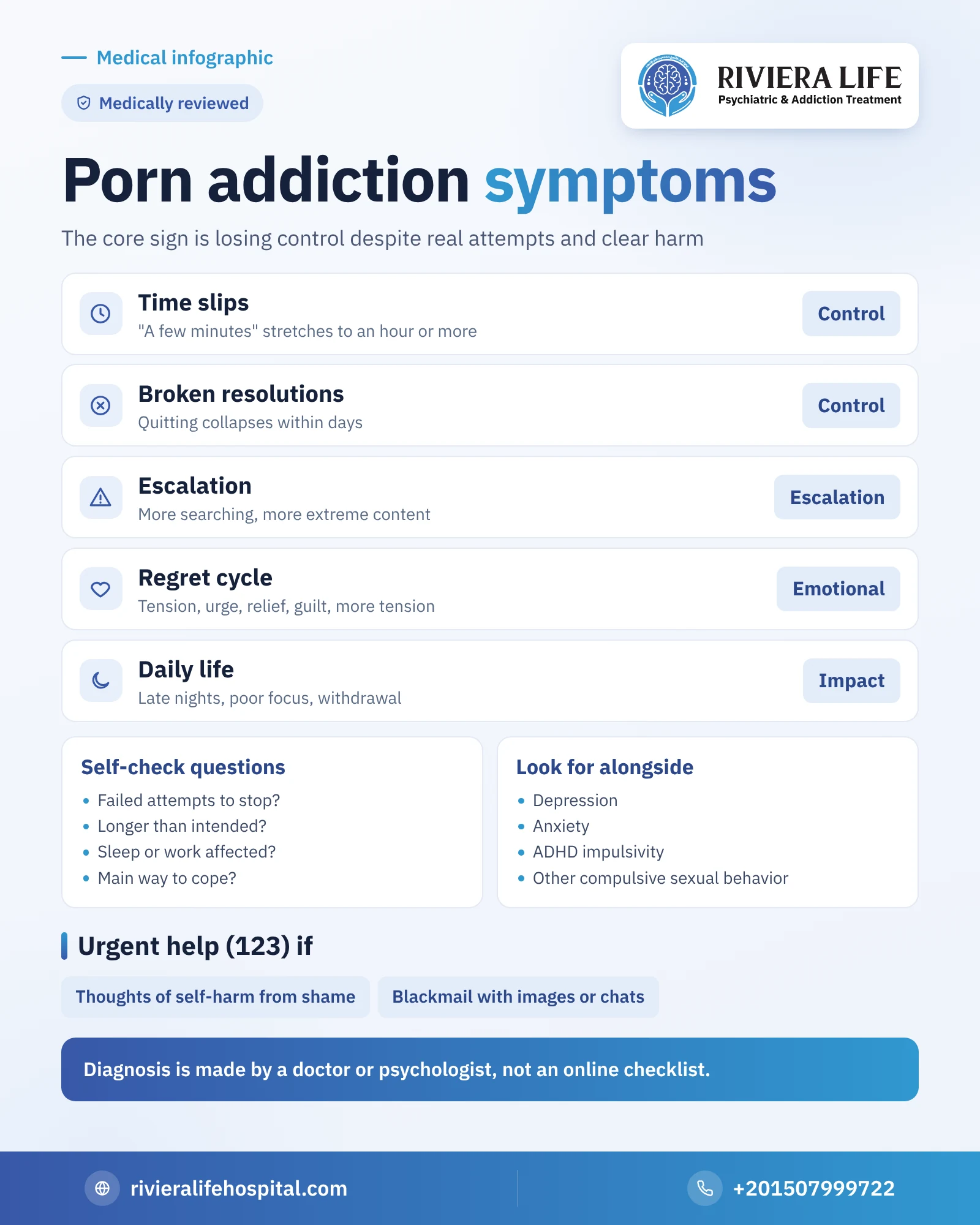
The core sign: loss of control
This is the sign everything revolves around, and it appears in several forms:
- A session that is supposed to be “minutes” stretches to an hour or more without the person noticing the time.
- Repeated decisions to stop that collapse after a few days, sometimes on the same day.
- Deleting apps or accounts and then going back to them, or looking for ways around blocking tools the person set up themselves.
- Continuing to watch at unsuitable times or places, such as at work or while the family is at home, despite fear of being found out.
- Declining interest in hobbies and activities that used to give them pleasure.
Escalation: when the usual content is no longer enough
Some people who suffer from compulsive viewing describe spending longer searching and moving between clips, or being drawn to more extreme content or content different from what they used to watch, sometimes content that conflicts with their inclinations and values, which increases their anxiety. Not everyone who watches goes through this, and scientists are still studying how to explain it, but when it happens it is a sign that the behavior has started leading the person, not the other way round. A related signal is when searching itself takes up more time than watching.
Psychological and emotional signs
Many live what could be called “the regret cycle”: tension, boredom or sadness, then an intense urge, then watching that gives temporary relief, then guilt, shame and a sense of failure, and this very feeling raises tension so the cycle starts again. Common psychological signs include:
- Mood swings and irritability, especially when trying to stop or when access to devices is blocked.
- The mind being preoccupied with the subject during work or study time.
- Constant anxiety about being found out.
- A negative view of oneself that reaches feeling one is an entirely “bad” person.
- Using viewing as an almost exclusive way of coping with sadness, loneliness or insomnia.
Signs that appear in daily life
Over time compulsive viewing leaves a visible mark. Sleep is delayed until dawn and the person wakes up exhausted, concentration at work or study declines, and postponed tasks pile up. They may spend long hours in their room with the door closed, become very sensitive about their phone and computer, and avoid social occasions or cut short their presence at them. Compulsive viewing is often combined with compulsive masturbation too, and you can read about the difference between normal and compulsive in our masturbation guide.
What a partner may notice in a marriage
The problem doesn’t always appear to the partner directly, but it may be reflected in details such as staying up after the other has gone to sleep, cooling interest in intimacy, or feeling that the other is present in body and absent in mind. The partner may notice sudden secrecy in phone use or defensive reactions when asked. These signs alone prove nothing, as exhaustion, depression or other problems may lie behind them, but they deserve a calm conversation, not an accusation. The effect on trust between spouses is explained in our article on the harms of pornography.
Signs the family may notice in a teenager
A teenager rarely talks about this on their own, but parents may notice repeated late nights on the phone, intense annoyance when anyone approaches their device, a sudden decline in studies, or withdrawal and avoiding conversation. These signs are general and may mean many things, from anxiety to cyberbullying, so don’t jump to conclusions. It is more useful to open the door to talking and reassure them that they won’t be punished for what they say honestly.
Loss of control or a conflict with values?
Some people watch rarely but feel great distress because viewing goes against their religious or moral values, so they describe themselves as addicted. Research indicates that this conflict between behavior and values explains a large part of some people’s feeling that they are addicted. This distress is real and deserves attention, but its treatment differs from treating actual loss of control. The therapist helps you distinguish between the two, and respects your values in both cases.
Questions that help you review what you are going through
Answer honestly to yourself, and don’t treat the result as a diagnosis:
- Have you tried to stop or cut down more than once in recent months without succeeding?
- Do you watch longer than you intend most of the time?
- Has viewing affected your sleep, work or studies?
- Has it become your main way of coping with pressure, sadness or boredom?
- Do you hide it from your partner or family and feel constant anxiety about it being discovered?
- Do you continue even though you clearly see its harm?
If your answers were “yes” to several questions and this has continued for months, a specialist assessment is a reasonable step.
Symptoms that may belong to another accompanying condition
Compulsive viewing is often the visible part of a deeper condition. It may be a way of escaping depression or anxiety, linked to the impulsivity of ADHD, or take the form of repeated intrusive thoughts that the specialist needs to distinguish from OCD. When loss of control extends to other sexual behaviors, the signs are closer to what our article on sex addiction symptoms explains. Diagnosing these accompanying conditions is an essential part of treatment.
When should you ask for help?
Ask for an assessment if your failed attempts to stop keep recurring, viewing has started disrupting your work, studies or marriage, or you feel sadness or despair afterwards that stays with you. And ask for urgent help if thoughts of harming yourself or ending your life come to you because of the sense of shame, or if you are blackmailed with images or chats: call an ambulance on 123 or go to the nearest emergency department. Our article on porn addiction treatment explains what awaits you after the assessment.
How can Riviera Life help you?
Asking for help on this subject takes courage, which is why the assessment at Riviera Life starts with a completely confidential session with a consultant psychiatrist who listens without judgment, and examines whether depression, anxiety or another condition lies behind the behavior. The first consultation is free on +201507999722.
More from our pornography guide
- Pornography: the complete guide
- Causes of porn addiction and risk factors
- Porn addiction treatment step by step
- The harms of pornography on the self, relationships and teenagers
- The benefits of quitting porn: realistic gains and what stopping doesn’t guarantee
Questions many people ask
It is usually failed attempts to stop or cut down, with noticing that the time spent is more than the person intends. The standard is loss of control, not the number of times.
Not necessarily. Guilt may come from watching conflicting with your values even if it is rare. A specialist assessment distinguishes this distress from actual loss of control.
There are research scales that help the specialist estimate severity, but they don't diagnose alone. Diagnosis comes from an interview with a doctor or psychologist who understands the full context.
You may notice repeated late nights, secrecy in phone use and coolness in the relationship, but these signs may have other causes. A calm conversation and then a joint consultation are better than searching and accusation.
Yes, some people use viewing to escape sadness, anxiety or loneliness. That is why the doctor looks for depression, anxiety and ADHD when assessing any compulsive behavior.