The urge to buy keeps returning and is hard to control because compulsive buying isn’t about things, but about what the moment of buying does to feelings. The causes of shopping addiction combine a psychological predisposition such as impulsivity and low self-esteem, a mood state such as sadness, anxiety and loneliness, and a modern environment that makes buying available at any moment with no down payment and no waiting. This article explains how these causes work together, why the cycle is hard to break by willpower alone, and which risk factors deserve attention.
The compulsive buying cycle: why does it repeat?
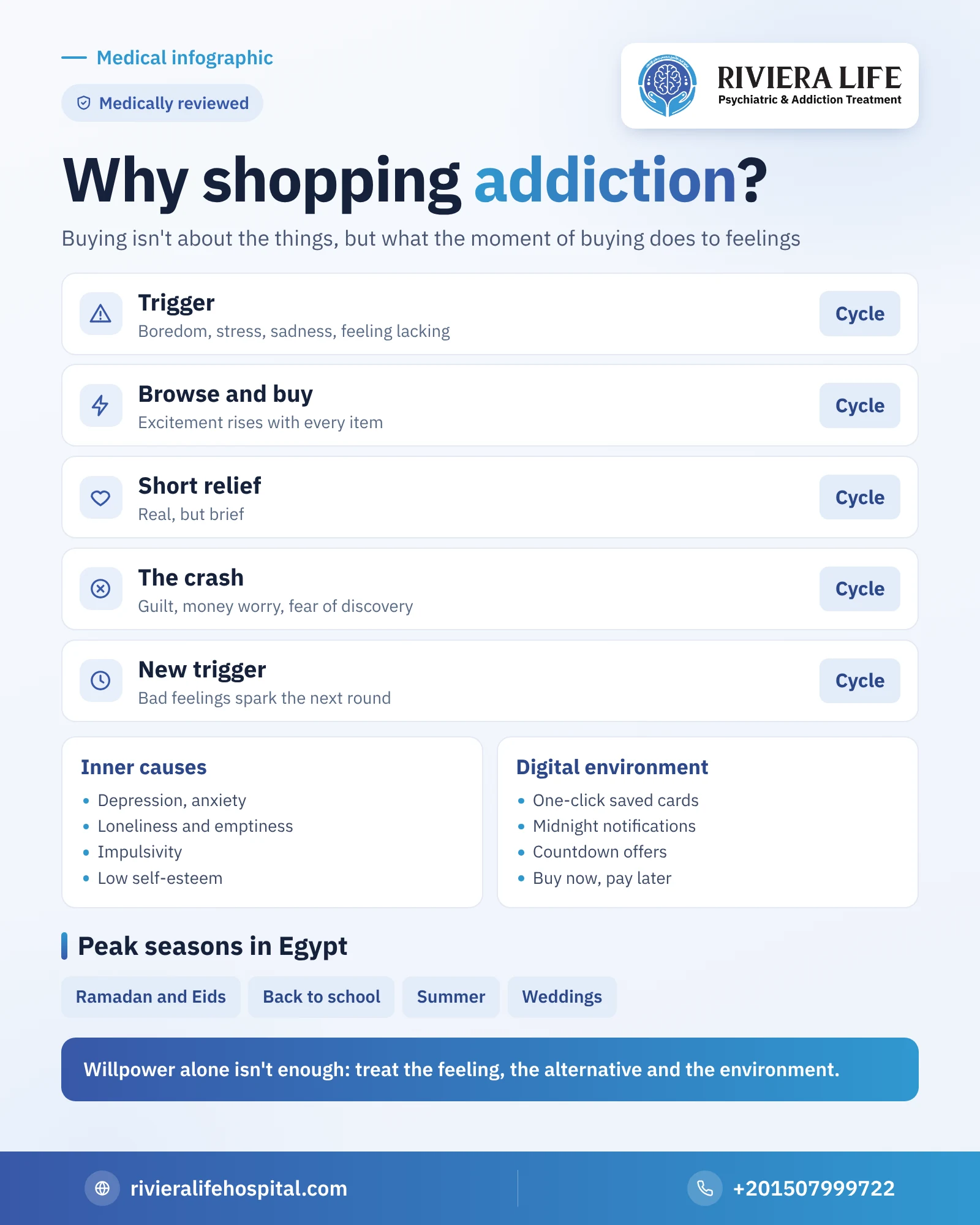
The cycle usually begins with an uncomfortable feeling: boredom, tension after a hard day, sadness, or a sense of lacking something. The idea of buying appears as a quick solution, so browsing begins, and with every product added to the basket the excitement rises. The moment of completing the order gives real but short relief. Then comes the crash: guilt, anxiety about money, and fear that the family will find out. And these new negative feelings in turn become the spark for another round of buying.
This is how the brain learns a simple equation: “When I feel bad I buy and feel better”. With repetition the equation becomes automatic, working before the person thinks of the consequences. That is why it isn’t enough for the patient to know buying harms them; they know it well, but the habit is faster than the knowledge.
The role of the brain’s reward system
Like any pleasurable behavior, buying activates the reward system, which depends on dopamine. Notably, the excitement lies in anticipation more than in getting: planning the purchase, waiting for the parcel, and opening the box. That is why some patients describe the item losing its value as soon as it is in their hands. This pattern resembles what happens in gambling addiction, where the uncertain reward drives desire more than the win itself. Researchers see compulsive buying as sharing with other behavioral addictions a weakened ability to restrain impulses despite knowing the harm.
Psychological and mood causes
Doctors note that compulsive buying is often linked to psychological conditions that need treatment in their own right:
- Depression: buying becomes an attempt to regain a sense of pleasure the person has lost in the rest of their life; you will find its signs in the article on depression symptoms.
- Anxiety: buying temporarily distracts the mind from tension and worrying thoughts.
- Loneliness and emptiness: browsing fills time, and orders arriving at the door give a sense that something is waiting for you.
- Difficulty regulating emotions: someone who hasn’t learned healthy ways to deal with anger or sadness turns to the fastest means available.
- Other disorders: compulsive buying sometimes coexists with eating disorders, substance use and some borderline personality traits.
Personality traits
Some traits make a person more vulnerable: impulsivity and difficulty delaying desire, low self-esteem and relying on things to improve one’s image in front of others, perfectionism that searches endlessly for “the perfect piece”, and excessive sensitivity to rejection. These traits don’t mean the person will inevitably be affected, but they make them more influenced by the triggers around them.
Early experiences and the family
Many people carry their relationship with money from their childhood home. A child may grow up in a home where buying is used as a reward, to compensate for absence or to apologize after a quarrel, and learn that a gift resolves feelings. Or they may grow up in severe deprivation, so a fear of “the chance that won’t come back” stays inside them. Some researchers note that mood disorders and addiction are more common in sufferers’ families, suggesting a mix of heredity and learning.
Social triggers and social media
Constant comparison on social media presses on self-esteem: pictures of new clothes, the latest devices and tidy homes, and influencers showing their purchases daily with discount codes. Live streams of sales pages create an atmosphere of excitement and urgency: “Last three pieces”, “Offer ends in ten minutes”. Added to this is social pressure at occasions, and the wish to appear at a certain level in front of family and friends.
The digital environment and no-down-payment installments
This may be the biggest change in the causes of shopping addiction in recent years. Apps are designed to reduce any barrier between desire and purchase:
- A saved card and one-click buying without re-entering details.
- Notifications of offers that “won’t be repeated” arriving at any time, even midnight.
- Targeted ads showing exactly what you searched for yesterday.
- Countdown timers and back-to-back sale seasons that create a constant sense of urgency.
- Cash on delivery, which postpones the feeling of the price.
- “Buy now, pay later” apps and consumer finance companies that split purchases over months.
Installments in particular change how the price is perceived. Instead of a large sum that provokes hesitation, the person sees a small monthly installment that seems bearable. The problem is that each transaction is assessed alone, so the sufferer doesn’t see the full picture until the installments gather in one month and exceed their income.
Seasons and occasions: recurring triggers
Spending in Egypt has well-known seasons: Ramadan and the two Eids, back to school, summer and the beach resorts, the big end-of-year sale seasons, and wedding preparations. In these seasons spending rises for everyone, and excessive buying becomes socially “justified”, so compulsive buying disappears in the crowd. Therapists note that many patients recognize their problem for the first time after such a season, when the installments pile up and the truth appears in the account statement.
Why does it often start in the twenties?
At this age a young person gets their first independent income, first card and first account in installment apps, without enough experience in managing money. This stage coincides with the pressures of building an identity, comparing with peers, and looking for work or marriage. If these pressures combine with a depressed mood, anxiety or impulsivity, buying finds fertile ground. That is why teaching children to manage money early, and discussing the meaning of debt and installments with them before they own a card, helps.
Risk factors in brief
| Area | What raises the risk |
|---|---|
| Age | Late adolescence and the twenties, with the first income or card |
| Mood | Depression, anxiety, loneliness, ongoing stress |
| Personality | Impulsivity, low self-esteem, perfectionism |
| Environment | Easy credit and installments, targeted ads, comparison on social media |
| Family history | Mood disorders or addiction in the family, learning buying as a way to compensate |
Do women and men have different causes?
The core motives are similar, but the form of buying sometimes differs. Treated cases appear more among women, and their purchases often focus on clothes, bags, cosmetics and household items. Men tend towards electronic devices, watches, sports equipment and car accessories, and present this as a hobby. The difference in seeking treatment may be bigger than the difference in being affected; men are less likely to admit their buying has gone out of control.
Why isn’t willpower alone enough?
Many sufferers have promised themselves many times, and deleted the apps and then reinstalled them. This isn’t a moral weakness, but the result of a deep-rooted habit fed by a bad mood and an environment designed to make buying easy. That is why treatment works on all three levels together: understanding the feelings that ignite the urge, learning alternatives to them, and changing the financial and digital environment to make it less tempting. You will find these steps in the article on shopping addiction treatment, and if you are still wondering about your condition, start with the article on shopping addiction symptoms.
At Riviera Life the consultant starts by understanding what drives the buying in each patient specifically, whether depression, anxiety, social pressure or an old history, then builds the plan on it.
More from the shopping addiction guide
- Shopping addiction: the complete guide
- Shopping addiction symptoms
- Shopping addiction treatment
- Bipolar disorder: the complete guide
Questions many people ask
There is no specific gene for it, but mood disorders and addiction are more common in the families of some sufferers, suggesting a mix of genetic predisposition and learning within the family.
Because buying gives quick relief that changes mood temporarily, so the brain learns to link sadness with buying. Repeating this link makes it automatic and hard to break without learning alternatives.
Apps don't create the addiction alone, but they remove the barriers between desire and purchase with saved cards, notifications and instant installments, raising the risk in those who are predisposed.
They often come together; buying may be an attempt to lift a depressed mood, and debts and guilt may deepen the depression. That is why the doctor assesses both together.
Because successive offers and social pressure make excessive buying acceptable and justified, so someone with a tendency to compulsive buying finds it hard to recognize their limits.