Bango withdrawal symptoms usually begin one to three days after the last joint, peak in the first week, then gradually ease within about two weeks, while disturbed sleep and vivid dreams may last for longer weeks. The best known are irritability, insomnia, loss of appetite and anxiety. These symptoms aren’t physically dangerous in most cases, but they are unpleasant enough to be the main reason many people go back to using in the first days. Here we explain what happens roughly day by day, what makes withdrawal harder, and when a doctor is needed.
These same stages are what someone stopping “bango” under its other common names, such as “bongo”, goes through.
Why do symptoms appear when you stop bango?
With regular use, the brain adapts to the presence of the active substance, reducing the number of active cannabinoid receptors and relying on bango to regulate sleep, appetite and mood. When the person suddenly stops, the brain finds itself with a weakly responding system, and symptoms appear until it regains its balance. Because the substance leaves fat stores slowly, withdrawal starts later than with other substances, but it lasts longer. This doesn’t happen to someone who tried it a few times; it usually appears in those who used daily or almost daily for weeks or months.
The most common bango withdrawal symptoms
Psychological symptoms
- Irritability and quick anger at the smallest things.
- Anxiety, tension and a feeling of unease.
- Depressed mood and loss of enthusiasm.
- Craving for a joint, stronger at usual times of use.
Sleep and appetite symptoms
- Difficulty sleeping and frequent waking.
- Very vivid dreams or nightmares, because bango had been reducing the dreaming phase.
- Loss of appetite and weight loss in the first week.
Physical symptoms
- Headache and sweating, and sometimes chills or a slight rise in temperature.
- Stomach pain or cramps and nausea.
- Mild tremor, restlessness and an inability to sit still.
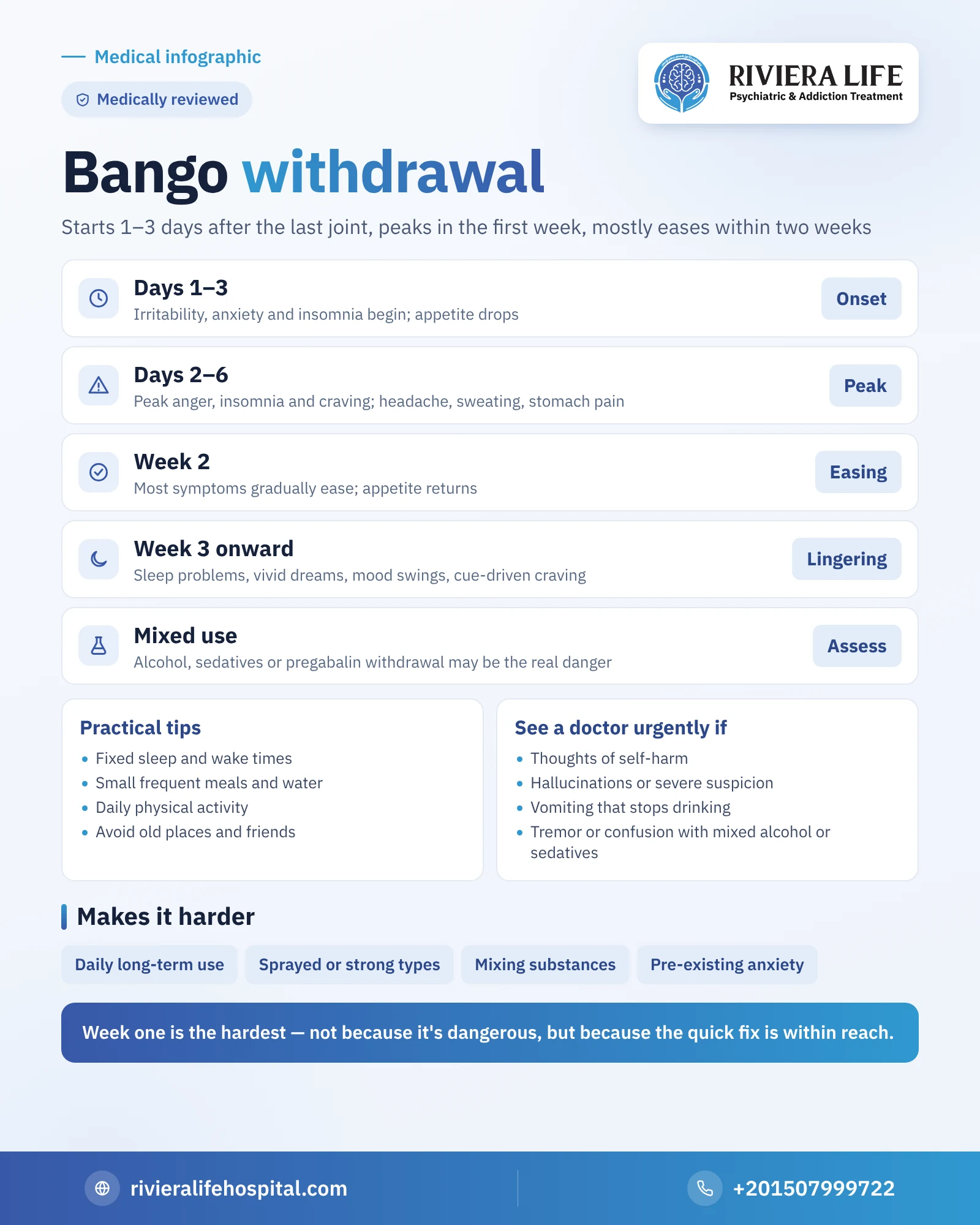
The bango withdrawal timeline
The duration varies from person to person, but most cases follow this approximate line:
| Period | What usually happens |
|---|---|
| Day one to day three | Irritability, anxiety and insomnia begin, and appetite drops |
| Day two to day six | The peak: the strongest anger, insomnia and craving, with headache, sweating and stomach pain |
| The second week | Most symptoms ease gradually and appetite returns |
| The third week onward | Disturbed sleep, vivid dreams, mood swings and bouts of craving with triggers may remain |
What makes withdrawal more severe or longer?
- Daily use over a long period, or several times a day.
- Strong types, or bango sprayed with synthetic cannabinoids, whose withdrawal is usually harsher.
- Mixing with tramadol, pregabalin or alcohol, so withdrawal is from more than one substance at the same time.
- Anxiety, depression or insomnia before use, because they return strongly on stopping.
- Staying in the same environment and with the same friends.
The difference between bango withdrawal and withdrawal from other substances
Bango withdrawal alone doesn’t usually cause seizures or a dangerous drop in breathing, unlike alcohol or sedative withdrawal. But this reassurance doesn’t apply to those who mix. If the person also takes sedative pills or pregabalin, or drinks heavily, withdrawal from these substances may be the more dangerous one, and needs a medical assessment before stopping. For someone using sprayed bango, symptoms may be closer to strox withdrawal; the details are on our page about strox.
Mood after stopping: pay attention to this
Some people go through a clear drop in mood in the first weeks, especially those who used bango to calm depression or anxiety. Passing sadness is expected, but if it turns into hopelessness or talk that life is pointless or of self-harm, this needs immediate contact with a psychiatrist. The person shouldn’t be left alone in this state.
Why do many relapse in the first week?
The first week is the hardest period in the journey of stopping bango, not because the symptoms are dangerous, but because the quick fix for them is known and within reach. Someone who hasn’t slept for three nights, is irritated by every word, and knows that one joint will relieve them within minutes needs more than willpower to hold out.
What makes it harder is that bango is cheap and available, and the friends who offer it are often just a phone call away. That is why many attempts to stop alone fail in these particular days, and the person then wrongly concludes that they can never stop. The truth is that planning this period in advance, with daily follow-up and someone close who knows the plan, changes the outcome a great deal.
Bango withdrawal in teenagers
In a teenager, the symptoms may appear as fights, stubbornness and refusing school more than as an open complaint of insomnia or anxiety. So the family needs to read this behavior as part of withdrawal, and coordinate with the doctor rather than responding with punishment.
Can you stop bango at home?
Many mild to moderate cases can get through withdrawal outside hospital, provided there is medical and psychological follow-up and a clear plan, not just willpower. An inpatient stay is more suitable in specific cases: mixing with other substances, psychotic symptoms or severe depression, repeated failure to stop, or a home environment full of triggers. The assessment determines the right setting, as we explain in our article on bango addiction treatment.
How is bango withdrawal managed medically?
There is no approved medicine given specifically for bango withdrawal, so the doctor focuses on easing the symptoms themselves for a short, measured period: help with sleep, easing anxiety, treating headache or stomach pain, and treating depression if present. Care is taken that sleep or anxiety medicines don’t turn into a new dependence. Alongside that, behavioral therapy sessions start from the first days, because the skills for dealing with craving are what prevent relapse after the physical symptoms fade.
During this period the doctor regularly monitors weight, sleep and mood, and reassesses the case if symptoms last longer than expected, because persistent insomnia or sadness after weeks may reveal a mental disorder that bango was hiding, which needs separate treatment.
Practical tips for the first days
- Fix your sleep and wake times, and avoid long naps and stimulants after the afternoon.
- Eat small, frequent meals even if your appetite is weak, and drink enough water.
- Do daily physical activity; it eases tension and improves sleep.
- Get rid of smoking equipment, and stay away from the usual “hangout” places and friends during this period.
- Plan what you’ll do in the hour when you used to smoke.
- Remember that the peak passes within days, and each day that passes makes the next one easier.
For the family: how to help without adding tension
Irritability in these days is part of withdrawal and isn’t aimed at you personally. Reduce heated discussions, provide simple meals and quiet at home at night, and encourage any healthy outside activity. And if you notice the return of the signs explained in our article on bango addiction symptoms, don’t treat it as the end of the attempt, but contact the doctor to adjust the plan.
When do you need urgent medical help?
Contact a doctor immediately if thoughts of self-harm appear, hallucinations or severe suspicion, repeated vomiting that prevents drinking, or strong symptoms in someone who mixes bango with alcohol or sedatives, such as severe tremor or confusion. At Riviera Life the medical team follows withdrawal cases around the clock, and the family can request a free, confidential first consultation. For the full picture of the substance, see our page on bango.
More from our bango guide
- Bango: the complete guide
- Bango addiction treatment
- How long bango stays in your system
- The causes of bango addiction
Questions many people ask
Bango withdrawal on its own is unpleasant but rarely physically dangerous. The danger comes from severe depression in some people, and from withdrawal from other substances if the person mixes them with it.
Most symptoms ease within about two weeks, peaking in the first days. Disturbed sleep and vivid dreams may continue for several weeks.
Because the brain got used to bango to fall asleep, and needs time to regain its rhythm. Regular sleep times and physical activity help, and the doctor can prescribe temporary help if needed.
There is no approved medicine specifically for it, but the doctor treats symptoms such as insomnia, anxiety and headache for a short period, and behavioral therapy starts early to prevent relapse.
If thoughts of self-harm, hallucinations or repeated vomiting appear, if the person mixes bango with alcohol or sedatives, or if previous attempts to stop have failed.