Bango addiction treatment is possible and effective, but it isn’t like treating heroin or sedative pills. There is no approved medicine given to replace bango or block its effect, so treatment rests mainly on psychological and behavioral therapy, and on treating the anxiety, depression or attention deficit that often stands behind use, together with managing withdrawal symptoms and long follow-up to prevent relapse. Most patients are young people, and many of them come reluctantly under family pressure, which makes building motivation part of the treatment itself. Here we explain the stages of treatment, when admission is needed, the expected duration, and how to choose the right hospital.
This also covers treating addiction to “bongo”, as it is called in Sudan and some Gulf countries, or “banjo” as some write it.
The stages of bango addiction treatment
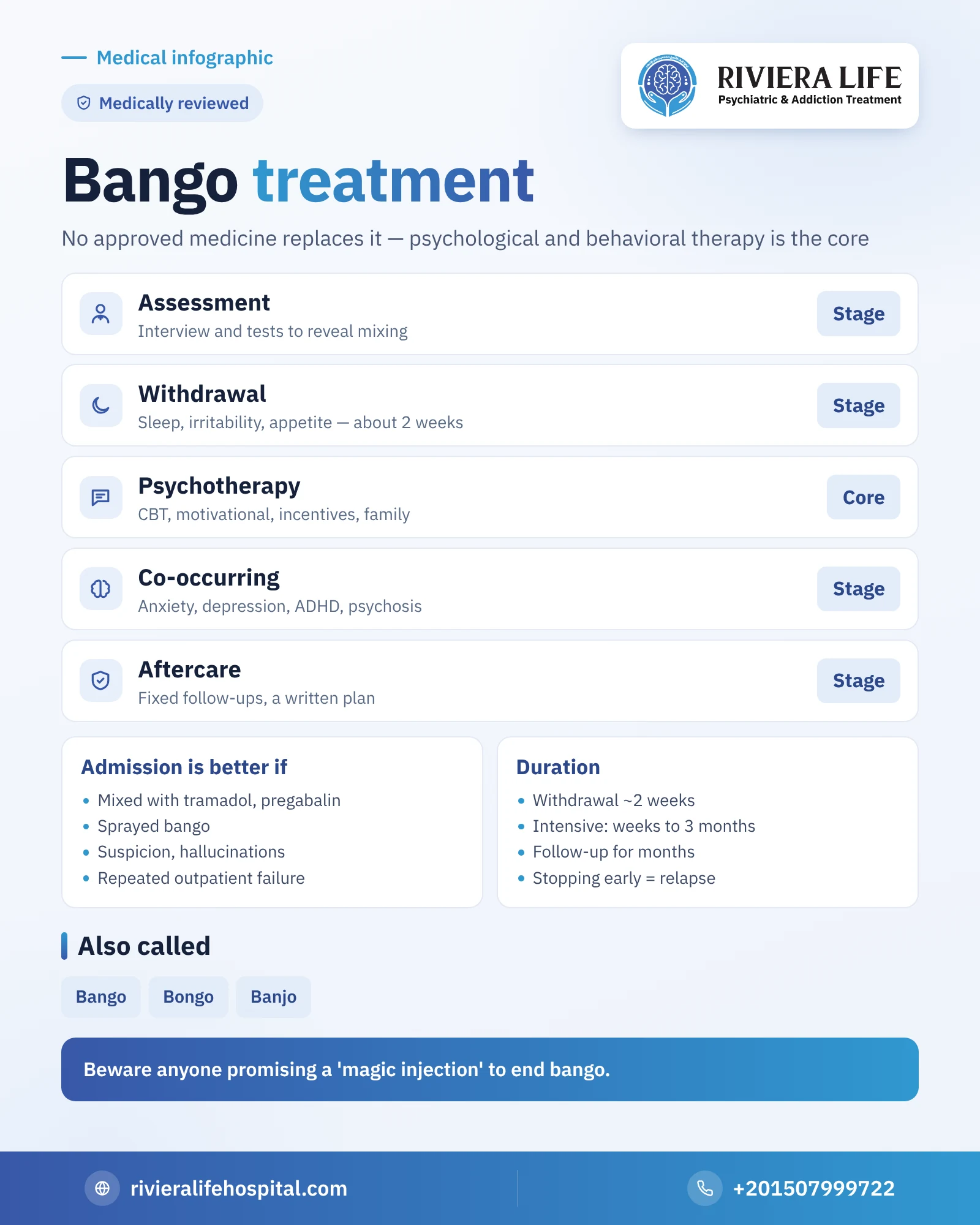
The details differ from patient to patient, but a good plan usually passes through these stations:
- Assessment: a medical and psychological interview with the patient and family, and tests that determine the substances actually used, as many who say “just bango” use pills or sprayed substances with it.
- Getting through withdrawal: managing insomnia, irritability and loss of appetite in the first weeks.
- Psychological and behavioral therapy: the core of treatment, continuing for weeks to months.
- Treating accompanying disorders: anxiety, depression, attention deficit and psychotic symptoms if present.
- After treatment: fixed follow-up appointments, and a written plan for dealing with craving and its triggers.
The first assessment: what happens in it?
The doctor asks about when use started, how often and how much, and other substances, about sleep, mood, study and work, and about any suspicions or hallucinations the patient has had. They listen to the family separately, because what the family sees differs a lot from what the patient reports. Tests help reveal mixing, bearing in mind that bango stays in the body a long time, as the article on how long bango stays in the body explains. At the end of the assessment the team determines the degree of the disorder and the suitable place of treatment.
Getting through the withdrawal stage
Bango withdrawal isn’t physically dangerous in most cases, but it is what most pushes the patient to return in the first week. During it the team focuses on regulating sleep, eating and activity, and uses medicines for a short period when needed to ease insomnia and anxiety, while taking care not to create a new dependence. The details and timing of the symptoms are in the article on bango withdrawal symptoms.
Psychological and behavioral therapy: the heart of treatment
These methods are the best supported by evidence in treating cannabis use disorder:
Cognitive behavioral therapy
It helps the patient spot the moments when they ask for bango: evening boredom, distress after a quarrel, or meeting particular friends. Then they train in practical alternatives, and in refusing the offer without losing their place among people.
Motivational therapy
Very suitable for a young man who came reluctantly and thinks “bango isn’t a problem”. Instead of arguing, the therapist helps him see the gap between what he wants from his life and what bango is doing to it, so the motivation shifts from the family to him.
Contingency management
A system of tangible rewards linked to negative test results or commitment to sessions, which has proven useful in improving retention, especially with teenagers.
Family therapy
It reorganizes communication inside the home, and teaches parents how to monitor without accusing, and how to set limits on money and going out without constant clashes.
Treating teenagers and school students
Because most of those who start bango in Egypt are teenagers, their treatment needs a program different from adults. The family here is an essential partner at every stage, and the sessions address study, friends, time management and pocket money, not use alone. Care is also taken that the teenager isn’t cut off from their studies for long except when necessary, and that after treatment they find a real activity to fill their time. Early intervention at this age usually achieves better results than waiting, because the brain is still able to learn and adapt quickly.
Are there medicines to treat bango addiction?
So far there is no medicine approved specifically to treat cannabis use disorder, and several medicines are still under research. That is why you should beware of any place that promises an “injection” or a “magic medicine” to end bango. The role of medicines in the plan is specific: easing withdrawal symptoms for a short period, and treating accompanying disorders such as depression, anxiety, attention deficit or psychosis, on prescription and with follow-up by a consultant psychiatrist.
Treating co-occurring disorders
Many bango patients carry a problem that preceded use, as we explain in the article on the causes of bango addiction. Treating bango while leaving anxiety or depression untreated means the reason that pushed towards the first joint is still there. Someone who has developed psychotic symptoms needs close psychiatric follow-up, and sometimes admission until their condition stabilizes.
Residential treatment or outpatient follow-up?
Many cases of bango addiction are treated with outpatient follow-up, which lets the student or employee carry on with their life. But admission is the more suitable option when mixing with tramadol, pregabalin or alcohol, when using sprayed bango, when suspicions and hallucinations appear, with severe depression, repeated failure of outpatient treatment, or a home environment full of triggers. Often the patient starts with a short period of admission and then moves to follow-up.
How long does bango addiction treatment take?
Getting through withdrawal takes about two weeks, and the intensive treatment program usually lasts from several weeks to three months, then follow-up continues for months after that depending on the case. Continuing treatment for long enough is more important than finishing it quickly, and stopping abruptly after the symptoms disappear is the most common cause of relapse.
Preventing relapse after treatment
The most dangerous moments after treatment are returning to old friends and idleness. That is why a good plan includes: a daily routine with study or work and sport, an alternative social circle, identifying personal triggers and how to act on them, regular follow-up sessions, and agreed periodic tests. And if a slip happens, it is a signal to adjust the plan quickly, not to declare failure.
The right hospital for bango addiction: how to choose
The right hospital for bango addiction is the one that offers what a bango patient specifically needs: structured psychological and behavioral therapy, not just admission; accurate assessment of anxiety, depression and psychosis; the ability to detect mixing and sprayed bango; and a program suited to young people and their families. Ask before you choose:
- Is the place licensed, with treatment led by consultants in psychiatry and addiction?
- Does it rely on cognitive behavioral and motivational therapy as the basis of the plan?
- Does it assess and treat psychotic symptoms, depression and attention deficit?
- Does it detect bango mixed with tramadol, pregabalin or synthetic cannabinoids and deal with it safely?
- Is there a family program that deals with clashes over money, going out and friends?
- Is there clear follow-up after discharge suited to a student or employee who has returned to their life?
And don’t be fooled by anyone who promises you a guaranteed cure rate, or ending bango addiction completely within days.
How Riviera Life meets these standards in bango addiction treatment
Here is how these criteria are met at Riviera Life:
- Official license: a hospital licensed by the Egyptian Ministry of Health.
- A record of experience: fourteen years of dealing with addiction, and thousands of patients who have regained their lives.
- Consultant doctors: specialists in psychiatry and addiction who examine what may accompany bango, such as anxiety, depression or psychotic symptoms.
- Structured behavioral therapy: an individual plan that builds the patient’s motivation and treats the reason behind use.
- Continuous medical care: follow-up around the day for those with mixing, withdrawal symptoms or psychiatric disorders.
- Family sessions: guiding the family to support and set limits without quarrels.
- Aftercare: follow-up after discharge and a plan for facing old friends and idleness.
- Complete confidentiality: the data of the patient and their family is fully protected.
Call us at any time on +201507999722 to get your first consultation free, or visit the hospital in Sheikh Zayed, Giza. For fuller information about the drug itself, read the bango page.
More from the bango guide
Questions many people ask
There is so far no approved medicine specific to bango addiction. Medicines are used to ease withdrawal symptoms temporarily and to treat accompanying anxiety or depression, while the core treatment rests on psychological and behavioral sessions.
Not always; many cases are treated with outpatient follow-up. Admission is more suitable when mixing with other substances, psychotic symptoms, severe depression or repeated failed attempts.
Getting through withdrawal takes about two weeks, the intensive program several weeks to about three months, then follow-up for months depending on the case.
Start from something that matters to him, such as sleep, study or tension, and suggest a medical assessment rather than admission. The family can also start with a consultation session alone to learn how to talk.
Look for a license, consultants in psychiatry and addiction, structured behavioral therapy, assessment of psychosis and mixing, a family program and aftercare. Riviera Life in Sheikh Zayed meets these criteria.