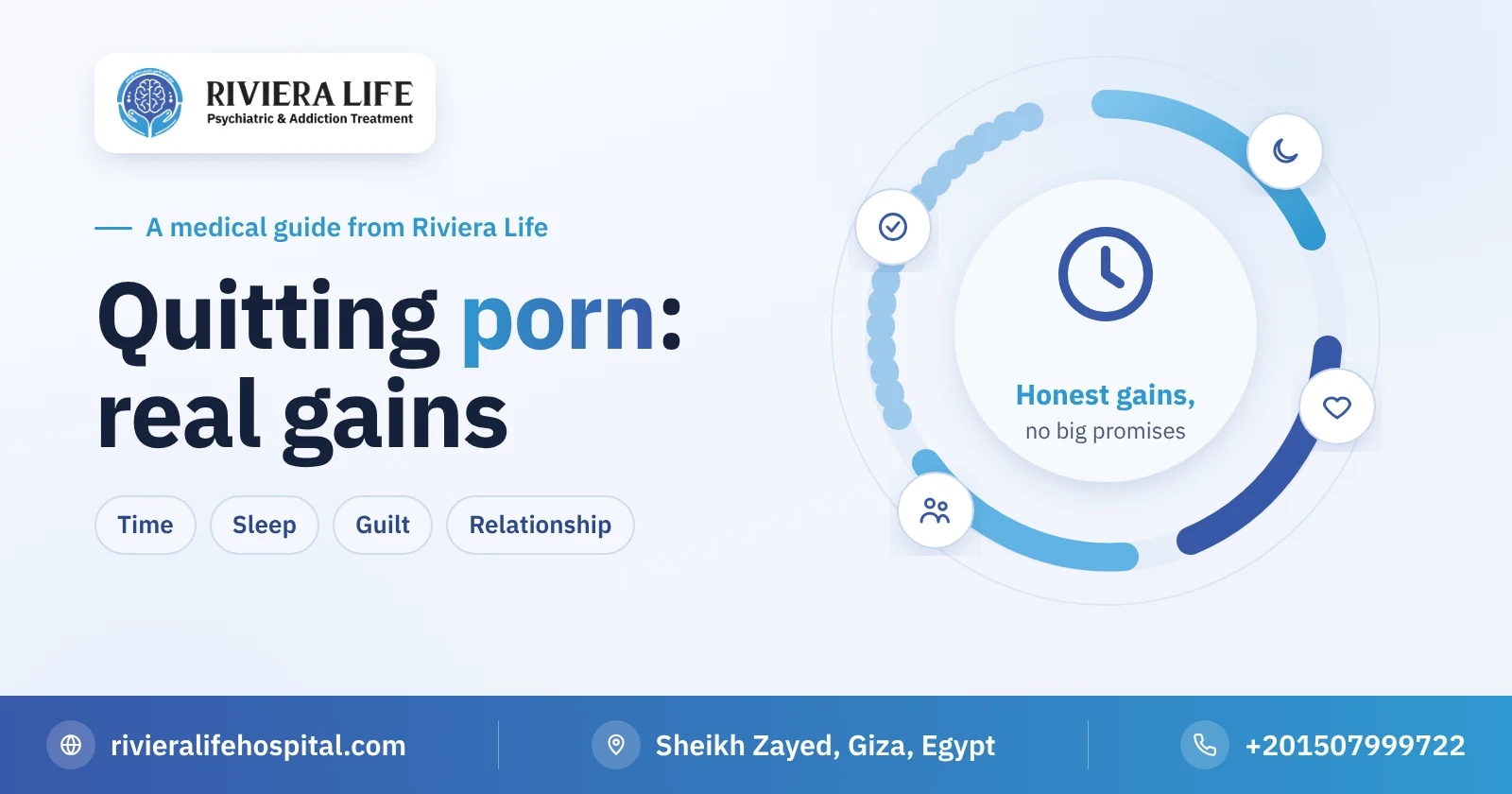
The benefits of quitting porn are what many people look for when they feel their viewing has got out of control: time being lost, guilt after every time, tension in the relationship, and a wish for calm to return. The scientific picture is complex and doesn’t allow for big promises; research is still debating the effect of viewing, and “porn addiction” isn’t an independent diagnosis in the official manuals, but doctors treat compulsive use that causes harm, and clinical experience shows realistic gains for people who stop. This article sets out these gains honestly, what they can’t promise, and how to start without denial or exaggeration.
Who benefits from stopping?
Not everyone who has watched pornographic material has a problem. The difference lies in control and harm, not in the act itself. The World Health Organization’s classification (eleventh revision) refers to “compulsive sexual behavior disorder”, defining it as a persistent pattern of failure to control sexual impulses that causes marked distress or harm in life. Viewing may be part of it.
In practice, three groups benefit from stopping or cutting down: those who can’t control it despite trying, those whose work, study or marriage is harmed, and those whose viewing clashes with their values so they live in constant distress. If you aren’t one of these, you don’t have to buy into the addiction story. For the difference between patterns, see porn addiction symptoms.
How does the brain respond to repeated viewing?
Viewing activates the brain’s reward system, whose most important messenger is dopamine, as happens with other strong stimuli. And because the content is available without limit and renews with a click, the brain may become attached to variety and novelty, so the person needs more stimulation or different types to feel aroused. This mechanism explains part of why stopping is hard, and we have explained its basis in dopamine and addiction.
But we must be careful about generalizing: studies don’t agree that porn changes the brain the way drugs do, and there is no conclusive evidence for everything said about “resetting” the brain. What we know is that strong habits change through repetition and practice, and that distance from the trigger weakens the craving linked to it over time.
What benefits do people who stopped report?
Time and priorities back in their place
The clearest gain is the time that used to go into viewing, searching and moving between clips, and the focus that used to be scattered by the urge. The student returns to their book, the employee to their project.
Calmer sleep
Late-night viewing delays sleep and lowers its quality, so the person enters a cycle of fatigue and poor concentration. Controlling this habit gradually restores the rhythm of sleep.
Less guilt, shame and secrecy
One of the most draining things for people in recovery is the double life: hiding devices and history and avoiding conversation. Stopping eases this psychological burden and restores honesty with oneself and with others.
A more honest relationship with your partner
Some couples report that stopping reduces comparisons and improves trust and communication. Viewing can create unrealistic expectations about the body and performance, and when these expectations recede, attention returns to the real person in front of you. This picture differs from one relationship to another, and viewing may not be the cause of the problem in the first place.
Greater satisfaction with yourself and your body image
Repeated comparison with staged scenes can weaken confidence in one’s body. When a person stops this comparison, they notice an improvement in how they see themselves, though this depends on many other factors.
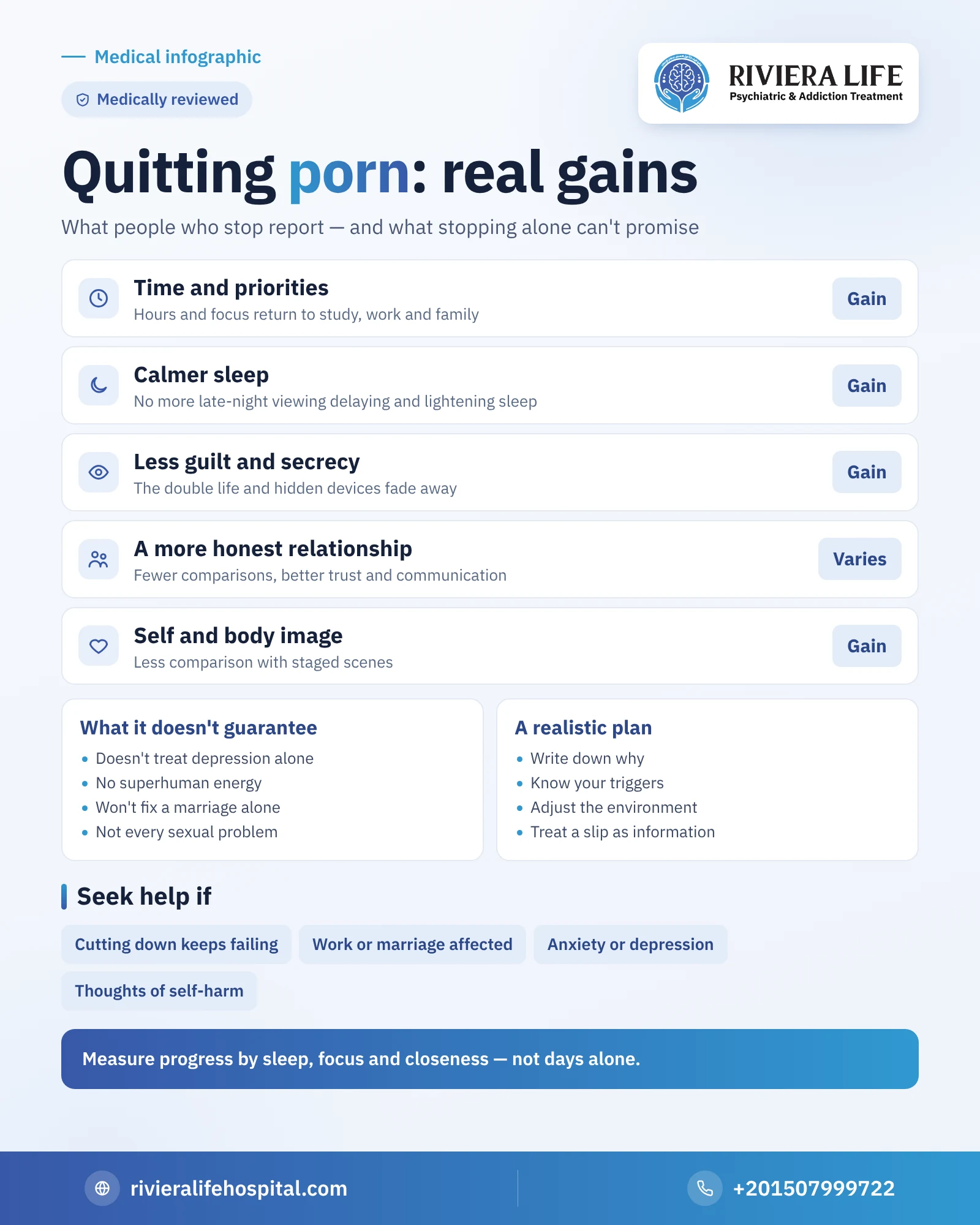
What quitting porn doesn’t guarantee
- It doesn’t treat depression or anxiety on its own: escaping into viewing may be a symptom of them, and treating them is necessary.
- It doesn’t promise superhuman energy or intelligence: moderate improvement is common, but big leaps are exaggeration.
- It doesn’t guarantee fixing a marriage: it may ease one cause of tension without addressing other disagreements.
- It doesn’t remove every sexual weakness: some performance problems are linked to viewing habits in a group of men, but the causes of weakness are many, and need a medical assessment, not guesswork. You will find its sexual effects detailed in the harms of pornography.
The first weeks: what should you expect?
Experiences vary a great deal. Some people go through a period of tension, insomnia, intense urges and mood disturbance, while others may feel better quickly. Stories circulate about a “long period of sexual flatline” after stopping, but science hasn’t conclusively proven it, and if persistent problems with desire or performance appear, consult a doctor instead of waiting. What matters is not to measure your progress by the number of days alone, but by improvements in sleep, concentration and your relationship.
How do you start with a realistic plan?
- Decide why: write down what you want to regain. A clear goal holds up against the urge.
- Know the cues: does the urge come with boredom, loneliness, anger or after a draining day? Control starts with knowing the moments.
- Adjust the environment: use blocking software as a supporting tool, not the only solution, keep the phone away from the bed, and avoid browsing alone at night.
- Refill the time: sport, meeting friends, a hobby, or any activity that fills the risky times.
- Ask for support: silence feeds secrecy. Talk to a trusted partner or a therapist.
- Treat a relapse as information: what happened before it? Adjust, and don’t go back to zero psychologically.
The treatment steps are covered in more detail in porn addiction treatment, and to understand the roots, read the causes of porn addiction.
Is blocking websites enough?
Blocking adds a useful barrier, especially with teenagers and in moments of weakness at night, but it doesn’t treat the motive. Someone who decides to open another door will find a way, so blocking works best when it goes with learning new ways to calm stress and loneliness, and with follow-up from a therapist or someone who supports you.
For the partner: how do you open the conversation without accusation?
A wife or husband discovering repeated viewing leaves a real wound, and the conversation often begins with anger. It is better to choose a calm time and talk about the feeling rather than the accusation, such as “I’ve felt distant from you and I want us to understand what is happening”. And the one who wants to stop should acknowledge it without justification and take on the process of rebuilding trust, which needs time. Couples counseling with a therapist who handles the subject without drama may help. Remember that blocking and monitoring alone don’t build trust; what builds it is repeated honesty over time.
For teenagers and parents
A teenager exposed to this material early needs protection and conversation, not scandal. They need to know that the content isn’t a realistic picture of relationships, and that they can talk to someone they trust without fear of punishment. Parents should use protection tools transparently and open the conversation calmly. And the most important thing to watch for is online blackmail: anyone threatened with images or messages should tell a trusted adult immediately and not give in.
When should you seek specialist help?
Ask for a psychiatric assessment if attempts to cut down fail despite your sincere wish, if viewing affects your work or relationship, if it comes with anxiety, depression or obsessions, or if you feel intense guilt or hopelessness. And if thoughts of self-harm come to you, call the mental health hotline on 16328 or an ambulance on 123.
How can Riviera Life help you?
At Riviera Life, consultant psychiatrists listen without judgment or scaremongering, assess accompanying causes such as anxiety and depression, then set a behavioral treatment plan that respects your values, involving your partner or family when needed. The first consultation is free and confidentiality is complete: +201507999722, Sheikh Zayed, Giza.
More from our pornography guide
- The pornography guide: every aspect in its own article
- Porn addiction symptoms
- Porn addiction treatment
- The harms of pornography
Questions many people ask
People who have stopped report regaining time, better sleep, less guilt and secrecy, more realistic expectations in their relationship, and greater self-confidence.
It isn't an independent diagnosis, but the International Classification of Diseases recognizes compulsive sexual behavior disorder, of which viewing may be a part.
This claim is widespread but hasn't been conclusively proven, and anyone who notices a persistent problem with desire or performance should see a doctor.
Blocking is a useful supporting tool but doesn't treat the motive, so it works better alongside learning other ways to calm stress and loneliness, and follow-up with a specialist.
When cutting down fails despite a sincere wish, when work or the relationship is affected, when there is anxiety, depression or severe guilt, and immediately with any thoughts of self-harm.