
The relationship between adrenaline and anxiety is direct, as adrenaline is responsible for the physical side of anxiety: palpitations, breathlessness, tremor, sweating and cold extremities. These symptoms are part of the “fight or flight” response designed to save you from real danger, but in anxiety disorders and panic attacks they are set off without danger, or because of a frightening thought rather than an actual situation. The symptoms themselves, however distressing, don’t harm a healthy heart, and you can learn to calm them and treat their cause. This article explains how adrenaline creates the symptoms of anxiety, why they turn into a vicious circle, what to do during an attack, and when you need the emergency department.
The fight or flight response: an ancient alarm system
Imagine a person thousands of years ago seeing a predator. In less than a second the amygdala, the brain’s alarm center, picks up the danger signal, activating the sympathetic nervous system, which orders the adrenal gland to release adrenaline, and releases noradrenaline in the nerves and brain. Within seconds the heart speeds up, the airways open, and the muscles fill with blood and sugar, so he can fight or flee. This system still works in us in the same way, but it doesn’t distinguish well between a predator and a difficult work meeting or a worrying message on the phone. To learn how adrenaline is made and its other functions, see our complete guide to adrenaline.
Adrenaline and anxiety: how do the physical symptoms appear?
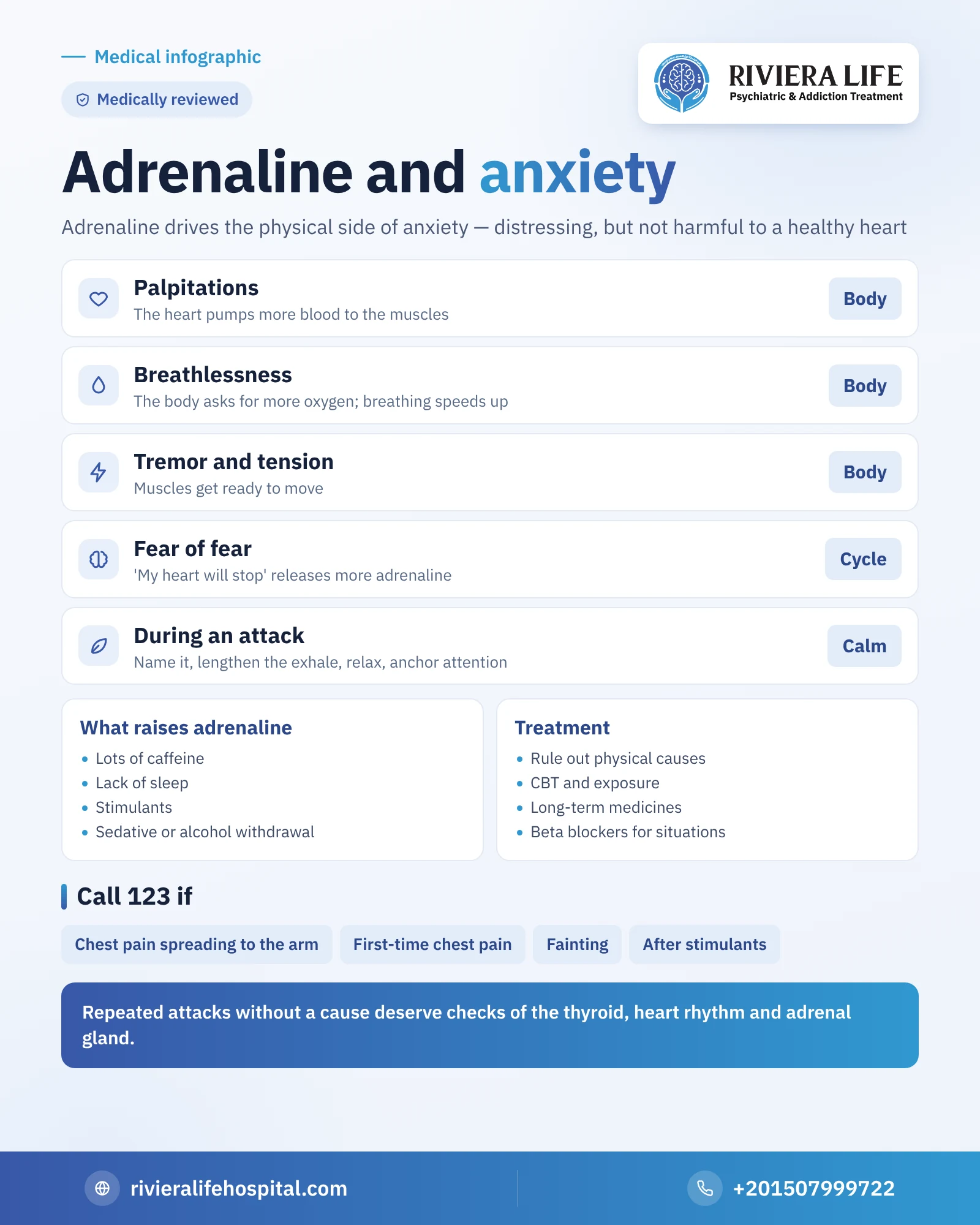
Each physical symptom of anxiety has a direct explanation in how adrenaline works:
| Symptom | What happens in the body |
|---|---|
| Palpitations and a fast pulse | The heart pumps more blood to the muscles |
| Shortness or quickening of breath | The body asks for more oxygen so breathing speeds up |
| Tremor and muscle tension | The muscles are in a state of readiness to move |
| Sweating and cold extremities | Blood is drawn from the skin toward the large muscles |
| Nausea or stomach upset | Digestion stops temporarily because it isn’t a priority |
| Dizziness and tingling | Fast breathing changes the balance of carbon dioxide in the blood |
Understanding this table alone eases the fear for many, because they realize that what they feel is a natural response at the wrong time, not a sign of a serious illness.
A panic attack: when the alarm goes off without a reason
A panic attack is a sudden wave of intense fear that peaks within minutes, with strong physical symptoms dominated by the effect of adrenaline: palpitations, chest pain or pressure, breathlessness, dizziness, and a feeling of imminent death or losing control. It may come in a crowded situation, while driving, or in the middle of the night out of calm sleep. Then it calms gradually, and severe exhaustion may remain afterward for hours. A single attack doesn’t mean a disorder, but its recurrence with a constant fear of it happening again and avoidance of places may point to panic disorder, which a psychiatrist diagnoses.
The fear-of-fear cycle
What makes panic recur isn’t adrenaline alone, but the person’s interpretation of what is happening in his body. The cycle usually runs like this: a simple bodily sensation such as a fast heartbeat, then a catastrophic thought, “my heart is going to stop”, then the release of more adrenaline because of this thought, then stronger symptoms that confirm the thought, and so on. Ahmed, an employee in his thirties, felt palpitations after two cups of coffee on an empty stomach, thought it was a heart attack, and minutes of palpitations turned into a full attack that ended in the emergency department. After that he started monitoring his pulse all day, and every check increased his anxiety. Breaking this cycle is the core of psychological treatment for panic.
Chronic anxiety: an alarm working at low volume
Not all anxiety comes as attacks. In generalized anxiety disorder, the person lives with constant worry about many things, and the alert system stays active at a lower level but for long periods: tension in the neck and shoulders, difficulty sleeping, quick fatigue, irritability and distraction. Here cortisol takes part more strongly than adrenaline, as our article on high cortisol symptoms explains. You will find the different types of anxiety and the differences between them in our article on types of anxiety.
Why do you wake at night with your heart pounding?
Many complain of waking suddenly in the middle of the night with palpitations, sweating and a sense of danger without a clear frightening dream. This may be a nocturnal panic attack, which happens during sleep itself rather than because of a conscious thought, or it may be the result of a drop in blood sugar in a diabetic, sleep apnea that wakes the body with a burst of alert hormones, or the delayed effect of a stimulant drunk in the evening. Distinguishing these causes matters because the treatment for each is different, so don’t assume it is anxiety before the doctor asks you about snoring, sugar, medicines and caffeine.
What raises adrenaline and increases anxiety?
- Caffeine in large amounts: coffee, strong tea and energy drinks.
- Lack of sleep: makes the alarm center more sensitive the next day.
- Stimulants: such as amphetamine, Captagon and cocaine, which may cause panic attacks and even psychosis. Details are on our page on Captagon.
- Withdrawal from sedatives and alcohol: sets off excess activity in the alarm system, and may be dangerous.
- Some physical conditions: an overactive thyroid, low blood sugar and heart rhythm disorders.
- Hashish in some people: may provoke panic attacks, especially with strong types.
What do you do during an attack?
You can’t stop adrenaline by decision, but you can help the body end the response faster:
- Name what is happening: “This is a wave of adrenaline; it will peak and then calm down”.
- Slow the exhale: a calm inhale through the nose, then a longer exhale through the mouth, as lengthening the exhale activates the calming nervous system.
- Deliberately relax the muscles of the shoulders, jaw and hands.
- Anchor your attention in the place: notice things you see, hear and touch.
- Don’t flee immediately if the place is safe, as staying teaches the brain that the alarm was false.
How is anxiety linked to excess adrenaline treated?
The doctor starts by ruling out physical causes with simple checks of the heart, thyroid and blood sugar when needed, then sets a plan that includes:
- Cognitive behavioral therapy: teaches realistic interpretation of bodily sensations, and uses gradual exposure to these sensations until the fear of them loses its power.
- Long-term medicines: such as selective serotonin reuptake inhibitors and some serotonin-norepinephrine reuptake inhibitors, with the doctor choosing the type and duration.
- Beta blockers: the doctor may prescribe them for specific situations to reduce tremor and palpitations, and they don’t treat anxiety itself.
- Lifestyle changes: regular exercise, enough sleep and less caffeine.
Doctors warn against relying on fast-acting sedatives for long periods without supervision, because they may cause dependence. The details of the full plan are in our article on anxiety treatment.
Are adrenaline symptoms dangerous to the heart?
In a healthy person, an anxiety or panic attack doesn’t harm the heart, however strong the palpitations. But no one can be certain the first time that chest pain is caused by anxiety, especially those with cardiac risk factors or who use stimulants.
Call an ambulance on 123 immediately if you see
Go to the emergency department first to make sure the heart is safe, then the anxiety assessment comes.
- Chest pain spreading toward the arm, jaw or back
- Chest pain for the first time, or different from the usual attacks
- Severe breathlessness that doesn’t improve, or fainting
- Palpitations with a severe headache and very high blood pressure
- Symptoms after using stimulants or while stopping sedatives or alcohol
High adrenaline: how do you recognize it and when does it need checking?
There is no direct sensation called “high adrenaline”; what we notice is its effect: a racing heart, cold clammy palms, tremor, and tension that makes sitting calmly impossible. Most of the time the rise is temporary and passes within minutes to an hour after the trigger goes away.
What deserves attention is recurrence. If these symptoms recur without a clear cause, or come as sudden attacks, ask your doctor about physical causes before assuming it is anxiety:
- An overactive thyroid, revealed by a simple blood test.
- Heart rhythm disorders, revealed by an ECG.
- A rare tumor of the adrenal gland that secretes adrenaline, suspected when palpitations come with severe headache, sweating and high blood pressure in attacks.
It helps to record when the symptoms came and what preceded them, such as coffee, staying up late or a worrying situation, as this helps the doctor sort things out faster.
And if the doctor rules out these causes, the problem is more likely the sensitivity of the alarm system itself, which is what anxiety treatment addresses. Our article on panic attacks helps you tell an attack from a heart problem.
How can Riviera Life help you?
Riviera Life’s psychiatry consultants distinguish between panic attacks, generalized anxiety, and anxiety caused by substances or withdrawal, and set a plan that treats the cause, not just the symptom, in complete confidentiality. For those whose anxiety comes together with use of stimulants or sedatives, a dual program is available under round-the-clock medical supervision. The first consultation is free on +201507999722. For the full picture of anxiety, see our page on anxiety.
More from our adrenaline guide
- Adrenaline: the complete guide
- Noradrenaline and stress
- GABA and anxiety
- Anxiety symptoms
- Panic attacks: how to tell them from a heart attack and what to do during one
- Psychogenic breathlessness: how to tell it from physical causes and what to do
- Propranolol (Inderal): physical anxiety, performance nerves and warnings
Questions many people ask
Yes, when the brain interprets a situation or thought as a danger, the sympathetic nervous system is activated and adrenaline is released, and the physical symptoms of anxiety such as palpitations and tremor appear.
The attack usually peaks within a few minutes and then calms gradually, and exhaustion may remain for hours afterward. Long attacks, or ones different from usual, need a medical assessment.
It doesn't usually harm a healthy heart, but chest pain for the first time, or with cardiac risk factors, calls for going to the emergency department to make sure before considering it anxiety.
They reduce physical symptoms such as palpitations and tremor in specific situations, but they don't treat anxiety itself, and the doctor decides whether they suit the case.
Lengthening the exhale, relaxing the muscles and anchoring attention in the place help the body end the response faster, and with repetition and treating the cause, attacks become less frequent.