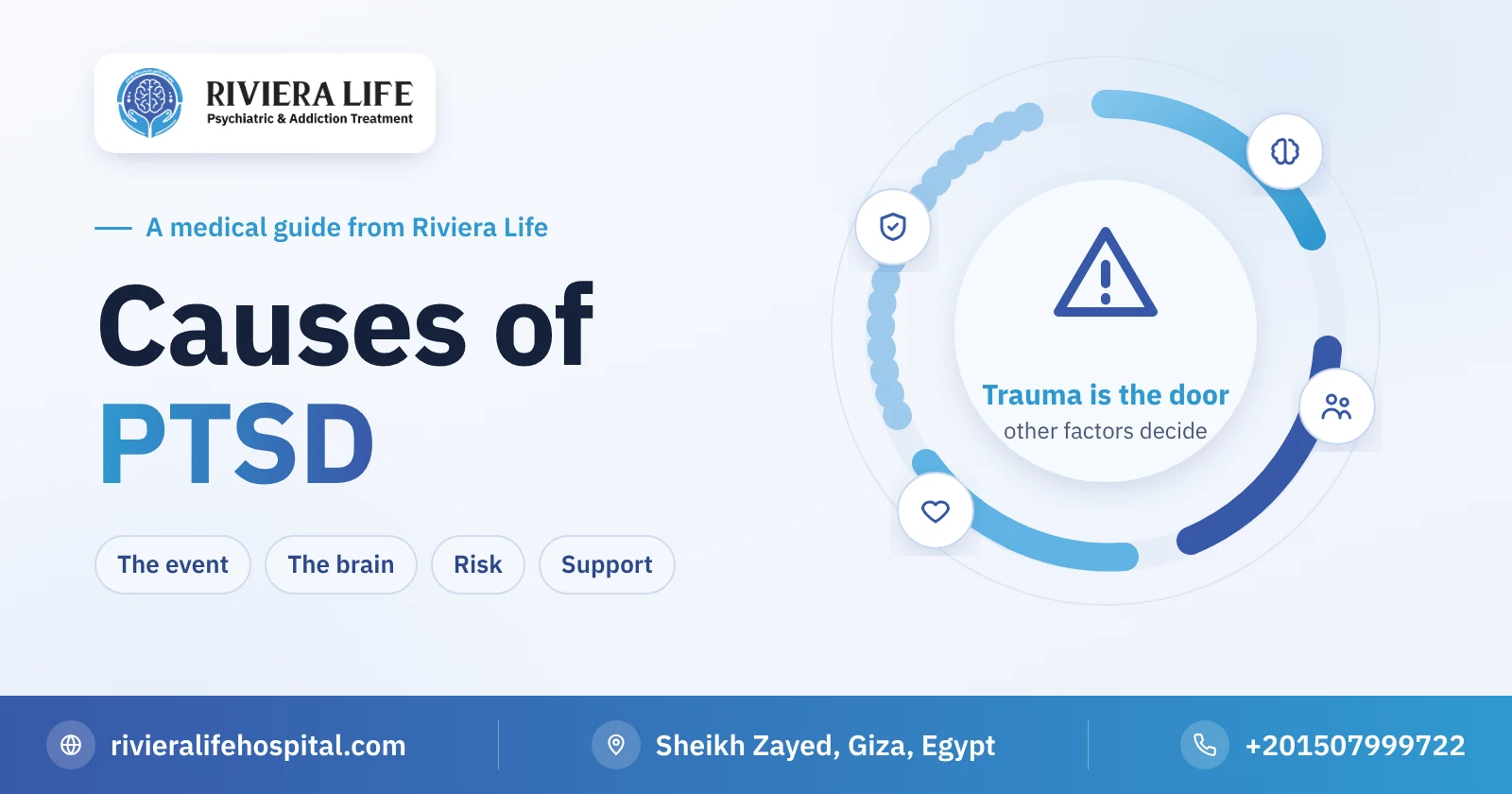
The clearest cause of post-traumatic stress disorder is known: a traumatic event the person went through or witnessed. But this doesn’t explain everything, as most people exposed to traumatic events don’t develop the disorder. What determines the outcome is an interaction between the nature of the event, a previous biological and psychological predisposition, and what happens in the following days and weeks. In this article we explain what goes on in the brain, the risk factors before, during and after the event, why symptoms continue in some, and what protects others.
Trauma is a necessary condition but not a sufficient one
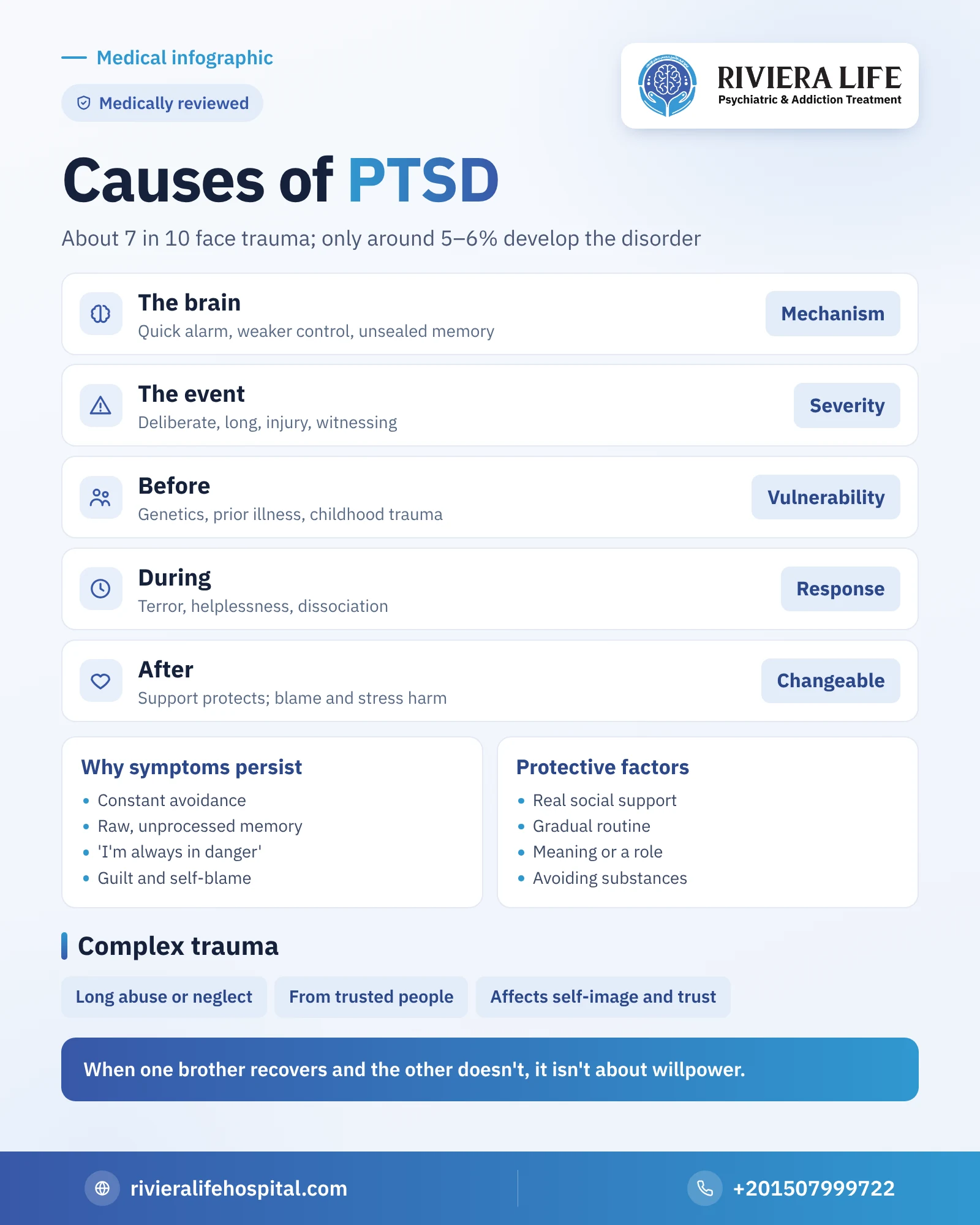
World Health Organization estimates indicate that about seven out of every ten people will face a potentially traumatic event in their lives, while only a small proportion of them develop PTSD, around 5 to 6% approximately. That is, trauma is the door, but passing through this door into the disorder is governed by other factors. This understanding is important for the family: when one brother recovers and the other remains affected after the same accident, the reason isn’t that one has stronger willpower.
What happens in the brain?
At the moment of danger the amygdala, the alarm center, takes command, and the body secretes stress hormones in preparation for survival. Normally the system returns to calm after the danger passes, the hippocampus helps store the memory in its time context as something that is over, and the prefrontal cortex controls reactions. In those with the disorder, research indicates that this balance is disturbed: an easily triggered alarm, weaker control from the frontal areas, and a memory stored as scattered sensory fragments without a time stamp. That is why a sound or smell is enough to wake it at full intensity, as if it were happening now. These are mechanisms that explain the symptoms, and not something revealed by a routine test or scan.
The nature of the event itself
Not all events are equal in their effect. The likelihood of the disorder rises when:
- The harm is deliberate by a human being, such as assault or violence, compared with natural disasters.
- The trauma is long or repeated, such as living in armed conflict or prolonged domestic violence.
- The person suffers a serious physical injury during the event, or spends a period in intensive care.
- They witness others being harmed or dying, especially if they are loved ones.
- Exposure to the details of trauma is repeated because of work, as in ambulance, emergency and firefighting.
Road accidents remain among the most common traumatic events in Egypt, along with the sudden loss of a loved one and difficult births.
Factors before trauma: genetics and psychological history
Twin and family studies indicate that genetics plays a partial role in how a person responds to severe stress, without there being a “trauma gene”. The risk is increased by a family history of mental disorders, or the person themselves having previously had depression or anxiety. Among the strongest factors is exposure to previous trauma, especially in childhood such as neglect, losing a parent or living in an unsafe environment, as a nervous system formed in conditions of danger remains more sensitive later.
Sex, age and life circumstances
Women are more likely to develop it than men, partly because of the type of trauma they are more exposed to, and partly because of biological and social factors that haven’t yet become fully clear. The World Health Organization also mentions young age and a lower level of education among the factors that raise the likelihood. Chronic pressures such as poverty, unemployment and unsafe housing weaken a person’s ability to recover after the event. Children are greatly affected by the state of the adults around them; a child who sees their parents holding together after the accident regains their safety faster than a child living in a house still drowning in fear and tension.
What happens during the event and directly after
The way a person responds at the moment of trauma gives an important indicator. Extreme terror, a feeling of complete helplessness, or detachment from reality during the event are linked to a higher risk. Likewise the appearance of strong symptoms in the first weeks, what is called acute stress disorder, means the person needs closer follow-up, though many who go through it recover without developing the chronic disorder.
After the trauma: support or isolation
This part of the story is the most open to change. Having family and friends who offer safety and listening without blame is among the strongest protective factors. On the other hand, the risk increases when the person faces successive pressures after the event: losing a job, chronic pain from the injury, long legal disputes, or those around them blaming them for what happened. A sentence like “It’s your fault because you went out at that time” may stay in the mind longer than the event itself.
Why do symptoms continue and not calm down?
After trauma the person naturally tries not to think about what happened. But constant avoidance deprives the brain of the chance to process the memory and place it in the past, so it stays raw and sharp. Added to this are thoughts that form after the event, such as “I’m always in danger” or “I should have done something”, which feed fear and guilt. This cycle of avoidance and negative thoughts is what trauma-focused psychotherapies target, as we explain in the article on PTSD treatment.
Causes of complex trauma
Complex PTSD is usually linked to long trauma that is hard to escape, especially if it came from people who are supposed to be a source of safety, such as abuse or prolonged neglect in childhood, or domestic violence continuing for years. This type of trauma doesn’t leave only a painful memory, but touches the way a person sees themselves and their ability to trust others. The difference between the two forms is explained in the complete guide to PTSD.
Drugs: cause and result
The relationship between trauma and addiction is double. On one side, many sufferers turn to alcohol, sedatives or tramadol to silence nightmares and alertness, so dependence begins. On the other side, substance use raises the likelihood of exposure to traumatic events such as accidents and violence, and weakens the brain’s ability to recover afterward. Withdrawal from benzodiazepines or alcohol increases anxiety and insomnia, so the symptoms of trauma seem more severe. That is why the doctor always asks about substances when assessing any trauma case.
Protective factors that reduce the risk
Just as there are risk factors, there are factors that protect:
- Real social support after the event, and at least one person you can talk with safely.
- A gradual return to a regular daily routine of sleep, food and work.
- The ability to find meaning or a role, such as helping others or engaging in the community.
- Flexible coping skills the person learned before, and seeking help early without shame.
- Avoiding drugs and alcohol as a means of calming down.
Can it be prevented after the event?
There is no guaranteed way, but what is offered in the first days matters. It helps to provide safety and basic needs, contact with loved ones, and simple information reassuring the person that what they feel is an understandable reaction. Forcing the survivor to recount all the details immediately in one session, however, isn’t recommended by modern guidelines. And if strong symptoms appear or continue, early assessment opens the door to shorter treatment. See the warning signs in the article on PTSD symptoms.
How does Riviera Life help you?
Understanding the causes is part of the treatment itself, because the doctor builds the plan on what keeps the symptoms going in each patient. At Riviera Life the psychiatry consultants carry out a comprehensive assessment including the history of trauma, substances and accompanying disorders, in complete confidentiality, and the first consultation is free.
More from the PTSD guide
- PTSD: the complete guide
- PTSD symptoms
- PTSD treatment
- Depression: the complete guide
- PTSD and addiction: self-medication and the path to simultaneous recovery
Questions many people ask
Yes, a single severe event such as a serious accident may be enough. Complex trauma, however, is usually linked to long or repeated trauma.
Yes, learning that a loved one was exposed to violence or a sudden accident counts among the events that may cause the disorder, even if the person wasn't present.
Genetics plays a partial role in a person's sensitivity to stress, but it doesn't cause the disorder on its own. A traumatic event is required, and many other factors intervene.
The difference goes back to the severity of the event, the person's history of previous trauma and their biological readiness, and to a large degree to the support they find after the event and the pressures that follow.
Yes, in two ways: it raises the likelihood of exposure to traumatic events, and hinders natural recovery afterward. Withdrawal from some substances also increases anxiety and insomnia.