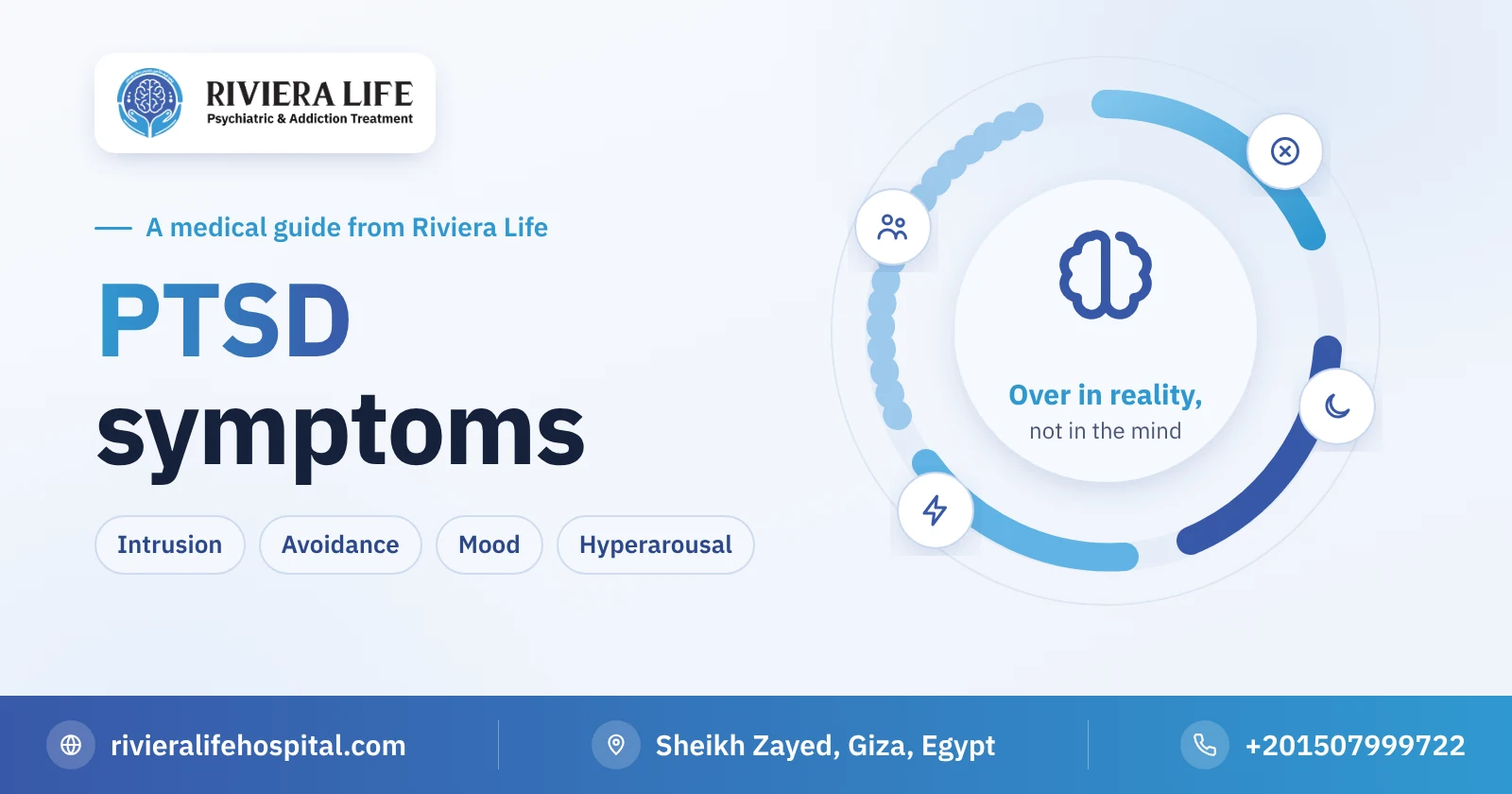
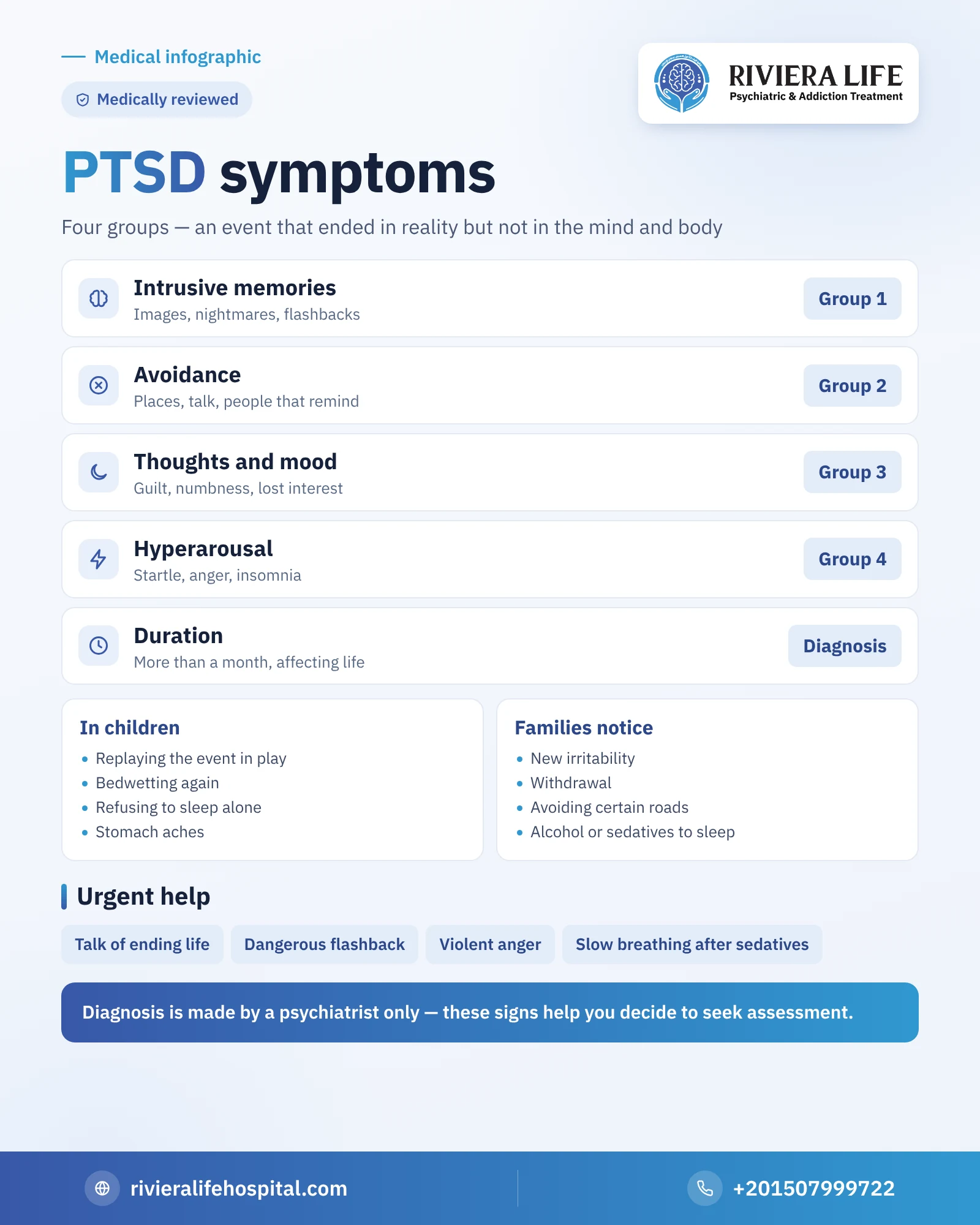
The symptoms of post-traumatic stress disorder revolve around one axis: an event that ended in reality but didn’t end in the mind and body. They appear in four groups: memories that intrude into the present, avoidance of everything that recalls the event, negative changes in thoughts and mood, and constant alertness as if danger were near. They are often accompanied by physical complaints such as headaches and stomach pain. In this article we describe each group with examples from daily life, the signs in children, what parents notice, then questions that help you assess the situation without diagnosing yourself, as the diagnosis is made by a psychiatrist alone.
When do symptoms start?
Symptoms usually appear within the first month after the event, and in this period severe disturbance is understandable and improves in many people on its own. The doctor speaks of post-traumatic stress disorder when symptoms last more than a month and affect work, study or relationships. But the onset may be delayed: a woman who survived a traffic accident and lived a normal year after it, then broke down when her son had a minor accident, so the nightmares and terror came back to her as if the first accident had happened yesterday. That is why you shouldn’t rule out trauma just because the event is old.
First: memories that intrude into the present
This is the most distinctive sign of the disorder. The memory here isn’t called up by its owner’s will, but forces itself:
- Images, sounds or smells from the event jump into the mind suddenly during work, eating or talking.
- Repeated nightmares about the event or a similar danger, from which the person wakes terrified and sweating.
- Sharp flashback moments in which they feel as if they have returned to the same place and time, and may act on this basis for moments.
- Severe psychological distress when facing what recalls the event, such as the sound of brakes or a news item on television.
- A strong physical reaction to these reminders: palpitations, trembling and shortness of breath.
Second: avoidance
The person tries to protect themselves from the memory, so they start avoiding what stirs it. A driver who survived his car overturning may refuse to drive altogether, then refuse to ride in the front seat, then avoid the whole road. Avoidance may be internal: changing the subject whenever the conversation approaches the event, or constant busyness with anything so as not to be alone with their thoughts. Avoidance brings momentary relief, but it narrows life and keeps the fear in place, and it is among the clearest things the family notices.
Third: changes in thoughts and mood
This group is less visible but very painful for its owner. Among its signs:
- A feeling of guilt or self-blame for what happened, such as the survivor saying they should have prevented it.
- Harsh, fixed thoughts such as: no one can be trusted, or the world is an entirely dangerous place.
- Continuous fear, anger or shame that stays with the person most of the day.
- Loss of interest in activities they used to love, and distance from friends and relatives.
- Emotional numbness and difficulty feeling joy or love, even towards their children.
- Gaps in remembering important parts of the event itself.
Fourth: hyperarousal and sharp reactions
The nervous system of the person works like an alarm set to the highest sensitivity. They jump at the sound of a door closing, sit in a restaurant with their back to the wall to see the entrance, and constantly watch those around them. Among the signs too are quick anger and outbursts out of proportion to the situation, difficulty concentrating, insomnia with repeated waking at night, and sometimes reckless behavior such as driving at dangerous speed or drinking too much.
Physical symptoms
In our societies psychological distress often expresses itself in the language of the body. The person may move between clinics because of repeated headaches, irritable bowel, shifting pains in the back and chest, or palpitations and constant fatigue, and the tests come back normal. These are real symptoms fed by chronic tension and lack of sleep, not pretense. Even so, any new symptom must be checked medically before it is attributed to trauma.
Signs of detachment from self or reality
Some people describe a feeling that they are watching themselves from outside, or that what is around them isn’t real, as if a dream or a film. This usually appears in moments of severe tension. If these symptoms are prominent, they may point to a pattern dominated by dissociative symptoms, which needs specialist assessment because it affects the way of treatment.
Additional signs in complex trauma
When the trauma is long or repeated, such as prolonged abuse in childhood, three things may be added to the above: emotions that swing sharply and are hard to calm, a constant feeling of shame or worthlessness, and difficulty trusting and getting close to others. We explained the difference between the two forms in the complete guide to post-traumatic stress disorder.
Symptoms in children and teenagers
The young child rarely describes their memories in words. They may repeat the event in their play again and again, such as crashing their toy cars into each other, or draw it, or their dreams may turn into nightmares about monsters. They may go back to bedwetting after having stopped, refuse to sleep alone, cling excessively to their mother, or complain of stomach aches and headaches. Children often unfairly blame themselves for what happened. As for the teenager, isolation, aggression, falling grades or risk-taking may appear, and sometimes trying substances to escape their feelings.
What do parents notice?
The family sees the change before its owner admits it. Pay attention to a continuing pattern, not a bad day: irritability that wasn’t there, withdrawal from family gatherings, refusing certain places or roads, disturbed sleep in which shouting or talking is heard, and decline at work. Among the most important warning signs is the person starting to depend on alcohol or sedatives to sleep or calm down, as this is a fast road to addiction.
Questions that help you assess the situation
These questions aren’t a diagnostic test, but a way to decide whether you need a consultation. During the past month:
- Have memories of the event intruded into your day or sleep without you wanting them?
- Have you made a big effort to avoid places, conversations or people that remind you of it?
- Have you become tense, on edge and easily startled?
- Have you felt detached from people or numb in your feelings?
- Have you blamed yourself or others for the event in a way you can’t stop?
If your answer is yes to several questions, the next step is an assessment with a specialist, not more searching on the internet.
Symptoms that resemble other conditions
Some signs of the disorder, such as insomnia, tension and difficulty concentrating, are shared with anxiety disorders, and numbness, loss of interest and guilt are shared with depression. These disorders often come together in the same person. What distinguishes post-traumatic stress disorder is the link of the symptoms to a specific event, and the return of this event in memories and nightmares. The reasons why one person develops it and another doesn’t differ, and they are what we explain in the article on the causes of post-traumatic stress disorder.
When do you ask for help?
Ask for an assessment if symptoms last more than a month, were severe from the start, affected your work, sleep and relationships, or you started depending on a substance to calm down. And there are situations that can’t wait:
Ask for urgent help immediately if you see
Call an ambulance on 123 or go to the nearest emergency department, and don't leave the person alone.
- Talk of ending life or self-harm
- A flashback or dissociation episode in which the person acts dangerously
- Violent anger that threatens their safety or their family’s safety
- Severe drowsiness or slow breathing after alcohol or sedatives
The good news is that these symptoms respond to treatment; learn about the available options in the article on post-traumatic stress disorder treatment. And at Riviera Life you can book the first consultation free with a consultant psychiatrist, in complete confidentiality.
More from the post-traumatic stress disorder guide
- Post-traumatic stress disorder: the complete guide
- The causes of post-traumatic stress disorder
- Post-traumatic stress disorder treatment
- Anxiety disorders: the complete guide
- Psychological trauma: normal reactions, what helps and when you need treatment
- Recurring nightmares: their causes, their link to trauma and what stops them
- Depersonalization-derealization disorder and its treatment
- EMDR therapy: its eight phases, who it suits and what the evidence says
- Post-traumatic stress disorder test
Questions many people ask
Symptoms usually start within the first weeks, but the diagnosis is only made if they last more than a month. In some people the onset may be delayed by months or years.
No, nightmares after a hard event are common and may ease on their own. The disorder means several symptoms from different groups coming together over a long period with a clear effect on your life.
Yes, such as repeated headaches, stomach disturbances, shifting pains and fatigue, because of chronic tension and lack of sleep. An organic cause must be ruled out first.
Watch for play that repeats the event, nightmares, bedwetting after it had stopped, excessive clinging and refusing to sleep alone. If these signs continue for weeks, consult a child psychiatrist.
The person may seem like someone different: more irritable, withdrawn or numb. These are changes linked to the disorder that usually improve with treatment, not a permanent change in personality.