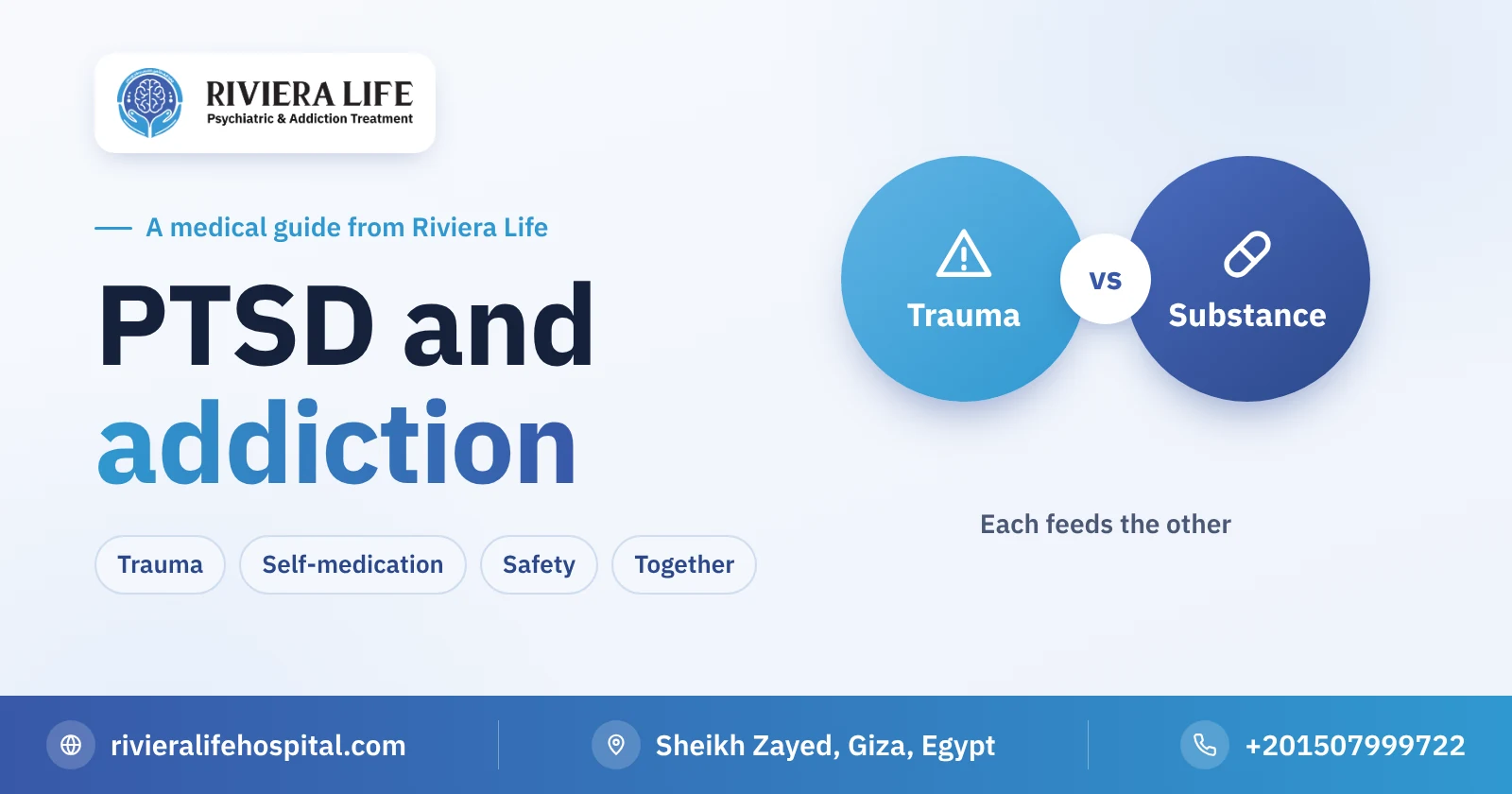
Post-traumatic stress disorder and addiction come together because a person with trauma looks for a way to switch off intrusive memories, tension and nightmares, and finds in alcohol, sedatives or drugs a quick relief. Then the relief turns into dependence, and the person has two problems, each feeding the other. This article explains why this happens, what substances do to trauma in the long term, and how the two are treated together in ways that deal with trauma safely without making the patient lose their stability. Diagnosis is for the psychiatrist alone, and someone suffering from painful memories doesn’t need to tell their details to start treatment.
What is the relationship between PTSD and addiction?
Studies say that a clear proportion of those with PTSD go through a substance use problem in their lives, and that a considerable proportion of those seeking addiction treatment have a history of trauma. The relationship runs in both directions: trauma pushes toward the substance, and use increases exposure to dangerous situations and new trauma. You will find the definition of the disorder and the types of trauma in the articles on PTSD symptoms and psychological trauma.
Self-medication: how does the cycle begin?
Doctors call this pattern “self-medication”, where the person uses the substance as a medicine for particular symptoms:
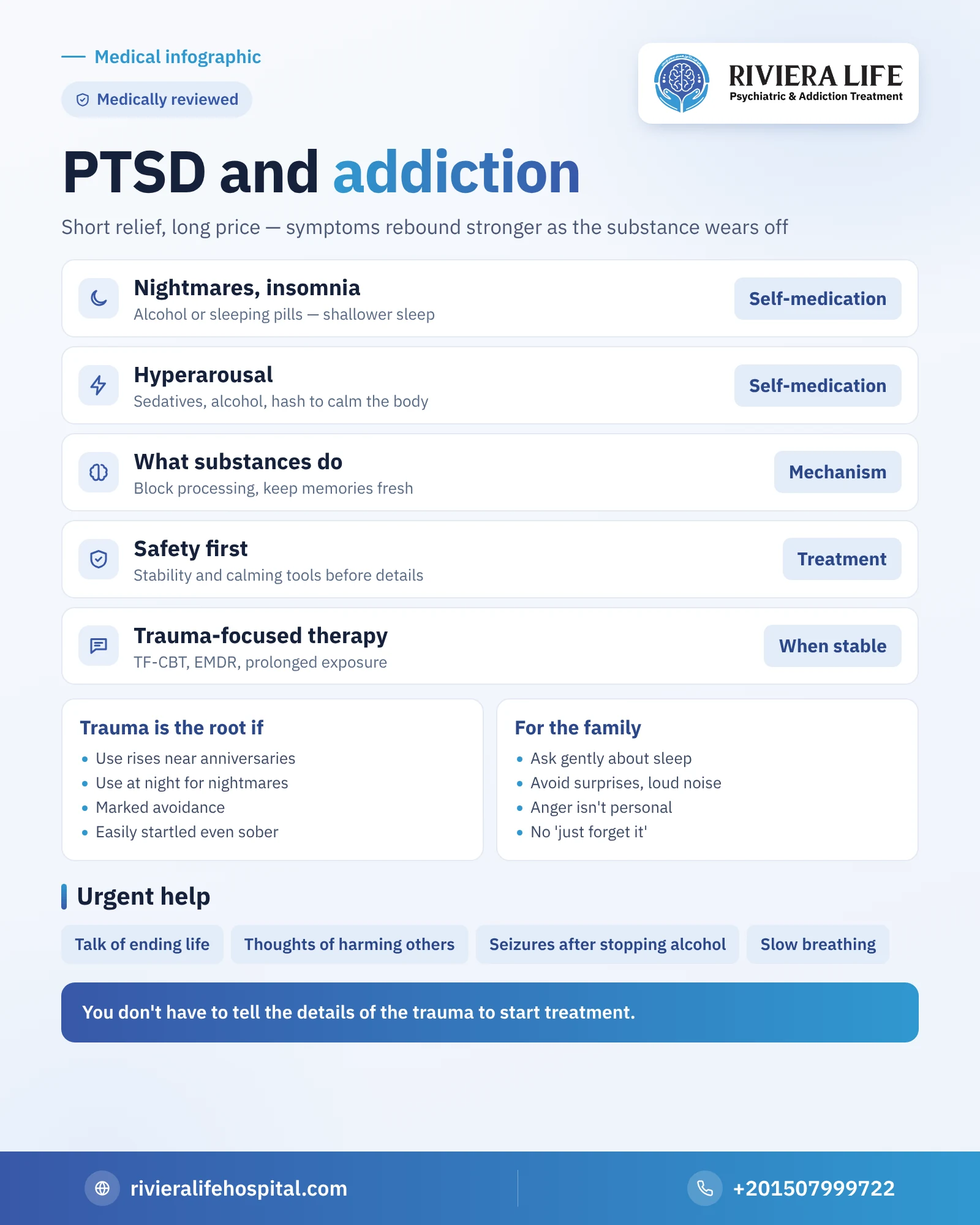
- Nightmares and insomnia: so they turn to alcohol or sleeping pills to fall asleep, then their sleep becomes shallow and broken and nightmares increase when they stop.
- Tension and constant bodily alertness: so they look for a sedative, such as alcohol, benzodiazepines or hash.
- Intrusions and memories: suppressed temporarily by the drug, but not treated.
- Numbness and emptiness: may push toward stimulants or thrills so the person feels anything.
- Guilt or shame: buried in alcohol for a while.
The problem is that the relief is short and the price long: each time the effect of the substance wears off the symptoms rebound stronger.
What do substances do to trauma?
Recovery from trauma basically needs the brain to face the memory in safe conditions, so it learns that it is over and the danger isn’t now. Drugs cut this process: the substance numbs the feeling so natural processing doesn’t happen, and keeps the memory fresh. They also weaken the parts responsible for regulating emotion, so anger and startle increase. Then withdrawal symptoms come to resemble the symptoms of trauma itself, such as palpitations, sweating, insomnia and anxiety, so the patient thinks the trauma is returning stronger.
The difficulty of distinguishing symptoms
Withdrawal, intoxication and trauma symptoms resemble each other a lot, so the doctor asks about the timeline: what appeared before use, and what appeared during abstinence? It is useful for the patient to mention the date of the traumatic event, the onset of symptoms, the substances used and sleep patterns. And the person shouldn’t delay seeking treatment waiting for “things to calm down”, nor ask the doctor only to remove the symptoms without looking at their cause.
How are the two treated together?
Research supports simultaneous treatment of both conditions more than treating one and postponing the other. Among its most prominent elements:
- Safety first: a stage that builds stability, abstinence and tools for calming the body before going into the details of the trauma, and programs such as “Seeking Safety” were designed for this.
- Trauma-focused psychotherapy: such as trauma-focused cognitive behavioral therapy, eye movement desensitization and reprocessing (EMDR) and prolonged exposure, carried out when the patient is stable enough, by a trained therapist. It may be started gradually even during the recovery period.
- Supervised detox: especially with alcohol and sedatives, because sudden stopping may be dangerous.
- Medicine when needed: the doctor may prescribe certain medicines for symptoms of trauma, depression or insomnia, with caution about medicines that can cause dependence. No dose is adjusted and no medicine stopped except by the doctor’s decision.
- Family and support: learning how to deal with episodes of anger and withdrawal. More in PTSD treatment.
Types of trauma linked to use
Trauma isn’t necessarily one big event. Some people go through a road accident, a disaster, a sudden loss or witnessing violence, some are exposed to repeated violence or neglect in childhood, and some work in professions where difficult scenes recur, such as ambulance work, the army and medicine. Studies indicate that early repeated trauma is linked to a higher risk of use later. This doesn’t mean everyone who suffered will become addicted, but that whoever is suffering should be asked about trauma and offered support early. And it is important that asking about the past doesn’t turn into an intrusion; the trained therapist lets the patient set the limits of what they tell.
Signs that trauma is the root
- Use increases near dates that recall the event or after similar scenes.
- The patient prefers to use at night or before sleep, because of nightmares.
- They avoid particular places, people or news in a striking way.
- They seem easily startled or constantly alert even without a substance.
- They return to the substance after every attempt to stop because nightmares and tension increase.
The presence of these signs isn’t enough for diagnosis, but it deserves to be mentioned to the doctor because it changes the treatment plan.
What hinders recovery?
- Fear of talking about the trauma, so the patient stays silent for years.
- Waiting for “relief” from the substance before starting treatment.
- Believing that weakness is the cause of the problem, while it is a body’s response to an unusual danger.
- Programs that treat only the addiction and ignore the trauma, or the reverse.
- Stigma, especially among men who are expected not to be affected.
When does trauma-focused therapy start?
There is no single timing that suits everyone. Some programs start by strengthening safety and calming skills with abstinence, then move to processing memories when the patient becomes able to bear feelings without escaping to the substance. In other cases work on the trauma may begin in parallel with addiction treatment if the patient is stable and motivated. The decision rests with the treating team according to the severity of symptoms, the length of abstinence and safety at home, not the family’s insistence or the patient’s hurry. What matters is that neither side is left waiting indefinitely.
What does the family do?
- Ask gently: “How are you sleeping?” or “Is something hurting you?” without pressuring them to tell.
- Avoid surprises and loud noises as much as possible, as their body is on alert.
- Don’t take anger or withdrawal personally; they are usually an effect of the trauma.
- Encourage seeking treatment without humiliation, and avoid “forget what happened”.
- Look after yourself, as long-term accompanying is exhausting.
Seek urgent help immediately if there appear
Call an ambulance on 123 or go to the nearest emergency department, and don't leave the person alone.
- Talk of ending life or that there is no point in going on
- Severe agitation or thoughts of harming another person
- Tremor, seizures and hallucinations after suddenly stopping alcohol or sedatives
- Severe drowsiness or slow breathing after sedatives or alcohol
You can also call the hotline of the General Secretariat of Mental Health on 16328.
How does Riviera Life help you?
At Riviera Life in Sheikh Zayed the psychiatry and addiction consultants treat trauma and substance use together in one plan that starts with safety and stability, with round-the-clock medical supervision and complete confidentiality, and a program for the family and aftercare. You aren’t asked to tell more than you want at the first meeting. The first consultation is free: +201507999722.
More from the PTSD guide
Questions many people ask
To ease nightmares, tension and intrusive memories, but the relief is short and the symptoms rebound stronger as the effect wears off.
No, the plan usually starts with safety and stability, and a trained therapist doesn't pressure you to tell more than you want.
Research supports treating both conditions together in one plan, and the team determines the timing of the trauma work according to your stability.
The doctor may prescribe medicines for certain symptoms with caution about those that can cause dependence, and no medicine is started, stopped or adjusted except by their decision.
In a dual diagnosis program, such as Riviera Life's program in Sheikh Zayed, supervised by consultants and with complete confidentiality.