Psychological trauma is the effect left by a terrifying event that threatens life or safety or exceeds a person’s ability to bear: a road accident, the sudden death of a close person, an assault, a fire, or war. In the days and weeks after the event most people show strong reactions, which are mostly normal and ease gradually.
This article explains what happens directly after trauma, what helps at this stage and what may harm, and how to distinguish a normal reaction from a disorder that needs treatment. PTSD itself has a separate guide, and diagnosis in all cases is for the psychiatrist.
What is psychological trauma?
Not every painful event is trauma in the medical sense. A disagreement with a friend or failing an exam may be very painful, but by a traumatic event doctors mean one that involves exposure to actual death or the threat of it, serious injury, or sexual violence, whether it happened to the person themselves, they witnessed it happening to someone else, or they learned that it befell someone close to them. This also includes repeated exposure to horrific details because of work, as happens to ambulance and emergency teams.
The same event may leave completely different effects on two people. The matter isn’t about strength or weakness, but about many factors including the severity of the event, the person’s history, and the support they find afterward.
Common reactions in the first weeks
Directly after the event a person may go through a mixture of the following, all of them common:
- Shock or a feeling of unreality: as if what happened were a film, or as if they were watching themselves from outside.
- Memories intruding on the mind: images and scenes that suddenly return, and nightmares.
- Physical tension: palpitations, trembling, headache, stomach upset, and startling at any sudden sound.
- Fluctuating feelings: fear, sadness, anger, and guilt because they survived or didn’t do more.
- Difficulty sleeping and concentrating and loss or increase of appetite.
- Avoidance: not wanting to talk about the event or pass by its place.
In most people these symptoms ease gradually within days to weeks, especially with support and safety. This is the natural recovery most people exposed to trauma go through.
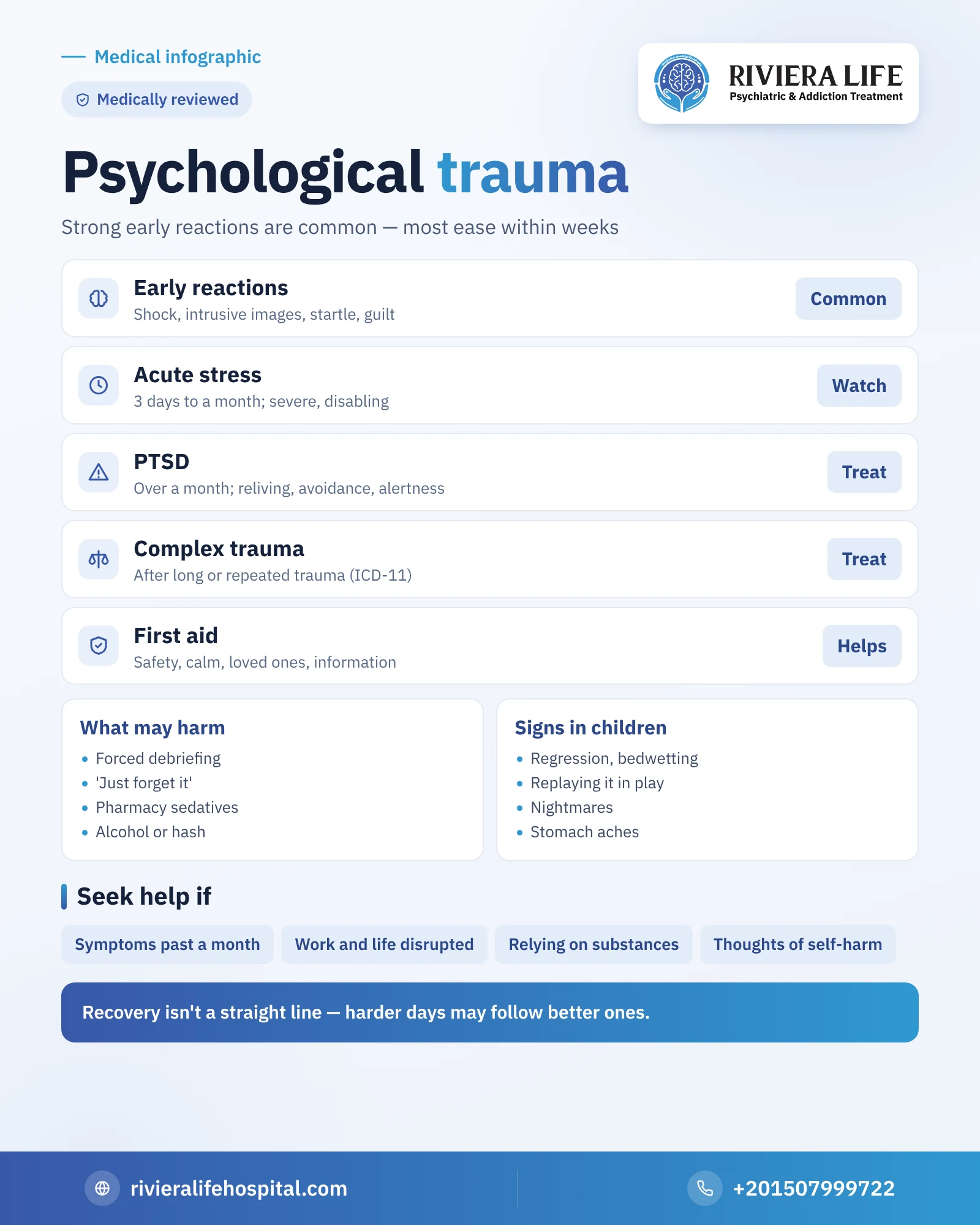
A normal reaction or a disorder? Three different conditions
| Condition | Timing | What distinguishes it |
|---|---|---|
| Acute stress disorder | From 3 days to a month after the event | Severe symptoms that hinder life: intrusive memories, detachment from reality, avoidance and severe tension |
| Post-traumatic stress disorder | More than a month, and may start late | Continued reliving, avoidance, hyperalertness and changes in mood and thoughts |
| Complex trauma | After long or repeated trauma | PTSD symptoms with great difficulty regulating emotions, a negative self-image and problems in relationships |
Acute stress disorder doesn’t necessarily mean the person will develop PTSD, but it is a sign that deserves follow-up. Complex trauma, recognized in the international classification ICD-11, is usually linked to abuse in childhood, prolonged domestic violence, captivity or war. The details of symptoms and specialized treatment are in the PTSD guide and the article on PTSD symptoms.
What helps in the first days?
International guidelines at this stage rely on what is called “psychological first aid”, and its essence is simple:
- Safety first: moving the person away from the source of danger and meeting their basic needs for water, food and rest.
- Calm: having a calm person beside them eases agitation more than any words.
- Connecting with loved ones: reuniting with family and friends is among the strongest protective factors.
- Clear information: knowing what happened and what will happen reduces the feeling of losing control.
- Listening without pressure: if they want to talk listen to them, and if they don’t, respect that.
- A gradual return to routine: sleep, meals and simple work restore a sense of stability.
And if you are the one who went through the event, give yourself permission not to be okay for a while. Don’t oblige yourself to return immediately to your full energy, and don’t measure yourself against others who seemed to get over it quickly. Recovery isn’t a straight line, and harder days may come after better days.
What doesn’t help, and may harm?
- Forcing the person to recount the details: a single session in which survivors are asked to recount the event in detail directly after it, known as “mandatory psychological debriefing”, hasn’t been proven useful, and guidelines such as NICE advise against offering it routinely, as it may increase symptoms in some people.
- Minimizing phrases: “Thank God it wasn’t worse” or “forget it” make the person feel their pain isn’t understood.
- Sedatives without a doctor: taking sedatives from the pharmacy to sleep or ease panic may give temporary relief, but it carries the risk of dependence, and isn’t recommended routinely after trauma.
- Alcohol or hash to escape: among the fastest ways to turn trauma into two problems.
- Repeated exposure to the scenes: watching videos of the incident repeatedly on social media increases tension.
Trauma in children
Children are affected by trauma in their own way, and may not be able to express it in words. Among the common signs:
- A return of behaviors they had outgrown, such as bedwetting, thumb-sucking or clinging tightly to the mother.
- Repeatedly re-enacting the event in play or drawing.
- Nightmares, fear of sleeping alone, and bouts of crying or anger.
- Repeated physical complaints such as stomach ache and headache.
- Academic decline or withdrawal from friends.
What the child needs: continuous reassurance that they are safe, a steady routine, honest answers that suit their age, and calm adults around them, as children read their parents’ fear. And if the symptoms continue for more than a month or are severe, assessment by a child psychiatrist is necessary.
When do you seek specialist help?
- If the symptoms continue or intensify after about a month has passed.
- If they have come to hinder work, study or caring for the family.
- If severe depression or repeated panic attacks appear; we explained panic attacks in the article on panic attacks.
- If the person starts relying on sedatives, alcohol or drugs to cope.
- If thoughts of self-harm or death appear.
Specialized treatments such as trauma-focused cognitive behavioral therapy and eye movement therapy are effective, and their details are in the article on PTSD treatment.
Seek urgent help immediately if there appear
Call an ambulance on 123 or the mental health hotline 16328, or go to the nearest emergency department if after the trauma there appear:
- Thoughts or talk of ending life or self-harm
- Severe detachment from reality or unresponsiveness
- Agitation or anger that threatens the safety of the person or those around them
- Refusal to eat and drink or physical collapse
- Mixing sedatives or alcohol with severe drowsiness or slow breathing
Trauma and addiction
The relationship between trauma and substance use is among the clearest relationships in psychiatry. Many of those treated for addiction carry a history of untreated trauma, especially in childhood. The substance starts as a means of silencing memories, nightmares and tension, then becomes a problem in itself. And use in turn raises the likelihood of exposure to new trauma, so a cycle forms. That is why treating addiction alone doesn’t succeed for these people, but they need a plan that treats both conditions together, as in the dual diagnosis program.
How does Riviera Life help you?
If weeks have passed since the event and the symptoms haven’t calmed, or a member of your family has started turning to sedatives or drugs, early assessment shortens the road. At Riviera Life in Sheikh Zayed the psychiatry consultants offer a confidential assessment and a plan of specialized trauma psychotherapy, with residence under round-the-clock supervision when needed. The first consultation is free on +201507999722.
More from the PTSD guide
- PTSD: the complete guide
- PTSD symptoms
- Causes of PTSD and risk factors
- PTSD treatment
- EMDR therapy: its eight phases, who it suits and what the evidence says
- Emotional trauma: why does a breakup hurt and how do you recover from it?
- PTSD test
Questions many people ask
No. Most people's symptoms ease gradually within weeks, and a smaller part develop a disorder that needs specialized treatment.
Don't force them. Listen if they want to talk, and respect their wish if they don't, as forcing early recounting hasn't been proven useful.
If they continue or intensify after about a month, hinder work and life, or are accompanied by severe depression, substance use or thoughts of self-harm.
They may return to earlier childish behaviors, repeat the event in play, or show nightmares, physical complaints and academic decline.
Yes. Early supportive intervention helps many, and trauma-focused psychotherapies are effective for those whose symptoms persist.