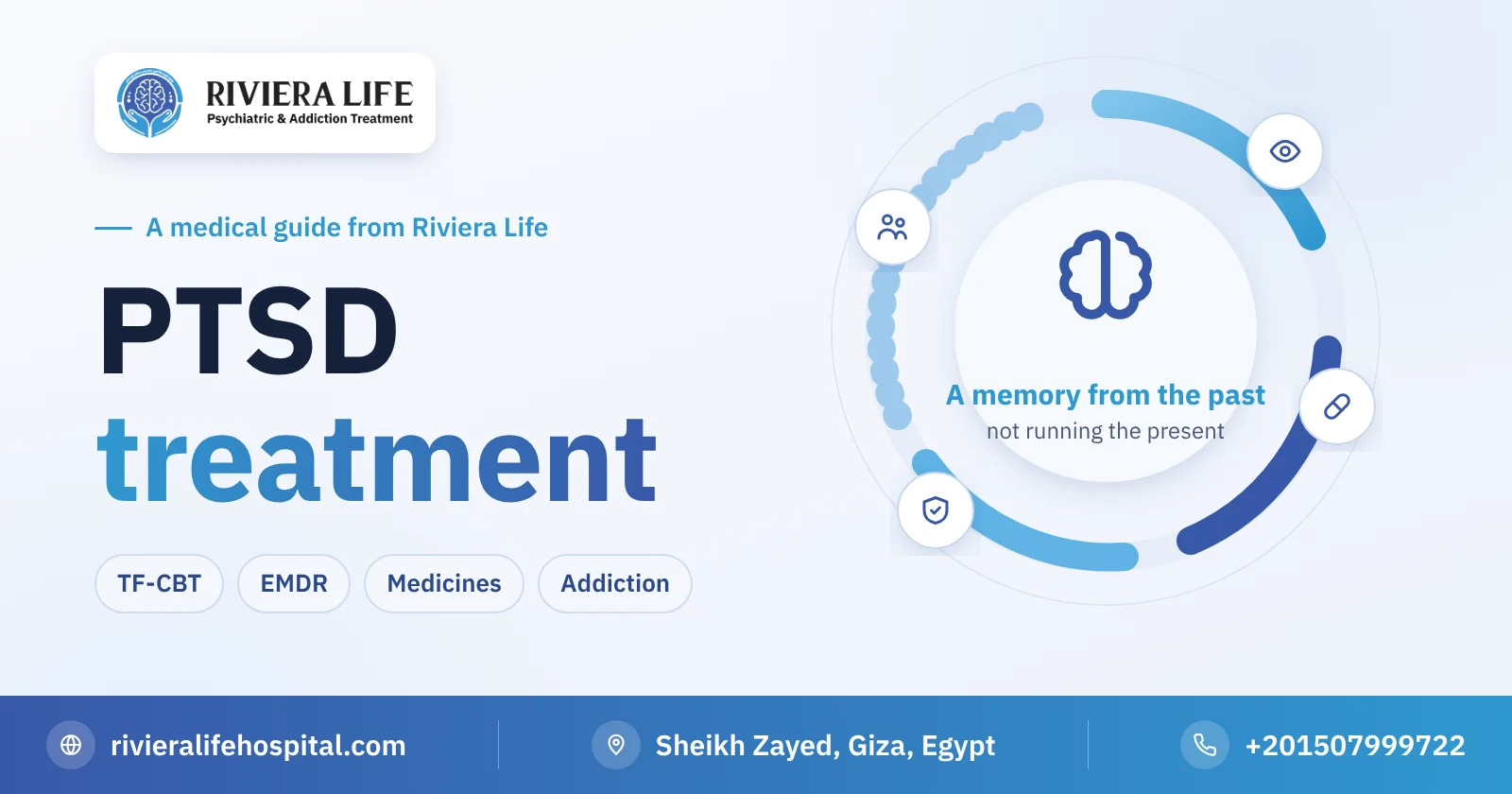
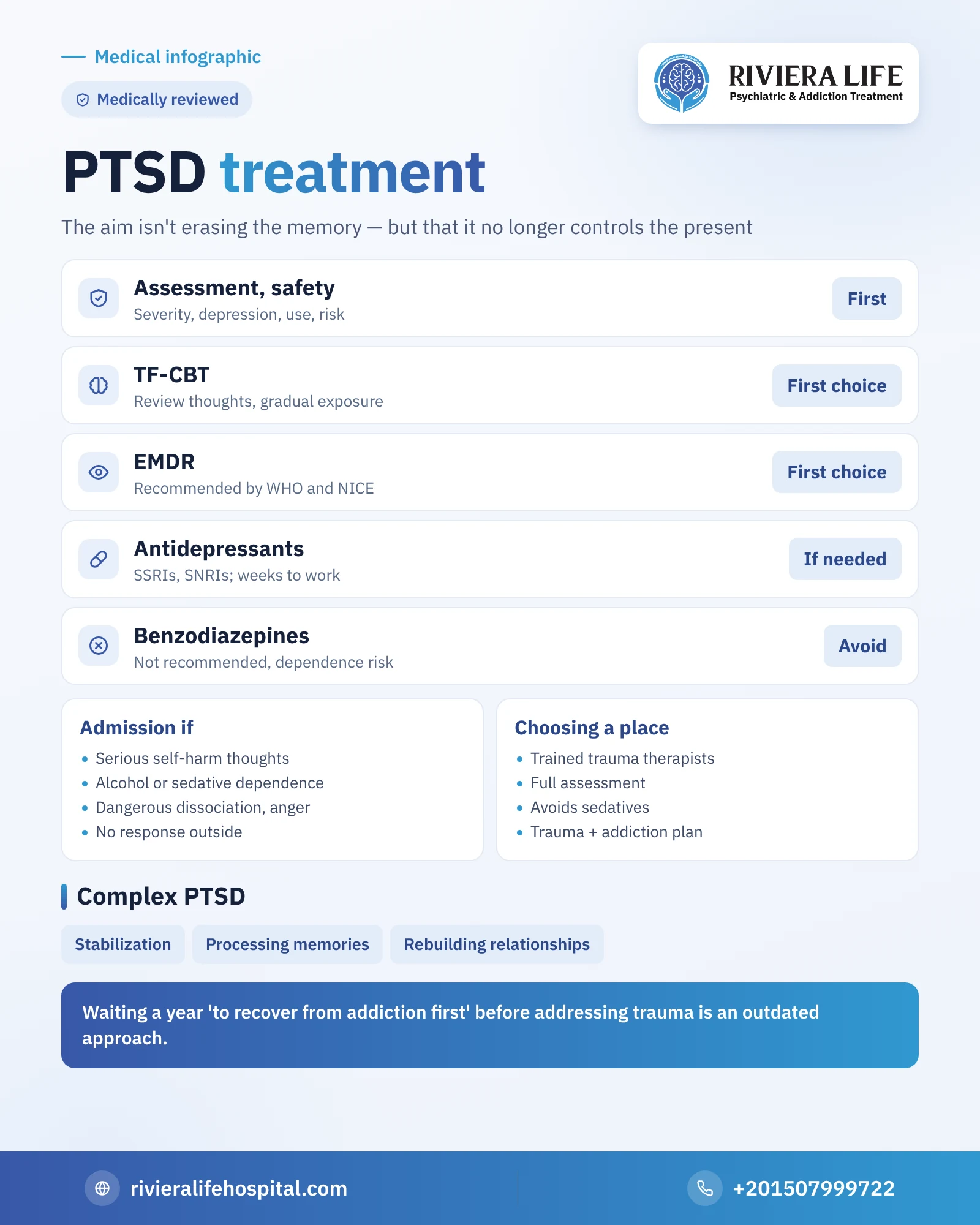
PTSD treatment is possible and effective for many patients, and the first option in international medical guidelines is trauma-focused psychotherapy, such as trauma-focused cognitive behavioral therapy and eye movement desensitization and reprocessing. The doctor may add a medicine from the antidepressants when symptoms are severe or accompanied by depression. The aim isn’t to erase the memory, but for it to become a memory from the past that doesn’t control the present. In this article we explain the stages of treatment, each type of it, the role and limits of medicines, treating trauma accompanied by addiction, when hospital admission is needed, and how to choose a place of treatment.
What does treatment achieve?
Many expect treatment to make them forget what happened, and this is neither true nor required. What changes is the person’s relationship with the memory: nightmares and moments in which they feel as if they are living the event again decrease, hypervigilance eases, they gradually return to the places and activities they avoided, and guilt and self-blame recede. The event remains part of their history, but it no longer runs their life.
The first step: assessment and building safety
Treatment begins with an assessment carried out by the psychiatrist or clinical psychologist, determining the severity of symptoms, the presence of accompanying depression, anxiety or substance use, and any risk to the patient’s safety. The patient isn’t asked in the first session to tell all the details. And if they are still living in an unsafe situation, such as ongoing violence at home, the priority is securing their situation before entering the processing of memories. We have explained the signs the specialist looks for in the article on PTSD symptoms.
Trauma-focused psychotherapies
These therapies deal with the memory itself, and aren’t content with easing the tension around it. They are usually offered in weekly individual sessions, and rely on a gradual approach controlled by the patient with their therapist.
Trauma-focused cognitive behavioral therapy
It includes several closely related methods. Some help the patient review the thoughts formed after the event, such as “it’s my fault” or “I’ll never be safe”, and test them calmly until they reach a more balanced view. Others rely on gradual exposure: approaching the memory and the avoided places step by step in a safe environment, until the brain learns that remembering isn’t dangerous. A patient who stopped riding in cars after an accident might start by sitting in a parked car, then a short trip on a quiet street, before returning to the road where the accident happened.
Eye movement desensitization and reprocessing (EMDR)
In it the patient brings to mind aspects of the memory for short periods, while following a regular movement with their eyes or receiving alternating stimulation, and the therapist guides them through defined phases. It is recommended by the guidelines of the World Health Organization and the UK’s National Institute for Health and Care Excellence among effective trauma therapies, and some patients prefer it because it doesn’t require lengthy talk about details.
Supportive therapies
Stress management and breathing exercises, improving sleep, and group therapy with other survivors are useful as part of the plan, but they don’t replace trauma-focused treatment when the disorder is present.
The role and limits of medicines
Medicine isn’t usually the first option, but it is useful in specific cases: severe symptoms that prevent the patient from benefiting from sessions, accompanying depression, or the patient’s own preference after discussing the alternatives. The most used classes are:
- Antidepressants from the selective serotonin reuptake inhibitor class, and some serotonin and noradrenaline medicines. They need weeks for their effect to appear, and don’t cause addiction.
- Medicines the doctor may add to ease nightmares and sleep disturbance in some cases, and the evidence for their effectiveness varies.
- Antipsychotics at doses determined by the doctor as an add-on in a few cases that haven’t responded or in which psychotic symptoms have appeared.
Sedatives from the benzodiazepine class aren’t recommended by guidelines for treating the disorder, as they may hinder recovery and carry a risk of dependence, a risk that is already high in trauma patients. The doctor alone determines the choice of medicine, its duration and how it is gradually stopped.
Early treatment after the event
In the first weeks after trauma not everyone needs treatment; many improve with safety, support and follow-up. But someone who shows severe symptoms, or is diagnosed with acute stress disorder, may benefit from trauma-focused cognitive behavioral therapy within the first month. Modern guidelines don’t advise a single compulsory session in which all survivors are asked to recount what happened.
Treatment of complex PTSD
When the trauma is long and repeated, treatment usually needs longer time and clearer stages. It begins with a stabilization stage in which the patient learns skills for regulating emotions and dealing with dissociation from reality, and builds a relationship of trust with their therapist, then moves on to processing memories, and after that works on rebuilding relationships and self-image. The difference between the two forms is explained in the comprehensive guide to PTSD.
Treating trauma accompanied by addiction
Many trauma patients reach treatment after years of calming their symptoms with a substance. Here the integrated plan that treats both disorders together succeeds: safe withdrawal from the substance under medical supervision, especially since withdrawal from alcohol and benzodiazepines may be dangerous if done suddenly at home, then starting trauma treatment without a long wait, because the nightmares and hypervigilance that appear strongly after stopping are among the most important causes of relapse. Waiting a whole year “to recover from addiction first” before talking about trauma is an old approach that is no longer favored.
When is hospital admission needed?
Most cases are treated in the outpatient clinic. An inpatient program becomes the most suitable option with:
- Serious thoughts of self-harm or ending one’s life, or accompanying severe depression.
- Dependence on alcohol, sedatives or other substances that needs safe withdrawal.
- Episodes of dissociation or anger that expose the patient or their family to danger.
- Symptoms that have completely disrupted life and haven’t responded to outpatient treatment attempts.
Duration of treatment and what to expect
Many trauma-focused treatment programs extend over several months, often roughly between 8 and 12 sessions in uncomplicated cases, and more in complex trauma or with accompanying disorders. The patient may at first feel a temporary increase in distress when approaching the memory, and this is expected and the therapist deals with it. Medicine, if prescribed, usually continues for months after improvement and is then reduced gradually. Understanding what feeds the symptoms in each patient helps tailor the plan, as we explain in the article on the causes of PTSD.
How does the family support treatment?
The family is an important partner: it encourages attending sessions, understands that the first days of treatment may be harder, and doesn’t pressure the patient to tell what they don’t want to. It helps for the family to learn what triggers their symptoms, and to avoid blame and comparison with others who “got over” the event. And when trauma is accompanied by clear depression, monitoring mood and sleep is among the most important things the family provides.
The right hospital for PTSD treatment: how to choose
The right hospital for PTSD treatment is one that provides what the trauma patient specifically needs: therapists trained in trauma-focused therapies, a safe environment that doesn’t force them into what they can’t bear, and the ability to treat accompanying depression or addiction. Ask before you choose:
- Does the place offer trauma-focused cognitive behavioral therapy or EMDR by trained therapists?
- Does it begin with a comprehensive assessment looking for depression, anxiety, substance use and the risk of self-harm?
- Does it avoid relying on sedatives, and can it withdraw them or alcohol safely for those dependent on them?
- Does it treat trauma and addiction in a single integrated plan?
- Does it respect the patient’s pace and maintain the privacy and confidentiality of what they recount?
- Does it involve the family and provide follow-up after the program ends?
And beware of any provider that promises you to erase the trauma in a session or days, or a guaranteed recovery rate.
How Riviera Life meets these standards in PTSD treatment
This is what the patient and their family find at Riviera Life in practice:
- A licensed provider: Riviera Life treats trauma and addiction with a license from the Ministry of Health.
- Extended experience: fourteen years in treating psychological disorders and addiction, and thousands of recovered cases.
- Specialized consultants: consultants in psychiatry and addiction treatment make the diagnosis and choose the appropriate psychological and medication treatment.
- Treating trauma and addiction together: safe withdrawal from alcohol, sedatives or others, with trauma treatment starting in the same plan.
- Round-the-clock medical supervision: 24-hour follow-up for cases that need residence or carry a risk to safety.
- Complete confidentiality: complete privacy for what the patient recounts and for their family’s data.
- A family program and aftercare: sessions that help the family support correctly, and follow-up after discharge to prevent relapse.
If memories of trauma are haunting you, your first consultation with us is free, the number +201507999722 is available around the clock, and our location is in Sheikh Zayed, Giza.
More from the PTSD guide
- PTSD: the comprehensive guide
- PTSD symptoms
- Causes of PTSD
- Benzodiazepine addiction treatment
- PTSD and addiction: self-medication and the road to simultaneous recovery
- EMDR therapy: its eight phases, who it suits and what the evidence says
Questions many people ask
Yes, trauma-focused psychotherapy is the first option and is enough on its own for many patients. Medicine is added when symptoms are severe or there is accompanying depression.
Not at the start, and not in a way beyond what you can bear. Treatment progresses in steps the patient agrees with their therapist, and some methods don't require lengthy talk about details.
Guidelines don't recommend benzodiazepines for treating the disorder, because they may hinder recovery and carry a risk of dependence. The doctor chooses safer alternatives when needed.
Many programs extend over several months, and longer in complex trauma or with accompanying depression or addiction. Improvement begins gradually and the therapist assesses it with the patient continuously.
Look for a place that combines trauma-focused therapies, a comprehensive assessment and treatment of accompanying addiction or depression. Riviera Life in Sheikh Zayed meets these criteria, being licensed by the Ministry of Health with specialized consultants and round-the-clock supervision.