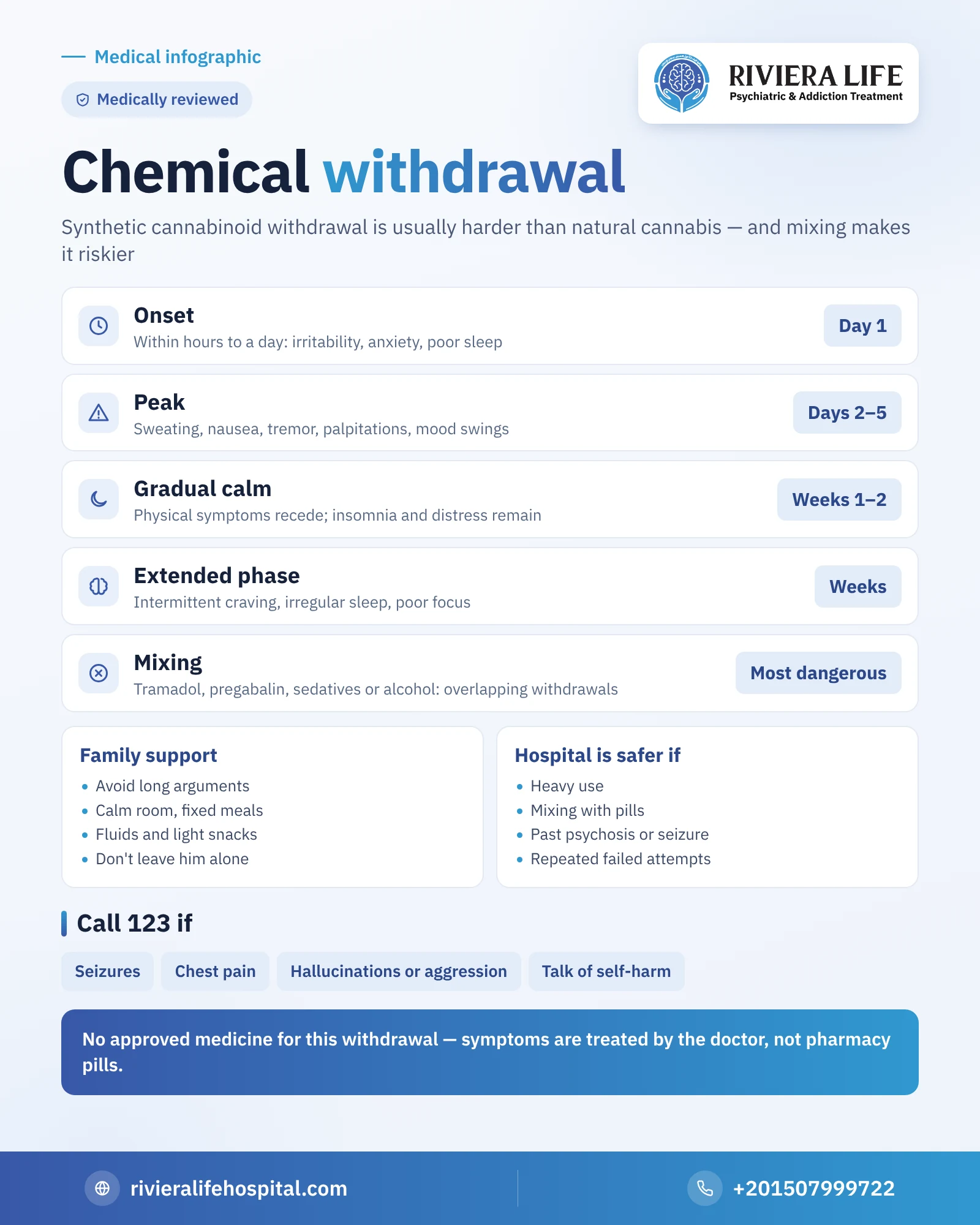
Chemical withdrawal symptoms usually begin within about a day of the last use, and may appear sooner in someone who smokes several times a day. They usually intensify between the second and fifth day, then calm gradually over one to two weeks, while insomnia, mood swings and urgent craving may remain for weeks. The most prominent are irritability, disturbed sleep, sweating, nausea, anxiety and depression. And because “chemical” is a name for different substances, and because many users combine it with pills or alcohol, withdrawal may be more severe than the person expects, which is what makes medical supervision important in many cases.
These stages also apply to withdrawal from “kemkel”, as some users in the Gulf call it, because it is the colloquial name for chemical itself.
Why do withdrawal symptoms appear at all?
With regular use, the brain adapts to the presence of a substance that activates cannabinoid receptors very strongly, so it reduces the number or sensitivity of these receptors to keep its balance. When the substance suddenly disappears, the brain stays in its “adapted” state without the stimulus it was used to, so the systems of sleep, appetite, mood and stress control are disturbed. And because synthetic cannabinoids are much stronger than natural cannabis, studies indicate that their withdrawal is more severe on average and more prone to physical symptoms.
The chemical withdrawal timeline
This is an approximate picture, and may vary a lot depending on the actual substance, the amount and the duration of use:
| Stage | Approximate timing | What to expect |
|---|---|---|
| Onset | Within hours to a day | Irritability, anxiety, difficulty sleeping, strong urge to smoke |
| Peak | Days two to five | Sweating, nausea, loss of appetite, tremor, palpitations, sharp mood swings |
| Gradual calm | The first to second week | Physical symptoms recede while insomnia and distress remain |
| Extended phase | Weeks after stopping | Intermittent craving, irregular sleep, apathy and weak concentration |
Physical withdrawal symptoms
- Heavy sweating, especially at night, with alternating feelings of heat and cold.
- Nausea and loss of appetite, and sometimes vomiting or abdominal pain.
- Tremor in the hands, muscle tension and headache.
- Palpitations or a feeling of tightness in the chest.
- General tiredness despite little sleep.
Psychological withdrawal symptoms
The psychological side is what drives most patients back. The person complains of irritability those around him can’t bear, anxiety that starts on waking, and sadness and loss of pleasure in anything. He may describe an urge to smoke that “takes over all his thinking”. In some cases suspicions or strange thoughts appear, especially in those who had psychotic episodes while using. Disturbed sleep is one of the most common and persistent symptoms: difficulty falling asleep, frequent waking, and unusually vivid, disturbing dreams.
The patient often interprets these symptoms as his “true nature” that chemical was hiding, so he becomes convinced he needs the substance to live normally. The truth is that they are mostly temporary withdrawal symptoms that recede with time and treatment, and understanding this point alone helps many hold out in the first days.
What makes withdrawal more severe in one person than another?
- The number of times smoked a day, and the amount each time.
- The length of the period of regular use.
- The type of the actual compound in the bag, which no one knows precisely.
- The presence of a previous psychiatric disorder such as anxiety or depression.
- Mixing chemical with other substances, the most dangerous point.
When chemical is part of a mixture
In the Egyptian reality, a patient rarely comes with chemical alone. Many combine it with tramadol, pregabalin, sedatives or alcohol. Here withdrawal becomes overlapping withdrawals: each substance has its own timing and symptoms, and the sudden withdrawal of some, such as sedatives, alcohol and pregabalin, may cause seizures. That is why the doctor asks at the first meeting about everything the person uses, and arranges the withdrawal of the substances with a plan that leaves no room for a sudden complication. You can review the details of withdrawal from tramadol if it is part of the picture.
Can chemical withdrawal be dangerous?
In most cases withdrawal is unpleasant and hard rather than life-threatening. But there are medical reports of seizures, heart rhythm disturbances and psychotic symptoms while stopping synthetic cannabinoids, and acute depression in the first days may carry thoughts of self-harm. With the unknown substance and common mixing, it is hard to judge the case in advance, which is reason enough not to go through the experience without consultation.
Danger signs during withdrawal
Call an ambulance on 123 immediately if you see
These signs while stopping chemical, especially when mixed with other substances, need urgent medical intervention.
- Seizures or an episode of loss of consciousness
- Chest pain or severe palpitations that don’t calm
- Hallucinations, severe confusion or sudden aggression
- Talk of self-harm or ending one’s life
- Persistent vomiting that prevents drinking fluids
How does the family support the patient in the days of withdrawal?
Irritability in these days is part of the symptoms, not a personal stance against the family. So it helps for the family to avoid long arguments and settling past accounts, and to provide a calm environment with dim lighting at night and fixed times for food and sleep. Fluids and frequent light snacks help with nausea and poor appetite. And it is important that the patient isn’t left alone for long periods in the first days, especially if signs of severe depression appear.
On the other hand, the family shouldn’t try to calm the symptoms with sleeping or sedative pills from the pharmacy or from “other people’s experiences”, because some of these medicines may interact with substances remaining in the body or become a problem themselves. Any medicine at this stage is decided by the doctor.
Can you stop at home?
Some mild cases, in a person who uses chemical alone, for a short period, without psychiatric illness or mixing, may get through their withdrawal under outpatient follow-up. But for someone who uses heavily, combines it with pills, has had a psychotic episode or seizure, or has tried to stop repeatedly and failed, it is safer for withdrawal to happen inside a hospital with round-the-clock supervision. The decision comes after a medical assessment, not by guesswork.
How is withdrawal managed medically?
There is no approved medicine given specifically for synthetic cannabinoid withdrawal, so doctors rely on treating the symptoms: regulating sleep, calming anxiety and agitation when needed with medicines the doctor chooses and monitors, replacing fluids, and monitoring the heart and blood pressure. Any psychotic symptom is treated quickly. The aim isn’t only for the patient to get through these days, but to come out of them ready for the next stage, which our article on chemical addiction treatment explains.
What happens after withdrawal ends?
The calming of physical symptoms doesn’t mean the danger is over. The following weeks bring intermittent craving that may come suddenly with a situation, place or old friend, and in them the patient needs a clear plan and regular support. It is important for the family to know that returning to use after a period off may be more dangerous, because tolerance has fallen while the new substance in the bag may be stronger than the previous one. Understanding the causes of chemical addiction helps anticipate these triggers early.
How can Riviera Life help you?
If you are thinking of stopping or trying to persuade a relative to, know that the hardest days are the first, and they pass. At Riviera Life the patient goes through the days of withdrawal under round-the-clock medical supervision, with a careful assessment of everything he was using, not chemical alone. The first consultation is free and confidential to help you decide the most suitable place for his condition.
More from our chemical guide
- Chemical: the complete guide
- Chemical addiction symptoms
- Chemical addiction treatment
- How long chemical stays in the body
Questions many people ask
Physical symptoms usually calm within one to two weeks, while insomnia, craving and mood swings may continue for weeks depending on the substance and duration of use.
Studies indicate that synthetic cannabinoid withdrawal is more severe on average and more prone to physical symptoms such as sweating, palpitations and nausea.
This isn't common, but it is recorded in medical reports, and the chance increases if the person also uses sedatives, pregabalin or alcohol.
Some mild cases may stop with outpatient follow-up, but mixing with other substances or previous psychotic episodes make medical supervision safer. The assessment decides.
A fixed routine, a calm environment and fewer stimulants help, while medicines are decided by the doctor only, to avoid interaction with substances remaining in the body.