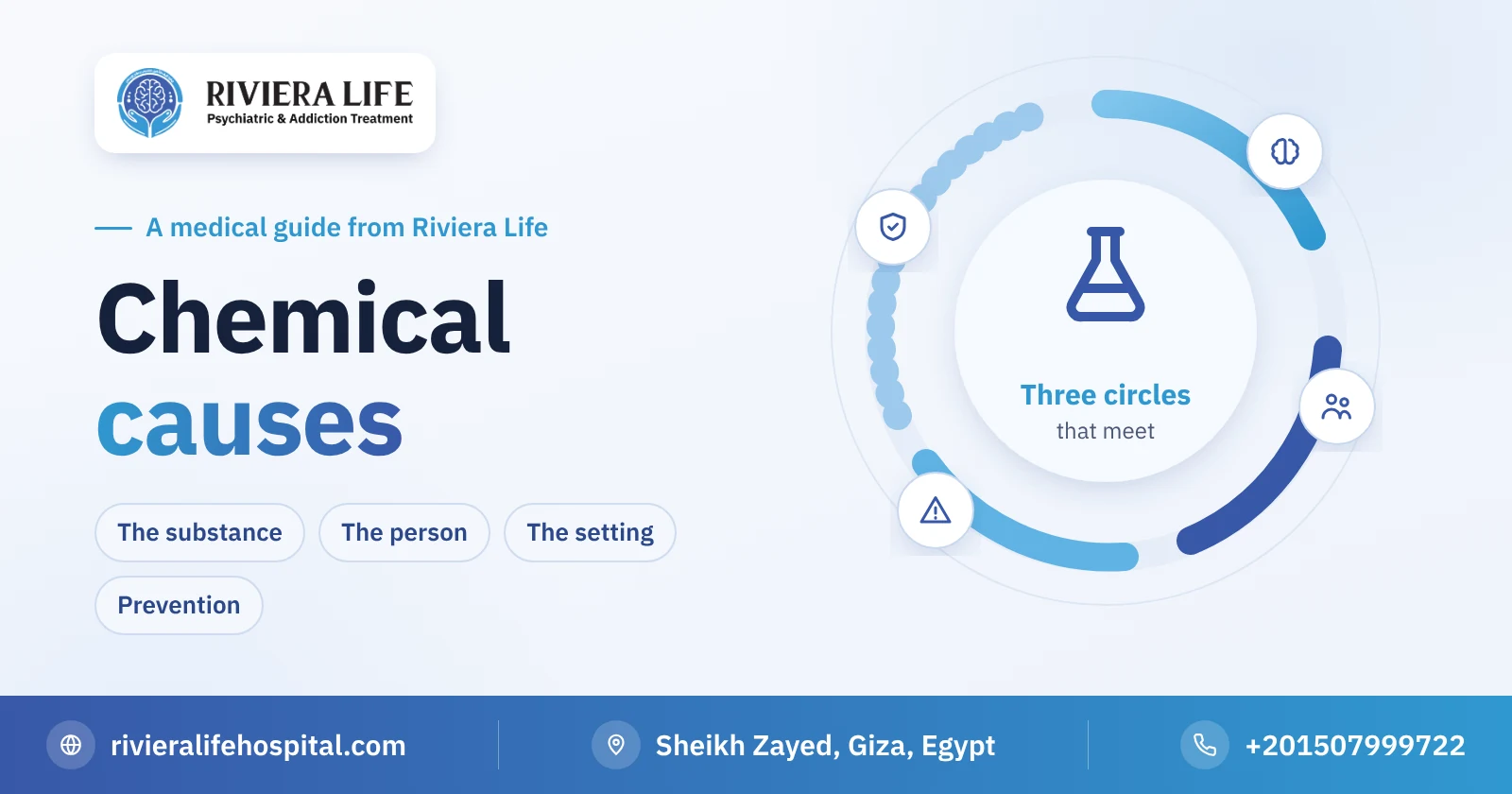
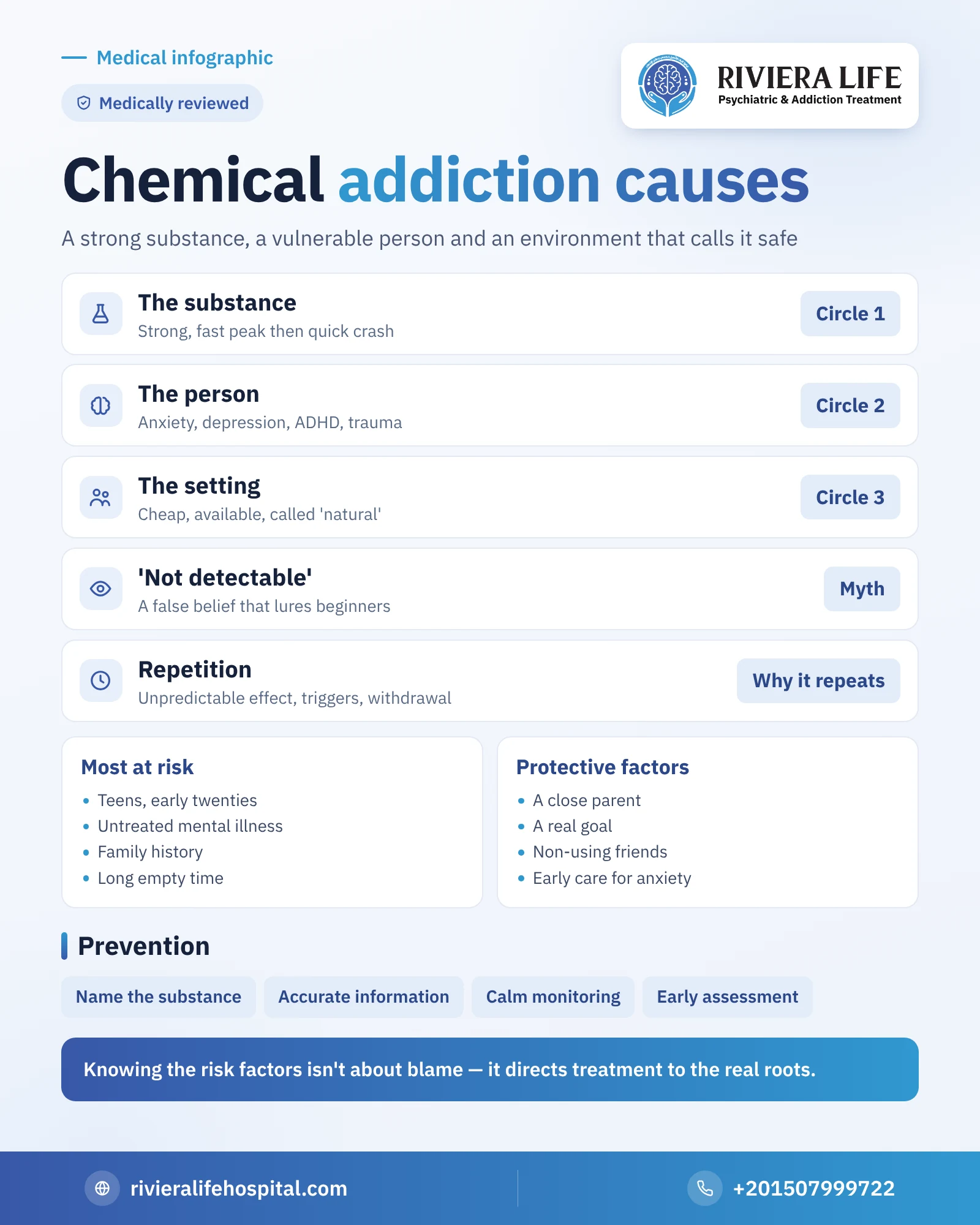
The causes of chemical addiction can’t be confined to a single cause; three circles usually meet: a strong, fast-acting substance that reshapes the brain’s reward system, a person with a psychological or genetic vulnerability or going through stress they can’t find a way out of, and an environment that supplies the substance at a low price and describes it as “safe”. Added to this is a factor specific to chemical: the belief that it doesn’t show in tests, a belief that tempts some to start. This article explains how these factors work together, and why many go back to using despite frightening experiences they have been through.
Why does chemical cause dependence quickly?
The compounds sprayed on chemical herbs activate cannabinoid receptors in the brain much more strongly than natural cannabis, and their effect arrives within minutes of smoking then falls in a relatively short time. This pattern, a fast peak followed by a crash, is one of the things that most pushes repetition. Over time the brain reduces the sensitivity of these receptors to protect itself, so the person needs a larger amount for the same effect, and feels distress and irritability in its absence. Here use moves from seeking pleasure to escaping discomfort.
From trying to addiction: how does it develop?
The story usually starts with a cigarette offered by a friend “to try” or “for fun”. If the first experience is acceptable, it repeats at occasions and weekends. Then it becomes a way to sleep or to escape tension after a hard day, then turns into a daily habit without which the day doesn’t pass. Most young people don’t notice the moment of moving from one stage to another, because it happens gradually and is accompanied by a conviction that “it’s under control”.
Take, for example, a student in his first university year who tried chemical at a party with new classmates. After two months he was smoking before sleep because he “can’t calm down” without it, and after four months he was borrowing from friends to buy it, and missing morning lectures. At every stage he had an explanation that convinced him he was different from “addicts”. This story repeats with different details, and what they have in common is that the change happened one small step after another, without a single clear moment that can be pointed to.
The illusion of safety and the low price
Chemical’s herbal appearance suggests something “natural” close to bango, and many dealers present it on this basis. The low price increases the ease of getting it, especially for students and teenagers who don’t have much money. This combination, a cheap substance thought to be light, lowers the psychological barrier to the first try more than any drug known to be dangerous does.
The belief that it doesn’t show in tests
It is widespread among some young people that chemical “isn’t detected”, so they choose it when they expect a test at work or university or fear their parents finding out. This belief is misleading, because specialized lab tests can detect many of these compounds, as the article on how long chemical stays in the body explains. But what matters here is that this idea itself is a risk factor, because it makes the person swap a known substance for another that is unknown and more dangerous.
Psychological factors
Many who use chemical regularly carry undiagnosed earlier psychological suffering:
- Chronic anxiety or social anxiety, so smoking becomes a way to calm oneself.
- Depression and a feeling of emptiness and lost meaning.
- Attention-deficit/hyperactivity disorder, linked to impulsivity and sensation-seeking.
- Old traumas or experiences of abuse or loss.
- Low self-esteem and the need for acceptance within a group.
Treating these disorders is an essential part of recovery, not a side step.
Heredity and biological predisposition
Research indicates that an important part of vulnerability to addiction in general is linked to genetic factors that affect the way the brain responds to substances. Having a father or brother with addiction doesn’t mean the son will inevitably become addicted, but it means caution is a must. And a genetic predisposition to psychotic disorders makes chemical more dangerous for those people specifically.
Family, environment and friends
- Lack of communication at home, or constant conflicts between the parents.
- Completely absent supervision or excessive harshness, both of which push towards seeking an outlet outside the home.
- Friends who use, so refusing becomes difficult and is interpreted as “weakness”.
- Long empty time without study, work or activity.
- Easy access to the substance in the area of home or study.
From bango or pills to chemical
Some chemical users started with bango or hash, then moved to it because it is cheaper, stronger or “doesn’t show in tests”. Others started with pills such as tramadol or pregabalin, then added chemical to them. This move means treatment needs to look at the whole history of use, not just the latest substance. You will find background about bango on the bango page.
Why does use repeat despite bad experiences?
Families often ask: how does he go back to it after we saw him in the emergency department? The answer lies in several things working together. First, unpredictability itself: some times are enjoyable and some terrifying, and this irregular pattern fixes the behavior in the brain more than a steady reward does. Second, withdrawal symptoms of irritability, insomnia and distress disappear immediately with a new cigarette. Third, a brain affected by the substance weakens its ability to plan and weigh consequences. And fourth, places, people and times linked to use become triggers that stir craving automatically. The details of the withdrawal stage are in the article on chemical withdrawal symptoms.
Who is most at risk of chemical addiction?
Teenagers and young people in their early twenties, those with untreated psychological disorders, those with a family history of addiction, those who started using other substances early, and those living with long empty time or ongoing stress without support. More than one factor together clearly raises the risk.
Doctors also notice a recurring pattern in young people in jobs or study with severe pressure or long late nights, such as working night shifts, where chemical starts as a way to “switch off” after an exhausting day and then turns into a condition for sleep. And likewise in those who have gone through a big, sudden change, such as losing someone close or moving to a new city far from the family, so use fills an emotional gap no one else filled.
This doesn’t mean everyone living in these circumstances will use, but it means that early attention to these sensitive periods, and honestly asking how they are, may be more useful than any general warning.
Protective factors
Knowing the risk factors doesn’t aim to blame the person or family, but to direct treatment towards the real roots. On the other hand, there are things that reduce the risk even with risk factors present: a close, open relationship with at least one parent, being occupied with a real goal in study, work or sport, friends who don’t use, accurate information about chemical instead of rumors, and dealing early with anxiety and depression.
Can it be prevented?
Yes, and prevention starts with a frank conversation at home about chemical by name, not by hinting or general scaring. Explain to your children that “natural-looking” doesn’t mean safe, and that the substance changes from bag to bag, and watch for sudden changes without turning the home into an interrogation room. And if early signs appear like those explained in the article on chemical addiction symptoms, early assessment changes the course. At Riviera Life the family can start with a free, confidential consultation to understand its position before any step.
More from the chemical guide
- Chemical: the complete guide
- The harms of chemical
- Chemical addiction treatment
- Chemical addiction symptoms
Questions many people ask
Because it is cheap, easy to hide and promoted as a light natural herb, in addition to the false belief that it doesn't show in any test.
Heredity raises vulnerability to addiction in general but doesn't settle it. A family history means caution and early attention are needed.
Because withdrawal symptoms go away with a new cigarette, because the unpredictability of the effect reinforces the behavior, and because surrounding triggers automatically stir craving.
Depression and anxiety are among the most important risk factors, as some use the substance to calm themselves, and treating them is an essential part of recovery.
With a frank conversation that names the substance, accurate information about its danger, calm monitoring of changes, and asking for an early assessment when any sign appears.