The symptoms of “chemical” addiction don’t always resemble what a family expects from “a young man smoking bango”. You may see episodes of absent-mindedness and sudden freezing, then agitation or incomprehensible fear, with red eyes and a racing pulse, then gradual withdrawal from study, work and home. And because “chemical” is a name covering different substances, the picture may differ from person to person, and even from week to week in the same person. This article gathers the signs the family can actually notice, explains when they indicate addiction rather than a passing experiment, and what to do when you notice them.
Many write the name in different ways, but the signs we present relate to the substance itself however its name is spelled.
Why do “chemical” symptoms differ from person to person?
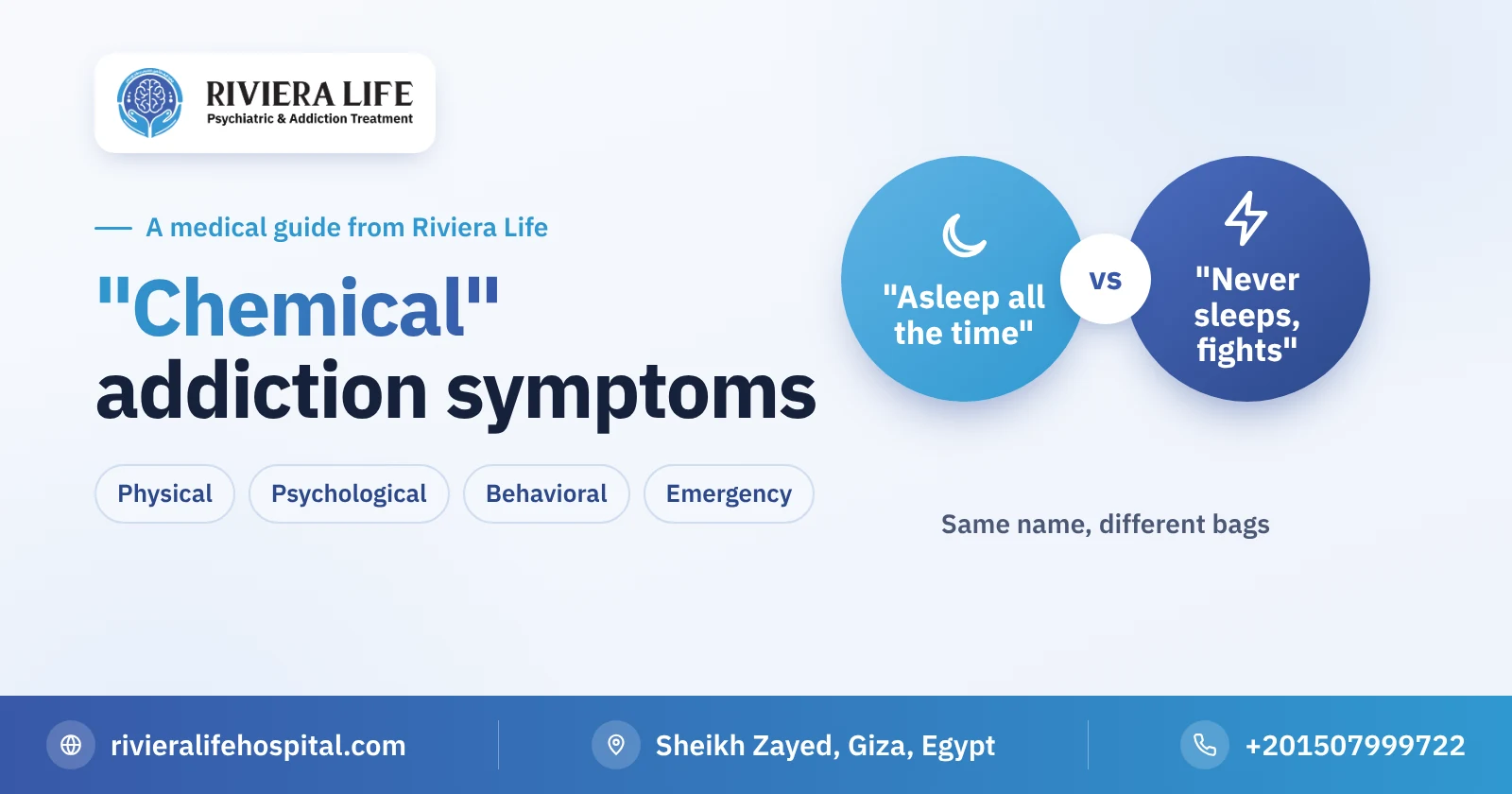
When someone uses hashish, for example, the doctor roughly knows what they will see. With “chemical”, the substance inside the bag may be a synthetic cannabinoid that causes dullness and dizziness, a manufactured stimulant that causes sleeplessness and irritability, or a mixture of the two. So one mother may describe her son as “asleep all the time”, while another describes hers as “never sleeping and fighting with everyone”, and both are using what the market calls “chemical”. This variation isn’t evidence that the family is wrong in its suspicion, but part of the nature of the problem itself.
Signs that appear during use or shortly after
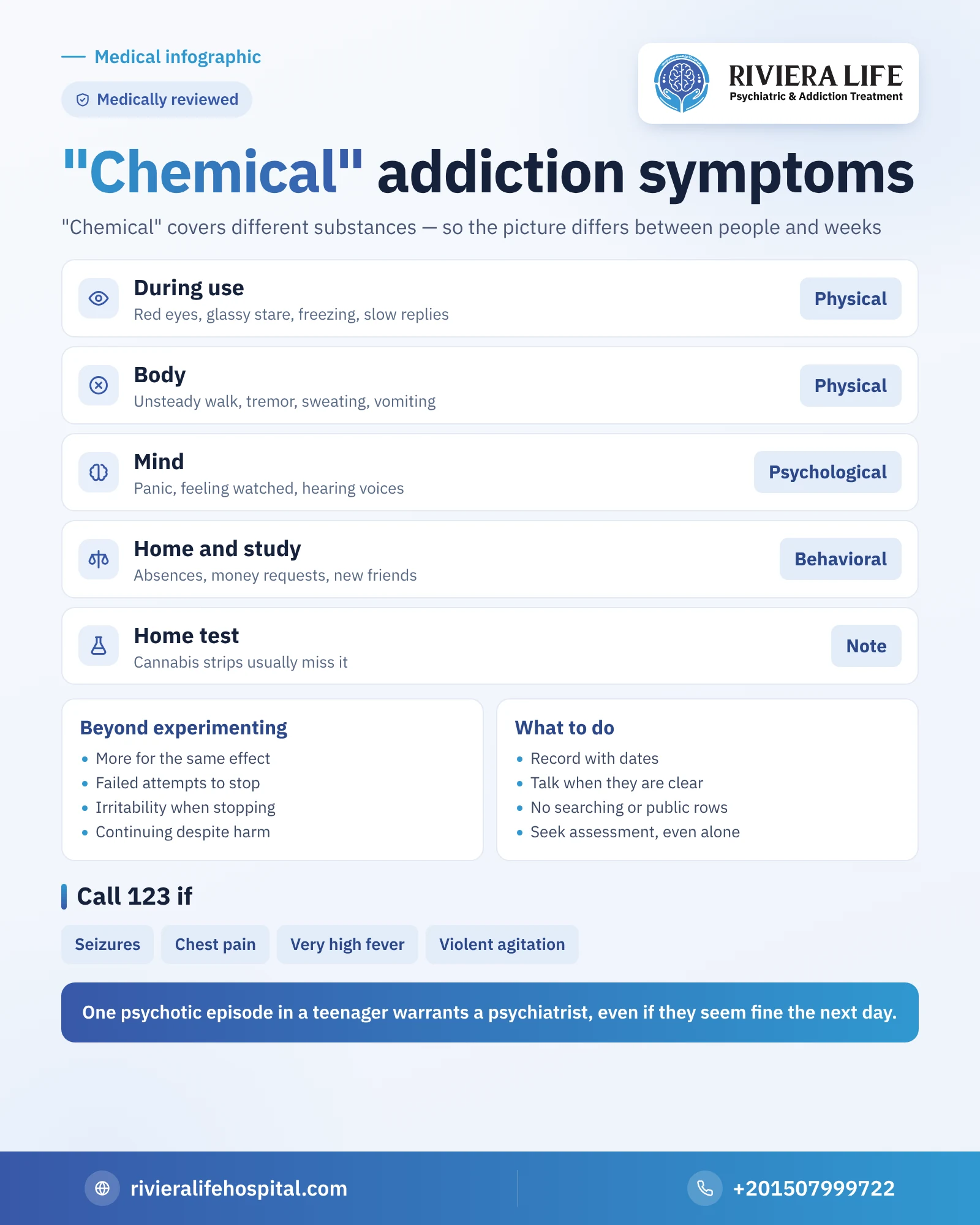
These signs usually appear within minutes of smoking and may last hours, and the family may only see part of them because use often happens outside the home:
- Red eyes and sometimes dilated pupils, and an absent or “glassy” stare.
- Freezing in place or very slow replies, as if the person can’t hear.
- Broken or incoherent speech, and laughing or crying for no clear reason.
- Unsteady walking and trembling hands.
- Sweating and pallor, and vomiting at times.
- A strange chemical or perfumed smell on clothes and in the room, different from the smell of hashish.
Behavioral signs at home and in study
Behavioral signs are more constant than physical ones, because they don’t disappear when the cigarette’s effect wears off. Among the most frequent in families’ complaints:
- Repeated absence from study or work, and a clear decline in grades or performance.
- Constantly asking for money with changing excuses, or small things disappearing from the home.
- Changing friends, staying out late, and keeping the bedroom door closed for long periods.
- Excessive irritability when asked about any detail of their day.
- Neglecting personal hygiene and appearance after having cared about them.
- Rolling papers, or small sealed bags of dry herbs with unfamiliar colors or smells.
Psychological and mood signs
Here the clearest difference between “chemical” and natural cannabis appears. Many “chemical” users go through episodes of acute anxiety or panic, talk about people watching them, or hear voices others don’t hear. The person may go through sharp mood swings within a single day, from exaggerated laughter to anger or deep sadness. In some cases these symptoms turn into psychosis lasting days after the last use, which needs an urgent psychiatric assessment, not waiting.
Physical signs that build up with continued use
With repeated use over weeks or months, the family may notice:
- Weight loss and poor appetite, or repeated bouts of nausea and vomiting.
- Disturbed sleep: long late nights then heavy sleep in the daytime.
- Complaints of palpitations or chest tightness.
- A chronic cough or repeated sore throat.
- Repeated headaches and weak concentration and short-term memory.
The details of what these substances leave in the body in the long term are in our article on the harms of “chemical” on the brain, heart and body.
To assess the degree of dependence objectively, the addiction test offers eleven questions matching the medical diagnostic criteria.
How do you know it has gone beyond experimenting?
Trying it once or twice is dangerous in itself, but addiction is a different picture that the doctor recognizes from a fixed pattern, not a single situation. Among its clearest signs:
- Increasing the amount or the number of times to get the same effect.
- Open or hidden attempts to stop that end with a return within days.
- Irritability, insomnia, sweating and loss of appetite appearing on stopping, then disappearing with use.
- Continuing despite clear problems in health, study or relationships.
- Most of the day taken up with obtaining the substance or finding the money for it.
If withdrawal symptoms are clear, see what to expect during them in our article on “chemical” withdrawal symptoms.
Can “chemical” be confused with other substances?
Yes, and often. Absent-mindedness and redness may resemble bango, sleeplessness and irritability may resemble stimulants, and drowsiness with small pupils points more to opioid painkillers such as tramadol. What is harder is that many “chemical” users combine it with other pills, so the signs get mixed. That is why the family shouldn’t try to identify the substance itself, but simply describe what it sees accurately to the doctor.
It helps for the family to write its observations on a single sheet: when the change began, which symptoms recur, whether they found pills, bags or rolling papers, and whether the person has had a fainting episode or seizure before. This sheet saves the doctor a great deal of time in the first meeting.
Why may the home test come back negative despite symptoms?
The usual test strip looks for the active substance in natural cannabis, and synthetic compounds differ chemically from it, so it usually doesn’t recognize them. So a negative result with clear symptoms neither clears the person nor confirms use; it means the tool isn’t suitable. Our article on how long “chemical” stays in the body explains which test actually detects it.
Signs of “chemical” in teenagers
Teenagers are more exposed to “chemical” because of its low price, how easy it is to hide, and the widespread idea that it is “safe”. Parents often confuse its signs with ordinary teenage mood swings. The difference is that the change here is sudden and sharp: an academic collapse within a month, a new friend who suddenly dominates their time, or an episode of fear or agitation that never happened before. And a single psychotic episode in a teenager calls for seeing a psychiatrist even if they return to normal the next day. Also watch for coded phone conversations or code names for friends, and for pocket money that runs out early without you knowing where it went.
What do you do if you notice these signs?
Start by recording what you see with dates and details, as this is more useful to the doctor than any home test. Choose a calm time when the person is fully aware and talk about your worry for their health, not about shame or punishment. Avoid repeated searching and confrontation in front of others, as they usually push towards more hiding. Then seek a specialist assessment, even if the family starts the consultation alone before the patient is convinced.
Signs that can’t wait
Call an ambulance on 123 immediately if you see
- Seizures or loss of consciousness
- Chest pain or severe palpitations
- A very high temperature with confusion
- Violent agitation or hallucinations with loss of the sense of danger
How can Riviera Life help you?
The Riviera Life team of consultants in psychiatry and addiction treatment receives families who notice these signs and don’t know where to start. The first assessment is free and confidential, and determines whether the symptoms result from “chemical” alone or from mixing with other substances, and whether there is a psychiatric disorder that needs parallel treatment. You will find the full picture of the substance on the “chemical” page.
More from our “chemical” guide
- “Chemical”: the complete guide
- The causes of “chemical” addiction
- “Chemical” addiction treatment
- “Chemical” withdrawal symptoms
Questions many people ask
The picture forms from a pattern, not a single sign: sudden absent-mindedness or agitation, red eyes, academic decline, repeated requests for money and new friends. Record what you notice and show it to a specialist.
They are usually more violent; acute anxiety, hallucinations, vomiting and seizures are more linked to "chemical". But the similarity in appearance makes confusion likely.
Yes, "chemical" may cause agitation, a panic attack or vomiting from the first try, because the concentration of the substance on the herbs is uneven and unpredictable.
Synthetic cannabinoids may cause temporary psychotic episodes, which may last days or weeks in some people. Any psychotic episode deserves an urgent psychiatric assessment.
With seizures, loss of consciousness, chest pain, high fever or violent agitation. Call 123 and don't wait for them to come round on their own.