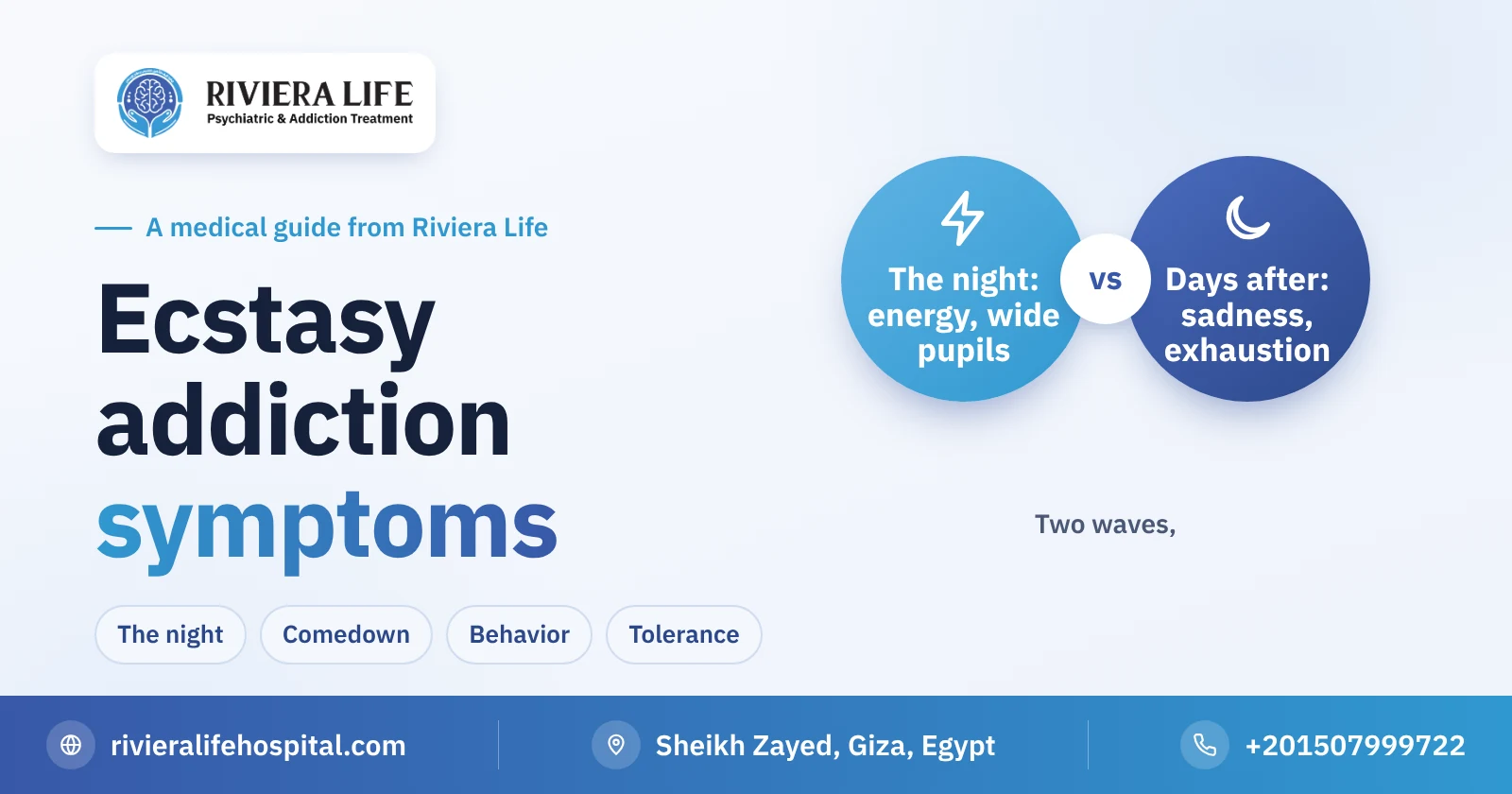
The signs of ecstasy use don’t appear throughout the week as with other substances, but come in two waves: a night of exaggerated energy and affection, wide pupils and a clenched jaw, then days of shutdown, irritability and sadness. A family that notices this repeated rhythm around parties and weekends has seen the most important signal among the symptoms of ecstasy addiction. In this article we set out the physical, behavioral and psychological signs that can be noticed, explain when use turns into addiction, and what to do if your suspicions are confirmed.
Whether you searched for it as ecstasy, “X” or MDMA pills, the signs we explain here are the same, because it is the same substance.
Signs that appear during the effect of ecstasy
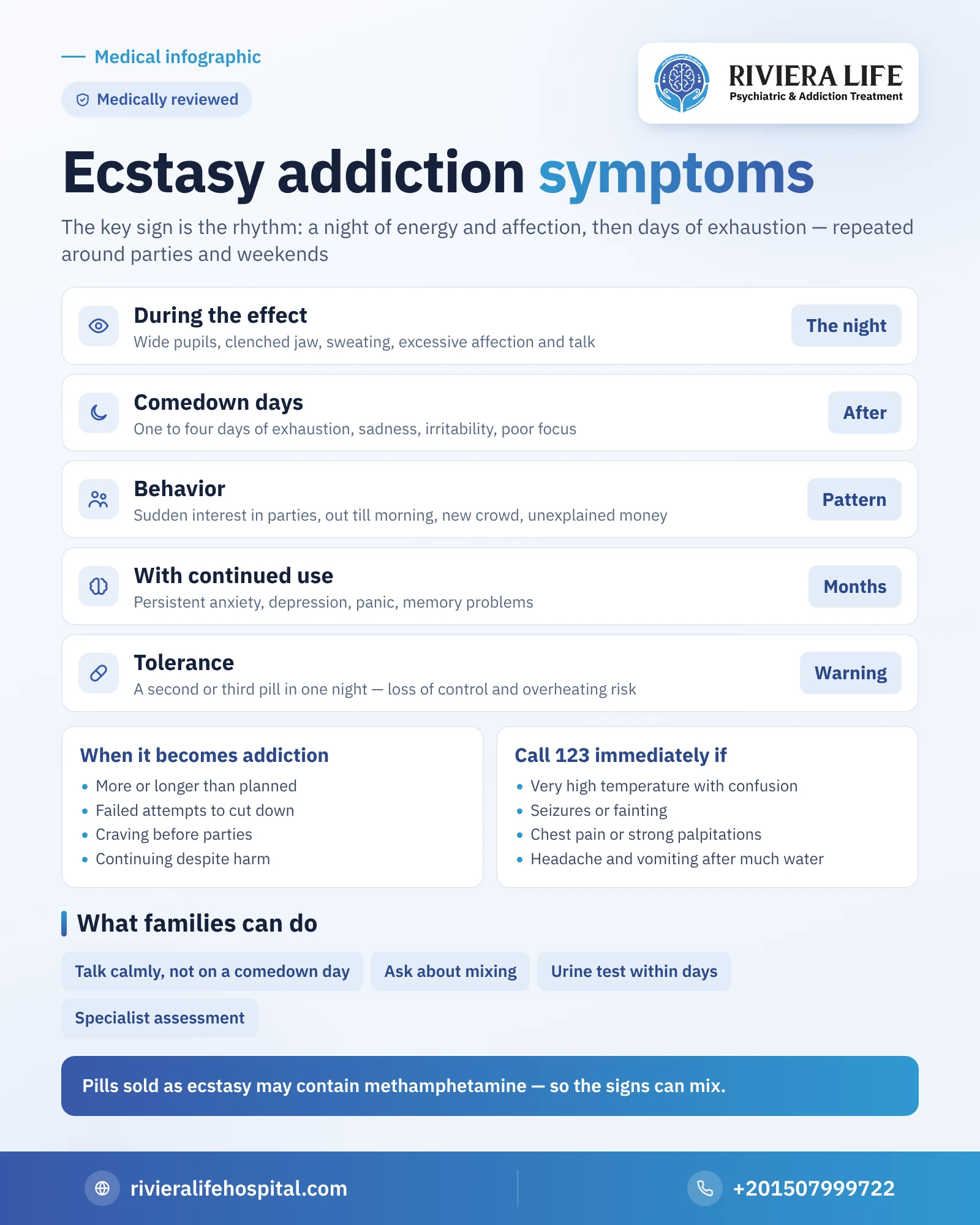
In the hours when the person is under the effect of the pill, you may notice a set of signs that are hard to hide:
- Clearly wide pupils, even in bright light.
- Teeth grinding or constant jaw movement, or excessive gum chewing.
- Heavy sweating with a feeling of heat, and sometimes chills and a slight tremor.
- Unusual enthusiasm in talking, and exaggerated hugging and touching, even with people they don’t know well.
- Heightened sensitivity to music, light and touch, and a desire to move and dance for hours.
- A fast heartbeat, nausea and little appetite for food.
A person who comes back from a night out like this may seem unusually “happy”, which is why some families don’t notice the first time.
Signs of the next day and the comedown days
After the effect ends, the store of serotonin is emptied, and the person enters what users call the “comedown”. It may last from one to about four days, and signs such as these appear during it:
- Severe exhaustion and long sleep or, on the contrary, insomnia and disturbed sleep.
- Unexplained sadness, crying, and irritability at the slightest thing.
- Poor concentration, forgetfulness and a drop in study performance at the start of the week.
- Jaw pain and small ulcers inside the mouth from teeth grinding.
- Loss of appetite and isolation in their room.
If this pattern repeats every week or two, what you are seeing is most likely not a passing mood swing.
Behavioral signs
Behavior reveals more than the body does, because ecstasy is linked to particular places and occasions. Pay attention to:
- A sudden interest in late-night parties and music festivals, and insistence on going whatever the cost.
- Staying out until morning, with conflicting stories about the place and the people.
- Repeated summer trips to the coast or resorts with a new crowd the family doesn’t know.
- Asking for money without a clear explanation, or small things disappearing from the house.
- A change of friends, and withdrawal from old activities.
- Excessive sensitivity when asked about their phone or nights out.
Things you may find in their room or bag
Don’t turn into a detective who searches every day; this destroys trust. But if you happen to see colored tablets with drawings or logos on them, unknown capsules, or small plastic bags containing powder or crystals, this is a signal that deserves a conversation. You may also notice lollipops or chewing gum in large quantities, which some users use to ease jaw clenching. These things alone aren’t conclusive proof, but they complete the picture with the other signs.
Psychological signs with continued use
When use repeats for months, the comedown is no longer just a few days. Anxiety may become a constant companion, and persistent depression, panic attacks and sleep disturbance that doesn’t improve may appear. Some users complain of poor memory and difficulty concentrating in lectures or at work. In less common cases, suspicious thoughts or hallucinations may appear, especially with large amounts or when mixed with other stimulants. What happens to the brain and heart in the long term is explained in our article on the harms of ecstasy.
When does use become addiction?
The diagnostic manual of mental disorders classes ecstasy within the hallucinogens group, and the disorder is diagnosed when use leads to clear harm and two or more signs appear within a year, including:
- Taking ecstasy in larger doses or for longer than the person planned.
- Failed attempts to cut down or stop.
- Spending a lot of time getting the pills or recovering from their effects.
- An urgent craving that appears as a holiday or party approaches.
- Neglecting study, work or family duties.
- Continuing despite clear psychological or physical problems caused by use.
- Giving up hobbies and relationships in favor of nights out.
The diagnosis itself is the psychiatrist’s task; the family’s role is to notice and ask for an assessment.
The sign of tolerance: one pill is no longer enough
Tolerance to the euphoric effect of ecstasy develops quickly, so the user complains that the “magic” they felt the first times has faded. The common reaction is to take a second and third pill on the same night, to shorten the gap between times of use, or to add another substance. This sign matters because it doesn’t only mean a loss of control, but also raises the risk of poisoning and overheating. If you hear your son talking about “boosting” the night or trying a stronger kind, this is a development that deserves intervention.
How do you tell the signs of ecstasy apart from other substances?
Some signs are similar between substances, but there are differences that help understanding:
| Substance | What distinguishes its signs |
|---|---|
| Ecstasy | Exaggerated affection and hugging, clenched jaw, wide pupils, then a comedown for days |
| Ice and shabu | Staying awake for days on end, suspicion and aggression, rapid weight loss and tooth damage |
| Hashish and bango | Red eyes, slowness and lethargy, increased appetite |
| Tramadol | Narrow pupils, drowsiness, constipation |
The problem is that pills sold as ecstasy may contain methamphetamine itself, so the signs mix. For those who suspect ice in particular, our page on ice and shabu explains the differences in detail.
Signs in teenagers and university students
Many cases of ecstasy use begin at university age or in the last years of school. In this group the signs may mix with the normal swings of adolescence, but the difference is repetition and the link to specific occasions. Grades dropping after every holiday, missing lectures on Sunday mornings, repeated arguments about curfew, and attraction to an older group are all signals that deserve attention. Intervening at this early stage is usually easier and more successful.
Pay attention also to what your children say about their friends. When your son tells you a friend “got sick” at a party or was taken to hospital because of the heat, or uses terms such as “molly” and “X” casually, this is a chance for a calm conversation in which you ask about his opinion and experience, without starting with an accusation.
What should you do if you notice these signs?
Start with a calm conversation, not an accusation, and choose a time when the person isn’t in a comedown day, because irritability on those days spoils any discussion. Talk about what you have seen yourself, and ask about mixing with other substances or medicines. If you want to confirm, know that ecstasy disappears from urine within a few days; the details are in our article on how long ecstasy stays in the body. Then ask for an assessment by a psychiatrist specializing in addiction, who determines whether it is experimentation or a disorder that needs a plan; the stages of that plan are explained in our article on ecstasy addiction treatment.
Danger signs that can’t wait
Call an ambulance on 123 immediately if you see
These are signs of poisoning, not just the effect of a night out.
- A very high temperature and hot skin with confusion
- Seizures or fainting
- Chest pain or strong palpitations
- Severe headache, vomiting and confusion after drinking a lot of water
- Muscle rigidity with agitation and heavy sweating
At Riviera Life it starts with a free and confidential first consultation, in which the team listens to the family’s observations and suggests the right next step.
More from our ecstasy guide
- Ecstasy: the complete guide
- The causes of ecstasy addiction
- Ecstasy withdrawal symptoms
- Ecstasy addiction treatment
Questions many people ask
The clearest signs are wide pupils, a clenched jaw, sweating and excessive talkativeness and affection, then fatigue, sadness and irritability in the following days. These signs together with a late night out deserve a calm conversation.
Yes, especially if use is infrequent and happens outside the home. But repeated comedown days after holidays, slipping studies and attachment to parties reveal it over time.
This is usually a sign of tolerance: the euphoric effect has lessened, so they try to make up for it. It indicates a loss of control and raises the risk of poisoning and overheating.
Sadness for days after use happens even in people who aren't addicted, because of serotonin depletion. But if it becomes persistent or is accompanied by an urgent craving to use again, it needs a medical assessment.
When use repeats, when it is mixed with other substances, when persistent anxiety and depression appear, or when study or work declines. An early assessment doesn't necessarily mean a hospital stay.