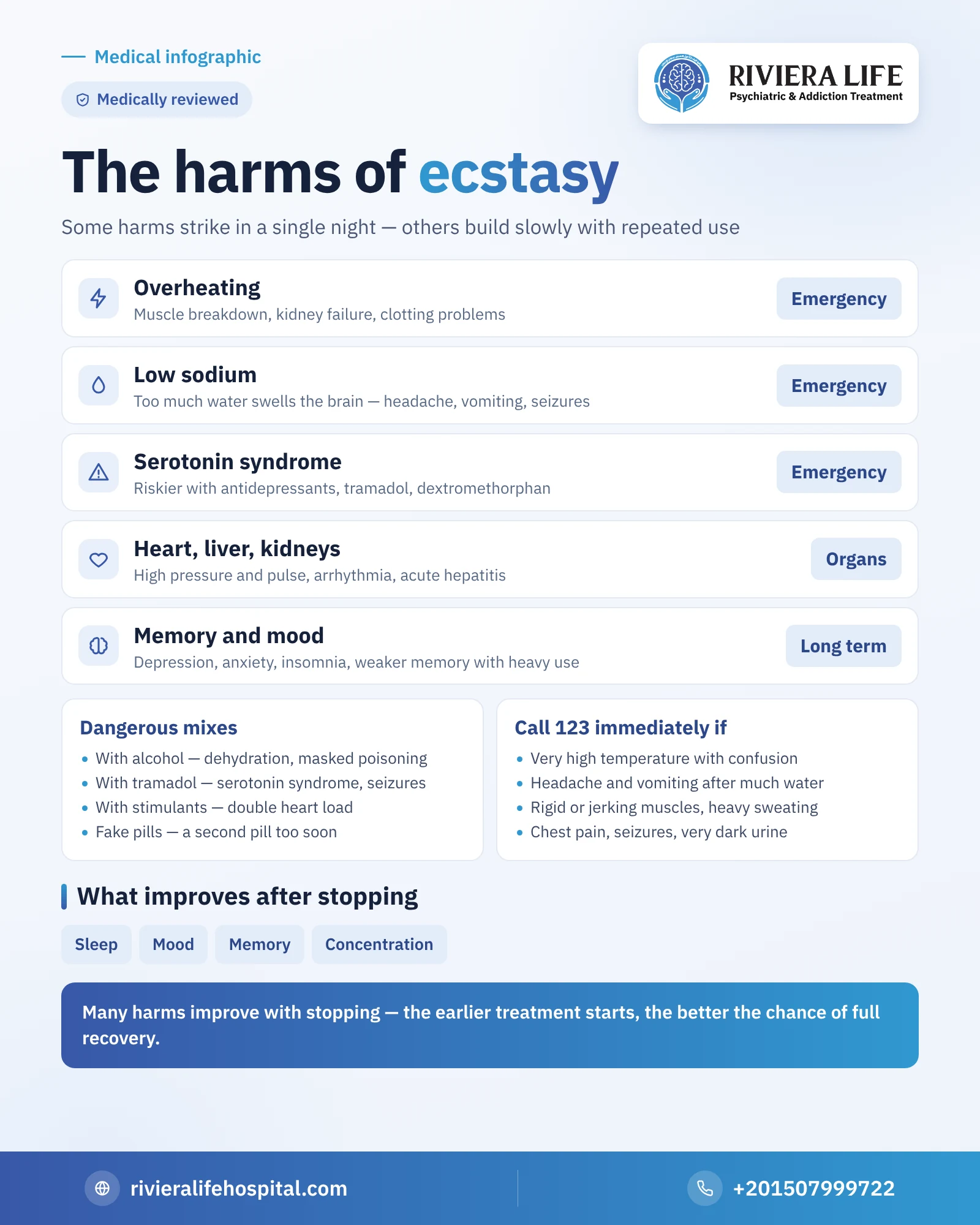
The harms of ecstasy come in two kinds: one that strikes suddenly in a single night and can be fatal, such as severe overheating, low sodium and serotonin syndrome, and one that builds slowly with repetition, affecting mood, memory, sleep and the heart. What makes the picture more dangerous is that the pill often contains other substances that add their own harms. In this article we explain what ecstasy does to the body, the brain and life, and which of these harms improve after stopping.
Short-term harms of ecstasy
Even when things pass without an emergency, ecstasy leaves a clear mark on the body in the first hours:
- A racing heart and raised blood pressure.
- Jaw clenching and teeth grinding, which can cause pain and tooth wear with repetition.
- Nausea, sweating and blurred vision.
- A dry mouth and loss of appetite.
- Impaired judgment, with what follows from it: reckless driving or unsafe relationships.
Then come the comedown days, with their sadness, anxiety, exhaustion and poor concentration, which are part of the harm and not just the end of the night out.
Overheating: the first danger
Ecstasy disrupts the brain’s ability to regulate body temperature and increases heat production in the muscles. When this combines with hours of non-stop dancing in a crowded, enclosed place or in the summer heat, temperature can rise to dangerous levels. A chain of harms then begins:
- Muscle breakdown, releasing its contents into the blood, with dark urine and severe muscle pain.
- Acute kidney failure as a result of this breakdown and dehydration.
- A disturbance of blood clotting that can cause bleeding in more than one place.
- Liver injury and damage to its cells.
- Seizures and loss of consciousness, which can end in death.
This can happen the very first time, and isn’t necessarily linked to a large amount.
Low sodium and brain swelling
Ecstasy stimulates the release of antidiuretic hormone, so the kidneys hold on to water instead of getting rid of it. Out of fear of dehydration, some users drink large amounts of water, and the excess water dilutes the concentration of sodium in the blood. When sodium falls quickly, brain cells swell inside the skull, causing a severe headache, vomiting, confusion and disorientation, then seizures and coma. Women are more vulnerable to this complication, and its symptoms may begin hours after the party is over, when everyone thinks the danger has passed.
Serotonin syndrome
It happens when serotonin rises to a toxic level, and its risk rises sharply when ecstasy is combined with other substances that raise serotonin, including:
- Antidepressants, especially selective serotonin reuptake inhibitors and monoamine oxidase inhibitors.
- Tramadol, which is common in Egypt and also raises the risk of seizures.
- Some cough medicines containing dextromethorphan.
Its signs include agitation and confusion, tremor or involuntary muscle jerking, rigidity, heavy sweating, dilated pupils, diarrhea, and a rising temperature and pulse. It is an emergency that needs a hospital immediately.
Effects of ecstasy on the heart, liver and kidneys
Ecstasy raises blood pressure and pulse for hours, which can be dangerous for someone with an undiscovered heart problem: it may cause a heart rhythm disturbance or a heart attack, or bleeding in the brain when blood pressure rises severely. Some studies suggest that repeated use over long periods may be linked to changes in the heart valves. The liver may develop acute inflammation even without overheating, and the kidneys may be damaged by dehydration and muscle breakdown. That is why the medical assessment of any regular user begins with checks of the heart and of liver and kidney function.
Effects of ecstasy on the brain and memory
Animal experiments have shown that large amounts of ecstasy can damage the endings of nerve cells that release serotonin. In humans, studies of heavy users show weaker verbal memory, attention and planning ability, though interpreting these results is complicated because many of them use other substances too. The cautious conclusion is that repeated use may leave a mark on memory and concentration, and that this mark is clearer the larger the amount and the longer the period.
Effects of ecstasy on mental health
After each use the brain goes through a temporary shortage of serotonin, and with repetition this temporary shortage can turn into longer problems:
- Depression lasting weeks, sometimes with thoughts of hopelessness.
- Persistent anxiety and panic attacks, even on days without use.
- Insomnia and a disturbed sleep pattern.
- Irritability and sharp mood swings.
- Less often: suspicion and hallucinations, especially in those predisposed to psychosis.
For what happens psychologically after stopping specifically, see our article on ecstasy withdrawal symptoms.
The harms of mixing and fake pills
Many cases that reach the emergency department aren’t about ecstasy alone, but about what came with it:
| The mix | The additional harm |
|---|---|
| Ecstasy and alcohol | Worse dehydration, weaker judgment, and masked signs of poisoning |
| Ecstasy and tramadol | Serotonin syndrome and seizures |
| Ecstasy and other stimulants | A double load on the heart and a bigger rise in temperature |
| Pills cut with slow-acting substances | Taking a second pill before the first takes effect, then poisoning |
A pill that contains methamphetamine instead of ecstasy brings with it all the harms of crystal meth, which are explained on our page about crystal meth (ice and shabu).
Harms to pregnancy and daily life
Using ecstasy during pregnancy exposes the mother to all the risks above, and studies raise concern about possible effects on the baby’s development, so a pregnant woman who has used it needs frank medical follow-up, not concealment. In daily life, use goes together with driving under the influence, unsafe relationships that may transmit infection, falling behind at school and work during comedown days, and legal consequences. These harms don’t show up in tests, but they are often the first thing the family notices, as explained in our article on ecstasy addiction symptoms.
Why are the harms worse for teenagers?
The brain in adolescence and the early twenties is still building its networks, especially the areas responsible for judgment, emotional control and memory. Repeated exposure to a substance that depletes serotonin at this stage may leave a clearer mark on mood and learning. On top of that, a teenager has less experience in recognizing danger signs, is more inclined to go along with the group in taking an extra pill, and is less willing to call an ambulance for a friend for fear of punishment. That is why talking with your children needs to include a clear message: if anyone shows signs of poisoning, calling an ambulance matters more than anything else.
Do the harms of ecstasy go away after stopping?
The good news is that many of the harms improve with stopping. Sleep and mood return gradually over weeks to months, and memory and concentration improve in many people, especially if the accompanying depression and anxiety are treated. But harms resulting from a severe emergency, such as kidney or brain damage after overheating or prolonged seizures, may leave a permanent mark. So the earlier treatment begins, the greater the chance of full recovery; the treatment steps are explained in our article on ecstasy addiction treatment.
Signs that call for an ambulance
Call an ambulance on 123 immediately if you see
These situations can deteriorate within minutes — don't wait for them to improve on their own.
- A very high temperature and hot skin with confusion or delirium
- A severe headache, vomiting and confusion after drinking a lot of water
- Rigid or jerking muscles with agitation and heavy sweating
- Chest pain or an irregular heartbeat
- Seizures or loss of consciousness
- Very dark urine or passing very little urine
More from our ecstasy guide
- Ecstasy: the complete guide
- Causes of ecstasy addiction
- How long ecstasy stays in your system
- Ecstasy addiction treatment
- GHB: its dangers with alcohol and how to protect yourself from drink spiking
Questions many people ask
The most dangerous are three emergencies: severe overheating, low sodium that causes brain swelling, and serotonin syndrome. They can happen the very first time.
Large amounts have damaged serotonin cells in animal experiments, and some heavy users have weaker memory and concentration. Much of this improves with stopping early.
Because ecstasy makes the kidneys hold on to water, so drinking too much dilutes the sodium in the blood. A rapid fall in sodium causes headache, vomiting and seizures, and can be life-threatening.
No. Alcohol increases dehydration, weakens judgment and masks the early signs of poisoning. Mixing in general raises the chance of ending up in the emergency department.
Mood usually improves gradually over weeks to months after stopping. If depression persists or thoughts of hopelessness appear, it should be treated by a psychiatrist.