Ecstasy withdrawal isn’t like heroin or alcohol withdrawal: there are usually no seizures and no severe physical pain. But ecstasy withdrawal symptoms are psychological par excellence: fatigue, deep sadness, anxiety, insomnia, difficulty concentrating and a wish to go back to the pill. Symptoms start within a day or two of the last use, peak in the first days, then gradually calm down over weeks for most people. The real danger at this stage is severe depression and dark thoughts, which is why we explain here what to expect day by day, and when to seek help immediately.
These stages apply to anyone using “ecstasy” under whatever name it is sold, whether called ecstasy, X or MDMA.
Does ecstasy really have withdrawal symptoms?
This question was debated for years, because ecstasy doesn’t cause clear physical dependence like opioids. But studies of regular users have described a recurring set of symptoms after stopping, including fatigue, loss of appetite, depression and difficulty concentrating. The accepted explanation is that repeated use depletes serotonin and changes the sensitivity of its receptors, so the brain needs time to return to balance. So the answer is yes, there is withdrawal, and its nature is mainly psychological.
The comedown after a night out, or withdrawal from regular use?
It is important to distinguish between two situations that look alike but mean different things:
- The comedown: happens even after a single use, usually lasts from about one to four days, then mood improves without intervention in most cases.
- Withdrawal: appears in those who used regularly for weeks or months, is longer and deeper, may last weeks, and is accompanied by an urgent craving to go back.
If someone goes into a comedown every week, they are practically living a repeated withdrawal in which the brain is given no chance to recover.
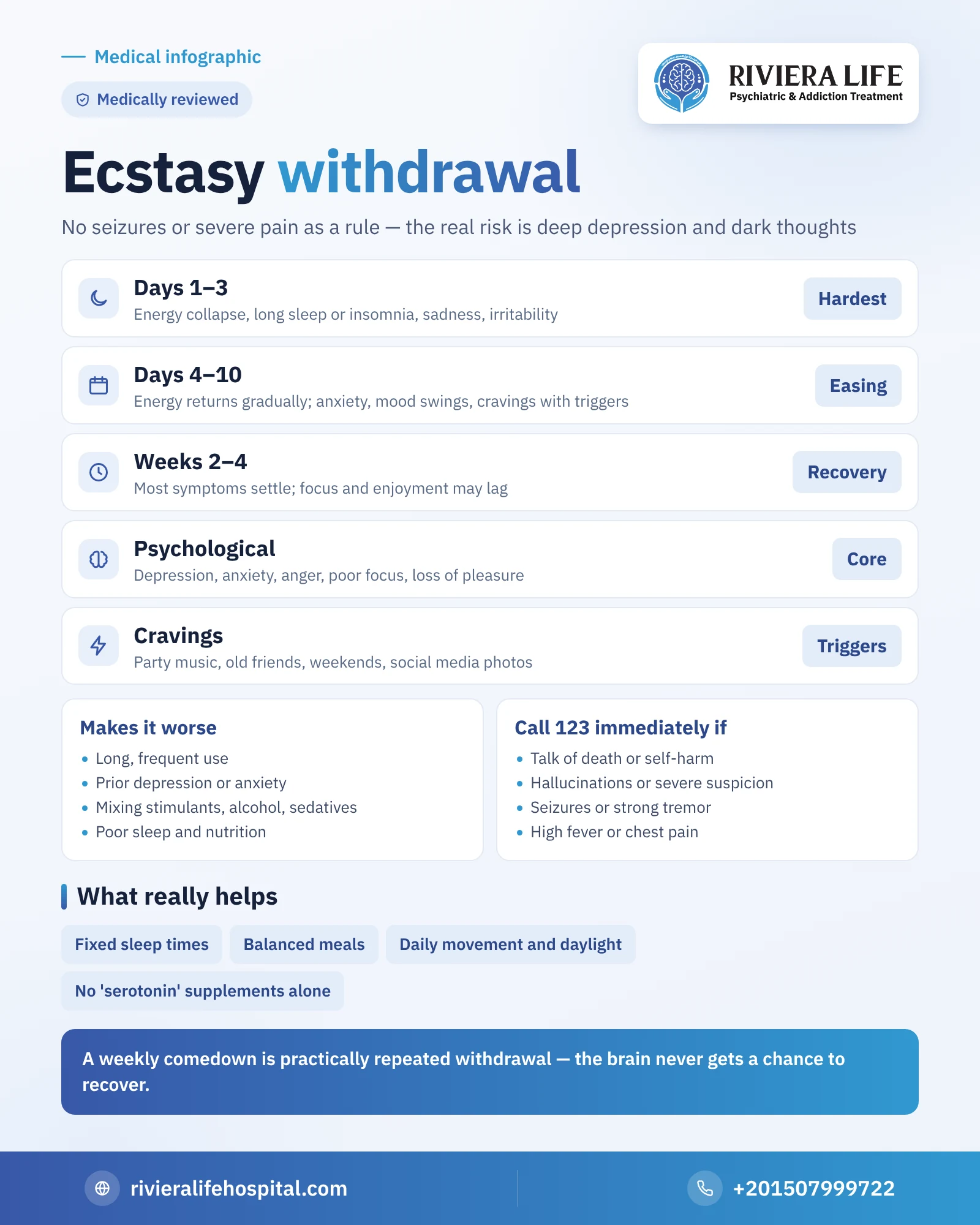
The timeline of ecstasy withdrawal symptoms
Durations vary from person to person, but the usual course can be summarized like this:
| Period | What usually happens |
|---|---|
| Days one to three | A collapse in energy, long sleep or insomnia, sadness and irritability, loss of appetite — usually the hardest days |
| Days four to ten | A gradual improvement in energy, with lingering anxiety, mood swings and cravings when exposed to triggers |
| Weeks two to four | Most symptoms calm down for many, with weak concentration and enjoyment in some |
| After the first month | Sleep and mood problems may continue in heavy users; these need assessment and treatment |
Psychological symptoms
These are the core of ecstasy withdrawal, and the most common are:
- Depression and unexplained sadness, and a feeling that life has no taste.
- Anxiety and tension, and sometimes panic attacks.
- Irritability and outbursts of anger over simple things.
- Difficulty concentrating and remembering, and slowed thinking.
- Losing the ability to enjoy usual things.
- In a few: suspicion and persecutory thoughts, especially if the pills contained other stimulants.
Physical symptoms
The physical symptoms are milder but troublesome, including severe fatigue and lethargy, sleep disturbance between oversleeping and insomnia, changes in appetite, headache, and jaw and muscle pain left over from teeth grinding. Some heavy users notice weak immunity and repeated colds because of late nights and poor nutrition. If severe physical symptoms such as seizures or strong tremor appear, they are most likely linked to another substance used with it, and this needs an urgent medical assessment.
Cravings and triggers
The urge to go back doesn’t come steadily, but flares with particular triggers: party music, a message from an old friend, the weekend approaching, or photos of a night out on social media. With days of sadness, thinking about “just one pill to lift my mood” becomes tempting, and this is exactly the beginning of relapse. Knowing the triggers in advance and avoiding them in the first weeks is an essential part of getting through this stage.
What makes withdrawal more severe?
- The length and frequency of use, and the number of pills per night.
- Depression or anxiety before use began.
- Mixing with other substances, especially stimulants, alcohol or sedatives.
- Lack of sleep and poor nutrition during the period of use.
- No family support and staying in the same environment.
To learn about the harms long-term use leaves on the brain and mood, see our article on the harms of ecstasy.
Can the withdrawal period be shortened?
There is no recipe that shortens the brain’s return to balance; it is a process that needs its time. Drinks, herbs and “serotonin-boosting supplements” are promoted online as speeding recovery, and some may be harmful, especially when combined with psychiatric medicines or a return to use, because they may raise serotonin too much. What really helps is simpler than it seems: regular sleep at fixed times, balanced meals, daily movement, daylight, less caffeine, and staying completely away from alcohol and any other substance. Any medicine or supplement should be taken with the doctor’s knowledge, not on the advice of a friend or a social media post.
When does withdrawal become dangerous?
Withdrawal from ecstasy alone rarely threatens life physically, but there are situations that can’t wait, most importantly depression accompanied by thoughts of self-harm. Someone who used large amounts of alcohol or sedatives with it may also face a dangerous physical withdrawal from those substances.
Call an ambulance on 123 immediately if you see
Or go to the nearest emergency department, and don't leave the person alone.
- Talk of death, harming themselves or a strange farewell to others
- Hallucinations or severe suspicion with agitation or aggression
- Seizures, strong tremor or confusion
- A very high temperature or chest pain in the first hours after use
Stopping at home or in hospital?
Many mild ecstasy cases can be managed with outpatient follow-up, provided there is a medical assessment at the start and a supportive family. But a hospital stay is the most suitable option in cases such as: severe depression or suicidal thoughts, psychotic symptoms, regularly mixing ecstasy with alcohol, sedatives or tramadol, previous failed attempts to stop, or a home environment that doesn’t help with staying away from triggers.
How is withdrawal managed medically?
There is no medicine approved specifically for ecstasy withdrawal, so treatment focuses on symptoms and the patient’s safety. The doctor begins by assessing the psychological and physical condition and whether other substances are involved, then sets a plan that may include regulating sleep, short-term treatment for anxiety or insomnia when needed, and treating depression if it persists or is severe, with psychological support that begins in the first days. All of this is supervised, because some psychiatric medicines need care with timing. What comes after withdrawal, behavioral therapy and relapse prevention, is explained in our article on ecstasy addiction treatment.
How can the family support during these weeks?
Remember that irritability and sadness in this period are part of withdrawal, not personal rejection of you. Help them with a simple routine: fixed sleep times, regular meals, a daily walk or light exercise, and fewer late nights. Stay away together from party-linked occasions in the first weeks, and watch their mood without constant interrogation. If improvement is delayed or mood worsens, don’t wait. You can confirm abstinence with a test when needed, as our article on how long ecstasy stays in the body explains.
At Riviera Life, consultants in psychiatry and addiction treatment follow this stage around the clock when needed, with a program that involves the family, and the first consultation is free.
More from our ecstasy guide
- Ecstasy: the complete guide
- Ecstasy addiction symptoms
- The causes of ecstasy addiction
- Ecstasy addiction treatment
Questions many people ask
The first three days are usually the hardest, and most people improve within two to four weeks. In heavy users, sleep and mood problems may last longer and need treatment.
Physically it is rarely dangerous on its own, but severe depression and thoughts of self-harm make it a condition that calls for immediate intervention. Mixing with alcohol or sedatives may add a dangerous physical withdrawal.
The comedown happens after a single use and lasts a few days. Withdrawal appears after regular use and is longer and deeper, with an urgent craving to go back.
There is no medicine specifically for it, but the doctor may treat insomnia, anxiety or depression as needed. Psychological support and regulating sleep and routine are among the most important parts of treatment.
In mild cases, stopping with outpatient follow-up after a medical assessment may be enough. Severe depression, psychotic symptoms or mixing substances call for a hospital stay.