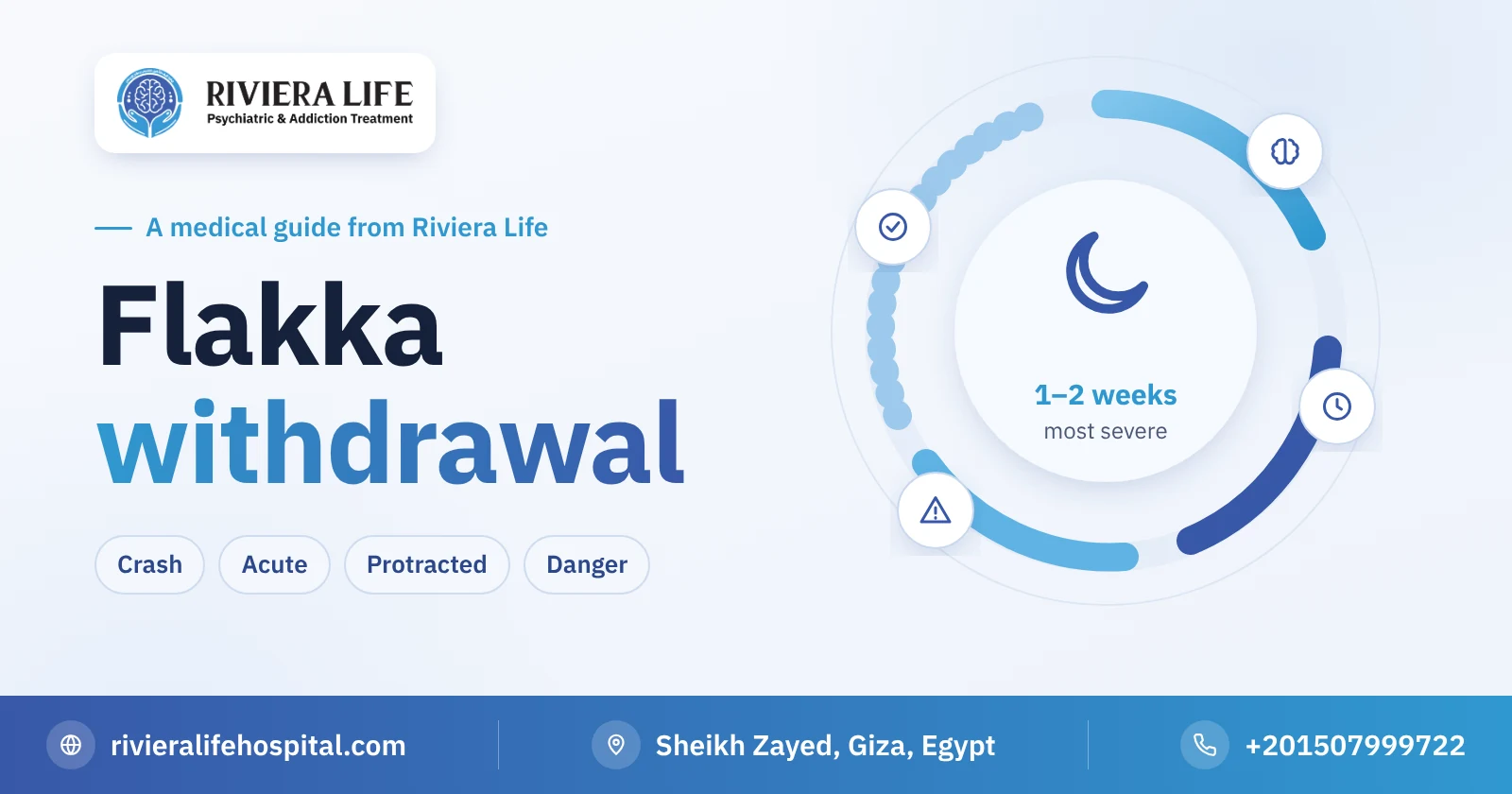
Flakka withdrawal symptoms usually begin within hours of the last dose, the first being a sudden collapse in energy and an overwhelming desire to sleep and eat, then within days they turn into depression, anxiety and urgent craving for the substance. The most severe symptoms usually calm within roughly one to two weeks, but weak enjoyment and waves of craving may remain for weeks or months.
Flakka withdrawal doesn’t resemble heroin or alcohol withdrawal in its physical pains, and its greatest danger is psychological: acute depression that may reach suicidal thoughts, or psychosis that doesn’t go away as quickly as expected. Here you will find the timeline of withdrawal, what you can expect at each stage, and when the matter becomes an emergency.
Why do symptoms appear after stopping?
Throughout the period of use, flakka kept dopamine and noradrenaline accumulated in the brain in abnormal amounts. To protect itself from this flooding, the brain reduces its sensitivity to these two transmitters and weakens its natural production of them. When the substance suddenly disappears the brain finds itself in deficit: no external stimulation, and an exhausted internal system. This deficit is what the person feels in the form of emptiness, tiredness, sadness and a desire to regain the lost feeling at any price.
When do flakka withdrawal symptoms start?
Because the effect of flakka is relatively short, the first signs of withdrawal appear quickly, sometimes within hours of the last dose in the session. The timing differs according to the length of the session and the amount the person used, and whether they mixed it with other substances such as hash, pregabalin or tramadol. Mixing may cover some symptoms at first and then add to them the withdrawal symptoms of the other substance, which makes the picture more complicated.
Stages of flakka withdrawal
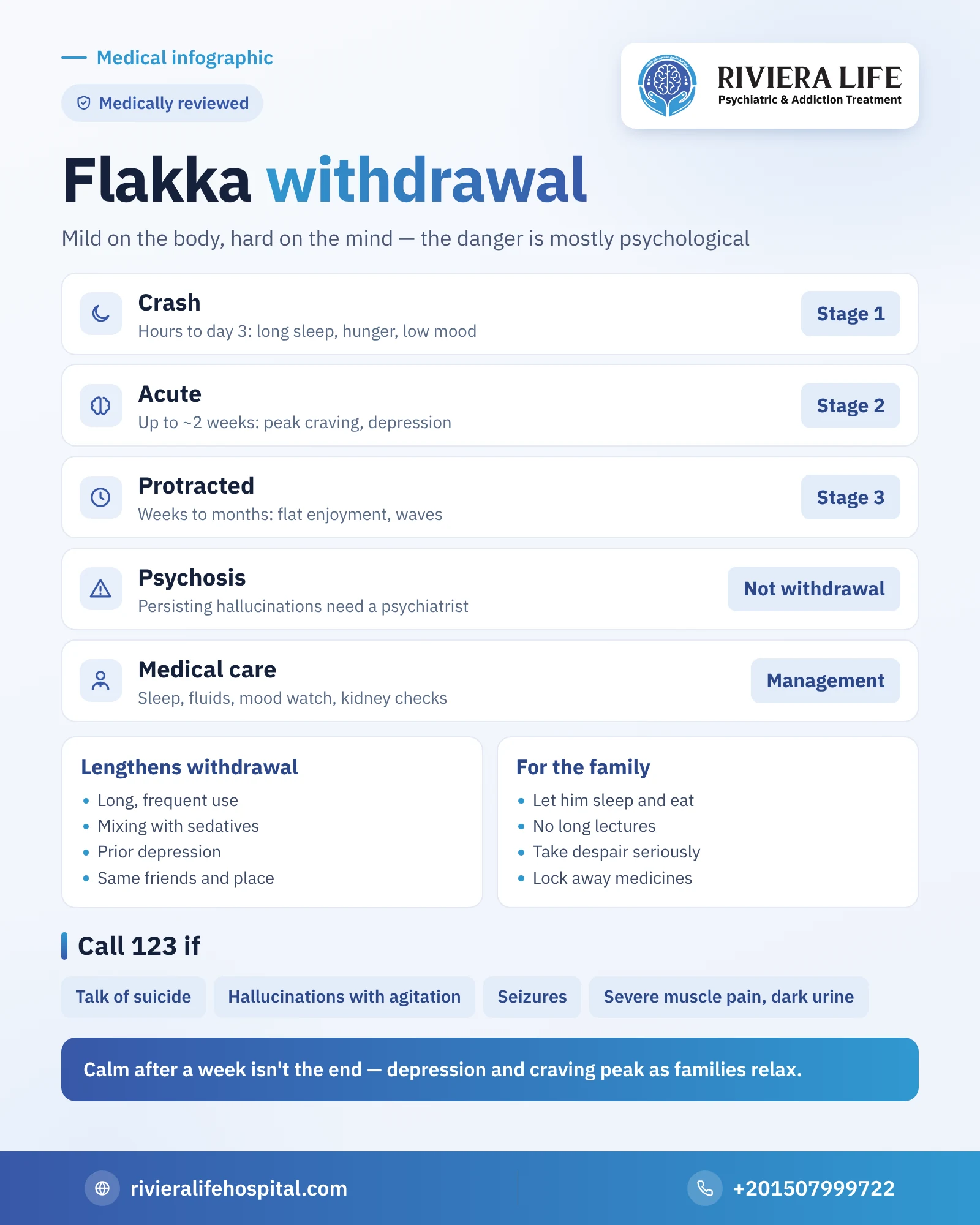
The first stage: the crash (the first hours until about the third day)
After days of staying up the body falls into a long sleep that may extend twelve hours or more, and the person wakes extremely hungry, heavy in movement, with a switched-off mood. They may be quick to anger, cry for no reason, or refuse to talk completely. In some patients suspicion and mistrust remain visible in these days as leftovers from the last session.
The second stage: acute withdrawal (from the first days until about two weeks)
Here the urgent craving reaches its peak, depression and anxiety escalate, and sleep is disturbed between night insomnia and daytime drowsiness. Concentration is difficult and ordinary things seem tasteless. This is the most dangerous period for relapse, and also for suicidal thoughts in those who suffered from depression before use.
The third stage: the protracted stage (weeks to months)
The acute symptoms calm, but there remain a flatness in enjoyment, mood swings, and sudden waves of craving triggered by places, people or even the smell of an e-cigarette. This improves gradually as the brain regains its balance, and needs follow-up, not passive waiting.
Psychological symptoms of flakka withdrawal
The psychological side is the heart of flakka withdrawal, and its most prominent symptoms are:
- Depression ranging from passing sadness to deep frustration that paralyzes movement.
- Loss of the ability to enjoy food, friends or any activity.
- Anxiety, tension and irritability at the slightest things.
- Urgent craving to use that may come in the form of dreams about the substance.
- Slow thinking and difficulty making decisions.
- Thoughts of death or self-harm in some patients, a sign that calls for immediate intervention.
Physical symptoms of withdrawal
The physical symptoms are usually milder than the psychological ones, but troublesome:
- Severe exhaustion and heaviness in the limbs.
- A large increase in appetite after days of deprivation.
- Long sleep at first then insomnia and disturbing dreams.
- Headache and muscle pains, especially after sessions with excessive exertion and movement.
- Slowness in movement and speech.
If severe muscle pains appear with dark urine after the last session, this isn’t withdrawal but a possible sign of muscle breakdown, and needs the emergency department, as the article on the harms of flakka explains.
Psychosis after stopping: is it part of withdrawal?
In some patients hallucinations or pathological suspicion persist for days after the last dose, so the family thinks they are withdrawal symptoms that will go away on their own. More accurately, this is psychosis caused by the substance itself, and it usually improves within days to weeks with stopping and treatment, but it may last longer in someone with a predisposition to a psychotic disorder or who used for a long period. This psychosis needs a psychiatrist, suitable medicine and a safe environment, not patience at home.
How long does flakka withdrawal last?
There is no single duration that applies to everyone, but the usual picture is roughly: a crash lasting one to three days, then acute withdrawal that usually calms within one to two weeks, then a protracted stage that may continue for weeks or a few months. Things that lengthen the duration:
- The length of the period of use and the frequency of sessions.
- Mixing flakka with other substances, especially sedatives and pregabalin.
- The presence of depression or anxiety before use started.
- Accumulated lack of sleep and poor nutrition.
- Staying in the same environment and with the same friends.
Is flakka withdrawal dangerous?
Withdrawal from stimulants in general doesn’t cause seizures or a drop in breathing as happens in withdrawal from alcohol or sedatives. But that doesn’t mean it is safe. The real danger comes from three directions: acute depression and the possibility of suicide, persistent psychosis, and relapse with a large dose after days of abstinence. A fourth danger is added if the person uses sedatives or pregabalin with it, as suddenly stopping those substances may carry its own risks.
Call an ambulance on 123 immediately if there appear
These are signs that go beyond the usual withdrawal and need urgent medical intervention.
- Talk of suicide or an attempt at self-harm
- Hallucinations or pathological suspicion with agitation or threats to others
- Seizures, especially when stopping sedatives or pregabalin at the same time
- Chest pain or severe palpitations
- Severe muscle pains with dark urine or reduced urine
- Severe confusion or inability to wake up
Why is stopping alone at home hard?
Many families try to lock the young man in the house for a week thinking that “the withdrawal will pass”. The problem is that the first week isn’t the end, and that depression and craving reach their peak exactly when the parents start to relax. The home also has no means of treating psychosis or monitoring the risk of suicide at night. Medical management makes these days safer, and links the end of withdrawal to the start of real treatment, which is what the article on flakka addiction treatment explains.
How is withdrawal managed medically?
There is no medicine that cancels flakka withdrawal, but the medical team manages the symptoms one by one: a calm environment that allows sleep to be made up, nutrition and fluids, daily follow-up of mood and suicide risk, medicines for insomnia or severe anxiety when needed, and an antipsychotic if hallucinations persist. Kidney and muscle functions are also checked in those coming out of long sessions, because their damage may be silent.
Tips for the family during the days of withdrawal
- Let him sleep and eat, as this is part of recovery, not laziness.
- Avoid lectures and long discussions in the first days, as his ability to concentrate is limited.
- Watch his talk about despair or death, and never take it lightly.
- Keep any medicines or sedatives in the house out of his reach.
- Don’t consider his calm after a week proof that the problem is over.
The urgent craving after withdrawal ends
The first two weeks may pass safely, then the person finds himself in the fifth week facing a sudden and strong craving after a call from an old friend. These waves are natural in recovery from stimulants, and weaken gradually with time and treatment. Knowing the causes of flakka addiction in the person himself helps in predicting his triggers and preparing for them.
How does Riviera Life help you?
We receive flakka patients in the first days of withdrawal under round-the-clock medical supervision, with daily psychiatric follow-up for the risk of depression and psychosis, then we move the patient directly into the treatment program without a gap. For a free consultation contact us on +201507999722.
More from the flakka guide
Questions many people ask
The most severe symptoms usually calm within roughly one to two weeks, but weak enjoyment and waves of craving may continue for weeks or months depending on the duration of use and the psychological state.
The physical symptoms are usually milder than opioid withdrawal, concentrated in exhaustion, long sleep and hunger. The hardest side is psychological: depression, anxiety and urgent craving.
Yes in some patients, especially in the first days and weeks or with previous depression. Any talk of death or self-harm calls for immediate medical intervention.
Persisting hallucinations or pathological suspicion after the last dose count as substance-induced psychosis, not ordinary withdrawal, and need psychiatric assessment and suitable treatment.
There is no medicine that cancels withdrawal completely, but the doctor treats insomnia, anxiety, depression and psychosis as needed, while monitoring the condition in a safe environment.