The most dangerous harms of flakka don’t need years to appear, but may happen the same night: an episode of severe agitation with confusion, a rise in body temperature that may exceed forty degrees, then muscle breakdown that may end in acute kidney failure. With repetition other harms accumulate on the heart and brain, psychosis and depression appear, and relationships, studies and work erode. This article arranges the harms of flakka by organ and timing, explains why some cases turn into life-threatening emergencies, and what can improve after stopping.
For an introduction to the substance itself, its composition, names and methods of use, see the complete flakka guide.
Short-term harms of flakka
During the hours of its effect flakka pushes the body into a state of maximum alert, and the following may appear:
- Severe racing of the heartbeat and a rise in blood pressure.
- A rise in body temperature with heavy sweating and dehydration.
- Tremor, muscle tension and teeth grinding.
- Acute anxiety, pathological suspicion and auditory or visual hallucinations.
- Impulsive behavior that exposes its user to road accidents, falls or fights.
The severity of these harms varies according to the amount, the purity of the substance and the state of the body, but the problem is that the user never knows any of these factors in advance.
Excited delirium: the most dangerous complication of flakka
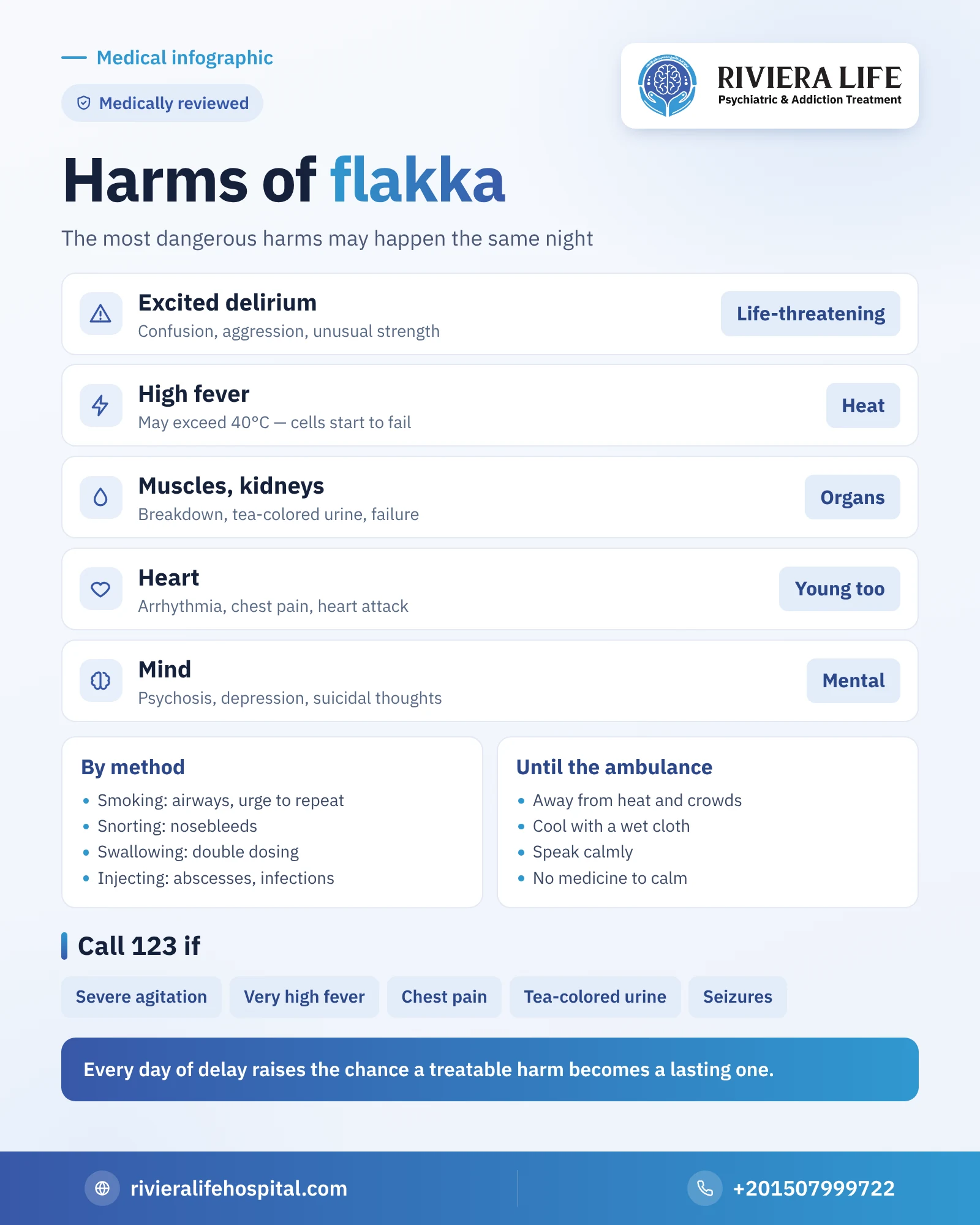
This is the state that gave flakka its media nickname. It combines severe confusion, aggression and screaming, unusual physical strength, and no clear sense of pain, with high temperature and sweating. The person may run in the street, try to smash something, or behave as if being chased. The danger of this state isn’t in the behavior alone, but in what happens inside the body at the same time: temperature climbing, muscles breaking down, and a heart strained to the limit. That is why the episode is treated in emergency departments as a life-threatening condition, and the patient needs medication calming, cooling, fluids and close monitoring, not forcible restraint, which may make the matter worse.
High temperature: why do some users take off their clothes?
Flakka raises the body’s heat production through excessive muscle activity and stimulation of the nervous system, and at the same time weakens the body’s ability to get rid of it. The person feels an inner flame that sometimes pushes them to take off their clothes or look for cold water, a scene repeated in many incidents linked to the substance. Severe heat isn’t just a troublesome symptom; when it exceeds a certain limit the proteins in cells begin to be damaged, and the kidneys, liver, brain and the ability of the blood to clot are affected.
Muscle breakdown and kidney injury
Muscle breakdown
With excessive movement, heat and dehydration, muscle fibers begin to break down, releasing their contents into the blood. Among its most prominent signs are severe muscle pains and weakness, and dark urine the color of tea or cola. These signs may not appear clearly until hours after the episode ends.
Kidney injury
The protein released by broken-down muscles strains the kidneys and blocks their tiny tubules, so urine production declines and acute kidney failure may occur, needing temporary dialysis. Heat and dehydration increase this risk. The good news is that early treatment with fluids and monitoring protects the kidneys in many cases, an additional reason not to wait at home.
Harms of flakka on the heart and blood vessels
Under the influence of flakka the heart works at maximum capacity: a fast pulse, high blood pressure, and constricted blood vessels. This may lead to a serious heart rhythm disturbance, chest pain from reduced blood supply, or a heart attack even in a young man with no previous illness. With repetition the risk to the heart muscle itself increases. Someone with high blood pressure or a congenital heart defect is more susceptible to these complications.
Harms of flakka on the brain and nervous system
- Seizures, especially with large amounts or mixing.
- Stroke as a result of a sudden rise in blood pressure or constriction of vessels.
- Weakness in memory, concentration and decision-making with repeated use.
- Chronic sleep disturbance.
Mental functions usually improve after stopping, but improvement takes time, and may be partial in those who used for a long period.
Harms of flakka on mental health
Psychosis is among the harms most linked to flakka. It may start with simple suspicion of the neighbors, then develop into a firm conviction that someone is watching or planning harm, with auditory or visual hallucinations. Most cases improve within days to weeks of stopping and treatment, but some last longer, especially in those with a previous predisposition to a psychotic disorder. Added to psychosis are deep depression after sessions, chronic anxiety, panic attacks, and a noticeable rise in the risk of suicidal thoughts, especially in the days of flakka withdrawal.
Do the harms differ by method of use?
| Method | Additional harms |
|---|---|
| Smoking and vaping | Irritation of the airways and coughing, and speed of reaching the brain increases the urge to repeat |
| Snorting | Nasal congestion and bleeding and irritation of the sinuses |
| Swallowing | Delayed effect may push toward a second dose before the first appears |
| Injection | Abscesses, damage to veins, and hepatitis and HIV infection |
There is no safe method; the difference between methods is in the type of additional harm, not in the presence of the basic danger.
Harms of mixing flakka with other substances
Mixing is common, and each mixture adds a different danger. With alcohol the burden on the heart and dehydration increase. With tramadol the risk of seizures rises. With strox and synthetic hash the risk of psychosis and agitation doubles. And when the user uses pregabalin or sedatives to calm down after the session, they enter a cycle of double dependence. The substance sold may itself differ from what the user thinks, being a mixture of cathinones or other stimulants such as ice, whose harms are explained on the ice and shabu page.
Harms on the teeth, skin and nutrition
Constant grinding and dry mouth damage the teeth and gums. Repeated scratching because of a feeling of something crawling under the skin leaves wounds that may become infected. Loss of appetite for consecutive days causes a deficiency in weight and vitamins and weak immunity. These harms are less dangerous to life, but they clearly change the person’s appearance and general health within months.
Social and legal harms
Pathological suspicion and aggression destroy relationships quickly, and continuous staying up demolishes studies and work. Many families relate incidents of violence inside the house, street fights or road accidents after flakka sessions. Added to this is an escalating financial burden, and the risk of legal prosecution because the substance is banned, which may close many doors in the future.
Do the harms of flakka go away after stopping?
A large part of them improves: sleep, appetite, weight, mood and concentration return gradually within weeks to months. And psychosis responds to treatment in most cases. Some acute complications, however, such as severe kidney injury or stroke, may leave a permanent effect. That is why every day of delay in stopping raises the likelihood that a treatable harm turns into a lasting one. The article on flakka addiction treatment explains how this road begins, while the flakka page explains the general picture of the substance.
Signs of poisoning that call for the emergency department
Call an ambulance on 123 immediately if there appear
The acute complications of flakka may develop within hours, and early treatment saves the heart and kidneys.
- Severe agitation with confusion and unusual strength
- Very high fever or hot skin with heavy sweating or its stopping
- Pain or pressure in the chest or irregular palpitations
- Seizures, loss of consciousness or sudden weakness on one side of the body
- Dark urine the color of tea or a severe reduction in urine
- Hallucinations with threats to harm oneself or others
Until the ambulance arrives, move the person away from heat and crowds, cool their body with a wet cloth, talk to them calmly, and don’t give them any medicine or substance to calm them.
More from the flakka guide
- Flakka: the complete guide
- Flakka addiction symptoms
- How long flakka stays in the body
- Flakka addiction treatment
- Khat: the complete guide
Questions many people ask
It may cause it acutely, as agitation and heat lead to muscle breakdown and the release of substances that strain the kidneys. Early treatment with fluids and monitoring protects the kidneys in many cases.
Because it increases heat production through muscle activity and stimulation of the nervous system, and weakens the body's ability to get rid of it, so temperature may reach dangerous levels.
In most cases it improves within days to weeks with stopping and treatment, but it may last longer in someone with a previous predisposition to a psychotic disorder or who used for a long period.
Yes, it may cause a heart rhythm disturbance, chest pain or a heart attack even in a healthy young man, because it raises the pulse and blood pressure and constricts the vessels.
It differs by substance: tramadol raises the risk of seizures, strox increases psychosis and agitation, and sedatives and pregabalin add a double dependence. Mixing makes poisoning harder to diagnose and treat.