“Can someone really recover from heroin?” This is the question families ask most in the first call. The medical answer is clear: yes, heroin addiction treatment is possible, and when it is organized it greatly reduces the risk of death and relapse and returns many patients to their work and homes. But effective treatment isn’t a week of detox then a return to life as it was; it is a path with stages, and each stage has a different goal. This article explains those stages, the approved medicines and the role of each, psychotherapy, the expected duration, and how to choose the right place.
Stages of heroin addiction treatment
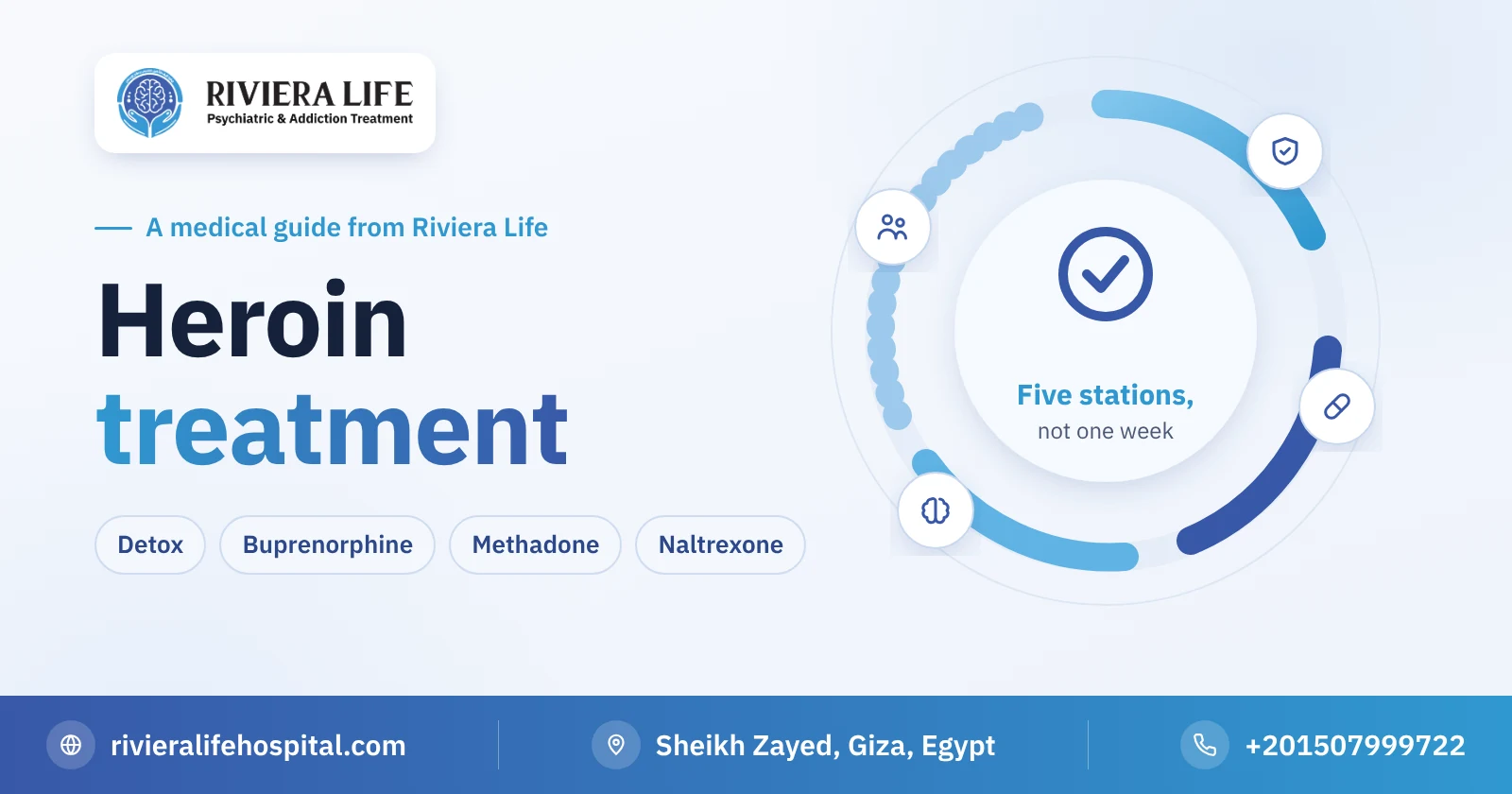
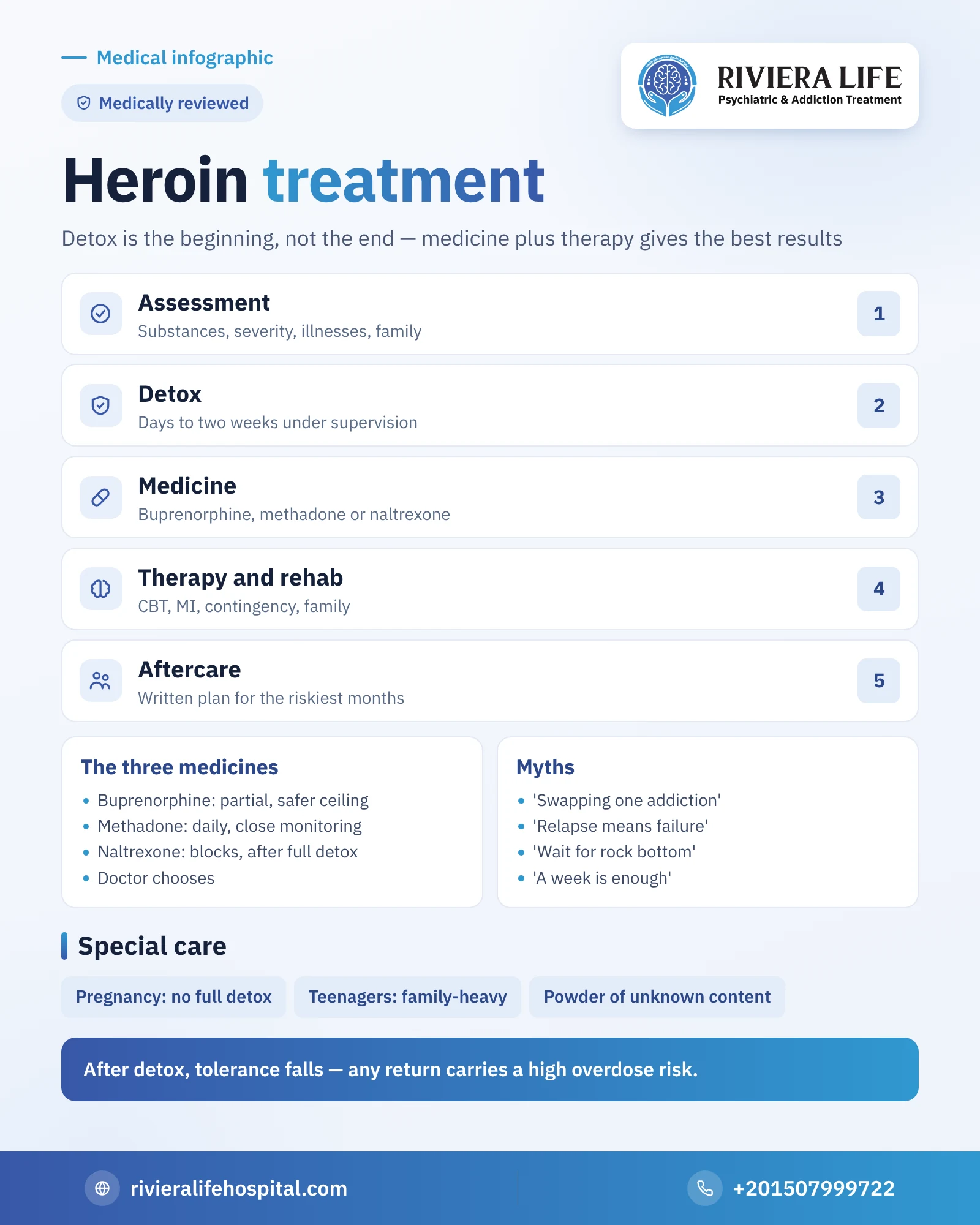
The details differ from patient to patient, but good treatment usually passes through five successive stations:
- Comprehensive assessment: a medical and psychological interview and tests to determine the substances used, the severity of dependence, accompanying illnesses and the family situation.
- Detox: managing withdrawal symptoms safely under medical supervision.
- Drug treatment: starting a medicine that reduces craving and protects against relapse, according to what suits the case.
- Psychotherapy and rehabilitation: understanding the reasons for use and building skills to deal with pressures and triggers.
- Follow-up and aftercare: regular sessions, support groups and a clear plan to prevent relapse.
Skipping any of these stations, especially stopping at detox, is the best-known reason for the patient going back to use after a few weeks.
Detox: the beginning, not the end
The goal of detox is for the patient to get through the acute withdrawal stage with as little pain and risk as possible, and it usually takes from several days to two weeks depending on the case and the plan. During it the medical team follows vital signs, fluids and sleep, and uses medicines that ease the symptoms. The details of the symptoms and their timing are in the article on heroin withdrawal symptoms.
But it is important for the family to know a fact that may seem strange: a patient who finishes detox and then stops treatment is in a more dangerous position than before starting, because their body’s tolerance for the substance has fallen, while the craving and triggers remain as they are. That is why detox alone isn’t considered a treatment for addiction.
The medicines used in heroin addiction treatment
The best results of opioid addiction treatment worldwide rely on combining medicine and psychotherapy. There are three main medicines, and the doctor chooses between them according to the case:
Buprenorphine
It binds to the same opioid receptors but only partially activates them, so it eases craving and withdrawal symptoms without causing a strong high, and its effect on breathing has a ceiling that makes it safer. It is usually started after withdrawal symptoms have appeared to a sufficient degree, because giving it early may cause sudden withdrawal. Naloxone is sometimes used with it in the same formulation to limit its misuse.
Methadone
A long-acting opioid given once a day under careful supervision, so it prevents withdrawal and craving and its level in the blood stabilizes instead of the sharp fluctuation heroin causes. It needs close follow-up at its start and gradual adjustment of the dose, because it may be dangerous if misused or mixed with sedatives.
Naltrexone
Unlike the two previous medicines, it closes the opioid receptors completely, so the person feels no effect if they use heroin. It suits patients who have completely finished detox and have a strong motive to continue, and is only started after the body has been free of opioids for several days, otherwise it causes sudden severe withdrawal.
Choosing the medicine and its duration is an individual medical decision, and none of them should be used without supervision. It is normal for drug treatment to continue for months or more; continuing isn’t a sign of failure, but is what protects the patient in the period most prone to relapse.
Psychological and behavioral therapy
Medicine calms the brain, while psychotherapy rebuilds life around it. Among the most used and evidence-supported methods:
- Cognitive behavioral therapy: helps the patient recognize the thoughts and situations that lead them to use and learn practical alternatives to them.
- Motivational interviewing: strengthens the patient’s inner motive for change instead of relying on outside pressure.
- Contingency management: a system of tangible rewards for commitment, such as negative test results, which has proven effective in improving continuation in treatment.
- Family therapy: treats patterns of communication within the family and turns them into a source of support instead of tension.
- Treating accompanying disorders: such as depression, anxiety and post-traumatic stress disorder, because ignoring them is among the most important causes of relapse.
How long does heroin addiction treatment take?
There is no single duration that suits everyone. Detox may take days, the intensive program inside the hospital may extend from several weeks to a few months, while outpatient follow-up and drug treatment continue in many cases for a year or more. Research indicates that continuing treatment for a sufficient period, usually estimated at three months at least for organized treatment, is clearly linked to better results. More important than the number of days is that the patient doesn’t break off suddenly between one stage and another.
Residential or outpatient treatment?
Treatment inside the hospital provides a safe environment away from the substance and triggers, and usually suits those who use large amounts, mix several substances, have previous failed attempts, a severe psychiatric disorder, or an unsupportive home environment. Outpatient treatment suits milder cases or the stage after residence, and allows the patient to continue their work and study. Often the ideal path combines both: a start in residence then a gradual move to outpatient follow-up.
Cases that need special care
Pregnant women
Full detox during pregnancy isn’t advised in most cases, because withdrawal may expose the fetus to danger. International guidelines usually recommend treatment with methadone or buprenorphine under joint follow-up between the obstetrician and the addiction doctor, with preparation to follow up the newborn after birth.
Teenagers
A teenager needs a program that takes their age stage into account, in which the parents take a greater part, and which cares about study, friends and social skills. Early intervention in teenagers usually achieves better results than waiting until the problem deepens.
Myths about heroin addiction treatment
The myth: treatment with methadone or buprenorphine is just replacing one addiction with another. The truth is that these medicines are given in fixed, calculated doses under supervision, don’t cause the high and fluctuation that heroin causes, allow the patient to work and live normally, and are among the treatments that most reduce deaths.
The myth: if the patient relapses, the treatment has failed. The truth is that relapse is common in all chronic illnesses, including addiction, and it is a signal to adjust the plan, not to abandon it.
The myth: the patient must “hit rock bottom” before accepting treatment. The truth is that waiting for rock bottom may mean waiting for an overdose, and early intervention is more successful and safer.
The family’s role in the treatment journey
The family isn’t just a visitor during the days of residence; it is part of the treatment plan. The family needs to learn how to support without covering up use, how to set clear limits without cutting the connection, and how to deal with relapse if it happens. That is why good programs dedicate sessions to the family itself. You will find practical guidance in the guide on how to deal with a heroin addict.
Relapse prevention after treatment
The first months after intensive treatment are the most dangerous. Among the most important things that protect the patient in them: continuing on the prescribed medicine and not stopping it without a doctor, commitment to follow-up sessions, staying away from places and people linked to use, building a daily routine with work, regular sleep and physical activity, and having a written plan for what the patient does when feeling a strong craving. It is important for the patient and family to know that any return to use after a period of abstinence carries a high risk of overdose because of lower tolerance.
The right hospital for heroin addiction treatment: how to choose
The right hospital for heroin addiction treatment isn’t the nearest, the cheapest or the one with the loudest advertisement, but the place that can provide a heroin patient specifically with everything their journey needs: safe withdrawal, drug and psychological treatment, and follow-up after discharge. When comparing hospitals and centers, ask specific questions:
- Is the place licensed, and do psychiatrists specialized in addiction work in it?
- Does it provide approved drug treatment, or rely on detox alone?
- Does it assess and treat accompanying psychiatric disorders?
- Is there a clear follow-up plan after discharge?
- Does the program include the family?
- Does it respect the patient’s privacy and the confidentiality of their data?
And beware of promises of guaranteed cure rates or treatment within a few days, as this isn’t the way addiction treatment works.
How Riviera Life meets these standards in heroin addiction treatment
These are the details of what Riviera Life offers in this area:
- Official license and long experience: a hospital licensed for psychiatry and addiction treatment that works according to Ministry of Health regulations, with experience extending fourteen years and thousands of cases that have completed the recovery journey.
- Doctors specialized in addiction: treatment is led by consultants in psychiatry and addiction treatment, and all the medical content we publish is reviewed before it reaches you.
- Safe detox with round-the-clock supervision: withdrawal symptoms are managed with continuous medical and nursing follow-up all day, so the patient isn’t left alone in their hardest days.
- Complete treatment that doesn’t stop at detox: an individual plan combining approved drug treatment, psychological and behavioral therapy, rehabilitation and relapse prevention.
- Dual diagnosis treatment: assessing depression, anxiety and accompanying disorders and treating them together with the addiction, because ignoring them is among the most important causes of relapse.
- The family is part of treatment: sessions and guidance for the family so it knows how to support without being drained.
- Complete confidentiality: no information about the patient or their family is shared without their permission.
- Follow-up after discharge: a clear plan for the first months, the period at highest risk of relapse and overdose.
Heroin addiction treatment at Riviera Life
Treatment at Riviera Life starts with a confidential assessment carried out by a team specialized in psychiatry and addiction treatment, then an individual plan is built combining safe detox, drug and psychological treatment and rehabilitation, with family involvement and extended follow-up after discharge. The first consultation is free, and you can contact us around the clock on +201507999722; the hospital is in Sheikh Zayed City, Giza. You can learn about the general picture of the substance itself on the heroin page, and about the factors that make some people more prone to addiction in the article on the causes of heroin addiction.
Questions many people ask
Yes, many recover and live stable lives, especially with treatment that combines medicine, psychotherapy and long follow-up. Addiction is a chronic condition that needs ongoing management, and relapse, if it happens, means adjusting the plan, not its failure.
No. Detox treats only the acute physical dependence, and stopping at it raises the risk of relapse and overdose because tolerance falls while craving remains. It must be followed by drug and psychological treatment and follow-up.
There is no single best medicine for everyone. Buprenorphine and methadone reduce craving and withdrawal, and naltrexone blocks the effect of opioids after withdrawal ends. The doctor decides the most suitable according to the case.
Detox takes days, the intensive program weeks to months, and follow-up and drug treatment may continue a year or more. Research links continuing for at least three months with better results.
Some milder cases may be treated with an outpatient program under medical supervision, but home detox without supervision is unsafe and often fails. Medical assessment is what determines the suitable place.
Look for a licensed place offering safe detox with round-the-clock supervision, drug and psychological treatment, treatment of accompanying disorders, family involvement and follow-up after discharge. Riviera Life in Sheikh Zayed meets these criteria, with complete confidentiality and a free first consultation.
'Powder' is a common name on the Egyptian street for a powder that may be heroin, and is sometimes used for other substances or mixtures whose components the user doesn't know. That is why the doctor starts by assessing what was actually used, and if it was heroin, the opioid treatment plan explained in this article is followed.