A heroin user stops the dose, and a few hours later their body starts demanding it in its own way: repeated yawning, a runny nose, restless anxiety, then pain spreading through the muscles and bones. These are heroin withdrawal symptoms, and they are among the things that most push the patient back to use even if they had sincerely decided to stop. Understanding these symptoms and their timing doesn’t ease the pain by itself, but it lets the patient and their family know what awaits them, and when the situation is normal and when it needs quick medical intervention.
This guide explains why withdrawal symptoms appear, how they progress from the first hours to the following weeks, what factors make them milder or more severe, and why withdrawal under medical supervision is considered safer than an individual attempt at home.
Why do heroin withdrawal symptoms appear?
Heroin is an opioid that binds to special receptors in the brain, spinal cord and digestive system, the same receptors that deal with the natural substances the body releases to ease pain and regulate mood. With daily repetition the nervous system adapts to the substance’s presence: the receptors become less sensitive, and the brain adjusts the activity of other areas to compensate for heroin’s suppressive effect.
When the substance drops suddenly in the blood, this adjustment remains with nothing to balance it. The clearest example is an area in the brainstem called the locus coeruleus, which is responsible for alertness and the stress response. Heroin used to suppress its activity, so when it is gone its activity rises excessively, and anxiety, sweating, a racing heart and chills appear. That is why many withdrawal symptoms look like the opposite of heroin’s effect: tension instead of relaxation, diarrhea instead of constipation, and dilated pupils instead of constricted ones.
The appearance of these symptoms means the body has become physically dependent on the substance. Physical dependence isn’t necessarily addiction, but the two usually come together in someone who uses heroin regularly. You can learn the full picture of addiction and its behavioral signs in the article on heroin addiction symptoms.
Physical symptoms of heroin withdrawal
The severity of symptoms differs from person to person, but most appear in a similar order. At first the symptoms are closer to a severe cold, then pain and digestive disturbance dominate.
Early symptoms
- Repeated yawning unrelated to sleepiness.
- Runny nose and watery eyes.
- Heavy sweating even in cold weather.
- Pain in the muscles, joints and back.
- Insomnia and difficulty sleeping despite exhaustion.
- Restlessness and being unable to sit still.
Symptoms that appear as withdrawal progresses
- Abdominal cramps and diarrhea.
- Nausea, vomiting and loss of appetite.
- Chills and goosebumps on the skin.
- Dilated pupils.
- Raised blood pressure and a fast pulse.
- Tremor and involuntary movements in the legs.
These symptoms are very unpleasant, but usually not fatal in a healthy adult. The real danger comes from their complications, the most important being dehydration and salt imbalance with continued vomiting and diarrhea, especially in older people and those with heart or kidney disease.
Psychological symptoms of heroin withdrawal
Many patients say the physical pain can be borne, but the psychological side is the hardest. During withdrawal the person may feel:
- Intense anxiety and bouts of tension without a clear reason.
- Irritability and quick anger at the simplest situations.
- Low mood, a feeling of emptiness and loss of pleasure.
- An urgent craving to use that may take over all thinking.
- Poor concentration and difficulty making decisions.
Craving here isn’t weakness of will, but part of the medical condition itself. That is why good treatment programs focus on dealing with it with suitable medicines and psychological support, not on asking the patient for patience alone.
The stages of heroin withdrawal and the duration of each
Heroin is a short-acting substance, so its symptoms start faster and end faster compared with long-acting opioids such as methadone. The following timing is approximate, and varies with the amount, duration and method of use:
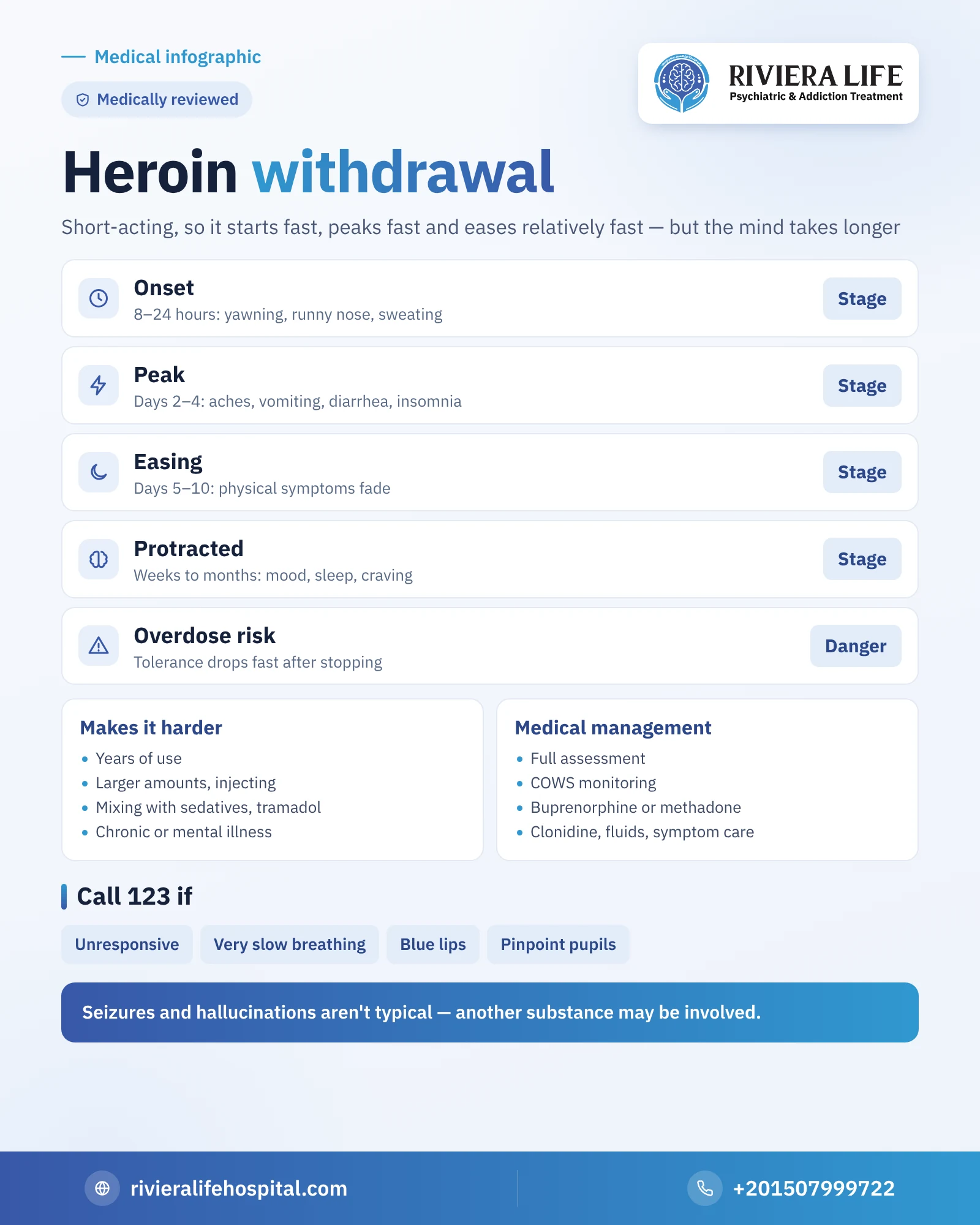
| Stage | Timing from the last dose | What usually happens |
|---|---|---|
| Onset | 8 to 24 hours | Anxiety, yawning, runny nose, sweating, craving |
| Peak | Day two to four | Muscle aches, vomiting and diarrhea, chills, severe insomnia |
| Easing | Day five to ten | Physical symptoms gradually ease, while fatigue and disturbed sleep remain |
| Protracted symptoms | Weeks, possibly months | Mood swings, anxiety, broken sleep, bouts of craving |
Symptoms may start before 8 hours in those who use large amounts several times a day, and may be delayed if the person mixes heroin with other longer-acting opioids. That is why this table isn’t suitable for judging a particular case, but only for understanding the general picture.
What are the protracted symptoms after withdrawal?
After the acute stage ends, many think it is over, then are surprised by days of unexplained sadness, insomnia or sudden craving for the substance. This stage is sometimes called protracted withdrawal syndrome, and its cause is that the brain needs longer than the body to regain its chemical balance. Knowing that these symptoms are expected and temporary helps the patient not interpret them as a sign of failure, and it is a period that needs regular psychological follow-up because it is one of the periods most linked to relapse.
Does heroin withdrawal differ from other opioids?
All opioids cause withdrawal symptoms that are similar in essence, but their timing and severity differ according to how quickly the substance leaves the body:
- Heroin: short-acting, so symptoms start within hours and peak quickly, but also calm in a relatively shorter time.
- Methadone: long-acting, so symptoms may be delayed a day or more, with a calmer peak that lasts longer, possibly weeks.
- Tramadol: combines an opioid effect with an effect on serotonin and noradrenaline, so some patients may have an unusual withdrawal including severe anxiety, panic attacks or strange psychological symptoms, alongside the seizure risk linked to tramadol itself.
- Buprenorphine: its withdrawal is usually milder and slower, which is one reason it is used in treatment.
And because many patients in Egypt combine heroin with tramadol, pregabalin or sedatives, the actual picture of withdrawal is often a mixture that needs careful assessment of each substance separately. You can learn about this family of substances on the opioids page.
Factors that affect the severity of withdrawal symptoms
Two people who stopped heroin on the same day may go through completely different experiences. Among the most important factors determining severity:
- Duration of use: the longer the years of use, the deeper the body’s adaptation.
- The amount and number of times used per day.
- The method of use: injecting and smoking give a faster effect and a faster drop in the substance’s level.
- Mixing heroin with other substances, such as alcohol, sedatives, tramadol or pregabalin, which makes withdrawal more complex and dangerous.
- General health and the presence of chronic illnesses.
- An accompanying psychiatric disorder such as depression or anxiety.
- Previous withdrawal attempts, as repeated incomplete attempts may be harder than earlier ones.
Danger signs that call for going to the emergency department immediately
Seek urgent medical help if any of the following appear
- Persistent vomiting or diarrhea preventing drinking fluids for more than a day
- Signs of dehydration such as severe dizziness, little urine and a dry mouth
- Chest pain or a very fast or irregular heartbeat
- Confusion, hallucinations or seizures
- Thoughts of self-harm or suicide
- Pregnancy, as withdrawal must not happen without medical follow-up
Seizures and hallucinations aren’t usual symptoms of heroin withdrawal, and their appearance suggests another substance is in the picture, such as sedatives or alcohol, or another health problem, which requires direct medical assessment.
Why is withdrawal at home risky?
Many patients try to stop alone at home, sometimes for fear of stigma and sometimes because of cost. The problem is that home withdrawal without supervision fails in a large proportion of cases, because the peak of symptoms and the craving come together on the second and third days, the time when heroin is a phone call away.
And there is a danger greater than the failure itself: after a few days of stopping, the body’s tolerance for the substance falls quickly. If the person returns to the dose they were used to before stopping, it may be enough to cause an overdose that suppresses breathing. That is why studies record a clear rise in overdose deaths in the first weeks after leaving periods of abstinence, such as an incomplete home withdrawal or release from prison. The family must know this information in particular.
Signs of overdose: call the ambulance on 123 immediately
The risk is highest in the days and weeks after stopping, because the body's tolerance falls quickly.
- Loss of consciousness and not responding to calling
- Very slow, irregular or stopped breathing
- Blue lips and nails
- Very small pupils
How are withdrawal symptoms managed medically?
The aim of detox under medical supervision isn’t to eliminate the symptoms completely, but to make them bearable and safe, and to prepare the patient for the most important stage, treatment and rehabilitation. It usually starts with a comprehensive assessment determining the type of substances used, the duration of use, and the physical and psychological condition, then the medical team uses known scales such as the COWS scale to follow the severity of symptoms through the day.
Depending on the case, the doctor may use medicines that ease the withdrawal itself, such as buprenorphine or methadone, or medicines that ease particular symptoms, such as clonidine for sweating, anxiety and a racing heart, alongside medicines for nausea, diarrhea and insomnia, with replacement of fluids and salts when needed. Choosing the medicine and when to start it is a medical decision based on each patient’s condition, and these medicines aren’t suitable to take without a prescription and follow-up, as some may cause sudden, severe withdrawal if given at the wrong time.
Detox alone isn’t enough to treat addiction; it is only the first step. What comes after it, in drug and psychological treatment, rehabilitation and relapse prevention, is explained in detail in the article on heroin addiction treatment.
Withdrawal during pregnancy
Stopping heroin suddenly during pregnancy may put the baby at risk, so trying it without specialist medical supervision is never advised. International medical guidelines recommend in most cases that a pregnant woman receive substitute drug treatment under the follow-up of both the obstetrician and the addiction doctor, instead of complete withdrawal during pregnancy. If there is a pregnant woman using heroin around you, the most important step is to contact a medical body as soon as possible.
Common myths about heroin withdrawal
- “Heroin withdrawal is fatal.” Withdrawal itself is rarely fatal in a healthy adult, but its complications such as dehydration, and returning to use after tolerance has fallen, may be very dangerous.
- “Stopping suddenly at home is the fastest way.” It may seem so, but it is the road most prone to failure and relapse, and the most dangerous thing about it is returning to the old dose after days of stopping.
- “The end of physical symptoms means recovery.” The end of the acute stage is only the end of detox; craving and mood swings may continue for months and need treatment and follow-up.
- “Withdrawal medicines are a substitute addiction.” The medicines used under medical supervision are given in calculated doses with a clear aim, and are among the treatment methods best supported by evidence; they don’t resemble random use.
- “Strong painkillers or sleeping pills are enough to ease the symptoms.” Using them without supervision may add a new dependence, and combining sedatives with any opioid raises the risk of stopped breathing.
How does the family help during withdrawal?
Having a calm person beside the patient makes a real difference. The family can help by staying close without suffocating surveillance, encouraging fluids and light food, providing a quiet place to sleep, and treating irritability and outbursts as part of the symptoms, not a personal stance. On the other hand, blame or threats don’t help in these days, and the patient shouldn’t be given any medicine from the pharmacy without medical advice. For more details on daily dealings, you can refer to the guide on how to deal with a heroin addict.
When should you seek help?
The right time to seek help is before stopping, not after the symptoms intensify. A prior medical assessment determines whether the patient needs detox inside the hospital or an outpatient program, and reveals other substances or accompanying illnesses that may change the whole plan. At Riviera Life you can contact the medical team at any time for a confidential assessment and to determine the next step suited to the case.
More from the heroin guide
- Heroin: the complete guide
- The causes of heroin addiction
- The harms of heroin on the body and brain
- How long heroin stays in the body and in tests
- Heroin vs hash: which is more dangerous, and is hash a gateway to heroin?
- The harms of injecting drugs: viruses, abscesses, the heart and veins
- Krokodil: the truth behind the terrifying pictures, its harms and treatment
Questions many people ask
They usually start within 8 to 24 hours of the last dose, and may appear sooner in those who use large amounts several times a day.
The acute physical symptoms usually ease within 4 to 10 days, while psychological symptoms, disturbed sleep and craving may continue for weeks or months to varying degrees.
Withdrawal itself is rarely fatal in a healthy adult, but severe dehydration and its complications may be dangerous, and returning to use after stopping greatly raises the risk of overdose because tolerance has fallen.
Usually the second and third days, when the peak of physical symptoms combines with the strongest degree of craving.
Rest, fluids and light food help, but they don't replace medical assessment. Withdrawal under medical supervision is safer and allows medicines that ease symptoms and reduce the chance of relapse.
If the 'powder' is heroin, then yes, the same symptoms appear: yawning, runny nose, muscle aches, anxiety, insomnia and diarrhea. But the name is sometimes used for other substances or mixtures, so the doctor needs to know what was actually used to assess the symptoms and set a safe withdrawal plan.