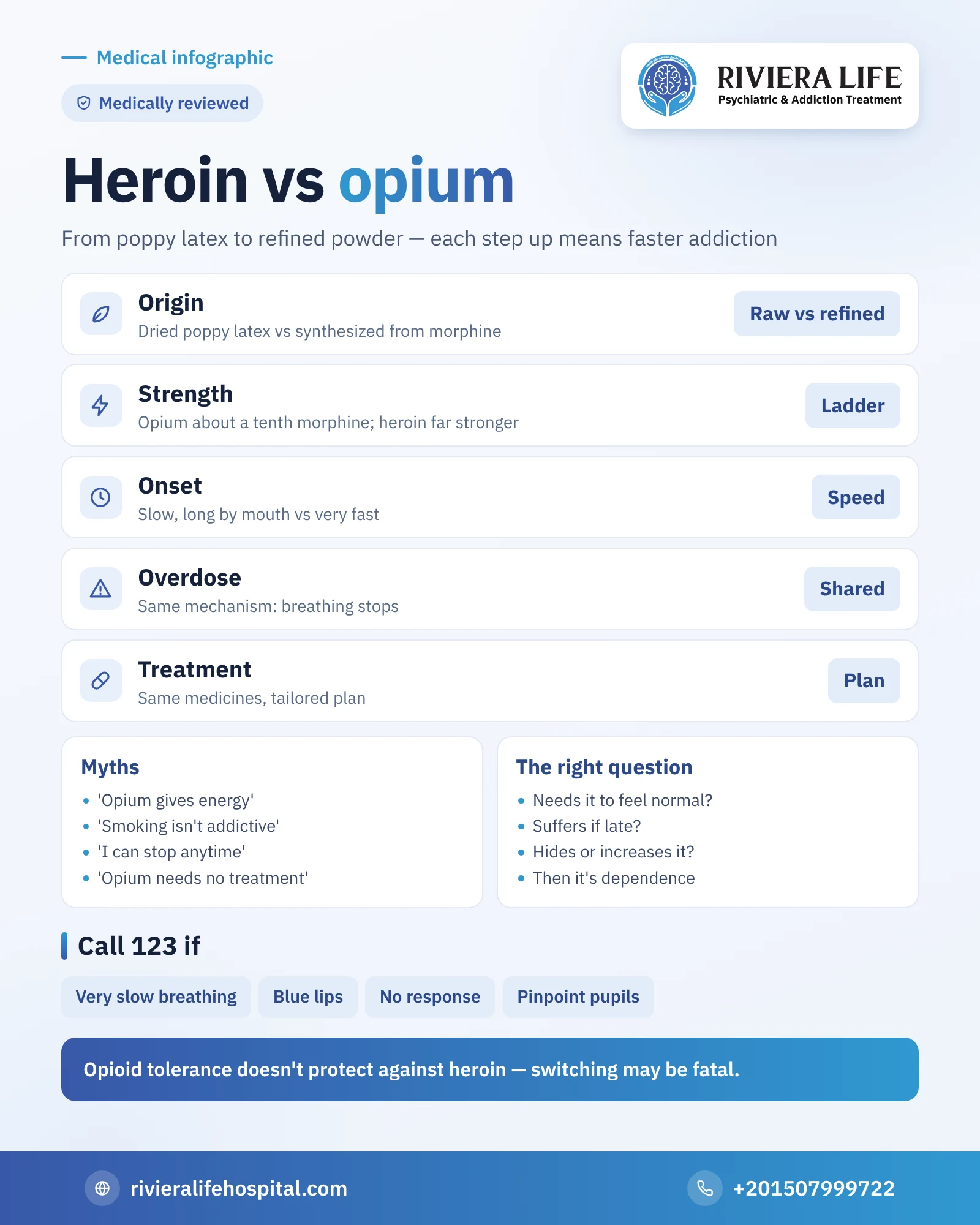
The difference between heroin and opium is that opium is the dried latex of the poppy fruit as the plant produces it, containing morphine with other alkaloids in moderate proportions, while heroin is a substance manufactured after processing morphine, more concentrated and faster to penetrate the brain. The first is raw and the second refined, and the more refining, the greater the strength and the higher the addiction and danger. But this doesn’t make opium “innocent”, as it is an opioid substance that causes dependence and overdose. Here we compare them from the angle of the “ladder of strength”: from the plant to the powder.
The difference between heroin and opium in a table
| Comparison | Heroin | Opium |
|---|---|---|
| Origin | A derivative manufactured from morphine | Dried latex from the poppy fruit |
| Composition | A single strong substance | A mixture of alkaloids including morphine and codeine |
| Strength | Much higher by weight | Lower, with its morphine content about a tenth approximately |
| Form | A white or brown powder | A paste or dark brown lumps |
| Common method | Snorting, smoking or injection | Swallowing or smoking |
| Onset of effect | Very fast | Slower and longer when swallowed |
| Its social image | Linked to stigma and concealment | Linked to old habits in some environments |
| Treatment | Approved medicines and psychological rehabilitation | Gradual tapering usually with the same medicines and rehabilitation |
The ladder of strength: from the plant to the powder
Imagine a ladder with three steps. At its bottom is the green poppy fruit and its latex, which dries to become raw opium. In its middle is the morphine extracted and purified from it. At its top is heroin manufactured from morphine. Each step means higher concentration and faster arrival at the brain, and therefore faster addiction and a greater likelihood of poisoning with a small-volume dose.
On this ladder opium may seem “natural” and so be thought gentle, but nature doesn’t mean safety. The poppy itself is the source of morphine used in hospitals under strict control. The article on opium: what it is and how it affects the body presents this background at length.
Why isn’t it enough to say opium is “lighter”?
It is indeed lighter in terms of concentration per unit, but what counts is the pattern. Someone who uses opium usually does so daily and for years, so the effects of physical dependence accumulate on them silently: chronic constipation, weak appetite, hormonal disturbance and general wasting. And someone who uses heroin jumps in danger more quickly, but both end up with the same result: a body that can’t do without the substance.
Method and speed of effect
Opium is usually taken by swallowing or smoking, so its effect arrives gradually and lasts long, which is why it seems to the user less “rushing” than heroin. Heroin, however, arrives within minutes or seconds through snorting, smoking or injection, so a short strong euphoria is produced followed by a crash that pushes toward a new dose. This fast cycle is what makes dependence on heroin form faster, and life revolve around getting it.
The danger of switching between the two substances
One of the most dangerous common ideas is that someone used to opium can switch to heroin because it is “stronger and cheaper by amount”. Tolerance built on opium doesn’t protect from heroin, but may tempt one to increase the amount so the body goes beyond its capacity. Any strong opioid becomes deadly when it exceeds its user’s tolerance. The same goes in reverse: someone who returns to a previous amount after stopping for days may die from what they could bear a month before.
The signs the family sees
The basic signs of opioids are the same: drowsiness, narrow pupils, slow speech, constipation, itching and loss of appetite. The difference is in the rhythm. The long-time opium user seems balanced as long as their dose is regular, and disturbance appears on them when it is late. And the heroin user’s state swings faster between numbness and tension. You will find the details of the signs in heroin addiction symptoms and opioid addiction symptoms.
Overdose
The mechanism is the same: it slows breathing until it stops. The danger rises with heroin because its concentration is unknown and it may be adulterated with much stronger opioids. With opium the danger rises when the source changes or sedatives or alcohol are added, or with weak liver and kidneys in the elderly.
Call an ambulance on 123 immediately if there appear
These are signs of an overdose of any opioid, raw or refined. Stay with the person and don't let them sleep.
- Very slow or intermittent breathing or stopped breathing
- Lips or nails turning blue
- No response to calling or to gentle shaking
- Pinpoint pupils with severe lethargy
The emergency antidote is naloxone, given by paramedics or trained staff, and explained in the article on naloxone.
Withdrawal: timing and duration
The withdrawal symptoms are close: yawning, tears and a runny nose, then bone pains, diarrhea, vomiting and insomnia. Heroin withdrawal usually starts within hours, and peaks within a few days. The long-term opium user, however, may have symptoms that start a little later and seem lighter in the first days but may extend, with urgent craving and insomnia remaining for weeks. This doesn’t mean a solo attempt is safe, as dehydration, tiredness and the risk of returning with a deadly amount exist in both cases. Read opioid withdrawal symptoms.
Treatment: a plan according to the pattern of use
Treatment of both relies on approved medicines for opioid addiction that the doctor determines according to the case, with psychological and behavioral therapy and a program for the family. The difference is in the details: long-term opium use, especially in the elderly, needs slow gradual tapering with checks of the heart, liver, kidneys and chronic illnesses. And heroin needs an assessment for possible infections and greater effort to dismantle the cycle of obtaining it. You will find both plans in opium addiction treatment and heroin addiction treatment.
Common myths when comparing
- “Opium gives energy and doesn’t harm the body”: it relieves pain so its user feels a greater ability to work, but it suppresses breathing, causes constipation and wasting and weakens sexual desire. You will find the details in opium and sex.
- “Smoking is easier than injecting so there’s no addiction in it”: the method changes the speed, not the nature of dependence, as smoking and swallowing also build physical dependence.
- “Someone who has used opium for years can stop whenever they want”: long dependence is harder to break, and usually needs a slow, organized plan.
- “Heroin is worse, so opium doesn’t need treatment”: both call for medical assessment, and comparing them doesn’t cancel the first’s need for treatment.
How does the family read this comparison?
The practical benefit of the comparison isn’t ranking the lighter and heavier substance to decide whether the matter deserves worry. The right question: does my relative now need the substance to feel normal? Do they suffer if it is late? Do they hide it or increase its amount? If the answer is yes, the matter is dependence, whether the substance is raw or refined. And early intervention is easier and less painful than intervention after years.
The law in Egypt in brief
Egyptian law treats both heroin and opium as narcotic substances subject to criminalization outside the licensed medical framework, from possession to trading. Opium being “traditional” in some environments doesn’t change its legal status or its health effect. And if you are looking for treatment, know that seeking medical support is offered to protect health.
When do you ask for help?
Ask for help if use has turned into a daily habit, attempts to reduce have failed, or withdrawal appears when the dose is late. Riviera Life offers an assessment supervised by consultants in psychiatry and addiction treatment, round-the-clock medical supervision, complete confidentiality, and a free first consultation on +201507999722. The hospital is licensed by the Ministry of Health, and located in Sheikh Zayed, Giza.
More from the heroin guide
Questions many people ask
Heroin is made from morphine extracted from opium, so they come from one plant, but heroin is a refined substance much stronger than raw opium.
It is less concentrated but causes physical dependence and fatal overdose, so being natural doesn't make it safe.
The symptoms are close, but heroin's starts faster and more clearly, and long-term opium use may have a prolonged withdrawal that needs gradual tapering under medical supervision.
No. It may tempt one to increase the amount, and heroin is much stronger and of unknown concentration, so the usual amount may cause breathing to stop.
Approved medicines from the same class are used for opioid addiction, but the doctor tailors the plan according to the duration of use, age and accompanying illnesses.