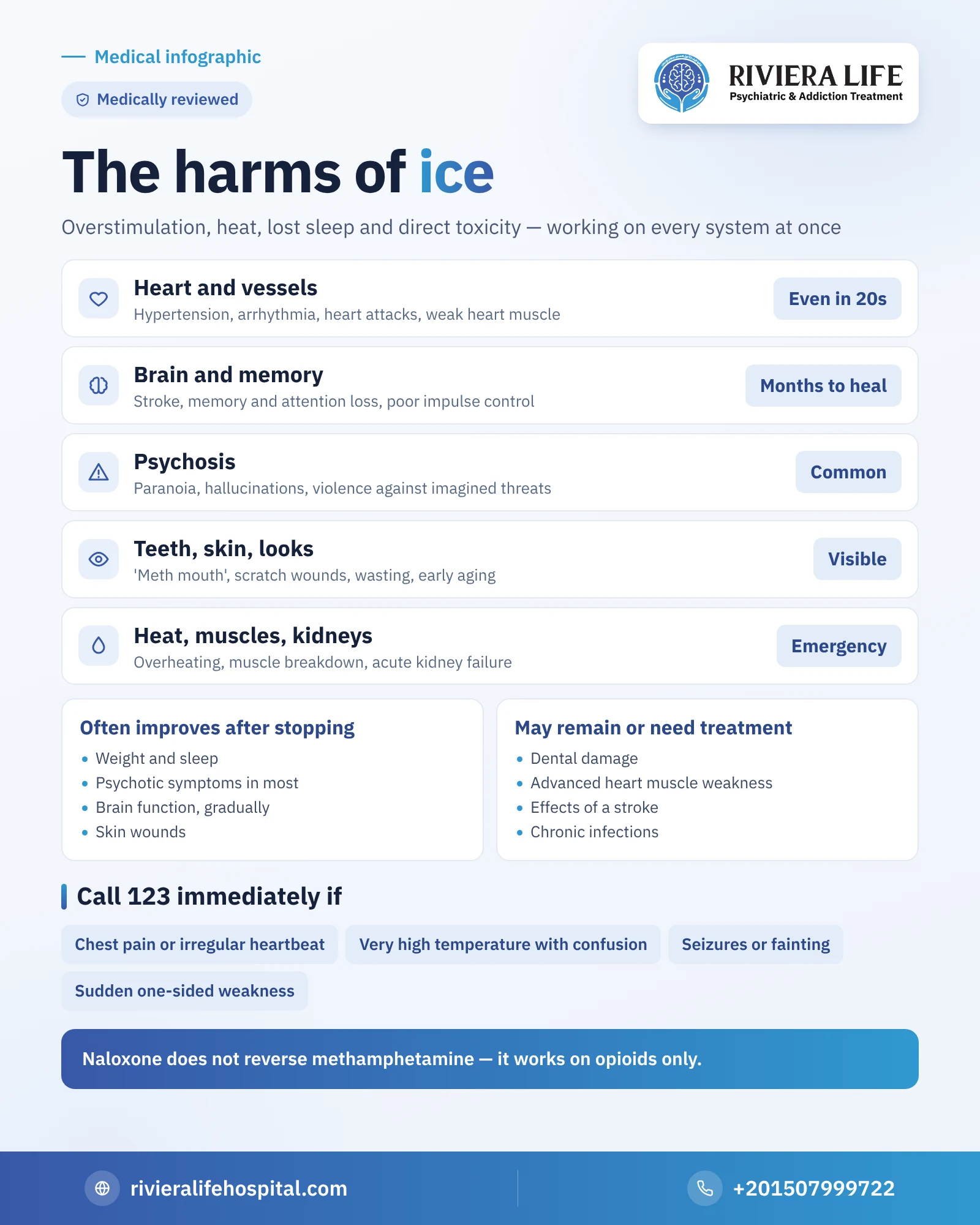
Ice doesn’t harm a single organ; it puts the whole body under continuous pressure: a heart beating faster than it can bear, constricted blood vessels, a high temperature, and a brain deprived of sleep for days. Over time these pressures turn into tangible damage to the heart, brain, teeth and skin, and into episodes of psychosis that can turn a whole family’s life upside down. This article brings together the harmful effects of ice — or shabu, or crystal meth — on each system of the body, and explains what can improve after stopping methamphetamine and what may remain.
How does ice cause damage?
The damage from ice comes from four sources working together. The first is excessive stimulation of the nervous system, which raises blood pressure and heart rate and constricts the vessels. The second is heat, as methamphetamine raises body temperature while reducing the sense of tiredness and thirst. The third is days of sleep and food deprivation during binges. The fourth is the direct toxic effect on the endings of nerve cells that release dopamine. Added to that is what isn’t known about the substance itself: crystal made in secret labs may carry residues of solvents and harmful chemicals.
The harmful effects of ice on the heart and blood vessels
The heart is one of the most damaged organs, and the problem can appear even in young people in their twenties with no previous illness:
- A sharp rise in blood pressure and a very fast pulse while under the influence.
- Disturbances of heart rhythm that can be dangerous.
- Spasm of the coronary arteries and heart attacks, even with doses the person didn’t consider large.
- A weakened, enlarged heart muscle with long-term use, which may lead to heart failure.
- A tear in the wall of the aorta in rare but extremely dangerous cases.
The harmful effects of shabu on the brain and memory
Sudden high blood pressure and constricted vessels make shabu users more prone to stroke, whether from a blocked artery or bleeding. Apart from these acute cases, studies show a decline in the dopamine system in those who have used methamphetamine for long periods, together with:
- Weaker memory, attention and speed of processing information.
- Difficulty planning, making decisions and controlling impulses.
- A weaker sense of pleasure in ordinary things.
- Repeated involuntary movements in some heavy users.
Part of these changes improves with long abstinence, but that takes months and sometimes more than a year.
Psychosis and psychological harm
Psychosis is one of the best-known harms of crystal and the most frightening for families. It usually starts with suspicion and mistrust, then may develop into auditory or visual hallucinations, a fixed belief that someone is watching the person or wants to harm them, and sometimes violent behavior in self-defense against a danger that doesn’t exist. The likelihood of psychosis rises with large doses, long sleeplessness and continuous use. In most cases it settles within days to weeks of stopping, but in a proportion of patients it may continue longer or return easily with any new dose. Alongside psychosis, ice is linked to depression, anxiety, panic attacks and chronic sleep disturbance.
Teeth, skin and appearance
The change in appearance is so striking that a family may notice it in photos taken months apart:
- Teeth: dry mouth, teeth grinding, sugar and neglected hygiene cause rapid decay and breakage known as “meth mouth”.
- Skin: wounds and sores from constant scratching, which easily become infected and leave scars.
- Weight: extreme thinness and muscle weakness from going without food for long periods.
- Premature aging: dull skin and tired features older than the person’s real age.
Heat, muscles and kidneys
Ice can raise body temperature to dangerous levels, especially in crowded or hot places or with intense physical activity. At these temperatures muscle fibers start to break down and release substances that block the kidneys — a condition called rhabdomyolysis, which can end in acute kidney failure. A high temperature can also lead to seizures and a disturbance of blood clotting. These are among the conditions that need immediate emergency care and can’t wait.
Sleep, nutrition and immunity
Binges of sleeplessness lasting two or three days leave an effect that builds with each binge. Chronic lack of sleep alone weakens memory and mood and increases impulsivity and irritability, and it is also one of the strongest paths into psychosis. Added to it is going without food for long periods, so the body loses protein, vitamins and minerals, muscles weaken and wound healing slows. With exhaustion and poor nutrition, immunity weakens, so skin infections and colds recur, and any infection becomes more severe than it would be in a healthy person. That is why doctors notice that recovering sleep and nutrition is one of the first things to improve a patient’s condition after stopping.
Harms linked to the route of use
- Smoking: irritation of the lungs and coughing, and burns on the lips and fingers.
- Snorting: damage to the lining of the nose and repeated nosebleeds.
- When injected: abscesses and skin infections appear, the heart valves may become infected, and viral hepatitis and HIV are transmitted if users share needles and equipment.
Ice is also linked to risky sexual behavior that raises the likelihood of sexually transmitted infection, a side detailed in our article on ice and sex.
The harmful effects of crystal on pregnant women and the baby
Methamphetamine use during pregnancy is linked to a higher risk of premature birth, low birth weight and placental abruption, and the baby may be born with difficulties in feeding, sleep and attention. Stopping suddenly without follow-up isn’t advised; instead, contact an obstetrician and an addiction doctor together to set a safe plan for mother and baby.
The harm to work, family and the law
The social harms often come before the physical ones. Binges and crashes make keeping up with work or study almost impossible, irritability and suspicion spoil relationships at home, and spending on the substance leads to debts or selling belongings. Added to that, possessing ice is a crime punishable under Egyptian law, and driving under its influence or during crash days exposes the person and others to serious accidents.
Mixing ice with other substances
A person rarely uses ice alone. Many turn to alcohol, tramadol, pregabalin or hashish to sleep after a binge, or mix it with other substances in search of a different effect. This mixing hides the signs of poisoning, adds strain on the heart and breathing, and makes withdrawal more complex. Mixing stimulants with opioids such as heroin in particular is a dangerous combination, because each substance hides the effect of the other until an overdose happens. To learn about the harms of these substances, see our pages on heroin and cocaine.
Signs of ice poisoning
Call an ambulance immediately on 123 if you see
Stimulant poisoning can develop within hours, and waiting for the person to calm down on their own is a common mistake.
- Pain or pressure in the chest, or an irregular heartbeat
- A very high temperature with confusion, or sweating that stops
- Seizures or loss of consciousness
- Sudden loss of strength in one side of the body, or difficulty getting words out
- Severe agitation or hallucinations with danger to themselves or others
A crystal meth overdose: what it means and how to recognize it
A crystal meth overdose isn’t linked to a specific number: the purity of the powder differs from one time to the next, and it may be mixed with substances the user doesn’t know about. So it can happen to someone used to the substance, after use that doesn’t seem any different from usual to them. What happens here is poisoning that hits the heart, the brain and body temperature together.
The greatest danger isn’t “coma”, as with opioid painkillers, but overstimulation: high body temperature, disturbed heart rhythm, blood pressure rising to the point of a brain bleed or clot, seizures, and agitation and psychosis that may harm the person or those around them.
If you see any of the signs of poisoning listed above:
- Call an ambulance on 123 and don’t wait for the symptoms to pass.
- Keep them in a cool, quiet place away from sharp objects and windows, and don’t leave them alone.
- Tell the paramedics everything they took, as far as you know, because mixing changes the treatment.
- Don’t try to force them to vomit, and don’t restrain them violently.
Naloxone doesn’t reverse methamphetamine; it works only on opioids. For more on handling these situations, read drug overdose: the signs and first response.
Does methamphetamine damage go away after stopping?
The good news is that much of the damage improves with abstinence: weight and sleep return, psychotic symptoms settle in most patients, and brain function gradually improves over months. But some damage may remain or need special treatment, such as dental damage, heart muscle weakness if it has advanced, the effects of a stroke, and chronic infections. That is why good treatment starts with a comprehensive examination of the heart, teeth and vital functions, not by focusing on addiction alone, as our article on ice addiction treatment explains.
More from our ice and shabu guide
- Ice, shabu and crystal meth: the complete guide
- Ice addiction symptoms
- The causes of ice addiction
- Ice and sex
Questions many people ask
Ice is the crystalline form of methamphetamine, and its most dangerous harms are heart attacks, heart rhythm disturbance, stroke, severe overheating and psychosis.
Shabu can cause psychosis with suspicion, hallucinations and violent behavior. It usually settles within days to weeks of stopping, but it may persist or return easily in some patients.
Because of dry mouth, teeth grinding, lots of sugar and neglected hygiene during binges, causing rapid decay and breakage that may need lengthy treatment.
Not all of it. Memory and attention gradually improve with long abstinence, but the improvement takes months and may be partial in those who used for years.
Yes. It is linked to premature birth, low birth weight and placental abruption, and a pregnant woman should be followed by an obstetrician and an addiction doctor, without stopping suddenly unsupervised.