Your son hasn’t slept for two days, talks at a speed you don’t recognize in him, and spends the night tidying his room or taking a device apart and putting it back together, then suddenly sleeps for a day and a half and wakes irritable, unable to stand anyone. This pattern of long sleepless stretches followed by a crash is the clearest feature of ice addiction symptoms — or shabu, or crystal meth, as some call it — all names for methamphetamine. This article sets out the signs families see in the body, mood and behavior, when use turns into addiction, and the signs that call for an ambulance immediately.
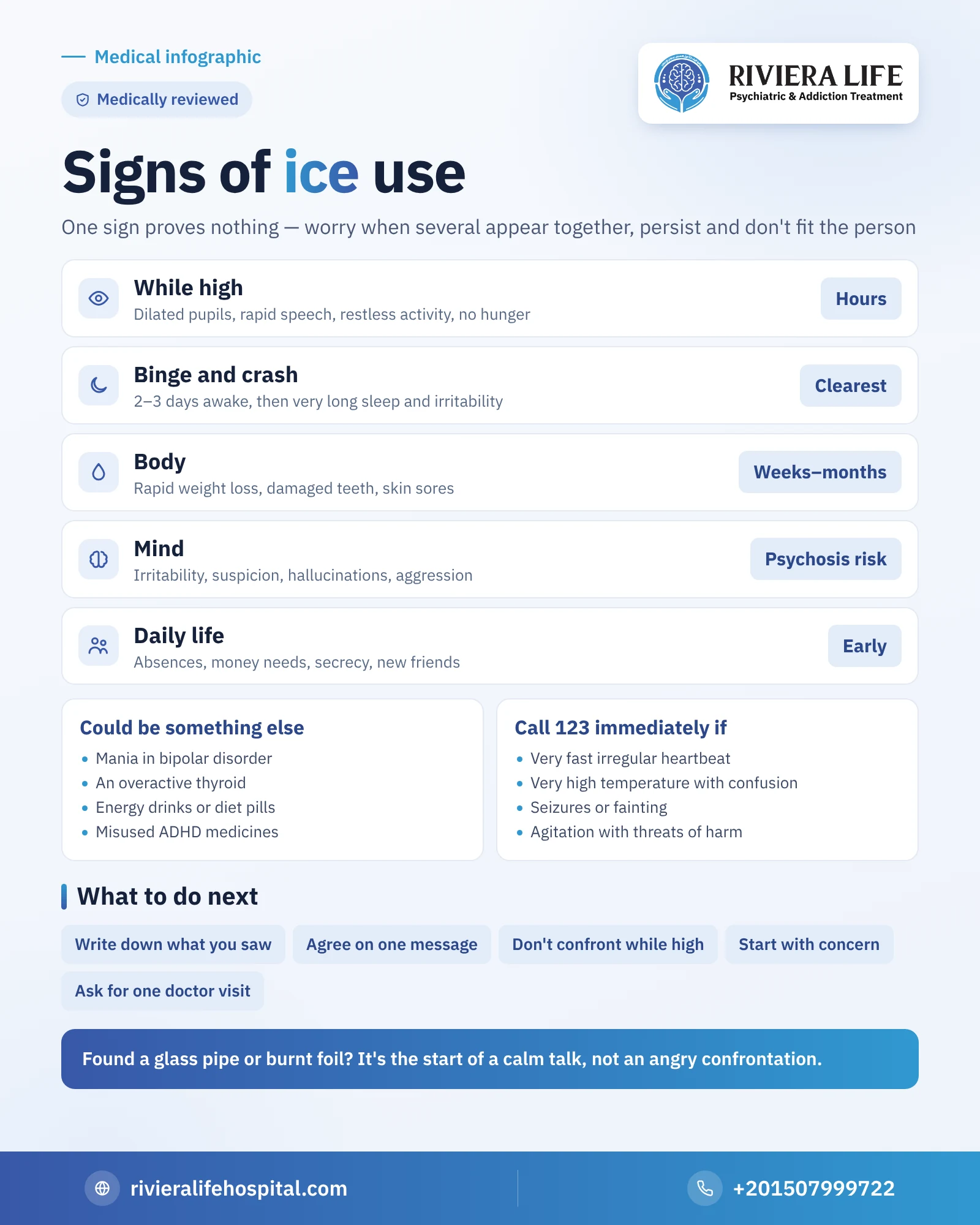
A warning before we start: a single sign proves nothing. What deserves concern is several signs together, persisting, and clearly departing from the person’s usual nature.
Signs that appear while ice is taking effect
The effect of a single dose of crystal lasts many hours, much longer than other stimulants, so you may notice these signs in more than one situation during the same day:
- Dilated pupils even in strong light, and a sharp, tense stare.
- Rapid, pressured speech jumping from one topic to another, and excessive self-confidence or sudden big plans.
- Restless physical activity: repeated cleaning, taking things apart, or pacing back and forth.
- No feeling of hunger for many hours, and drinking large amounts of water or soft drinks.
- Teeth grinding, a clenched jaw and repeated movements of the mouth.
- Sweating, a raised temperature and a fast heartbeat you can notice by touching the hand or neck.
The binge-and-crash cycle: the clearest sign of shabu
Many shabu users take it in “binges”: two or three days of repeated use with hardly any sleep, then a crash in which the person sleeps for very long hours, and wakes intensely hungry, gloomy and quick to anger. Then the cycle starts again. During this period they may invent repeated excuses for their absence: a sudden trip, staying over at a friend’s, or night work that never existed before.
This abnormal rhythm of sleep and eating is easier for the family to spot than any other sign, especially if it repeats at weekends or after getting money. What happens in the crash itself, and why mood is so harsh in it, is explained in our article on ice withdrawal symptoms.
Physical signs as use continues
After weeks or months of regular use, effects begin that are hard to hide:
- Rapid thinness: clear weight loss over a short period, with a pale face and sunken eyes.
- Teeth: dry mouth, teeth grinding and neglected hygiene lead to obvious decay and breakage.
- Skin: sores and small wounds on the face and arms from constant scratching, as some users feel something crawling under the skin.
- Lips and fingers: cracked lips, and sometimes small burns on the lips or fingertips in those who smoke crystal.
- Nose: repeated congestion or light bleeding in those who snort the powder.
- Arms: injection marks or bruises in those who inject methamphetamine, often hidden by long sleeves.
These signs aren’t just about appearance; they reflect damage to the heart, brain and skin, and the details are in our article on the harmful effects of ice.
Psychological signs: from irritability to psychosis
The psychological change is what worries families most, and it usually progresses in stages:
- Irritability and outbursts over the smallest things, especially on crash days.
- Constant anxiety and tension, and difficulty sitting still or focusing on a conversation.
- Sharp swings between exaggerated enthusiasm and deep gloom.
- Growing suspicion: closing the curtains, looking out of the window, searching the phone, and believing someone is watching or plotting against them.
- Auditory or visual hallucinations, or a feeling of insects on the skin.
- Aggressive or violent behavior that wasn’t known in them before.
Suspicion and hallucinations are signs of stimulant-induced psychosis, which can appear even in those with no previous psychiatric history, and become more likely with lack of sleep and large doses.
Changes in behavior and daily life
Before any clear physical sign appears, the user’s daily life usually changes in this way:
- Repeated absence from work or study, or a sudden drop in grades and performance.
- A constant need for money, valuables disappearing from the house, and unexplained debts.
- New friends they don’t introduce, long nights out, and short, mysterious calls.
- Excessive secrecy around the phone and the bedroom, and anger when asked.
- Neglect of appearance and personal hygiene, or the opposite: an excessive, strange attention to small details.
- Giving up hobbies and interests that were part of their personality.
Things you may find at home
Some families discover the matter from a small object before any other sign. Among the things linked to using ice: small glass pipes with a blackened bulbous end, pieces of tin foil with burn marks, many lighters, very small plastic bags, and clear crystals resembling coarse sugar or broken glass. Finding these things deserves attention, but it is the start of a calm conversation, not a moment for an angry confrontation.
When does crystal use become addiction?
Having tried the substance isn’t enough for a person to be called addicted. Doctors rely on specific criteria to diagnose stimulant use disorder, including:
- Using larger amounts or for longer periods than intended.
- Failed attempts to cut down or stop.
- Spending a lot of time getting ice or recovering from the effects of a dose.
- A strong, pressing craving to use.
- Neglecting work, study or family because of use.
- Continuing despite clear psychological or physical problems caused by the substance.
- Needing a larger amount to get the same effect.
The more criteria that apply within a single year, the more severe the disorder. And with methamphetamine the picture can develop quickly, so the doctor doesn’t wait for it to be complete before stepping in.
Symptoms that can look like ice use but have other causes
Before reaching a final judgment, remember that some conditions resemble stimulant use in how they look: a manic episode in bipolar disorder, an overactive thyroid, overuse of energy drinks or some slimming medicines, and misuse of ADHD medicines. That is why a medical assessment combines an interview, an examination and a test. A test can be a helpful step if used calmly, and how long the substance shows up in each sample is explained in our article on how long ice stays in your system.
Signs that need urgent intervention
Call an ambulance immediately on 123 if you see
These signs may mean stimulant poisoning or acute psychosis, and can't wait.
- An extremely fast heartbeat with an irregular rhythm, or chest pain
- A very high temperature with confusion, or hot skin
- Seizures or fainting
- Severe agitation or hallucinations with threats to harm themselves or others
You’ve noticed the symptoms — what next?
Write down what you saw with the dates, and agree with the rest of the family on one message before any conversation. Avoid confronting them while they are high or at the end of a sleepless binge, because paranoia and irritability are at their peak. Start with concern, not accusation, and ask for a small step such as seeing a doctor. The detailed steps for this conversation, and what to do if they refuse, are in our guide to how to deal with someone addicted to ice; to learn about the substance itself and its names, see our page on ice and shabu.
Shabu and sleep: why does sleep vanish for days and then the person collapse?
Shabu keeps the brain in a state of excessive wakefulness, so the user feels neither tiredness nor sleepiness, and they may stay awake for two, three days or more. Meanwhile the body uses up its reserves without rest, and when the effect wears off, the person falls into a heavy sleep lasting many hours, which may go beyond a whole day, then wakes hungry, exhausted and quick to anger.
What the family sees in this cycle:
- Whole nights of feverish activity on pointless tasks.
- Going without food and drink while awake, then intense hunger afterwards.
- Unbroken sleep from which it is hard to wake them after the crash.
- Irritability, suspicion and hallucinations that increase the longer they stay awake.
Long sleep deprivation magnifies suspicion and hallucinations on its own, which is why it is linked to episodes of psychosis. And don’t try to put them to sleep with sleeping pills or sedatives you have at home: mixing them with stimulants is dangerous; leave the decision to the doctor.
After stopping, sleep is disturbed again: heavy sleepiness in the first days, then insomnia that may last for weeks, as our article on ice withdrawal symptoms explains. To see what continuous sleeplessness does to the body, see the harmful effects of ice on the heart, brain and body, and for sleep disorders in general read sleep disorders and their types.
How can Riviera Life help you?
The family doesn’t need complete certainty before asking. You can present what you have noticed to the Riviera Life team in a free, confidential first consultation, so the doctor can help you read the picture and decide the next step, whether that is an urgent assessment or a plan for talking to them.
More from our ice and shabu guide
- Ice, shabu and crystal meth: the complete guide
- The causes of ice addiction
- Ice and shabu addiction treatment
- How to deal with someone addicted to ice
Questions many people ask
What families notice earliest is disturbed sleep: two or three days awake with abnormal energy, then very long sleep and irritability afterwards. But one sign alone isn't enough; what matters is several changes together.
Shabu causes dilated pupils and a tense stare, but dilated pupils can happen with other medicines and substances, so the eyes alone aren't enough to judge without an assessment and a test.
Yes. Some crystal users feel something crawling under the skin and scratch hard, so sores and small wounds appear on the face and arms, which can become infected.
Yes. Paranoia and a feeling of being watched are among the best-known psychological symptoms of methamphetamine, and they can develop into psychosis with hallucinations, which needs urgent medical assessment.
No. The diagnosis relies on criteria such as loss of control, pressing craving and continuing despite harm. But dependence develops quickly with ice, so any repeated use deserves an early assessment.