When we look into the causes of ice addiction we don’t find a single cause; what usually happens is the meeting of three things: a substance that is extremely powerful at stimulating the brain, a person carrying a genetic or psychological predisposition, and circumstances that make the first experience possible and then repetition easy. That is why two people may try shabu on the same night, and one walks away after once, while the other finds himself within weeks unable to stop. This article explains why crystal meth causes addiction so fast, the risk factors that make some people more vulnerable to it, why use continues despite clear harm, and what protects against it.
Why does ice cause addiction so fast?
Any addictive substance does so through the brain’s reward system, but methamphetamine does it with exceptional strength for several combined reasons:
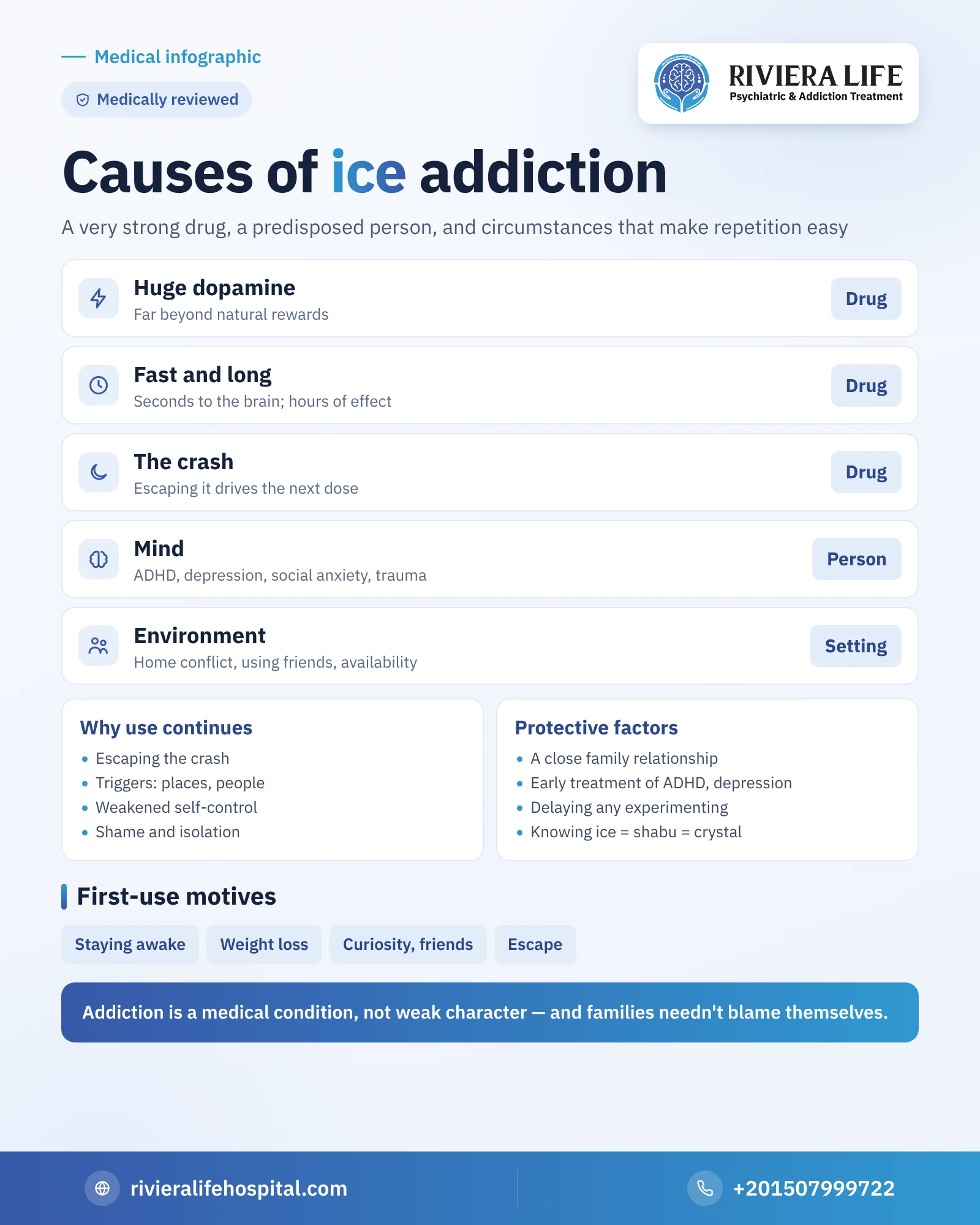
- The amount of dopamine: ice releases an amount of dopamine far beyond what natural rewards produce, so the brain records the experience as extremely important.
- Speed of arrival: smoking delivers the substance to the brain within seconds, and the faster the arrival, the stronger the link between the act and the reward.
- Length of effect: methamphetamine stays in the body for many hours, so the experience is extended and its effect deepened.
- The crash after it: the sharp drop in mood and energy after the effect wears off pushes towards a new dose to escape it, and continuous binges begin.
Why do some people become addicted and others don’t?
The substance alone doesn’t explain everything. Doctors agree that addiction results from an interaction between three circles: the person with their body and psychology, the environment they live in, and the substance and how it is used. The more risk factors come together in the three circles, and the fewer protective factors, the higher the likelihood that the experience turns into addiction. Having a risk factor doesn’t mean addiction is inevitable, just as its absence doesn’t mean complete immunity.
Genetic and biological factors
Family and twin studies indicate that genetics explains a large part of the predisposition to addiction in general, estimated at about half in many studies. This doesn’t mean there is an “addiction gene”, but a set of inherited traits that affect how the brain responds to substances, and impulsiveness, thrill-seeking and stress tolerance. That is why having a first-degree relative with addiction is a risk factor that deserves attention. Age also plays an important role, as the brain in adolescence and the early twenties hasn’t yet fully matured in the areas that control impulsiveness, and early use is linked to a higher likelihood of addiction later.
Psychological disorders: ADHD, depression and trauma
A large proportion of patients with shabu addiction carry a previous or accompanying psychological disorder, most notably:
- Attention-deficit/hyperactivity disorder: the person may find in stimulants a temporary sense of focus and calm, so they become more prone to repeating them, especially if it hasn’t been diagnosed and treated.
- Depression: crystal gives temporary energy and euphoria to someone suffering apathy and sadness, then deepens the depression in the crash phase.
- Social anxiety: some people use it to feel confident in gatherings.
- Trauma and post-traumatic stress disorder: exposure to violence, neglect or loss is linked to a clear rise in the risk of drug use.
This doesn’t mean mental illness justifies use, but it means treatment must cover both together, otherwise the motive remains.
Starting motives: why does a person try shabu the first time?
Rarely does anyone start intending to become addicted. The motives we often hear in the clinic are practical on the surface:
- Staying awake and long work: drivers on long-distance roads, night-shift workers, and students in exam days looking for extra hours without sleep.
- Weight loss: young women and men who heard that ice cuts appetite.
- Sexual expectations: the belief that it prolongs sex or increases desire, an idea our article on ice and sex discusses.
- Curiosity and friends: an offer at a party, or not wanting to appear different.
- Escape: from sadness, pressure or emptiness, even for a few hours.
Family and childhood
The home a child lives in leaves a long mark. Known risk factors include: a parent who uses or is addicted, violence and constant conflict at home, emotional neglect or lack of supervision, extreme harshness or excessive indulgence without limits, and a difficult divorce or early loss. Conversely, a warm relationship with at least one parent, open conversation and clear rules are among the strongest protective factors. It is important for the family to know that these factors raise the likelihood and don’t create addiction on their own, as many patients come from stable homes.
Friends, environment and society
The availability and price of the substance are two basic factors. With shabu spreading in the region in recent years, in the Gulf and then in Egypt, getting it has become easier than it was. The risk is increased by belonging to a group of friends who use, working in environments that encourage long late nights, unemployment and idleness, and content on social media presenting drugs as part of a fun life.
The multiple names of the substance also confuse young people, as someone may accept “crystal” because they don’t know it is the same ice they heard is dangerous. And in some harsh work environments shabu is presented as a way to hold out through long shifts, so the person starts it for “practical” reasons and then finds himself unable to work without it.
From other substances to ice
Many who reach ice passed through other substances before it: hashish, tramadol or Captagon pills. This doesn’t mean everyone who tries a substance will inevitably move to another, but getting used to changing mood with a substance, and entering circles where more than one type is available, makes the next step easier. Moving from Captagon to shabu in particular is common, because they are from the same stimulant family, and the second is stronger and longer-acting. To compare them, see the Captagon and amphetamines pages.
Why does use continue despite harm?
After a while the question changes from “why did they start?” to “why don’t they stop?”. The answer lies in several mechanisms working together:
- Escaping the crash: the depression and apathy after stopping make the next dose look like a solution.
- Triggers: the brain links the substance to places, people, times and even smells, so these things provoke a sudden strong craving.
- Weakened self-control: the decision-making areas of the brain are affected, so resisting impulses becomes hard.
- Shame and isolation: guilt pushes towards hiding, and hiding keeps help away.
That is why stopping for a few days isn’t enough; the person needs treatment that rebuilds these circuits, as our article on ice addiction treatment explains.
Factors that protect against ice addiction
- A close family relationship that allows problems to be discussed without fear.
- Early diagnosis and treatment of ADHD, depression and anxiety.
- Delaying any experimenting with substances until after adolescence.
- Friends and sporting or social activities away from drugs.
- Skills for dealing with stress, failure and boredom.
- Accurate knowledge that ice, shabu and crystal are names for one substance.
Is addiction weak willpower? And is the family the cause?
Addiction is a medical condition that changes brain function, not evidence of weak character or bad morals. On the other hand, the family doesn’t need to punish itself, as the causes are many and mostly outside any individual’s control. What the parents have now is the way they deal with it, and that is what makes a real difference in their son reaching treatment, as our guide on how to deal with someone addicted to ice explains.
More from our ice and shabu guide
- Ice, shabu and crystal meth: the complete guide
- Ice addiction symptoms
- The harms of ice
- How to deal with someone addicted to ice
Questions many people ask
Because ice releases a huge amount of dopamine, reaches the brain within seconds when smoked, and its effect lasts hours, then a crash follows that pushes towards repetition.
Genetics increases predisposition to addiction without making it inevitable; its role is estimated at about half in research, while the rest comes from psychological and environmental factors.
Yes, untreated ADHD is a known risk factor for stimulant use, and treating it early reduces this risk.
Not inevitably, but moving from Captagon to methamphetamine is common because they are from the same stimulant family, and methamphetamine is stronger and longer-acting.
Open conversation, a close relationship and clear rules, treating any psychological disorder early, delaying any experimenting with substances, and making clear that ice, shabu and crystal are one substance.