Parkinol withdrawal symptoms usually begin within one to two days of the last dose in someone used to taking it regularly, and center on nausea, vomiting, sweating, headache, insomnia, anxiety and muscle tension, and tremor and stiffness may return in those taking antipsychotics. The symptoms peak in the first days and then ease within days to about two weeks, but they vary with the amount, the duration and the psychological state. And not everything that appears after stopping is withdrawal, as some of it is the return of symptoms the medicine was masking. This article sets out the sequence of symptoms, how the doctor tells withdrawal apart from the illness returning, and when it becomes an emergency.
Why does Parkinol cause symptoms when stopped?
Parkinol (trihexyphenidyl) is a medicine that blocks acetylcholine receptors, a neurotransmitter that regulates movement, attention, the glands, the stomach and the bladder. When someone takes the medicine regularly, their systems adapt to this blocking by raising their production of or sensitivity to acetylcholine. When the medicine disappears suddenly, this system floods without a brake, and effects opposite to those of the medicine appear: instead of a dry mouth, saliva flows; instead of a slow stomach, nausea and vomiting; and instead of calm, tension and insomnia. Doctors call this “cholinergic rebound”. To understand the medicine and who prescribes it, the Parkinol guide helps.
When does withdrawal start and how long does it last?
Parkinol’s half-life is relatively short, around three to five hours, so symptoms appear quickly, usually within the first day or two, and may start after hours in someone taking large amounts several times a day. They intensify in the first three to five days, and settle for most people within one to two weeks. Insomnia and anxiety, however, may stay for weeks if they were present before the medicine. These figures are approximate, and aren’t suitable for guessing your individual case.
The approximate timeline
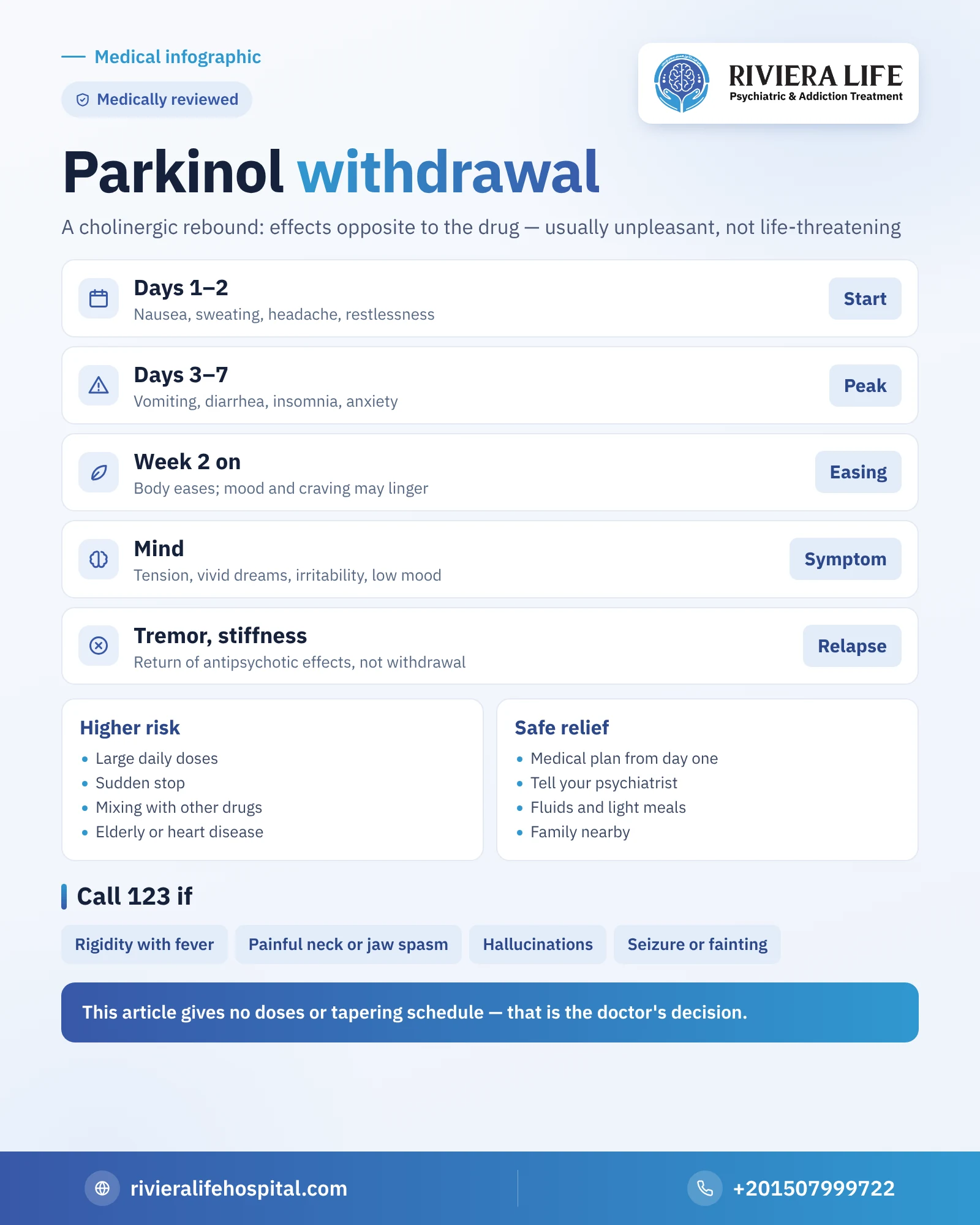
Days one and two
The person notices that “something isn’t right”: mild nausea, sweating and headache, restlessness and tension in the muscles, and difficulty sitting still. They sleep little or sleep fitfully, and the craving to take the medicine quickly to ease this state intensifies.
Days three to seven
This is usually the hardest period. Digestive symptoms escalate, with vomiting, diarrhea and abdominal pain in some, insomnia and anxiety intensify, and disturbing dreams recur. Tremor, stiffness and muscle spasms may return in those taking antipsychotics. These days exhaust the family, because the person seems nervous and quick to anger.
Week two and beyond
Physical symptoms recede gradually, and sleep and appetite slowly improve. Some are left with anxiety, mood swings and a craving that returns at certain times, especially if the medicine was used for the feeling it gives rather than for a movement need.
Digestive and physical symptoms
The most prominent are nausea and vomiting, and it may reach diarrhea and abdominal cramps after long excess, because the stomach and intestines had their movement held back and then surged. Heavy sweating, drooling and excess secretions appear, along with headache, a feeling of exhaustion and muscle aches. The heartbeat may speed up temporarily. These symptoms seem unpleasant, but they mostly don’t threaten life in someone with a healthy heart unless they become severe.
Psychological symptoms and sleep
Severe anxiety and tension, insomnia with vivid dreams, nervousness and quick anger, and low mood in some. Someone who was taking Parkinol for its stimulating or intoxicating effect notices emptiness, dullness and a strong craving. Depression may intensify in someone predisposed, so they must be followed up. Among the most alarming things that may surprise the family is the person talking about despair or showing suspicion and hallucinations, and here a psychiatrist is needed without delay. Reading depression symptoms helps distinguish between passing sadness and a condition that needs treatment.
Withdrawal or a return of the original illness?
This is the most important point where people stumble. Parkinol is prescribed to treat the movement side effects of antipsychotics, so if the person stops it, the original movement symptoms may return: tremor, stiffness, spasms and restlessness that won’t settle. These aren’t withdrawal in the strict sense but a return of what the medicine was blocking.
The practical difference: true withdrawal eases gradually over days to weeks, while the original movement symptoms remain as long as the antipsychotic continues and the cause hasn’t been treated. That is why it isn’t judged at home; the doctor examines movement and reviews the whole plan. The solution may lie in adjusting the antipsychotic itself, not in Parkinol. You will find a broader explanation of this cycle in Parkinol addiction treatment.
Why is stopping suddenly hard?
Because the first symptoms are unpleasant enough for the person to go back to the medicine after hours, so the attempt turns into a cycle: stopping, then pain, then returning with a larger amount. Here some people make the mistake of trying to ease it with sedatives, tramadol or alcohol, so symptoms overlap and the problem moves to a new substance. Any reduction is carried out gradually and under the doctor’s supervision, taking into account the antipsychotic, sleep, pulse and blood pressure. This article doesn’t include any amount or tapering schedule, as it is an individual decision that can’t be generalized.
Call an ambulance on 123 immediately if you see
Especially in someone taking antipsychotics, who went back to a large amount after stopping, or who mixed Parkinol with other substances.
- Severe body stiffness with high temperature and confusion
- A painful spasm in the neck, jaw or eyes, or difficulty swallowing
- Hallucinations, suspicion or violent agitation
- A very fast heartbeat or chest pain
- A seizure or loss of consciousness
Who is most at risk of severe withdrawal?
- Someone who took large amounts daily for months or years.
- Someone who stopped suddenly after regular use instead of reducing.
- Someone who mixes Parkinol with sedatives, tramadol or alcohol.
- Someone with an ongoing psychiatric illness such as schizophrenia or bipolar disorder.
- Older people, and those with heart disease, thyroid disease or raised eye pressure.
How does the doctor follow the patient while stopping?
They measure pulse, blood pressure and temperature regularly, ask about sleep, appetite, mood and thoughts, and examine movement themselves to distinguish between the medicine’s rebound and the movement symptom returning. Specific symptoms such as nausea or insomnia may need treating with safe means suited to the case, and the doctor decides what is and isn’t suitable. Medical admission remains an option when other substances, an active psychiatric illness, or no one at home to watch the patient come together.
What eases the symptoms without risk?
- Medical supervision from the start: the doctor sets a reduction plan suited to your condition and medicines.
- Telling the treating psychiatrist: they are the one who reviews the antipsychotic if it is the reason for the need.
- Water and light meals: to make up for what vomiting and sweating lose.
- A fixed time for sleep: without sleeping pills on your own initiative.
- The family’s presence: they understand the nervousness and help notice dangerous signs.
Withdrawal doesn’t necessarily mean you were “addicted”
Many take Parkinol on prescription and in small amounts, and feel discomfort when they miss it for a day. These symptoms mean physical dependence and not necessarily addiction. Addiction is defined by behavior: compulsive use, amounts exceeding the prescription, and seeking the medicine for the feeling rather than the need. To understand the context of the psychiatric medicines Parkinol usually accompanies, the article on schizophrenia treatment helps.
The Riviera Life team offers an assessment in complete confidentiality, in coordination with the treating psychiatrist, and a free first consultation is available on +201507999722.
More from the Parkinol guide
- Parkinol: the complete guide
- Parkinol addiction treatment
- Schizophrenia treatment
- The dual diagnosis program
Questions many people ask
Usually within the first one to two days after the last dose, and they may start after hours in someone taking large amounts several times a day.
They peak in the first days and ease for most people within one to two weeks, while insomnia and anxiety may last longer.
It is mostly unpleasant rather than life-threatening, but it may become complicated in people on antipsychotics or who mix it with other substances, and medical supervision is needed.
It isn't withdrawal in the strict sense, but a return of the antipsychotic's effect that the medicine was blocking, and the psychiatrist assesses it.
No. Stopping suddenly after regular use causes a rebound, and the medicine is adjusted gradually according to the treating doctor's plan.