Shadow withdrawal symptoms start in many people within hours to about a day of the last cigarette, intensify in the first days, then most of them settle within a week or so, while insomnia, irritability and intense craving may remain for weeks. What most distinguishes them is anxiety, tension, difficulty sleeping, loss of appetite and sweating, and in some cases more severe symptoms appear that need medical supervision. This article maps withdrawal stage by stage, explains what makes it harder for one person than another, when hospital is safer than home, and how the family can support in these days.
Why do symptoms appear when stopping shadow?
With repeated use the brain gets used to strong, continuous activation of cannabinoid receptors, so it reduces their number and sensitivity to keep its balance. When the substance suddenly disappears, the brain finds itself with less responsive receptors and without the stimulus it got used to, so what this system used to regulate, mood, sleep, appetite and a sense of ease, is disturbed. Because shadow’s effect is relatively short, this gap starts to appear soon after stopping, which is what makes many return to the cigarette not looking for a high, but to escape the distress.
When do shadow withdrawal symptoms start and how long do they last?
There is no fixed schedule, but what medical reports describe usually runs as follows:
- Onset: within hours to about a day of the last use, and it may be faster than in those who use hash.
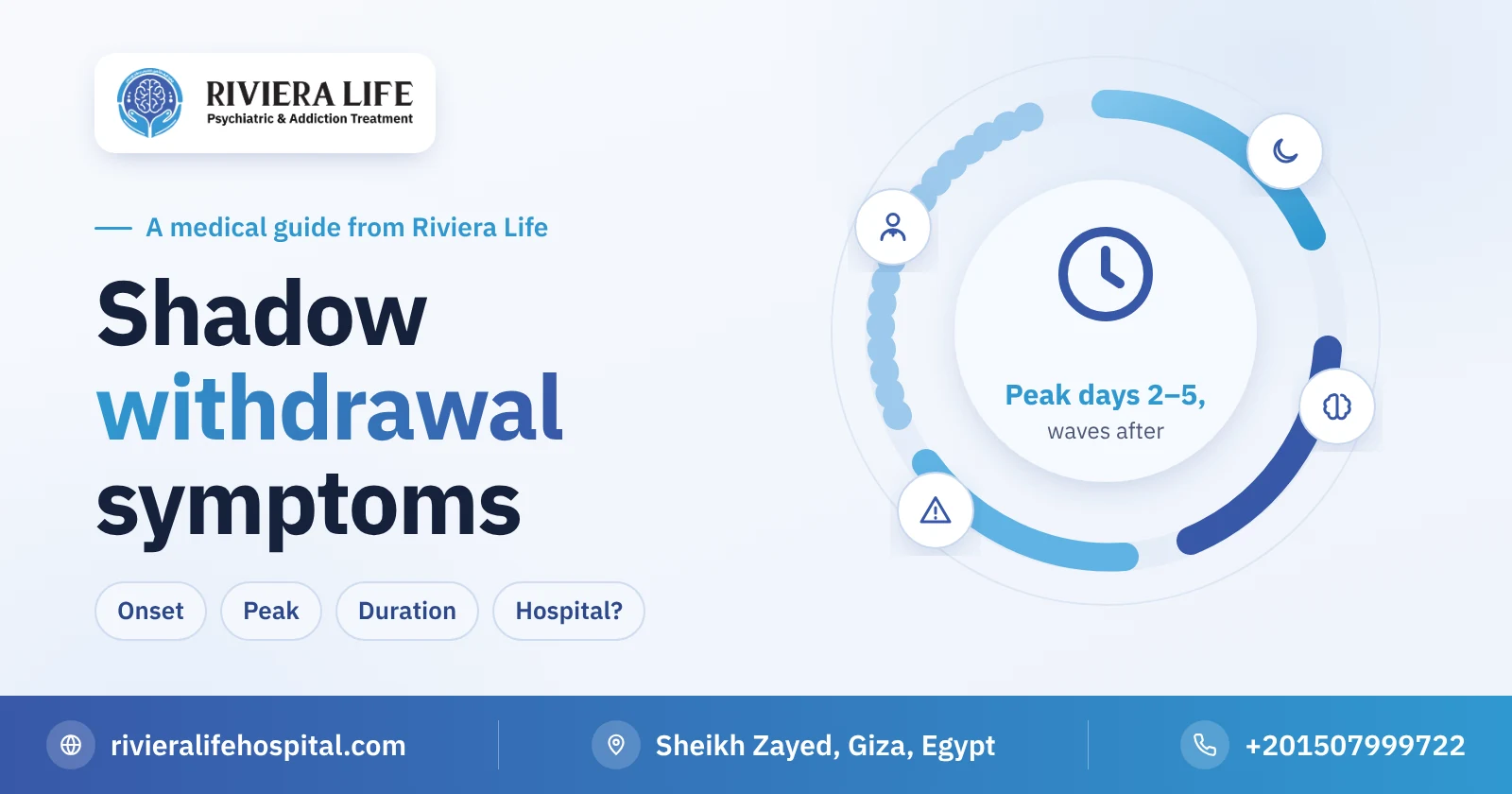
- Peak: in the first days, usually between roughly the second and fifth day.
- Easing: most physical symptoms settle within one to two weeks.
- Lingering symptoms: insomnia, mood swings and craving may continue for weeks, and appear in waves.
The stages of shadow withdrawal
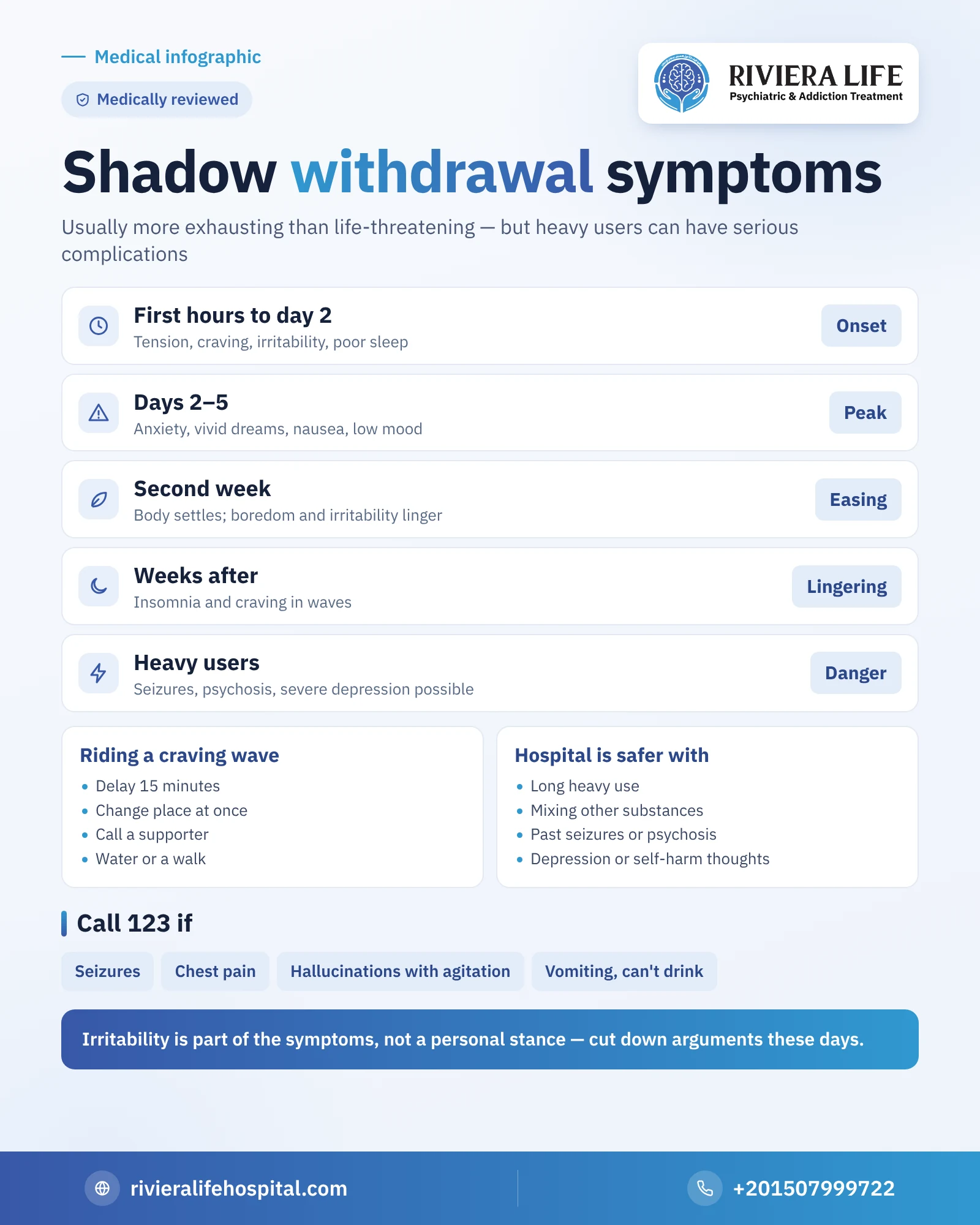
The first hours until the end of the second day
It begins with inner tension and a strong urge to smoke, then irritability at the simplest things, and difficulty sleeping on the first night. The person may notice sweating, palpitations and loss of appetite, and feel “not themselves” without knowing exactly why. Families often interpret this state as bad manners or stubbornness, while it is the start of withdrawal.
The peak: the first days
This is the hardest stage. Anxiety intensifies and may reach panic attacks, and sleep becomes broken and full of disturbing, unusually vivid dreams. Nausea, headache, a slight tremor and abdominal pain may appear, with low mood and a tight chest. It is in these days specifically that most returns to use happen.
Easing: roughly the second week
The physical symptoms gradually ease, appetite returns, and sleep improves a little. But irritability, boredom and a feeling that life is dull may remain, and need patience and support. Here many patients start to feel they have “recovered already”, a feeling that needs caution because the craving isn’t over yet.
Lingering symptoms: weeks after stopping
In someone who used for a long time, difficulty sleeping, mood swings and waves of intense craving may continue, especially when passing places or people linked to use. These waves decrease in intensity and become further apart with time, helped by regular sleep, daily physical activity and a treatment program that fills the gap left by use.
The physical symptoms of withdrawal
- Severe insomnia and difficulty falling asleep.
- Sweating, and sometimes chills or feeling hot and cold.
- Loss of appetite and nausea, and vomiting may occur.
- Headache, palpitations and a slight rise in blood pressure.
- Tremor in the hands and muscle tension.
The psychological symptoms of withdrawal
The psychological side is the heaviest for most patients. Anxiety, tension and quick anger dominate, accompanied by low mood and loss of enjoyment of anything. Some complain of difficulty concentrating and scattered thoughts, and an intense craving to smoke that doesn’t settle. In a few patients, especially those who had psychological symptoms before use, suspicion, paranoia or dark thoughts may appear that need close follow-up.
What makes withdrawal more severe or longer?
- A long period of use and using several times a day.
- The strength of the batches used, which is usually unknown.
- Mixing with other substances such as tramadol, pregabalin or sedatives, because withdrawal comes from multiple sources.
- Having anxiety or depression before use.
- Pressure at home or work, and the absence of a supportive person.
Is shadow withdrawal dangerous?
In most cases it is more troublesome and exhausting than life-threatening. But medical reports have recorded more severe symptoms in some heavy users, such as seizures, a disturbing fast heart rate, psychotic symptoms, and acute depression with thoughts of self-harm. Repeated vomiting and little eating and drinking increase the risk of dehydration. Because no one knows exactly which compound the patient was using, doctors prefer that severe withdrawal takes place under observation, so that any complication is detected at its start.
Call an ambulance on 123 immediately if you see
These signs during withdrawal shouldn't be left to home care, even if they seem temporary.
- Seizures or loss of consciousness
- Chest pain or severe palpitations that don’t settle
- Hallucinations or intense suspicion with agitation
- Talk of self-harm or ending life
- Persistent vomiting with inability to drink fluids
Waves of intense craving: how do they pass?
The craving to smoke after stopping doesn’t come steadily, but in waves that rise and fall, usually peaking within minutes and then settling if the person doesn’t respond to it. Understanding this nature alone helps a lot. Among the simple tricks patients train on: postponing the decision by a quarter of an hour, changing place immediately, calling a supportive person, drinking water or walking, and reminding oneself of the reasons for stopping written down beforehand. With each wave that passes without use, the next one is weaker.
Withdrawal at home or in hospital?
Outpatient supervision may be enough for someone who used for a short period without mixing, has a cooperative family, and doesn’t suffer from a psychological or physical illness. Hospital is the safer option for someone who has used heavily for a long time, mixes other substances, has had seizures or psychotic symptoms before, has depression or thoughts of self-harm, or has failed previous attempts at home. Stopping suddenly alone without any follow-up is the shortest road to relapse.
How do doctors deal with withdrawal symptoms?
There is still no medicine approved specifically for shadow withdrawal, so doctors rely on treating each symptom appropriately: regulating sleep, easing anxiety and agitation for a short period at doses the doctor sets, treating nausea, replacing fluids, and monitoring the heart and mental state. Psychological support starts at the same time, because the first days are an opportunity to build the motivation to continue. Details of what comes after this stage are in our article on shadow addiction treatment.
How can the family support during withdrawal days?
Cut down arguments and holding the past against them in these days; irritability is part of the symptoms, not a personal stance. Provide a calm home, frequent light meals and water always available, and encourage short walks and a warm shower before sleep. Keep the patient away from friends linked to use, and don’t give them any sleeping pill or sedative from the home medicine cabinet without a doctor. Watch the mood with an alert eye, and if talk of despair or self-harm appears, ask for help immediately. To understand what they went through before stopping see shadow addiction symptoms.
More from our shadow guide
- Shadow: the complete guide
- How long shadow stays in the body
- The harms of shadow
- The causes of shadow addiction
Questions many people ask
Most physical symptoms settle within roughly one to two weeks, but insomnia, mood swings and craving may continue for weeks, especially after long use.
The first days after stopping, roughly between the second and fifth day, when anxiety, insomnia and loss of appetite intensify, and when most returns to use happen.
This isn't common, but it has been recorded in some heavy users. That is why medical supervision is preferred in severe cases or when other substances are mixed.
There is no medicine approved specifically for it, and the doctor treats each symptom separately, such as insomnia, anxiety and nausea. Sleeping pills or sedatives shouldn't be used without supervision.
Because the distress and insomnia at the peak of withdrawal are harsh, and the cigarette removes them temporarily. Medical and psychological support in these days greatly reduces this risk.