Video game addiction symptoms aren’t measured by the number of hours alone, but by three major signs: losing control over gaming time, putting the game before sleep, study and people, and continuing despite clear losses. These signs show in behavior first, then in mood, the body and grades. Parents often notice them before the player admits them. In this article you will learn about the signs that deserve attention, how to tell them apart from ordinary enthusiasm in teenagers, and when a psychological assessment is a necessary step.
Enthusiasm for a game or addiction to it?
Almost every teenager goes through a period of attachment to a new game, talking about it at lunch and staying up with it in the holidays. This alone isn’t an illness. The difference appears when you ask: can he still stop when he wants or when asked to? Does he sleep, study and go out with his friends despite loving the game? Is he losing something important because of it and continuing? Ordinary enthusiasm adapts to life, while addiction makes life adapt to it.
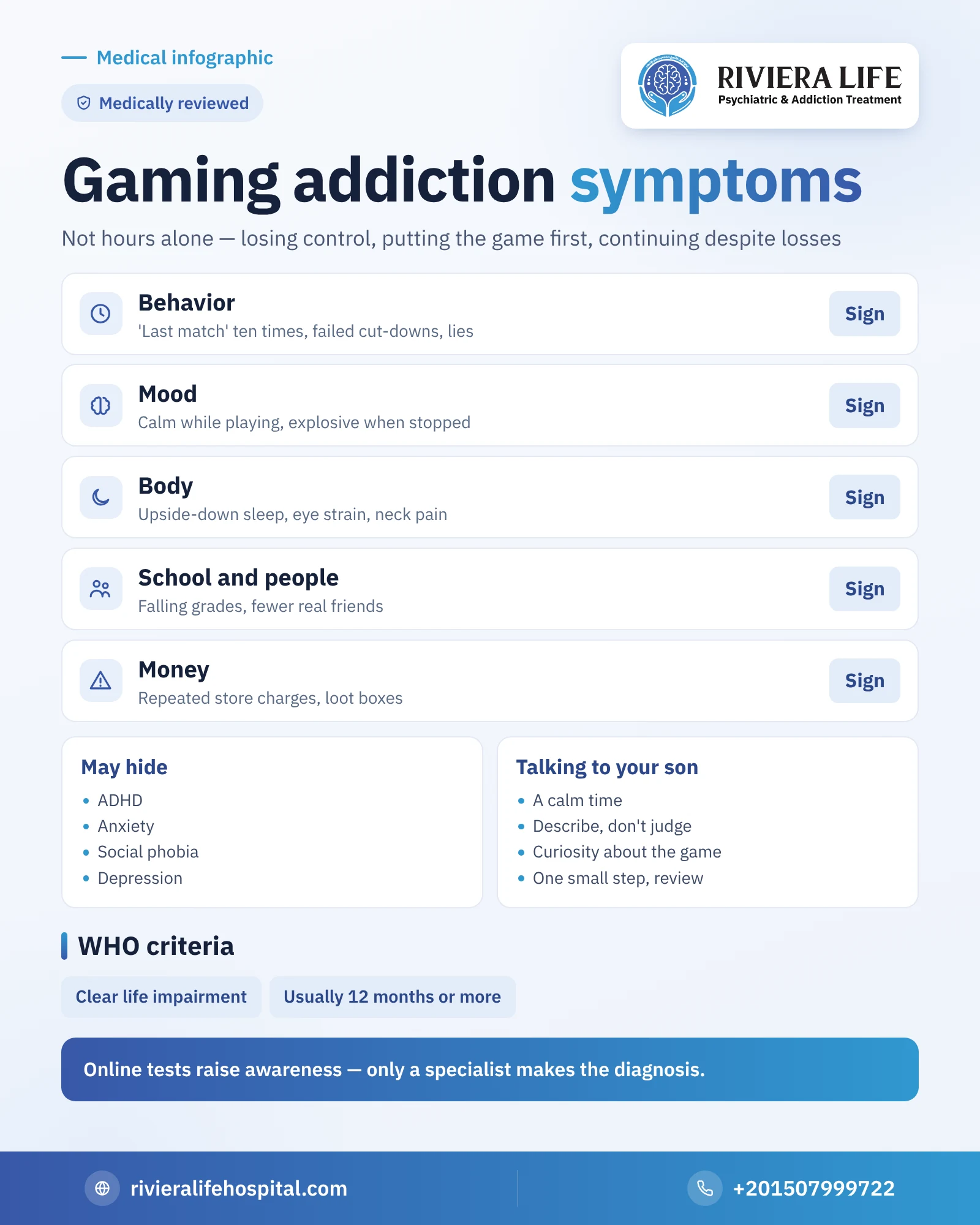
That is why the World Health Organization requires, to diagnose gaming disorder, that gaming causes noticeable impairment in life, and that it usually lasts at least a year. In other words, a holiday week full of gaming isn’t enough to judge, but it may be a warning bell if it continues after school returns.
Behavioral signs parents notice
Behavior is the first thing to change; among its clearest forms:
- Gaming sessions that always last longer than promised, with the phrase “last match” repeated ten times.
- Repeated attempts to cut down that collapse after days.
- Lying about or hiding gaming time, such as playing under the covers after lights out or using the phone in the bathroom.
- Putting off eating, bathing, prayer and homework until the match ends.
- Giving up hobbies he used to love, such as football, training or drawing.
- Absence from school or private lessons, sometimes to spend time in a PlayStation shop.
- Repeated requests for money or small sums disappearing to top up the game or buy its currency.
Psychological and mood signs
Mood changes around the game in a striking way. The young person seems calm or cheerful while playing, then becomes tense and quick to anger when away from it. Important signs include:
- Constant preoccupation with the game even in class or at the dinner table.
- Intense irritability, shouting or breaking things when the internet is cut off or the device is taken.
- Using gaming to escape sadness, anxiety or family problems.
- Clear boredom and loss of enjoyment in any other activity.
- Feeling guilty after long sessions without being able to change.
This distress when stopping isn’t physical “withdrawal symptoms” as with drugs, but it is a real emotional reaction that shows the game has become his main way of regulating his feelings.
Physical signs
The body records the long hours of sitting. You may notice dark circles and upside-down sleep, headaches and eye strain, pain in the neck, back and wrists, weight gain or loss of appetite from skipping meals, and neglect of personal hygiene. These signs alone don’t mean addiction, but they complete the picture when they come together with behavior. We explain what these hours do to the body in the long term in the article on the harms of video game addiction.
Signs in study and relationships
School is usually the first to pay the price. Grades decline gradually, then come complaints about sleeping in class and not handing in homework. At home, talk with the family shrinks to short sentences, and the young person avoids family visits and going out. He may have many “friends” inside the game, while losing his real friends one after another. In adults the same picture appears at work: lateness, mistakes, sick leave, and tension with the wife or husband.
Financial signs many don’t notice
Check your card or e-wallet statement if your son’s phone is linked to it. Small repeated transactions under app store names, successive requests to buy top-up cards, or selling his personal belongings to buy game currency, are all signs that gaming has gone beyond entertainment. Spending on loot boxes deserves special attention, because it is closer to gambling than to buying.
How do symptoms differ by age?
Younger children
It shows in fits of crying or intense anger when screen time ends, refusing to play with other children, difficulty sleeping, and sometimes delayed speech or concentration with very excessive use.
Teenagers
What most distinguishes them is staying up until dawn, secrecy, constant arguing about the rules, declining study, spending on in-game purchases, and strong belonging to a gaming team that pressures him to be present all the time.
Adults
An adult may hide their addiction better, but it shows in staying up before workdays, neglecting the family, spending amounts out of proportion to their income, and feeling that life outside the game is dull.
Self-assessment questions
These questions don’t diagnose anyone, but they help you or your son see the picture honestly. Think about the last twelve months:
- Do you think about the game most of the day even when you aren’t playing?
- Do you feel tense or distressed when you can’t play?
- Do you need longer gaming time to feel the same enjoyment?
- Have you tried to cut down and failed more than once?
- Have you given up hobbies or meetups you loved because of gaming?
- Do you continue despite knowing gaming harms your study, work or sleep?
- Have you lied to your family or partner about gaming time?
- Do you play to escape bad feelings?
- Have you lost or nearly lost a relationship, a study opportunity or a job because of gaming?
These items are close to the nine criteria proposed by the fifth American diagnostic manual, which considers that five or more of them in a year call for a specialist assessment. This doesn’t replace seeing a doctor or psychologist, who alone makes the diagnosis.
Symptoms that may hide another disorder
Sometimes excessive gaming is a symptom of a deeper problem. A child who can’t concentrate on studying but concentrates for hours on the game may have attention-deficit/hyperactivity disorder. An isolated teenager who avoids people may have anxiety or social phobia. And someone who has lost interest in everything and spends the night gaming may be living with symptoms of depression. That is why the doctor always looks for what lies behind the game, and you will find these factors detailed in the article on the causes of video game addiction.
How do you talk with your son about what you notice?
Choose a calm time away from a moment of argument, and describe what you see without judgment: “I’ve noticed you’ve been sleeping after dawn for two weeks, and your maths grades have dropped”. Ask him about the game itself with real curiosity, and listen before you suggest. Avoid mockery, threats and suddenly confiscating the device, as they usually push him towards secrecy, not change. And agree together on a small, achievable step that you review after a week.
When should you seek a psychological assessment?
Seek an assessment if the signs continue despite rules and dialogue, or if violent anger appears when stopping, or he drops out of study or work, or shows signs of deep sadness or talk that life is pointless. This last case in particular calls for acting immediately, not waiting. Anyone who needs the treatment steps will find them detailed in the article on video game addiction treatment.
At Riviera Life, the consultant psychiatrists carry out a confidential assessment for teenagers and adults, including looking for anxiety, depression and ADHD, and sit with the family to agree a realistic plan with them. The first consultation is free.
PUBG addiction: when does gaming become a problem?
PUBG is a “battle royale” game: dozens of players enter one confrontation, and only one team or player remains. This design creates a feeling of a “last round” that never ends; losing pushes to try again and winning pushes to repeat the high. Adding to this, team play puts the player under an obligation to their team, so it is hard to withdraw in the middle of a match.
The general symptoms of addiction apply here, with signs that recur especially in PUBG players:
- Staying up until dawn for team matches or season events.
- Intense anger or shouting after a loss or when the session is cut off.
- Repeated spending on in-game currency and skins without the family’s knowledge.
- Preoccupation with rank progress more than friends and study.
The judgment doesn’t rest on the game’s name but on loss of control and the harm done to life. If the signs come together, a psychological assessment is better than punishment alone; learn about the motives in the causes of video game addiction and the recovery steps in video game addiction treatment.
More from the video games guide
- Video games: the complete guide
- The causes of video game addiction
- The harms of video game addiction
- Video game addiction treatment
Questions many people ask
The number of hours alone doesn't determine addiction. What matters is whether he can stop, whether playing comes before sleep, study and relationships, and whether it continues despite harm for a long period.
Mild annoyance is normal, but repeated intense anger, breaking things or shouting when stopping, with other signs such as late nights and lying, points to an attachment that needs assessment.
Yes, it may hide attention-deficit/hyperactivity disorder, anxiety or depression. That is why the doctor looks for what lies behind the gaming and doesn't settle for reducing the hours.
Yes, and in them it shows in staying up before work, declining performance, neglecting the family and overspending, and it may be harder to discover because an adult hides it more skillfully.
A psychiatrist or psychologist diagnoses it after interviewing the patient and family and assessing the duration of symptoms and the extent of harm. Tests published online only help raise awareness and don't make a diagnosis.