Bofa addiction symptoms usually appear as sharp swings: hours or a whole night of excessive energy, staying up and eating little, then a collapse with long sleep and irritability. Alongside that come signs of smoking such as coughing and small burns on the lips or fingertips, and behavioral changes, the most important being sudden absences and money disappearing. One sign isn’t enough to judge, but several signs together, repeating, deserve a medical assessment. In this article we set out what a family can actually notice, and how to tell a passing sign from a pattern that points to addiction.
Signs that appear while it is active
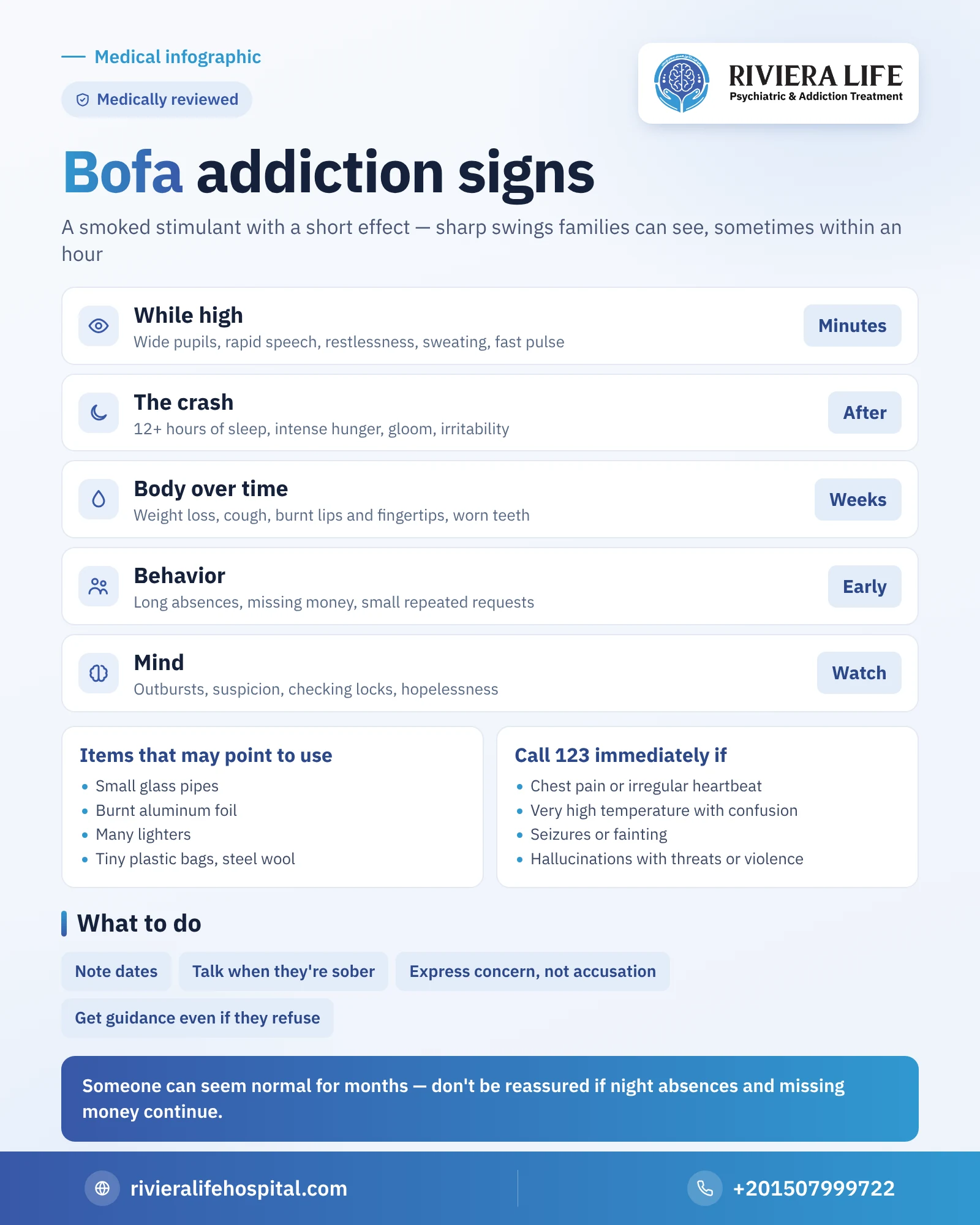
Because bofa’s effect is short, you may see the person in more than one state within a single hour. During the high you usually notice:
- Clearly dilated pupils, even in ordinary light.
- Fast, pressured speech and jumping between topics.
- Extra movement: fidgeting, rubbing the hands, moving the jaw or grinding the teeth.
- Sweating with a feeling of heat, and a fast pulse if you touch their wrist.
- Exaggerated confidence, or sudden big projects they talk about enthusiastically.
A few minutes later the scene may change completely: anxiety and tension, looking for somewhere to be alone, or repeatedly leaving the house for no clear reason. This rapid switch between the two states is one of the things that most catches families’ attention.
Signs of the crash after a session
Smoked stimulants leave a clear “bill” behind them. After a night of repeated use, the person may sleep for more than twelve hours, then wake intensely hungry, sullen and quick to anger, complaining of headache or tiredness. This scene repeats weekly or more often, and you may notice that the first days of the week, or the days after payday, are the worst. What happens on stopping completely is explained in our article on bofa withdrawal symptoms.
Physical signs as use continues
The longer the period of use, the more signs appear that remain even on days without using:
- Weight loss and a thin face, because of lost appetite and staying up.
- A repeated cough, and sometimes dark phlegm or a hoarse voice.
- Cracked lips or small burns on them, and burnt or yellow spots on the fingertips.
- Dry mouth and worn teeth, or jaw pain from constant grinding.
- Pallor, dark circles under the eyes and clear neglect of personal hygiene.
- Repeated complaints of palpitations or chest pain — a sign that should never be ignored.
Behavioral signs
Many families discover the problem from behavior before the body. Among the clearest signs:
- Being away for long hours, or staying out overnight without a convincing explanation.
- Money or valuables disappearing, or selling personal belongings such as their phone.
- Repeatedly asking for small sums with different excuses, because a dose is cheap but the repetition is frequent.
- New friends no one knows, and short calls after which they leave immediately.
- Slipping at school or missing work, especially in the days after sessions.
- Lying and intense defensiveness at any question about where they were or their money.
Items that may point to use
Finding some small objects can be important evidence, especially if it repeats: small glass pipes or parts of them, pieces of burnt aluminum foil, many lighters even though they don’t smoke cigarettes, very small plastic bags, or remnants of steel wool. These items don’t identify the substance precisely, as they may be used with other stimulants, but they raise the likelihood of use by smoking and call for conversation and assessment, not constant searching.
Psychological and mood signs
Mental state is deeply affected by bofa, and the signs that usually worry families include:
- Irritability and outbursts of anger over small things, especially during crashes.
- Unjustified suspicion of others, such as believing someone is watching or plotting against them.
- Repeatedly looking out of the window, checking the locks, or fearing the police for no reason.
- Sadness, flatness and loss of interest in anything they used to love.
- Talk of hopelessness or that life is pointless, which needs immediate intervention.
How do the signs develop from trying it to addiction?
At first there may be nothing more than unusual staying up and a slight change in mood after a night out with friends. After weeks the occasions come closer together, sessions lasting until morning appear, and money starts to disappear. Then comes the stage in which bofa becomes the center of the day: they plan for it, use it even during work hours, and use despite clear losses. The speed of this transition differs from person to person, and its causes are explained in our article on the causes of bofa addiction.
Can someone use bofa and seem normal?
Yes, for a while. Some users limit sessions to the weekend and make up for staying up by sleeping, so no one notices anything for weeks or months. But the substance’s short pattern makes this “balance” fragile, and signs often start to appear suddenly when the occasions increase. So don’t be reassured that the person “seems normal” if there are other indicators such as night-time absences or missing money.
How do you tell the signs of bofa from other substances?
| Substance | What usually distinguishes its signs |
|---|---|
| Bofa | Short, repeated bursts of energy, smoking marks on the lips and fingers, a crash and long sleep after the session |
| Shabu and ice | Staying up for a day or more without sleep, continuous energy for many hours, and hallucinations are more common |
| Heroin and opioids | Drowsiness and drifting between waking and dozing, very narrow pupils, slow speech |
| Strox and voodoo | Rigidity or spasms, loss of awareness, sudden strange behavior |
This table is for guidance only; many users mix more than one substance, and testing and medical assessment are what settle the matter. What a test can reveal, and its limits, is explained in our article on how long bofa stays in your system.
Signs of use in teenagers
Teenagers are among the groups most exposed to bofa because of its low price. Its signs may be mixed up with the normal ups and downs of adolescence, but the difference is in intensity and repetition: a sudden drop in grades, missing school, older friends, small repeated requests for money, a strange smell of smoke on clothes, and mood swings beyond the usual. A teenager slides into dependence faster than an adult, so they deserve early intervention.
When is use addiction?
Doctors rely on a set of criteria to diagnose stimulant use disorder, including: using larger amounts or for longer than intended, failing to stop despite trying, spending a lot of time getting the substance or recovering from it, a pressing craving, neglecting work, study or family, and continuing despite clear health or psychological problems. Two or more of these criteria within a year are enough for a diagnosis, and severity is set by how many there are. A specialist doctor makes the diagnosis after a full interview, not an online checklist.
What should you do if you notice these signs?
Gather your observations with their dates, and choose a calm time to talk when the person isn’t under the influence. Express your concern for their health, and avoid accusations and threats. And if they refuse to talk, don’t stop yourself: contact specialists to assess the situation and guide you. The treatment steps themselves are detailed in our article on bofa addiction treatment.
Danger signs that can’t wait
Call an ambulance immediately on 123 if you see
These aren't ordinary signs of addiction, but indicators of poisoning or an acute crisis.
- Chest pain or severe, irregular palpitations
- A very high temperature with confusion or agitation
- Seizures or loss of consciousness
- Hallucinations or pathological suspicion with threats or violence
- Explicit talk of suicide or self-harm
At Riviera Life, help starts with a free, confidential first consultation with an addiction consultant, which the family can attend alone if the patient hasn’t agreed yet.
More from our bofa guide
- Bofa: the complete guide
- The harmful effects of bofa
- Bofa addiction treatment
- Bofa withdrawal symptoms
Questions many people ask
There is no single decisive sign, but what families notice earliest is unusual staying up followed by long sleep and irritability, with repeated absences and small sums of money disappearing.
The pupils usually dilate while it is active, as with stimulants in general. But dilated pupils alone don't prove use, as they can have other causes.
Stimulants sharply raise dopamine and noradrenaline, and with repetition and lack of sleep, tension and suspicion appear and may reach psychosis. Irritability increases during the crashes between doses.
Small burns on the fingertips and lips can point to smoking a hot substance from a small pipe, a common sign with smoked stimulants, but it needs other signs alongside it.
With chest pain, severe palpitations, a high temperature, seizures, agitation with hallucinations, or any talk of suicide. Call an ambulance on 123 immediately.