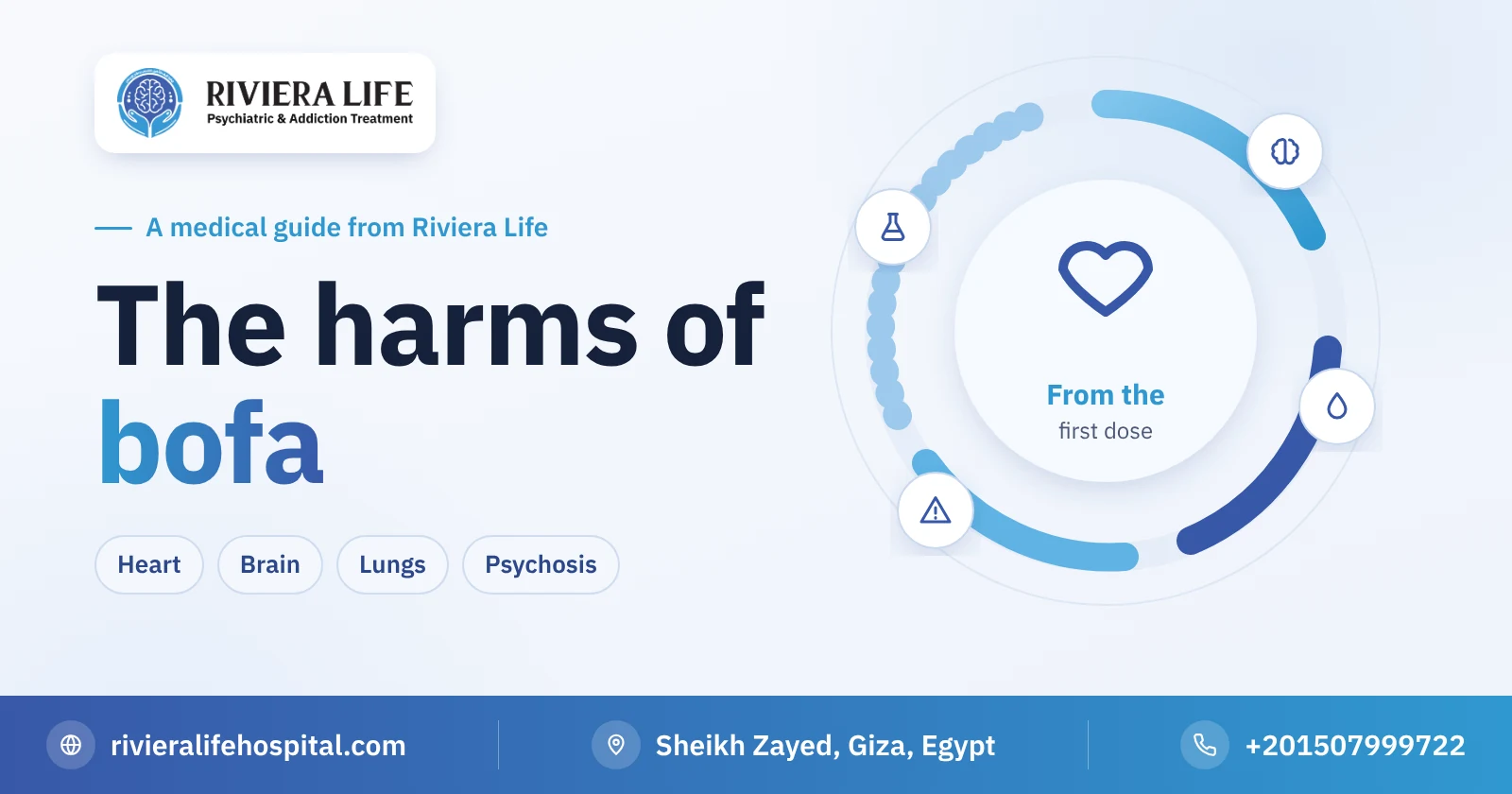
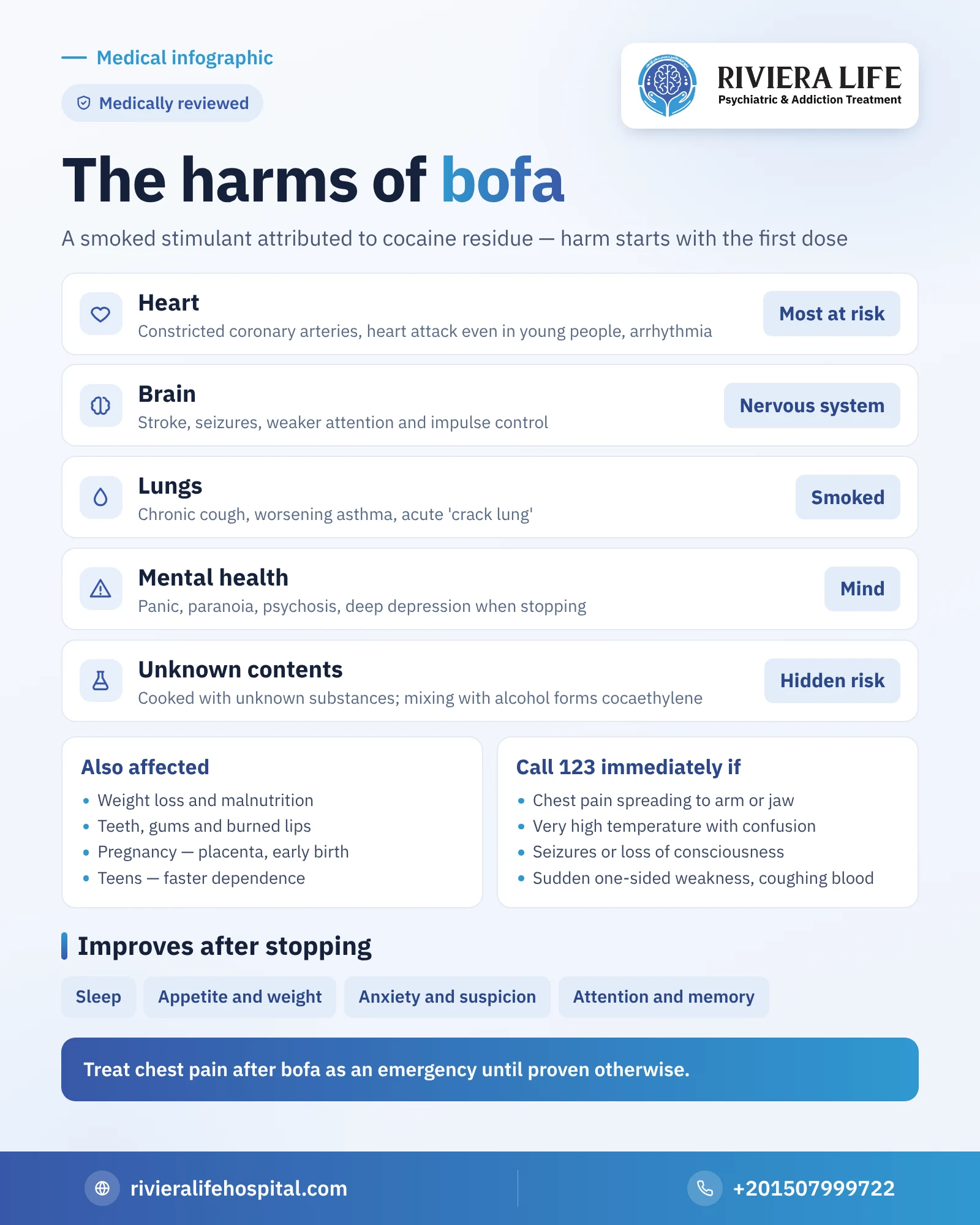
The harms of bofa begin with the first dose and don’t wait for years of addiction. The substance, a smoked stimulant attributed to cocaine residue, raises the pulse and blood pressure and constricts the arteries within seconds, and can cause a heart attack or stroke even in a healthy young man. With continued use, harm builds up in the lungs, brain, teeth and weight, and psychological disorders appear, the most dangerous being psychosis and acute depression. The unknown contents add another layer of risk that can’t be calculated. Here we set out these harms organ by organ, and explain what can improve after stopping.
Short-term harms of bofa
In the hours after use, especially in sessions where doses are repeated, the body comes under intense pressure:
- A severely racing heart and a sharp rise in blood pressure.
- A rise in body temperature, which can reach a dangerous level with heat or exertion.
- Tremor, muscle tension and teeth grinding.
- Acute anxiety or panic attacks, and sometimes temporary pathological suspicion.
- Cough, a burning throat and burns on the lips from the heat of the device.
- Complete sleeplessness that night, then collapse and exhaustion the next day.
The harms of bofa on the heart and blood vessels
The heart is the organ most at risk with stimulants of this type. Cocaine constricts the coronary arteries that supply the heart muscle, and at the same time makes the heart work faster and need more oxygen. This contradiction can end in a heart attack, even in someone in their twenties with no illness. Other known harms include:
- Serious heart rhythm disturbances that can cause sudden death.
- A tear in the wall of the aorta with a sharp rise in blood pressure, a rare but fatal condition.
- With continued use: enlargement and weakening of the heart muscle and accelerated hardening of the arteries.
That is why chest pain in anyone who has used bofa is treated as an emergency until proven otherwise. For anyone wanting to compare these harms with what known cocaine does, our article on the harms of cocaine sets them out in detail.
The harms of bofa on the brain and nervous system
A sudden rise in blood pressure and constriction of the vessels can cause a stroke, either by blocking an artery or by bleeding inside the brain. Stimulants also lower the seizure threshold, so an epileptic fit can happen in someone who has never had one. With continued use, research notes weaker attention, memory and decision-making, and difficulty controlling impulses — exactly the functions a person needs in order to stop. Some of these functions improve after a period of abstinence, but that takes months.
The harms of bofa on the lungs and respiratory system
Smoking puts the lungs in the front line. Known harms of smoking cocaine include a chronic cough, dark phlegm, worsening asthma and repeated infections. An acute condition known as crack-related lung injury can occur, showing as breathlessness, chest pain, fever and cough, sometimes with blood, hours after heavy smoking. Deep inhalation and holding the breath can also lead to air leaking around the lung. And because bofa is cooked with unknown substances, its smoke may carry additional irritants whose effect we don’t know precisely.
The harms of bofa on mental health
This is the side families complain about most. Smoked stimulants are linked to a long list of disorders:
- Panic and anxiety that stay with the person even on days without bofa.
- Pathological suspicion, which can develop into full psychosis with auditory hallucinations or a sensation of insects under the skin.
- Aggression and impulsivity, with a tendency to violence in moments of suspicion or comedown.
- Deep depression during periods off it, sometimes with suicidal thoughts.
- Worsening of previous mental disorders such as bipolar disorder.
Stimulant-induced psychosis clears in many people within days to weeks of stopping, but it can recur more quickly with each return to use.
The harms of bofa on the body in general
Beyond the heart and brain, continued use leaves its mark on the whole body: weight loss and malnutrition from lost appetite, tooth wear and gum inflammation from a dry mouth and grinding, skin problems from scratching and poor hygiene, and weakened immunity with lack of sleep. Some users may develop muscle breakdown with high temperature and exertion, a condition that threatens the kidneys.
The danger of unknown contents and mixing
This is what sets bofa apart from known cocaine. Reports speak of the residue being “cooked” with other substances without any control, which means the user knows neither the strength nor the ingredients. Harmful cutting agents have been detected in the cocaine market worldwide, including a veterinary medicine that causes a dangerous drop in white blood cells and skin damage. Deliberate mixing increases the danger further:
- With alcohol: the liver forms a compound called cocaethylene, more toxic to the heart than cocaine alone.
- With hashish, sedatives or tramadol: each masks part of the other’s effect, so the person uses larger amounts.
- With other stimulants such as shabu: the strain on the heart doubles and the risk of psychosis rises.
The harms of bofa on the nose, mouth and teeth
The mouth is the first thing to touch the hot device, so early marks appear on it: cracked and burned lips, small sores inside the mouth, and constant dryness that reduces the saliva that protects the teeth. With night-time teeth grinding, neglect of cleaning and eating sweets to make up energy, decay speeds up and the gums become inflamed. Anyone who also snorts the substance may suffer repeated nosebleeds and inflammation of the nasal lining. These harms seem minor next to the heart and brain, but they are painful and costly to treat, and are often what first brings a person to a doctor.
The harms of bofa on pregnancy and the baby
Cocaine crosses the placenta, and its use during pregnancy is linked to early separation of the placenta, premature birth and low birth weight, and some later difficulties with attention and behavior. A pregnant woman who uses needs immediate medical follow-up, not to hide it for fear of blame, because early intervention protects both mother and baby.
The harms of bofa on teenagers
The teenage brain is still building the circuits responsible for judgment and impulse control. Exposure to a strong stimulant at this stage makes dependence faster and raises the likelihood of academic, psychological and behavioral problems. Bofa’s low price makes teenagers the group most exposed to it.
Social and financial harms
The dose may be cheap, but the addiction isn’t. Constant repetition drains money quickly, leading to debt and selling possessions, and sometimes theft or trouble with the law. Work and study decline, and family relationships become strained under the pressure of lying, irritability and absence. To recognize the signs that come before these losses, see our article on bofa addiction symptoms.
Do the harms of bofa go away after stopping?
Many of them improve. Sleep, appetite and weight return within weeks, anxiety and suspicion recede gradually, and attention and memory regain much of their strength within months of abstinence. But harms that have actually happened, such as a heart attack or stroke, may leave a permanent mark that needs follow-up. That is why the earlier treatment begins, the fewer irreversible harms there are. You’ll find the treatment steps in our article on bofa addiction treatment.
When do the harms of bofa become an emergency?
Call an ambulance on 123 immediately if you see
These are signs of stimulant poisoning that can threaten life within minutes.
- Chest pain or pressure spreading to the arm or jaw
- A very high temperature with confusion or agitation
- Seizures or loss of consciousness
- Sudden weakness on one side of the body, a drooping face or slurred speech
- Severe breathlessness or coughing up blood
You can also refer to our page on bofa to understand the substance itself and what is known about its contents.
More from our bofa guide
- Bofa: the complete guide
- Bofa addiction symptoms
- How long bofa stays in your system
- Bofa addiction treatment
Questions many people ask
Smoking delivers the substance to the brain faster, raising the risk of dependence, and the unknown contents add substances with unknown effects. So bofa may be more dangerous than known cocaine, not milder.
Yes. Cocaine-type stimulants constrict the coronary arteries and raise the heart's need for oxygen, and can cause a heart attack even in healthy young people, sometimes in the first few uses.
It can cause psychosis with pathological suspicion and hallucinations, especially with repeated use and lack of sleep. Many improve within days to weeks of stopping and treatment, but it can return with renewed use.
The liver forms a compound called cocaethylene, which stays longer and is more toxic to the heart, raising the risk of rhythm disturbances and sudden death.
Cough and irritation usually improve after stopping, but repeated infections or acute injuries may leave a mark that needs follow-up with a chest doctor.