Bofa withdrawal symptoms usually start within hours of the last dose with a “crash” stage involving severe exhaustion, long sleep, hunger and sadness. Then comes the acute withdrawal stage, which lasts about one to two weeks, most notably depression, irritability and intense craving for the substance. After that, craving and mood swings may continue for weeks or months. Stimulant withdrawal doesn’t usually cause the violent physical symptoms caused by opioids or alcohol, but its real danger is psychological: depression that can reach suicidal thoughts, and rapid relapse. Here we explain the stages in order, and what is normal and what calls for emergency care.
Why do withdrawal symptoms appear after stopping?
Throughout the period of use, bofa artificially raised dopamine and noradrenaline, so the brain adapted by reducing its natural production of these substances and its sensitivity to them. When the substance suddenly stops, the brain finds itself in a state of deficit: no energy, no pleasure and no ability to concentrate. This chemical gap is what creates withdrawal symptoms, and it needs at least weeks for balance to return gradually.
When do bofa withdrawal symptoms start?
Because bofa’s effect is very short, the crash begins only a few hours after the last dose, and sometimes minutes after the session ends. The longer the session and the more doses, the deeper the crash. That is why many users describe the next morning as one of their worst times.
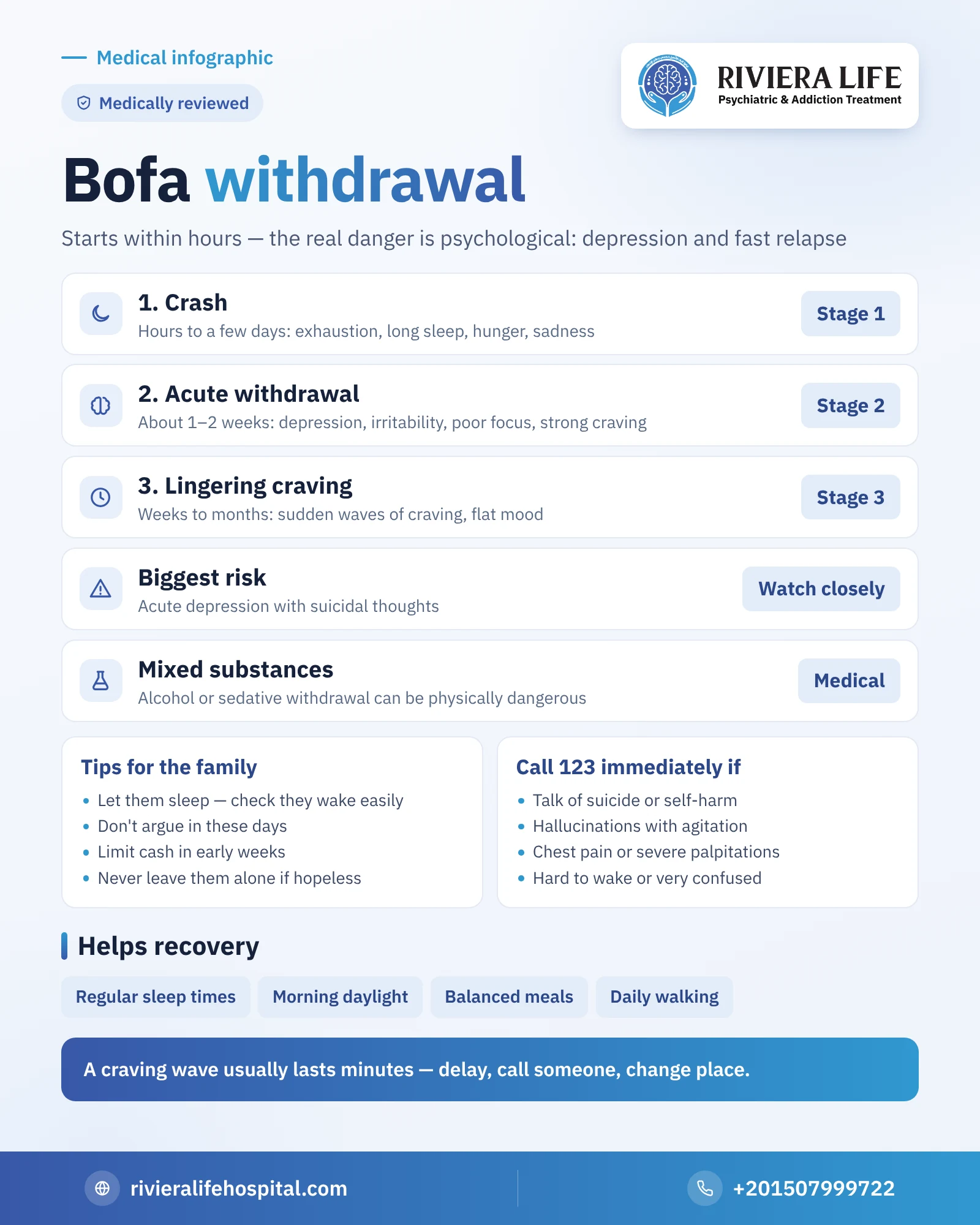
The stages of bofa withdrawal
Stage one: the crash (hours to a few days)
Exhaustion to the point of collapse, long sleep that may exceed half a day, intense hunger after days of eating little, and sadness, anxiety and irritability. In these days the person is slow and withdrawn, and may refuse to talk. It is important for the family to know that long sleep here is normal, as long as the person wakes easily when called.
Stage two: acute withdrawal (about one to two weeks)
After recovering some energy, psychological symptoms begin to appear clearly: depression and loss of pleasure, poor concentration, mood swings, irritability, disturbed sleep alternating between insomnia and oversleeping, and vivid, disturbing dreams. At this stage the craving for the substance is strong, especially on exposure to a familiar trigger.
Stage three: lingering craving (weeks to months)
Most symptoms ease, but waves of craving remain that come suddenly, sometimes with surprising strength weeks after stopping. Some people continue to have a flat mood and difficulty enjoying things for several months. This stage is the longest, and it is when many relapses happen.
Psychological symptoms of bofa withdrawal
- Depression, low mood and a feeling of emptiness.
- Losing the ability to enjoy anything.
- Irritability, quick anger and tension.
- Anxiety and restlessness.
- Poor concentration and memory.
- Intense craving for the substance, stronger with triggers.
- In some cases: pathological suspicion or hallucinations continuing for days after stopping.
Physical symptoms of withdrawal
Physical symptoms are usually milder than psychological ones; the most common are exhaustion and slowed movement, increased appetite, headache, general body aches, and disturbed sleep. Someone who uses bofa with hashish, alcohol, sedatives or tramadol may also show withdrawal symptoms from those substances, and some of them, such as alcohol and sedative withdrawal, can be physically dangerous and need direct medical supervision.
How long does bofa withdrawal last?
The whole acute stage lasts from one to two weeks in most cases, but craving and mood swings may continue for weeks to months. The duration is longer with longer, heavier use, previous depression and mixing other substances. No precise duration can be given for a particular person before assessing them.
Is bofa withdrawal dangerous?
Stimulant withdrawal rarely threatens life physically as alcohol or sedative withdrawal does. But that doesn’t mean it is safe. The biggest danger is acute depression, which may come with suicidal thoughts, especially in the first days. The second danger is relapse: some who return to using after a break use so heavily that they put the heart under severe strain. What these returns do to the heart and brain is explained in our article on the harms of bofa.
Call an ambulance on 123 immediately if you see
These signs go beyond normal withdrawal and need urgent intervention.
- Talk of suicide or an attempt at self-harm
- Hallucinations or pathological suspicion with agitation or threats to others
- Chest pain or severe palpitations
- Seizures or severe tremor, especially when stopping alcohol or sedatives at the same time
- Difficulty waking the person from sleep, or severe confusion
Why is it hard to stop alone at home?
Many start trying to stop at home with enthusiasm, then go back to the substance on the third or fourth day. The reason is that the home is full of triggers, the phone holds the numbers of those who sell the substance, and depression makes a dose seem like the only solution. The family may also not distinguish ordinary sadness from depression that needs intervention. Stopping under medical supervision provides a safe environment, treats the symptoms, and notices any danger early.
How is withdrawal managed medically?
There is no approved medicine that cancels stimulant withdrawal, but medical care makes a big difference. It usually includes: an assessment of the heart and accompanying substances, enough nutrition and fluids, regulating sleep with suitable medicines when needed, daily mood monitoring and assessment of suicide risk, and treating psychotic symptoms if they appear. Then behavioral therapy starts early, because craving needs psychological tools, not just medicines. The details of the full plan after withdrawal are in our article on bofa addiction treatment.
Tips for the family during withdrawal days
- Let them sleep during the crash days, just make sure they wake easily, eat and drink.
- Don’t take their irritability personally, and don’t get into arguments with them in these days.
- Keep cash away from them as much as possible in the first weeks.
- Take talk of hopelessness seriously, and don’t leave them alone if it appears.
- Encourage walking and regular meals; they help mood more than they seem to.
- Don’t give them any sedative or sleeping pill of your own.
Sleep and eating during the weeks of withdrawal
After weeks of sleeplessness and eating little, the body needs to recover its rhythm. At first the person may sleep a lot and eat with a big appetite, then go through a period of broken insomnia and disturbing dreams. Regular sleep and wake times, exposure to daylight in the morning, and avoiding stimulants in the evening are all simple steps that speed the return of balance. Regular balanced meals help mood and concentration, as the brain needs enough food to rebuild its store of neurotransmitters.
Intense craving after withdrawal ends
Craving for bofa can return weeks after stopping as a sudden wave, when passing a particular street, getting paid or meeting an old friend. These waves usually last minutes and then subside if the person doesn’t respond to them. Learning to deal with them, by delaying the decision, calling someone trusted and changing place, is one of the most important things the patient practices in treatment. To learn what makes some people more vulnerable to this craving, see our article on the causes of bofa addiction.
The difference between bofa withdrawal and cocaine withdrawal
If bofa’s main ingredient is cocaine, the withdrawal pattern is largely similar to what is explained in our article on cocaine withdrawal symptoms. The difference is that bofa may contain other substances, so unexpected symptoms sometimes appear that stimulants alone don’t explain, which is another reason for a medical assessment.
At Riviera Life, the patient goes through the days of withdrawal under round-the-clock medical supervision, with daily psychological follow-up, and the first consultation is free.
More from our bofa guide
- Bofa: the complete guide
- Bofa addiction treatment
- How long bofa stays in your system
- Bofa addiction symptoms
Questions many people ask
Within hours of the last dose, the crash begins with exhaustion, long sleep and sadness, because the substance's effect is very short. Psychological symptoms then appear clearly in the following days.
The acute stage usually lasts about one to two weeks, while craving and mood swings may continue for weeks or months depending on how heavy the use was and the person's mental state.
It is rarely physically dangerous on its own, but acute depression may come with suicidal thoughts, and withdrawal from substances mixed with it, such as alcohol or sedatives, can be dangerous.
No approved medicine cancels withdrawal, but the doctor treats insomnia, depression and psychotic symptoms and monitors the condition, which makes this stage safer and less painful.
Long sleep is part of the crash after days of sleeplessness and exhaustion. It is normal if the person wakes easily; difficulty waking them needs emergency care.