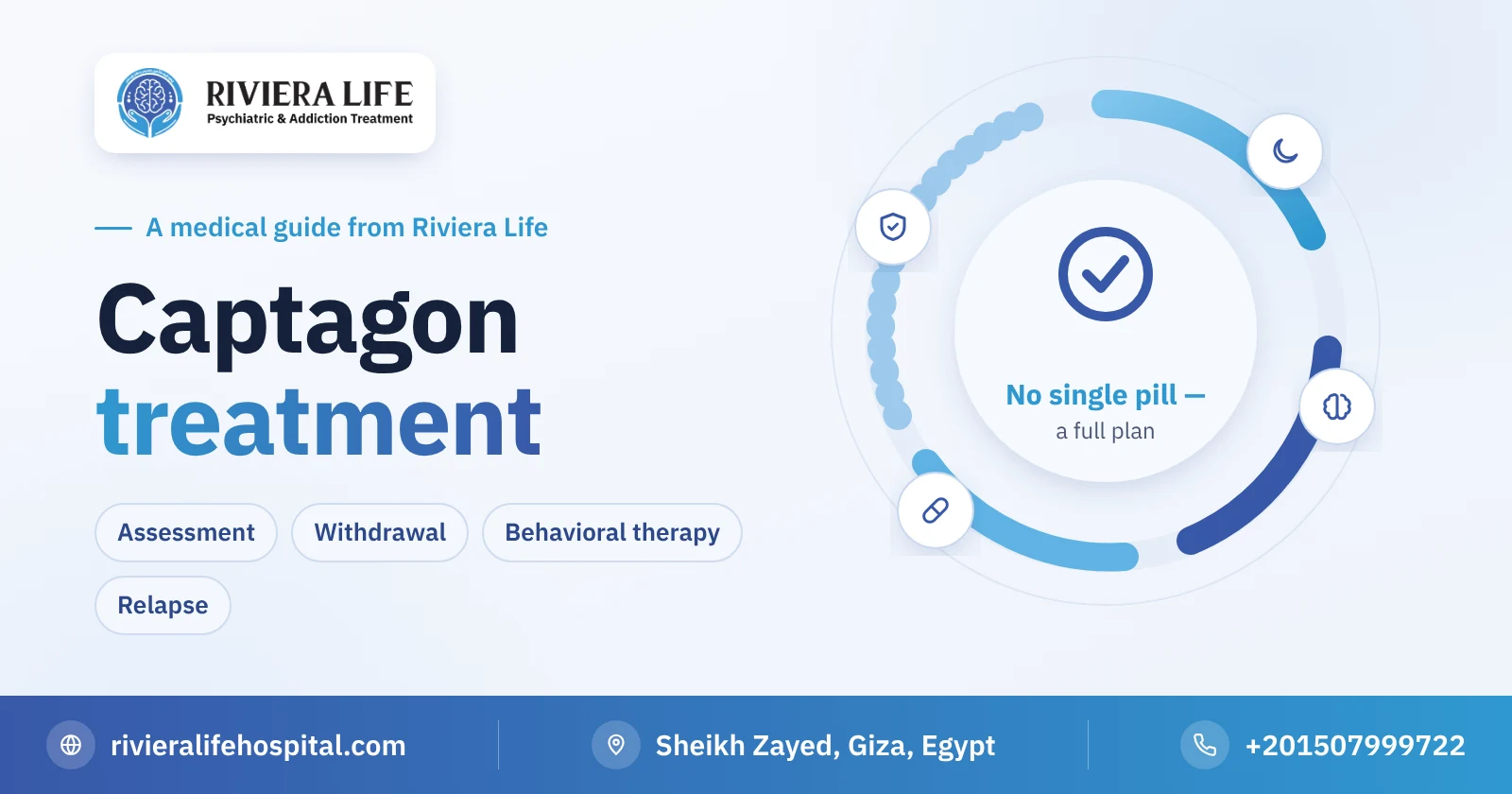
Captagon addiction treatment is possible, and its results are good when it follows a complete plan that doesn’t stop at the first days. Treatment starts with a medical and psychological assessment, then managing the withdrawal stage safely, then psychological and behavioral therapy, which is the cornerstone, because there is still no approved medicine that treats stimulant addiction alone. Accompanying disorders such as depression, ADHD and psychotic symptoms are treated with it, and it ends with long follow-up that prevents relapse. In this article we explain each stage, what medicines can actually offer, how long treatment takes, and how to choose the right hospital.
What distinguishes captagon addiction treatment?
Stimulant addiction differs from opioid or alcohol addiction in two points. The first is that physical withdrawal is lighter, so the patient and family think “the problem is over” after a week, while depression and urgent craving remain for weeks. The second is that captagon is often linked to a function in the patient’s life: studying, night work, long driving, or losing weight. That is why removing the pill isn’t enough; the patient must find another way to do what the pill used to do, otherwise they go back to it at the first pressure.
Stages of captagon addiction treatment
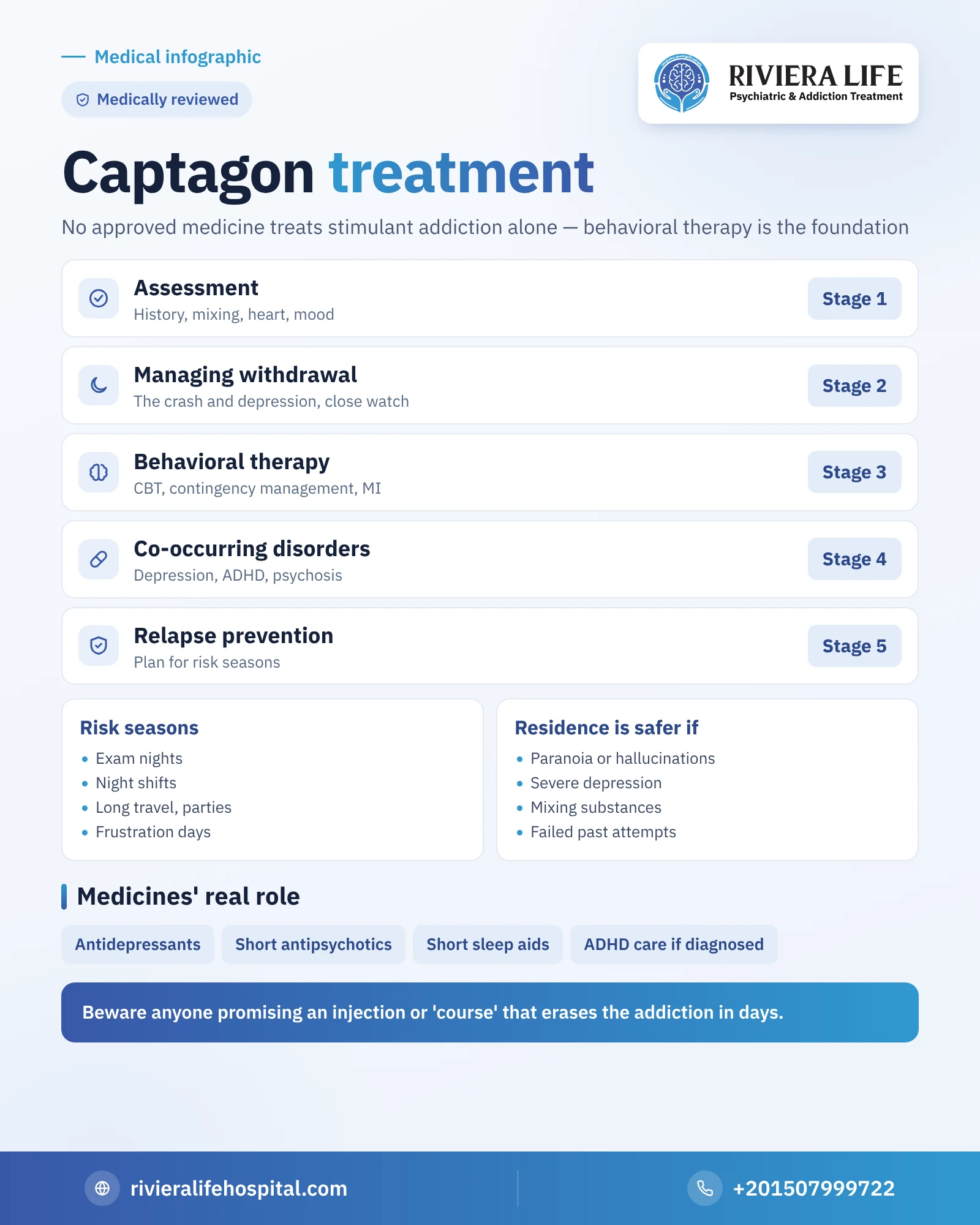
The plan is shaped according to each patient, but it usually passes through five stations:
- Comprehensive assessment: the history of use, accompanying substances, the psychological and physical state, blood and urine tests and an ECG when needed.
- Managing withdrawal: getting through the first crash and depression stage under supervision, with regulation of sleep and nutrition.
- Psychological and behavioral therapy: understanding the motives for use and building new skills.
- Treating accompanying disorders: depression, anxiety, ADHD and psychotic symptoms.
- Follow-up and relapse prevention: regular sessions and a written plan for dangerous situations.
The first assessment: what does the doctor need to know?
In the first session the doctor asks about things that may seem far from the pill itself: when use started and why, whether it is linked to seasons or a certain job, whether it is mixed with tramadol, pregabalin, hash or alcohol, whether the patient has gone through episodes of suspicion or hallucinations, and whether they suffered before that from attention deficit or depression. The heart, blood pressure and weight are checked, because captagon strains them all. These answers determine the place of treatment, its intensity and the order of its priorities.
Managing withdrawal: the first weeks
The goal of this stage is for the patient to get through the first crash and depression safely and without going back to the pill. The medical team follows sleep, appetite and mood daily, and uses medicines for a limited period if severe insomnia, anxiety or psychotic symptoms appear. And because the risk of depression and thoughts of self-harm is present in this period, close monitoring is more important than any medicine. The details of the symptoms and their timing are in the article on captagon withdrawal symptoms.
Is there a medicine that treats captagon addiction?
Frankly: there is still no approved medicine that treats amphetamine addiction in the way certain medicines treat opioid addiction. But this doesn’t mean medicines have no role. The doctor uses them to treat what accompanies the addiction or what pushes towards relapse:
- Antidepressants when depression continues after acute withdrawal ends.
- Antipsychotics for a limited period if hallucinations or severe suspicion appear.
- Sleep-regulating medicines for a short, calculated period, without falling into a substitute addiction.
- Suitable treatment for attention-deficit/hyperactivity disorder if its diagnosis is confirmed, with a choice that takes the history of addiction into account.
Research is being done on other medicines to reduce the craving for stimulants, some of which have shown partly encouraging results, but they haven’t yet become standard treatment, which is the same situation as in methamphetamine addiction treatment. Beware of anyone who promises you an injection or a “course” that erases the addiction.
Psychological and behavioral therapy: the real foundation
The strongest evidence in treating stimulant addiction comes from psychological therapies, including:
- Cognitive behavioral therapy: the patient learns to recognize the situations and thoughts that precede craving, and practices practical alternatives to them.
- Contingency management: tangible rewards linked to negative test results and commitment to sessions, which is among the most effective methods with stimulants.
- Motivational interviewing: strengthens the patient’s inner motive, especially in someone who sees the pill as a tool for success, not a problem.
- Structured intensive programs: combine individual and group sessions, education and the family over weeks.
- Support groups: give the patient people who have been through the same experience.
Treating what stands behind use
Many captagon users started for a reason: a student with undiagnosed attention deficit, a depressed young man looking for energy, or a worker facing exhausting shifts. If the addiction is treated and the reason left, the patient goes back to the pill after weeks. That is why the psychiatrist assesses these reasons and treats them in parallel. You will find a detailed presentation of these motives in the article on the causes of captagon addiction.
Residential treatment or outpatient follow-up?
Residence in the hospital is usually better when there are psychotic symptoms or severe depression, mixing captagon with other substances, previous failed attempts, or an environment that keeps the pill within reach. Outpatient follow-up suits milder cases and those who have finished the residential stage. In many cases the ideal path is a short start in residence then a gradual move to an outpatient program.
How long does captagon addiction treatment take?
There is no fixed duration. The acute withdrawal stage takes a few weeks, the intensive program may extend from one to three months, and outpatient follow-up usually continues for several months after that. Research indicates that continuing treatment for a sufficient period, estimated at three months at least, is linked to better results. What matters is that there is no break between one stage and another.
Relapse prevention: the risk seasons
Relapse in captagon addiction has predictable times: exam nights, night shifts, long travel, parties, and days of frustration after a disagreement or failure. The relapse prevention plan includes identifying these seasons in advance, organizing study or work in a way that doesn’t depend on staying up late, deleting the numbers of using friends, agreeing on what the patient does when craving comes, and periodic tests presented as support, not punishment.
The family’s role in the treatment journey
The family is a partner in treatment, not just an observer. It needs to understand that depression after stopping is part of the illness, to set clear limits around money and late nights without hostility, and to ease the pressure of grades and achievement that pushed some patients to the pill in the first place. That is why good programs dedicate sessions to the family itself.
Can captagon addiction be treated at home?
Captagon withdrawal isn’t like alcohol or sedative withdrawal, as it usually doesn’t cause dangerous seizures. That is why many ask about treatment at home. The answer is that it may suit some cases, provided it is within a medical plan, not an individual attempt. The real danger in the first weeks is psychological: a severe drop in mood, sometimes suicidal thoughts, long sleep followed by insomnia, and a strong craving pushing to go back. Residence in the hospital is more suitable in these cases:
- Suspicion, hallucinations or aggression appearing during or after use.
- Severe depression or any talk of self-harm.
- Mixing captagon with hash, tramadol or alcohol.
- Use in large amounts or late-night sessions lasting days.
- Previous attempts to stop that ended in going back within days.
You will find the full comparison between levels of treatment in addiction treatment without admission or with residence?
Does captagon treat depression?
Some users turn to captagon because at first it gives them a boost of activity and confidence, so they think it treats depression or laziness. But this boost is borrowed from the brain’s own reserve. After the effect wears off comes a worse crash, and with continuation depression and anxiety increase instead of decreasing. And if depression is what stands behind use, its real treatment is an essential part of the captagon addiction treatment plan, with psychotherapy and suitable antidepressants when the doctor decides on them. Any medicine given here is by the doctor’s decision, not personal experimentation.
The right hospital for captagon addiction treatment: how to choose
The right hospital for captagon addiction treatment is the one that provides what a stimulant patient specifically needs: careful psychological follow-up of depression and psychosis, organized behavioral therapy, and a realistic plan for the risk seasons. Ask before you choose:
- Is the provider licensed, and is captagon treatment there led by consultants in psychiatry and addiction?
- Does it assess depression, thoughts of self-harm and psychotic symptoms and follow them daily in the first weeks?
- Does it offer organized cognitive behavioral therapy, or settle for residence and detox?
- Does it diagnose and treat what may stand behind use, such as attention deficit or depression?
- Does it deal safely with mixing captagon with tramadol, pregabalin or sedatives?
- Is there follow-up after discharge and a program for the family?
And don’t trust anyone who guarantees you a cure or promises to get rid of captagon for good in a few days.
How Riviera Life meets these standards in captagon addiction treatment
Here is how these criteria are met at Riviera Life for captagon addiction treatment in Egypt:
- Official license: a hospital licensed by the Egyptian Ministry of Health.
- Accumulated experience: over fourteen years, thousands of patients have recovered from addiction at the hospital.
- Careful psychological assessment: the consultants in psychiatry and addiction examine what accompanies captagon of depression, psychosis or other disorders.
- Uninterrupted follow-up: medical care night and day every day of the week, whose importance increases in the crash period during the first weeks.
- An individual plan: takes into account the reason for use, whether study, night work or a previous psychological problem.
- Support for families: meetings that guide the family to support their son and set clear limits without confrontations.
- Aftercare: follow-up after discharge and a plan for the risk seasons.
- Complete confidentiality: the data of the patient and their family are fully protected.
Get your first consultation free by calling us at any time on +201507999722, or visit us in Sheikh Zayed, Giza. To learn more about the substance itself, see the captagon drug page.
More from the captagon guide
- Captagon: the complete guide
- Captagon withdrawal symptoms
- Captagon addiction symptoms
- Captagon and sex
Questions many people ask
Many do recover and return to their lives, especially with organized cognitive behavioral therapy and long follow-up. Addiction is a condition that needs ongoing management, and relapse, if it happens, means adjusting the plan, not its failure.
There is no approved medicine that treats amphetamine addiction alone. Medicines are used to treat the accompanying depression, insomnia and psychotic symptoms, while the main treatment rests on psychological and behavioral sessions.
Acute withdrawal takes a few weeks, the intensive program roughly one to three months, then follow-up for several months. Continuing for at least three months is linked to better results.
Yes in milder cases, through a regular outpatient program. But with severe depression, psychosis, mixing substances or previous failed attempts, residence is safer.
Look for a license, consultant psychiatrists leading treatment, daily monitoring of depression and psychosis, structured behavioral therapy, a family program and aftercare. Riviera Life in Sheikh Zayed meets these criteria.
'Lexus' is a popular name among users for a type of pill sold as captagon, whose content is usually unknown. That is why it is treated as an amphetamine stimulant addiction: medical assessment, then managing withdrawal, then psychological and behavioral therapy, and the plan is set by the substances the person actually took, not the pill's name.