Captagon withdrawal symptoms usually start within hours to a day after the last pill, and the first of them are heavy exhaustion, long sleep, hunger and low mood. The psychological symptoms, such as depression, loss of pleasure and urgent craving, intensify during the first week, and most of them calm down gradually within roughly two to three weeks, while craving and disturbed sleep and mood may remain for weeks or months. Stimulant withdrawal rarely threatens life physically, but its real danger is psychological: depression that may reach thoughts of self-harm, and a quick relapse to escape the exhaustion. Below are the stages in detail, what makes withdrawal longer, and when immediate medical intervention is needed.
Why do symptoms appear after stopping?
During the period of use, the brain gets used to strong, repeated bursts of dopamine and noradrenaline forced by the amphetamine. To keep its balance, it reduces its sensitivity to these substances and drains its stores of them. When the pill suddenly disappears, the brain remains for a while in a state of deficit: little energy, dull pleasure and disturbed sleep. This is withdrawal. It isn’t weak will, but a period in which the brain resets its chemistry, and it needs time and support.
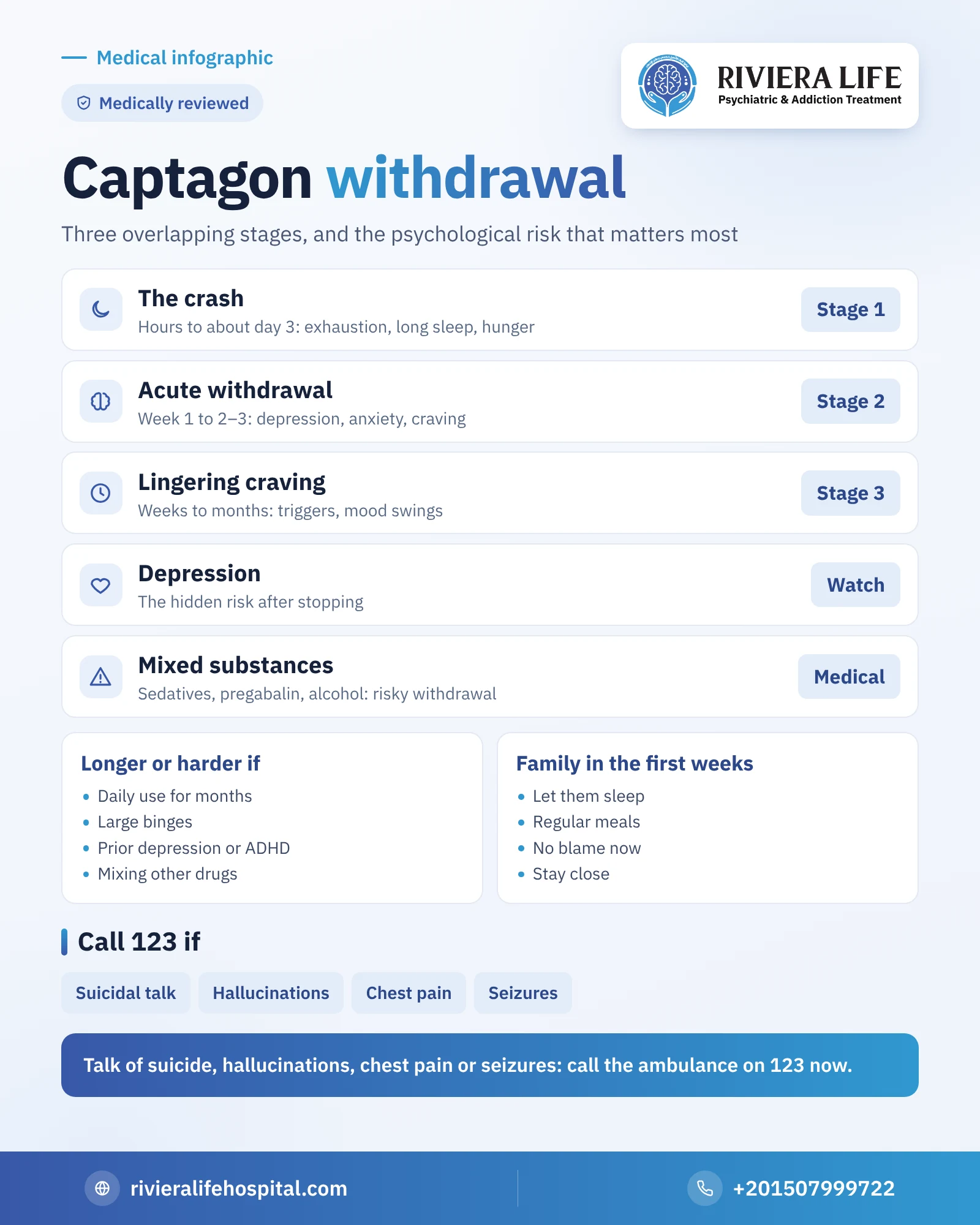
How long does recovery from Captagon take? The stages of withdrawal at a glance
Timings differ from one person to another, but the general picture goes through three overlapping stages:
| The stage | Approximate timing | What mainly happens |
|---|---|---|
| The crash | From hours to about the third day | Severe exhaustion, long sleep, hunger, distress and irritability |
| Acute withdrawal | The first week up to the second or third | Depression, loss of pleasure, anxiety, disturbing dreams, urgent craving |
| Lingering craving | Weeks to months | Bouts of craving with triggers, mood swings, poor concentration |
Stage one: the crash
After nights of staying up and continuous use, the body collapses. The person sleeps very long hours, and may wake up to eat greedily and then go back to sleep. In waking periods they are exhausted, sad and quick-tempered, and may feel anxious and restless despite the tiredness. Many interpret this crash as a “passing illness”, and they know that one pill makes it go away, and this is exactly where the cycle forms: they use to escape the crash, so the use is extended, and the next crash comes harder.
Stage two: acute withdrawal
After the body has regained some of its sleep, the psychological symptoms stand out clearly, and they usually last roughly one to three weeks:
- A depressed mood, a feeling of emptiness and not enjoying anything, even the things they used to love.
- Low energy and slowness in movement and thinking.
- Anxiety and tension, and sometimes unjustified bouts of anger.
- Fluctuating sleep: insomnia on some nights and excessive sleep on others, with vivid and disturbing dreams.
- Increased appetite and regaining some of the lost weight.
- An urgent craving for the pill, which intensifies in situations linked to it, such as study nights or meeting using friends.
Those who used large amounts for a long time, or showed psychotic symptoms during use, may go through this stage in a harsher and longer form.
Stage three: lingering craving
After the acute symptoms calm down, the patient may feel that they have recovered, and then a strong wave of craving surprises them weeks later, when they see a place or a person or even as exam season approaches. This is sometimes accompanied by poor concentration, mood swings and difficulty enjoying things. This stage is the longest and least obvious, and most relapses happen in it, which is why treatment focuses on it more than on the first days.
What makes withdrawal longer or harder?
- The duration and pattern of use: daily use for months differs from use in seasons.
- Large amounts and bouts of continuous use for days.
- The unknown content of the pills, as some batches are stronger than others.
- Having depression, anxiety or attention deficit hyperactivity disorder before use.
- Mixing Captagon with tramadol, pregabalin or sedatives.
- Long sleep deprivation and poor nutrition during the period of use.
Depression after stopping: the risk that isn’t seen
What worries doctors most in stimulant withdrawal isn’t the body, but the mood. Depression in the first weeks may be deep, and is sometimes accompanied by a feeling of despair and thoughts of self-harm, especially in those who had previous depression or went through a long bout of use. That is why the family shouldn’t treat the patient’s sadness in this period as “spoiling” or acting. Talking with them calmly, not leaving them alone for long periods on difficult days, and contacting the doctor if any talk of death appears are all steps that save lives.
Is Captagon withdrawal physically dangerous?
Unlike withdrawal from alcohol or sedatives, amphetamine withdrawal doesn’t usually cause seizures or physical complications that threaten life. But there are important exceptions. Whoever was mixing Captagon with sedatives from the benzodiazepine family, with pregabalin or with alcohol in large amounts may face withdrawal from these substances, a withdrawal that may be dangerous and needs medical supervision. Severe weakness and dehydration after a long bout of use may also need an assessment, especially in someone with a heart condition.
Can Captagon be stopped at home?
Some mild cases, of a person who used for a short period, doesn’t mix other substances and has a supportive family, may go through withdrawal under outpatient follow-up. But stopping at home without any plan often ends in going back in the first days, when exhaustion and depression are at their peak. Withdrawal inside a hospital is preferable for those who mix several substances, have shown psychotic symptoms, have severe depression or thoughts of self-harm, or have failed in previous attempts.
How is withdrawal managed medically?
There is no single approved medicine that cancels Captagon withdrawal, but medical supervision eases its severity and makes it safer. This includes organizing sleep, nutrition and fluids, treating anxiety, insomnia or psychotic symptoms if present with medicines chosen by the doctor for a limited period, following the mood daily, and starting psychotherapy early. The plan after withdrawal, from cognitive behavioral therapy to relapse prevention, you will find in the article Captagon addiction treatment.
Advice for the family in the first weeks
Let the patient sleep in the first days and don’t consider it laziness. Provide them with regular meals and water, and reduce pressures and demands as much as possible. Don’t open files of the past and blame in this period, as they are too weak to bear them. Watch their mood and stay close. Help them cut contact with the numbers of using friends. Most importantly, don’t ask them to go back to studying or working at full capacity immediately, because this is exactly what may push them to the pill again. And if you want to understand how these symptoms overlap with the signs of use itself, see Captagon addiction symptoms.
When do you need urgent intervention?
Call the ambulance on 123 immediately if there appears
Withdrawal itself is rarely fatal, but these signs mean a direct danger.
- Talk of suicide or an attempt at self-harm
- Hallucinations, severe suspicion or violent behavior
- Chest pain, severe palpitations or fainting
- Seizures, especially in someone who was mixing sedatives, pregabalin or alcohol
And remember that the substance leaves the body within days, while the brain’s recovery needs much longer, as the page How long Captagon stays in the body explains in detail. At Riviera Life, the patient goes through this stage under round-the-clock medical supervision, with daily follow-up of mood and sleep, and an early start to psychotherapy.
Captagon and sleep: why is it disturbed after stopping?
During use, sleep disappears because of the stimulant itself, and then comes a long collapse in which the body makes up for what it missed. After stopping, the brain needs time to regain its natural rhythm, so many go through excessive sleep in the first days, then broken insomnia and vivid, disturbing dreams that may last weeks. This is a normal part of recovery and not a sign that stopping has failed, even if it seems exhausting.
What usually helps is regularity, not tricks:
- A fixed time for sleeping and waking, even if sleep is broken.
- Morning light and light movement during the day.
- Avoiding coffee and energy drinks in the second half of the day.
- A quiet, dark room with no screens before sleep.
The common mistake is for the person to treat their insomnia with alcohol, tramadol, pregabalin or sleeping pills from the street. This swaps one problem for another, and adds the risk of dependence on a second substance. If insomnia lasts more than two or three weeks, or is accompanied by severe depression, ask for a medical assessment.
For more on the types of sleep problems and their signs see Sleep disorders, and on supplements and which of them are suitable during recovery read Melatonin and sleep.
More from the Captagon guide
- Captagon: the comprehensive guide
- Captagon addiction treatment
- The harms of Captagon
- How long Captagon stays in the body
Questions many people ask
Most acute symptoms calm down within roughly two to three weeks, but craving, mood swings and sleep problems may continue for weeks or months to a milder degree.
It doesn't usually cause severe physical pain as opioid withdrawal does; its main symptoms are exhaustion, long sleep, hunger, depression and urgent craving.
Yes, depression and loss of pleasure are among the most important withdrawal symptoms, and they may be severe in some people. Any talk of self-harm calls for immediate medical contact.
After days of staying up, the body needs to catch up on sleep, and brain activity also drops temporarily once the stimulant wears off. This long sleep is a normal part of the crash stage.
Not always, but residency is better for those who mix other substances, have severe depression or psychotic symptoms, or have failed in previous attempts. A medical assessment determines what suits best.