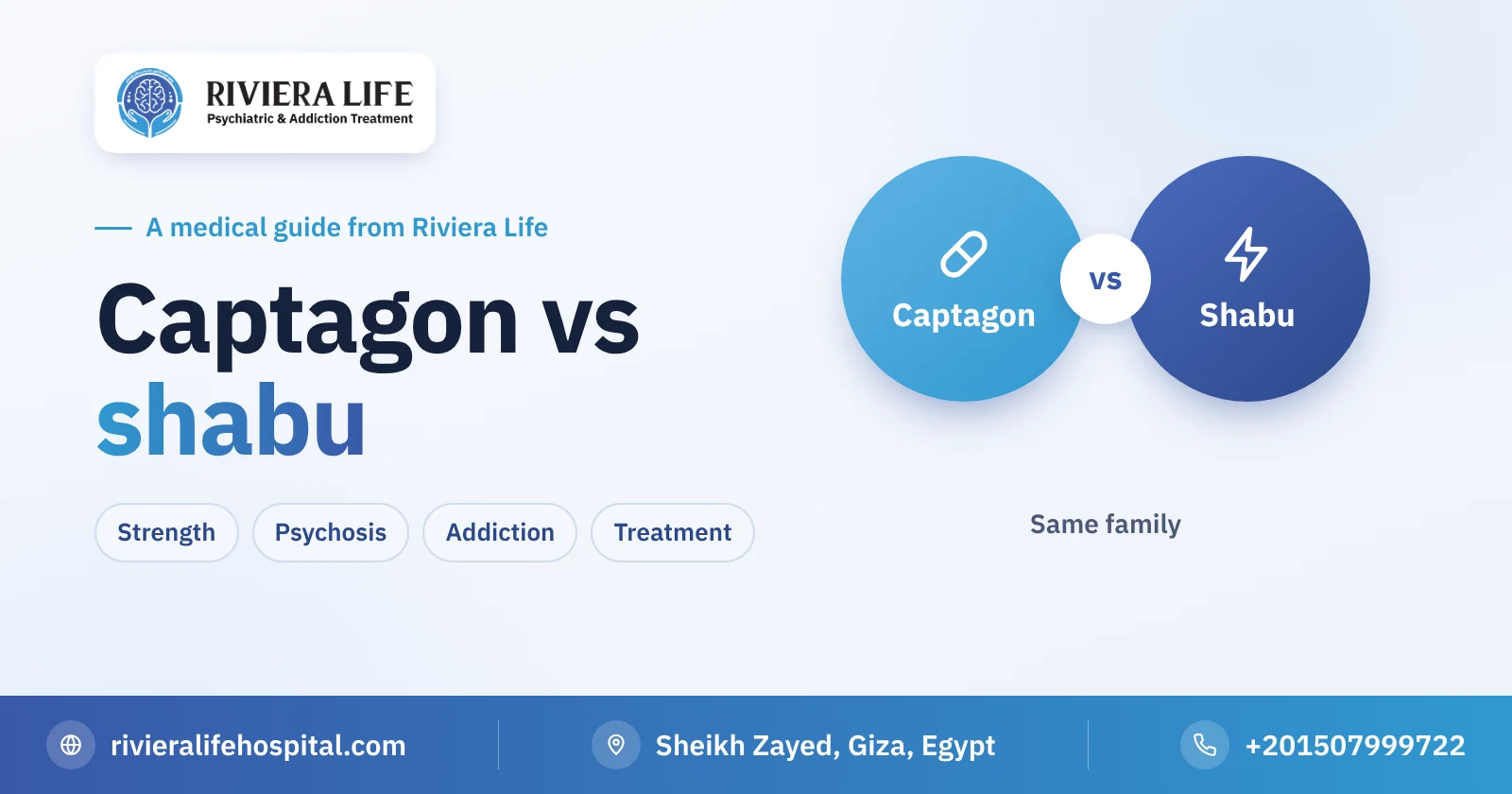
The difference between Captagon and shabu is big even though both are stimulants from the amphetamine family, sharing sleeplessness, loss of appetite and impulsivity followed by a crash. The difference shows in strength, the speed at which the substance reaches the brain, and the duration of effect. Street Captagon is tablets, most of which contain amphetamine and caffeine, while shabu (ice or crystal) is methamphetamine in crystal form, usually smoked. The result is that shabu causes addiction faster, and is linked to psychosis and nerve damage to a greater degree. In this article we compare them point by point, with a table summarizing the differences, and explain why “milder” doesn’t mean safe.
What do Captagon and shabu have in common?
Both substances raise levels of dopamine and noradrenaline in the brain, giving a feeling of energy and confidence and reducing the need for sleep and food. Both speed up the heart and raise blood pressure and body temperature. With repetition the picture becomes similar: tolerance that pushes to increase the amount, continuous sleeplessness followed by collapse, and mood swings that may reach suspicion and aggression. That is why many confuse them, or think moving from one to the other is a small step.
A quick definition of each
Captagon
The brand name of an old medicine whose substance is fenethylline, whose medical use stopped decades ago. What is sold today under its name is counterfeit tablets usually containing amphetamine with caffeine and fillers, at a concentration that varies from batch to batch. This is explained in detail in the article on types of Captagon pills.
Shabu
A popular name for crystal methamphetamine, also known as ice and crystal. It looks like pieces of glass or ice, and is stronger than amphetamine because its chemical structure allows it to cross the brain barrier faster. You will find its full picture in the complete guide to ice and shabu.
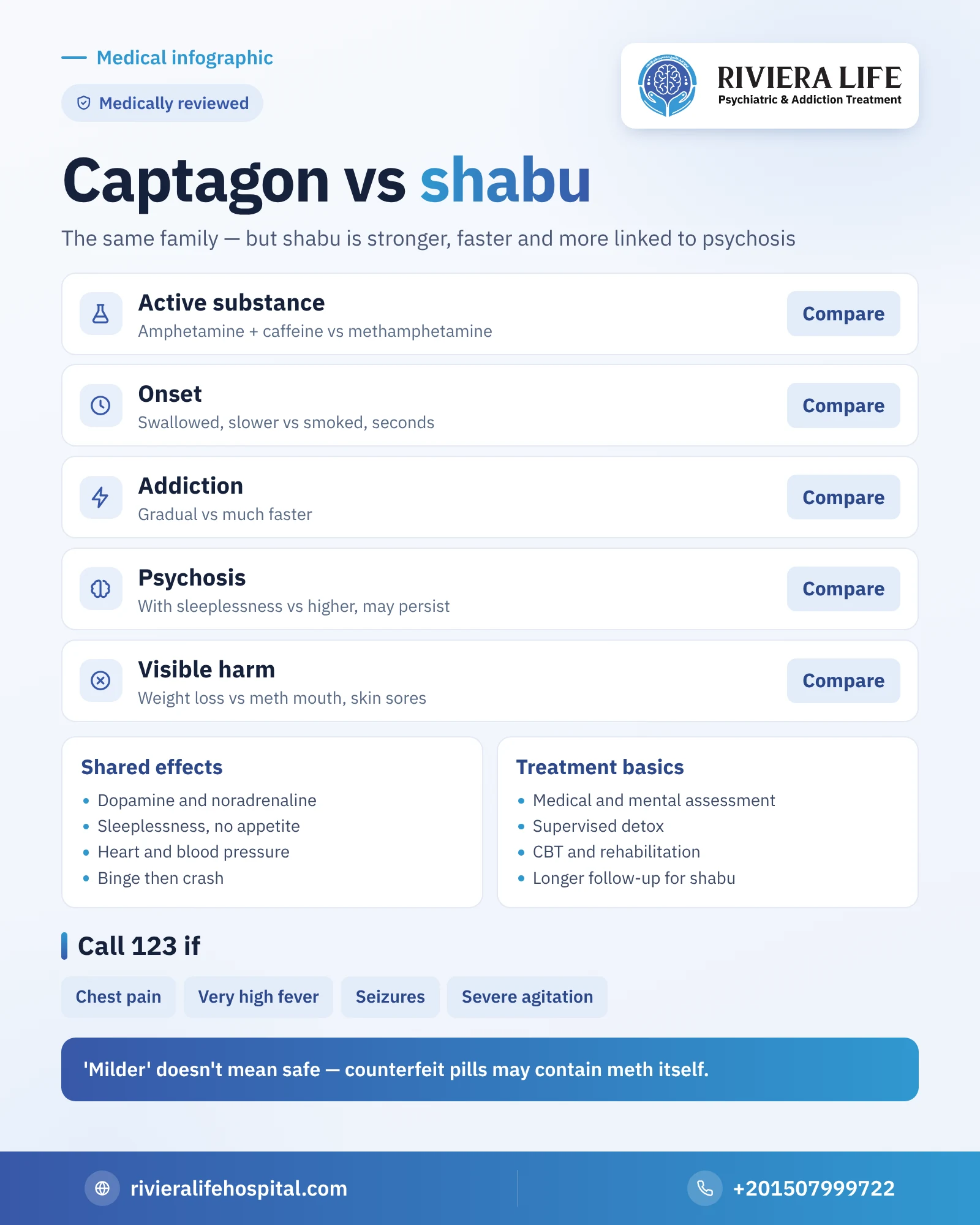
Comparison table of Captagon and shabu
| Point of comparison | Captagon | Shabu (ice) |
|---|---|---|
| Usual active substance | Amphetamine with caffeine and fillers | Methamphetamine |
| Common form | Small stamped tablets | Clear crystals or powder |
| Common method of use | Swallowing | Usually smoking, sometimes injecting or snorting |
| Speed of onset | Relatively slower | Very fast when smoked |
| Intensity and duration of the high | Moderate | Usually stronger and longer |
| Speed of reaching addiction | Mostly gradual | Much faster |
| Risk of psychosis | Possible with sleeplessness and high doses | Higher and more frequent |
| Long-term nerve damage | Less clear | Documented to a greater degree |
| Most visible harms | Weight loss, insomnia and palpitations | Tooth damage, skin sores and severe wasting |
This is a general comparison; counterfeit pills may sometimes contain methamphetamine itself, and the severity of harm varies with the amount, repetition and each person’s health.
Form and method of use: why do they make a difference?
Swallowing a tablet means the substance passes through the stomach and liver before reaching the brain, so the effect comes gradually. Smoking shabu, on the other hand, brings the substance to the brain within seconds, and this sudden rush is what carves the addictive memory deeply. The faster the arrival and the sharper the crash, the stronger the urge to repeat. That is why someone may use Captagon for months in particular seasons, while another loses control of shabu within weeks.
Strength and duration of effect
Methamphetamine stays active in the body for many hours, and users describe bouts of sleeplessness that may last days. Captagon also causes sleeplessness, but its bouts are usually shorter, and many return to sleep after a night or two. This difference in duration means shabu deprives the brain of sleep for longer periods, and sleep deprivation in itself is fuel for hallucinations and suspicion.
Speed of addiction
Both substances cause addiction, so neither is a “safe” substance. But shabu is known for its ability to turn experimentation into dependence within a short period, especially with smoking or injecting. Captagon, on the other hand, often starts as a “tool” for studying or night work, and dependence creeps in slowly until the person discovers they can no longer manage an ordinary day without it. Slowness here isn’t an advantage, because it gives longer time for denial.
Price and availability also play a role. When a substance becomes easier to get within a circle of friends, repetition increases, and repetition is the real fuel of addiction in both cases. And there is no “safe” amount at which one can stop, because tolerance always pushes the person beyond it.
The risk of psychosis and suspicion
Stimulant-related psychosis can appear with both substances: a feeling of being watched, hearing voices, and persecutory thoughts. But with shabu it is more common and more severe, and in some users may continue for days or weeks after stopping, returning easily with any new use. With Captagon it usually appears after continuous sleeplessness or large amounts. In both cases psychosis isn’t treated at home, but needs an urgent psychological assessment.
Physical harms: where are they similar and where do they differ?
They are similar in the strain on the heart and blood vessels: palpitations, high blood pressure, and a risk of rhythm disturbance or clots in some, as well as high temperature and dehydration. Shabu differs with more severe visible effects, such as the severe tooth erosion known as meth mouth, skin sores from scratching, and clear wasting. Research also indicates that long-term methamphetamine use is linked to changes in dopamine cells that affect memory, movement and mood, some of which may improve after long stopping. The harms of the pills are detailed in the article on the harms of Captagon, and the harms of shabu in the article on the harms of ice.
The crash and withdrawal
After stopping, users of both substances go through a stage of exhaustion, long sleep, hunger, depression and strong craving. With shabu this stage is usually deeper and longer, and may be accompanied by severe depression that needs close follow-up. With Captagon it is usually milder, but enough to bring many back to the pill. In both cases craving keeps returning in waves for weeks or months, especially with places and people linked to use, which makes a relapse prevention plan no less important than the first days. Stimulant withdrawal doesn’t usually carry a direct physical danger like alcohol withdrawal, but its psychological danger is real.
From Captagon to shabu: a move that often happens
Some young people start with pills and then hear that shabu is “stronger and cheaper for the effect”, so they move to it when Captagon’s effect weakens with tolerance. Others use tramadol, pregabalin or sedatives to come down from both substances, adding a second addiction on top of the first. And if you want a more precise comparison between the active substance in the pills and shabu, read methamphetamine vs amphetamine.
Which is more dangerous?
By general medical measures, shabu is more dangerous: stronger, faster to addict, and more linked to psychosis and nerve damage. But this answer may be misunderstood. Captagon isn’t a safe alternative, and its counterfeit pills of unknown concentration may cause sudden poisoning, and may sometimes contain methamphetamine itself. The more precise question isn’t which is milder, but how the person stops before the harms build up.
It is also wrong for the family to be reassured because their son “only takes pills and doesn’t go near shabu”. Many shabu cases that reach hospitals started with exactly this sentence, and by stopping early the person avoids this whole move.
Does treatment differ between them?
The foundation is the same: medical and psychological assessment, supervised detox that attends to sleep and mood, then cognitive behavioral therapy, rehabilitation and relapse prevention. There is still no approved medicine that removes the craving for either. The details differ in intensity: shabu cases usually need longer psychological follow-up because of psychosis and depression. You can review the treatment steps in Captagon addiction treatment.
Call an ambulance on 123 immediately if you see
After using Captagon or shabu, these signs may mean stimulant poisoning.
- Chest pain or severe palpitations
- Very high temperature with confusion
- Seizures or loss of consciousness
- Severe agitation or hallucinations with a risk of harming oneself or others
And for the medicines that have been studied in stimulant addiction and the limits of their benefit, see shabu treatment medicines.
More from the Captagon guide
- Captagon: the complete guide
- Types of Captagon pills
- How to deal with a Captagon addict
- Ice addiction symptoms
- Heroin vs Captagon: sleeplessness, drowsiness, danger and treatment
Questions many people ask
No. Street Captagon usually contains amphetamine with caffeine, and shabu is crystal methamphetamine. The two substances are from the same family, but shabu is stronger.
Shabu is usually faster to addict, especially when smoked, because it reaches the brain within seconds. But Captagon also causes addiction with repetition.
Captagon may cause suspicion and hallucinations after long sleepless periods or large amounts, but psychosis is more common and more severe with shabu and may continue after stopping.
The initial stimulant test usually detects amphetamines, but precisely distinguishing amphetamine from methamphetamine needs a confirmatory test.
The basics are the same, but shabu cases usually need longer psychological follow-up because of psychosis and depression after stopping.